




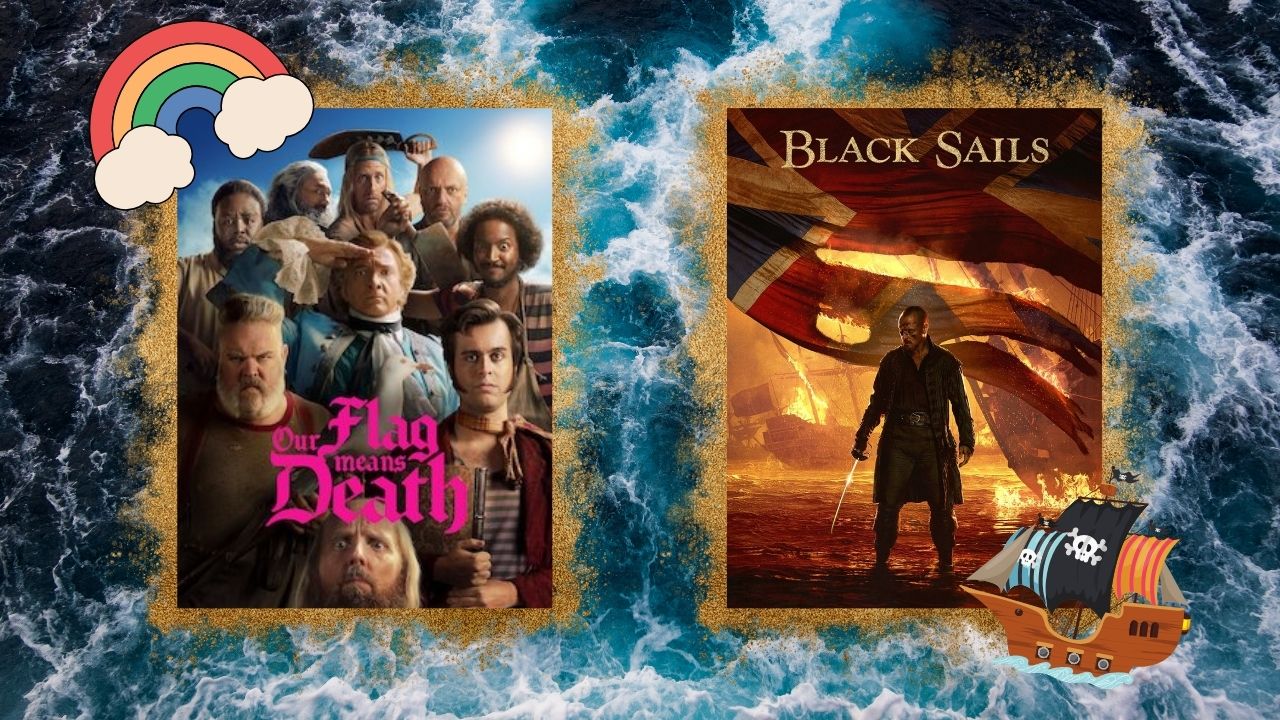
Were pirates gay? It’s a question everyone from Redditors to scholars has been speculating about for years now, and depending on who you ask, the answer may vary. But regardless of whether real, historical pirates were queer, there’s no denying that fictional pirates certainly are! From hit TV shows like Black Sails and Our Flag Means Death to romantic high-seas adventure novels like Maggie Tokuda-Hall’s The Mermaid, the Witch, and the Sea and Gabe Cole Novoa’s The Wicked Bargain, fans have been devouring LGBTQ+ pirate stories. But what makes these narratives so captivating to us? That’s what we’re here to investigate today! So come along, me hearties, as we weigh anchor and set sail on a journey through the past, present, and future of queer pirate media.
Warning: This article contains spoilers for Black Sails and Our Flag Means Death.
A Tale of Two Fandoms
While the Black Sails and Our Flag Means Death fandoms haven’t always gotten along, they share at least one commonality: an appreciation for queer pirates. And though viewers may debate which series is superior, there’s no denying the cultural impact both of these shows have had. When it comes to the explosion of LGBTQ+ pirate media, we have these two series to thank for popularizing the niche. Let’s return to the phenomenon’s inception to determine why these shows enraptured audiences and created such die-hard fan bases.
Black Sails
Black Sails is an action-adventure period drama that aired from January 2014 to April 2017, spanning four seasons. Created by Jonathan E. Steinberg and Robert Levine as a prequel to the 1883 historical adventure novel Treasure Island, it follows infamous pirate captain James Flint and his motley crew as they fight to defend New Providence Island against British forces and establish a Republic of Pirates. The series takes place in the early 1700s during the Golden Age of Piracy, and thus, in addition to fictional characters from Treasure Island, it depicts real-life historical figures like Anne Bonny, Jack Ratham, Benjamin Hornigold, Ned Low, Charles Vane, Israel Hands, and Edward Teach, also known as Blackbeard. That’s not to say that these representations were historically accurate (or even trying to be such), but more on that to come.
Overall, the show is positively regarded: it has an 81 percent average critic score and an 83 percent average audience score on Rotten Tomatoes. However, season one was remarkably less lauded than the subsequent seasons. When it first aired on the premium cable network Starz, Black Sails was promoted as a typical action drama: striking visuals, vivid fight sequences, and plenty of nudity, sex, and gore. Many reviewers remarked that the story felt hollow underneath all the costumes and CGI, but this lack of substance didn’t seem to deter the show’s predominantly male audience, as conveyed by critic Tom Long of Detroit News:
Black Sails is mostly a boys’ tale told for adult boys, all huffing and puffing and heaving ho. But isn’t that what pirate stories always were? So sail on, mateys.
Rotten Tomatoes
But by season two, things were starting to change, both in terms of the show’s direction and the audience’s response. While season one banked on pure spectacle to draw viewers in, Black Sails’s sophomore season homed in on its protagonists. In particular, much screen time was devoted to Captain Flint’s mysterious backstory, including the reason why he turned to piracy in the first place.
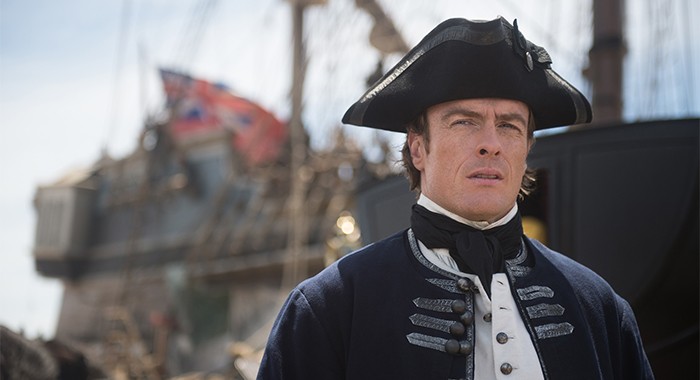
It’s revealed that before he became a notorious pirate captain, James Flint was James McGraw, a lieutenant in the Royal Navy tasked with helping aristocrat Thomas Hamilton regain British control over New Providence Island from the pirates. What began as a professional partnership between the two men eventually turned into a passionate romance, but when the affair was discovered by Hamilton’s political enemies, they exposed it to get him out of the picture. With Hamilton institutionalized and rumored to have committed suicide, Flint vowed to avenge his lover by forever freeing Nassau from England’s grip, beginning his transformation into the formidable Captain Flint we meet in the series’s pilot.
On the whole, season two was much more well-received than its predecessor. The audience score on Rotten Tomatoes climbed from 79 percent to 90 percent, while the critic score shot up from a modest 65 percent to 100 percent. Reviewer Jessica Rawden wrote of the second season:
In Season 2, the foundations have already been built, and Black Sails is free to open its sails and traverse wherever it pleases. The drama is bolder and sharper than ever, and it’s become the crowd pleaser it has always meant to be.
CinemaBlend
However, while critics and general audiences seemed to be in consensus about the show’s upward trajectory, a certain subsection of the fandom was none too pleased with this development. The first season of Black Sails wasn’t entirely devoid of LGBTQ+ representation; characters like Max and Eleanor were openly sapphic since season one. The queer identities of other characters like Anne and Flint didn’t come to light until the second season, but by the end of the series, the show would deliver several explicitly queer characters and relationships, to the disdain of some fans.
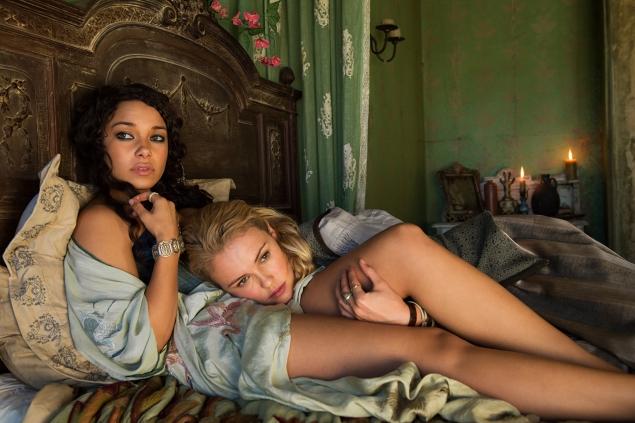
According to one such viewer on Rotten Tomatoes, Black Sails is a “great series” with an “original story,” but its inclusion of LGBTQ+ characters “appears overly activist” and “spoils the ‘historical feeling’” of the show. Another incensed reviewer accused the show’s writers of “bait[ing] and lur[ing] people for two years into a tough guy pirate action story” just to stoop to “shock factor BS” by revealing Flint as queer.
This backlash didn’t go unnoticed by the show’s cast and crew. Toby Stephens, who played Captain Flint, had this to say about the reaction to Flint’s sexuality:
Before the revelation I had this huge following from guys, but as soon as that happened it was like they had been betrayed…For a lot of guys, they just can’t get their head around it.
Digital Spy
However, the creative team behind Black Sails refused to change course in the face of this pushback, delivering two more highly praised seasons of TV. Since coming to streamers like Hulu and Netflix, the show has only grown in popularity. Now, its inclusion of LGBTQ+ characters is increasingly seen as a draw rather than a drawback. But Black Sails isn’t the sole queer pirate TV series to make a splash in recent years. Another show has also managed to capture the hearts of LGBTQ+ fans in a much different way.
Our Flag Means Death
Our Flag Means Death is a period romantic comedy that aired on HBO Max from March 2022 to October 2023, spanning two seasons. Set in the early 18th century during the Golden Age of Piracy, the show loosely follows the life of Stede Bonnet, a real historical figure nicknamed the Gentleman Pirate due to his privileged upbringing. Tired of his comfortable, sheltered life as a member of the gentry, Bonnet abandons his unhappy arranged marriage to become a pirate despite possessing none of the skills needed to lead his dysfunctional crew or fend off enemy attacks. On the high seas, he encounters the fearsome Edward Teach, better known as Blackbeard, and in an unforeseen turn of events, the two fall in love.
Despite receiving little promotion leading up to its debut, Our Flag Means Death quickly accumulated significant viewership and critical praise, making it one of HBO Max’s flagship series. In 2022, it landed on many “best of” lists from noteworthy publications such as The Los Angeles Times, Entertainment Weekly, IndieWire, The Atlantic, Mashable, Forbes, Polygon, and The A.V. Club. On Rotten Tomatoes, the show has a 95 percent average critic score and a 96 percent average audience score.
Initial teasers and trailers for the show didn’t do more than hint at the eventual romance between Stede and Ed, and the two characters don’t even meet until the end of the third episode. However, the show didn’t wait too long to introduce its various queer characters and couples, to the delight and relief of hopeful fans; by episode six, the heartwarming romance between crewmates Lucius and Black Pete has already been canonized with an on-screen kiss. Still, some remained skeptical that Our Flag Means Death would actually deliver on the relationship between Blackbeard and the Gentleman Pirate, a reaction creator and showrunner David Jenkins hadn’t been expecting:
I think I didn’t realize — because I see myself represented on camera, and I see myself falling in love in stories — I didn’t realize how deep the queer-baiting thing goes…But then, looking at how people were kind of afraid to let themselves believe that we were doing that was a surprise to me, and it’s heartbreaking.
The Verge
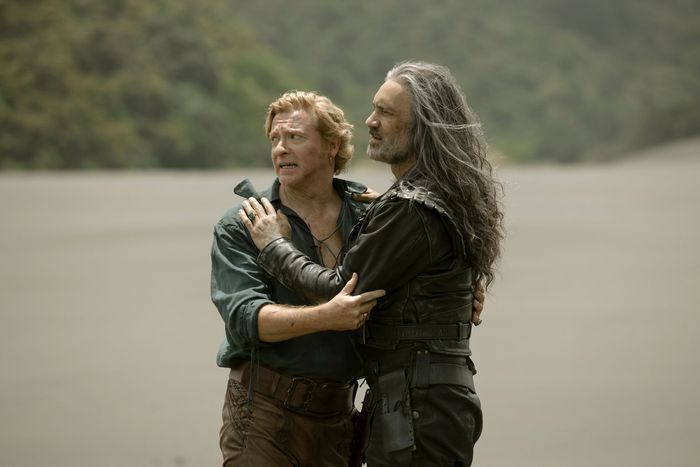
This distrust in creators committing to explicit queer storylines is built upon years of queer-baiting in shows like Supernatural and Sherlock, which profit off of engagement from LGBTQ+ fans but aren’t interested in delivering real representation. Fortunately, this was not the case with Our Flag Means Death. From its earliest conception, the series was always envisioned as a love story according to Jenkins. Whereas many stories with queer subtext never quite make the transition to queer representation, the romance between Stede and Ed was always meant to be the show’s heart and soul. As articulated by Jenkins:
The show is the relationship.
Decider
Our Flag Means Death shattered any doubts that its primary queer romance would remain subtextual once and for all when Stede and Ed shared their first kiss in episode nine, and from that point on, viewership and adoration for the show skyrocketed. By its second and final season, the series had fully leaned into this central love story, which became the focal point of both the plot and the show’s promotional materials.
For fans who had been disappointed by queer-baiting so many times before, this was a breath of fresh air. But it wasn’t just the romantic relationship between Stede and Ed that viewers embraced with open arms. Our Flag Means Death also features several other LGBTQ+ relationships and characters, including Jim Jimenez, a non-binary member of Bonnet’s crew played by non-binary actor Vico Ortiz. Within the realm of mainstream television, non-binary characters are rarely depicted, making Jim’s storyline all the more groundbreaking and impactful. In a review for season one, non-binary critic Jax Griffin wrote:
Seeing a non-binary character so effortlessly existing as themselves and moreover, so effortlessly accepted by their compatriots was something I didn’t realize I hadn’t witnessed before. The profound effect seeing this has had on me is, quite frankly, indescribable in words. And this is ‘the thing of it,’ this is what is reaching into the core of this show’s connection with its audience. It’s not just about representation, it’s about effortless representation. The heroes are gay, bi, straight, fat, thin, Black, brown, white, poor, rich, non-binary, cis, neurotypical, neurodivergent — and this isn’t questioned.
Film Inquiry
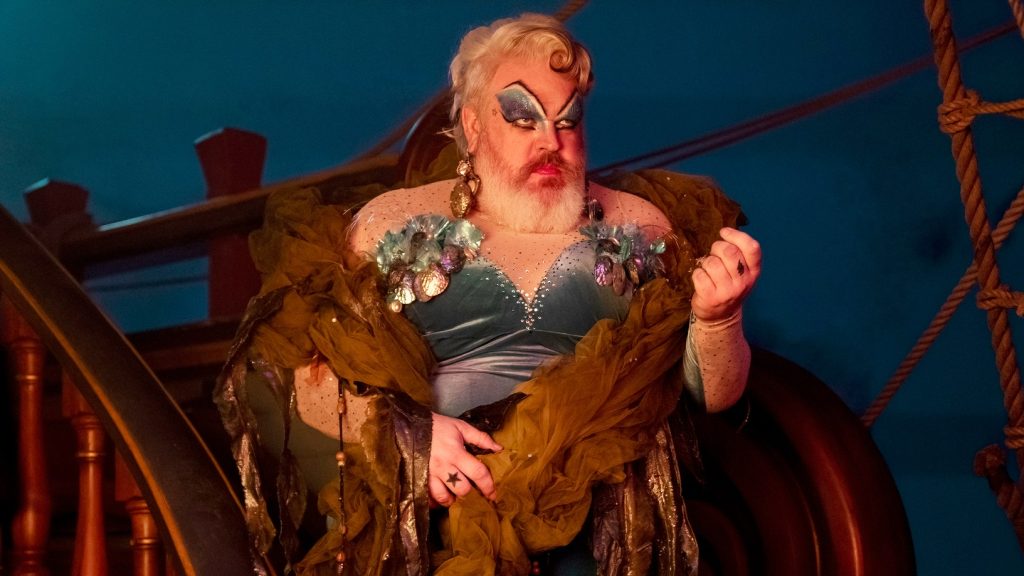
One of the highlights of Our Flag Means Death’s representation is its emphasis on queer joy. While the characters each experience their fair share of adversities, the crew helps them heal these hurts through unconditional friendship. The show’s depictions of LGBTQ+ characters finding self-acceptance, community, and happiness are exactly what keep fans wanting more:
Amid heart-to-hearts about trauma and change, Jenkins and his crew make room for queer joy. It’s not just there in parties but also in the embrace between long-separated loves, in the casual employment of the nickname ‘babe,’ and in the glittery fins of a resplendent merman.
Kristy Puchko, Mashable
Though both Black Sails and Our Flag Means Death are now celebrated as beloved pieces of queer pirate media, the introduction of canon LGBTQ+ characters in these two shows sparked opposite reactions. For Black Sails, the revelation of Flint’s sexuality was met with scorn and fury, while for Our Flag Means Death, Stede and Ed’s first kiss was cause for much celebration. These contrasting responses could be attributed to many factors. However, two of the major causes likely come down to marketing and target audience.
Marketing, Viewership, and Reception Disparities
Unlike Black Sails, Our Flag Means Death was advertised as a queer show (at least from the end of the first season on); plus, within the context of the series, queer characters and relationships were clearly depicted with LGBTQ+ audiences in mind, unlike season one of Black Sails, in which queer representation seemed to cater to the male gaze more than anything else.
Not to mention, the shows strike two distinct tones. Our Flag Means Death is a vibrant, colorful depiction of piracy, while Black Sails takes a darker, grittier angle. These differences are reflected in each show’s leading man. Both are more or less successful pirate captains, but Flint is more stereotypically masculine than Stede. Whereas Stede values emotional openness, Flint is quite closed off, keeping his innermost feelings hidden. And whereas Stede, as the Gentleman Pirate, tends to shy away from violence, Flint isn’t afraid to get his hands dirty. Though these characteristics don’t have anything to do with one’s sexuality in actuality, they may help explain why viewers with more traditional understandings of masculinity felt blindsided by Flint’s queerness but didn’t bat an eye at Stede’s.
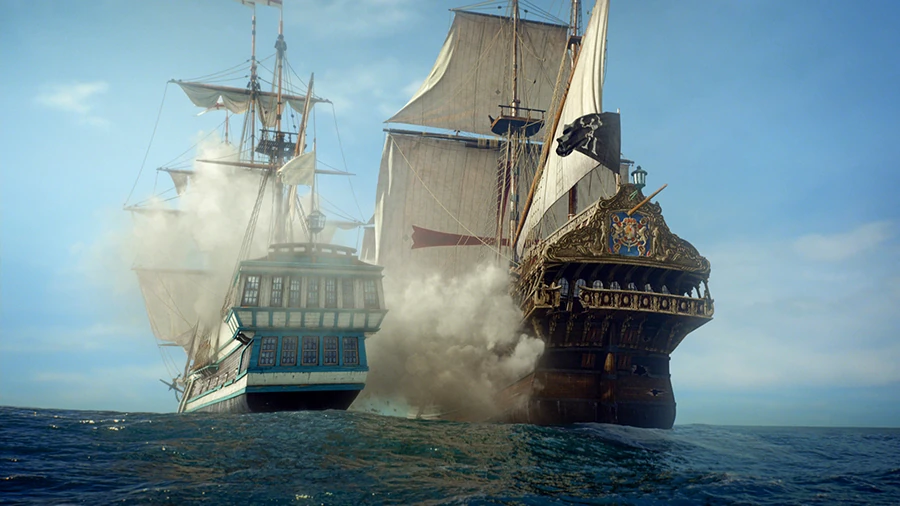
It’s also probable that these shows attracted two disparate audiences. Even though there was nothing overtly queer about the season one trailers for either of these series, Black Sails leaned into a more typical portrayal of pirates than Our Flag Means Death right off the bat, and this gave viewers certain expectations. When those expectations were turned on their head in season two, some fans were unable to reconcile the idea of strong, hyper-masculine pirates with queerness and, therefore, reacted with vitriol.
In a Reddit post from 2020, one user remarks that Black Sails’s “gay agenda” was a flaw in an otherwise “spectacular” series. In their eyes, the queer representation was unrealistic, historically inaccurate, and “forced.” But is this ultra-masculine perception certain fans have of pirates all that factual in the first place? To find out, let’s consult history.
Queer Pirates: Fact vs. Fiction
Upon the unveiling of Flint’s sexuality, certain segments of the Black Sails fandom were adamant that queer characters had no place in a show about hardened buccaneers. And though the show never claimed to be striving for complete historical accuracy, it may be worth exploring how queerness was regarded in pirate culture to understand why these shows resonate with so many people. So without further ado, let’s attempt to answer the age-old question: were pirates truly queer?
Pirate Culture and Queerness
During the Golden Age of Piracy (which spanned from the 1650s to the 1730s), queerness was seen as a lifestyle choice rather than an intrinsic, immutable part of someone’s identity. Thus, “homosexual behavior” had both social and legal ramifications. In British society, anyone caught engaging in said behavior could be convicted of “sodomy,” a term used to describe “immoral” sexual behavior, including everything from bestiality to “non-procreative sexual activity” (aka, masturbation, oral and anal sex, and any sexual relations between same-sex partners). Those found guilty of sodomy could face execution.
However, the same laws didn’t apply out at sea. In his 1983 book Sodomy and the Pirate Tradition, historian B. R. Burg claimed “homosexual acts were the only form of sexual expression” pirates could engage in on all-male crews. He further asserted that those with “homosexual preferences” were often drawn to a life at sea because it gave them the freedom to explore desires that were criminalized on land.
This isn’t to say that buccaneers were flying pride flags alongside the Jolly Roger, but historical evidence suggests that queerness was not unusual or shameful in pirate culture, contrary to what some Black Sails fans seem to believe. Take the practice of matelotage, for instance. Matelotage was a form of civil union between two men that ensured one partner would inherit the other’s belongings upon their death. Although matelotage can be interpreted as a strictly economic agreement (and it may well have started that way), it’s difficult to ignore that this bond was “a relationship with clearly homosexual characteristics,” as put by Burg. According to historian Christopher L. Miller in his 2008 book The French Atlantic Triangle, matelotage could “combine friendship, brotherly love, servitude, and perhaps even sex.” Some have even compared the ritual to contemporary same-sex marriage.
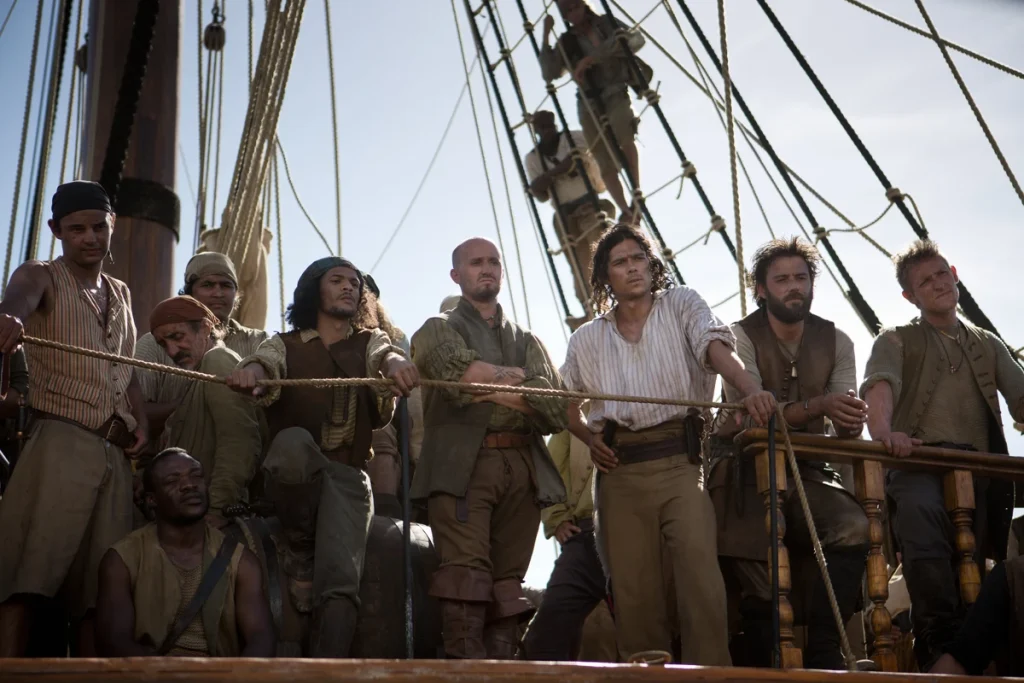
Historical accounts of matelotage give credence to the theory that some matelot pairs may have shared more than a platonic bond. One of the more well-known examples of matelotage was between Olauduh Equiano and Richard Baker. As teenagers living at sea, the two grew “extremely fond” of each other, despite the fact that Olauduh was formerly enslaved and Baker was a white, American enslaver. Entries from Equiano’s journal reveal that the two were “inseparable,” often sharing a bed and turning to each other for emotional support.
While Equiano never wrote of sexual conduct between himself and Baker, the intimate nature of their relationship challenges the view that matelotage was a mere contractual agreement. In practice, the matelotage bond could have held a different significance for each pair of matelots, but any definitive conclusion on the matter remains to be seen. It may be the case that matelotage was a purely platonic practice, but the possibility that it held romantic or sexual implications (at least in some instances) cannot be ruled out either.
Another queer aspect of pirate culture was cross-dressing, a practice mostly ascribed to women pirates. On the whole, pirating was a male-dominated domain. Superstitions about women being bad luck on ships and worries that male crew members would fight over women meant that very few crews were willing to accept a female pirate into their ranks. Certain pirate captains even went so far as to include a woman ban in their ship’s code of conduct, which all crew members had to sign; Captain Bartholomew Roberts’s pirate code contained the clause:
If any man were to be found seducing any [woman] and carried her to sea, disguised, he was to suffer death.
MEL Magazine
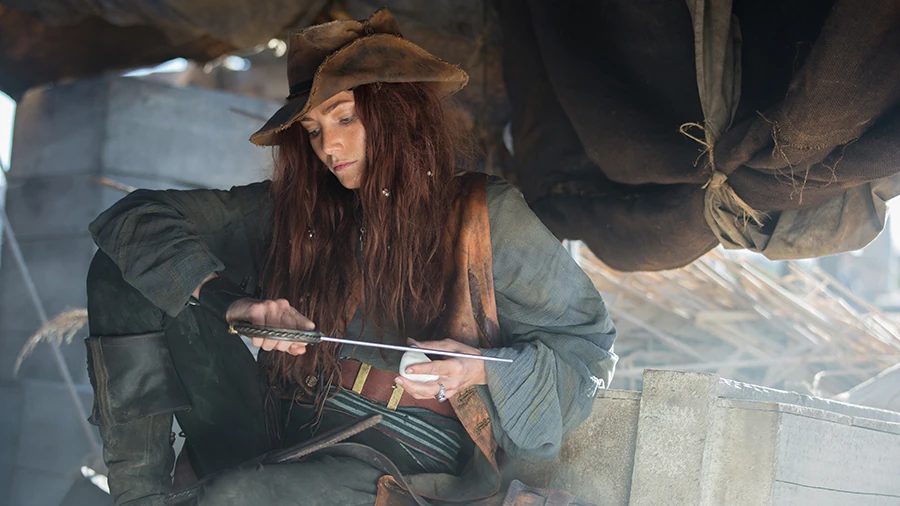
But this didn’t stop all women from taking up pirating. Some went to great lengths to pursue this way of life, including two of the most famous female buccaneers of all time, Anne Bonny and Mary Read. As illegitimate children, both women began cross-dressing at a young age for various reasons. Anne’s father passed her off as the son of a relative to conceal his affair; Mary’s mother disguised Mary as her dead son to continue receiving financial support from her late husband’s family. As she grew older, Mary continued to live as a man, eventually joining the crew of a Dutch ship set for the West Indies. When the vessel was seized by Anne’s pirate crew, the two women quickly became friends and, by some accounts, lovers.
Aboard the ship, Anne lived as a woman, acting as quartermaster Jack Rackham’s lover. The crew believed Mary to be a man, her secret known only to Anne, Jack, and a male shipmate she became involved with. During battles, however, both women donned male attire and fought alongside the rest of the crew. Whether their cross-dressing was simply a means to infiltrate the male-dominated world of pirating, an authentic act of self-expression, or something in between remains up for debate.
The Myth-Making of the Queer Pirate
Although historical evidence of queerness in pirate communities does exist, as established above, some modern conceptions about queer buccaneers are only marginally based in reality. Take the legends surrounding Anne Bonny and Mary Read for example. Some believe they were lovers, while others insist they were nothing more than friends. Although a romance between the two cannot be disproven, it is also not definitively supported by historical documentation. Despite this, many continue to run with the narrative that Bonny and Read were queer, which begs the question: why are people so quick to accept this unverified love story as truth?
In her paper Enemies of All Mankind: Gender, Violence and the Queering of Anne Bonny and Mary Read, Tegan Evans offers a cogent answer. She points to the desire to see queer people represented in history, as exemplified in this quote from sociologist Paul Johnson:
Because of thousands of years of persecution of LGBT people, our histories are fragmented and lost…It is vital, therefore, that efforts continue to discover our past and represent it throughout society.
Reuters
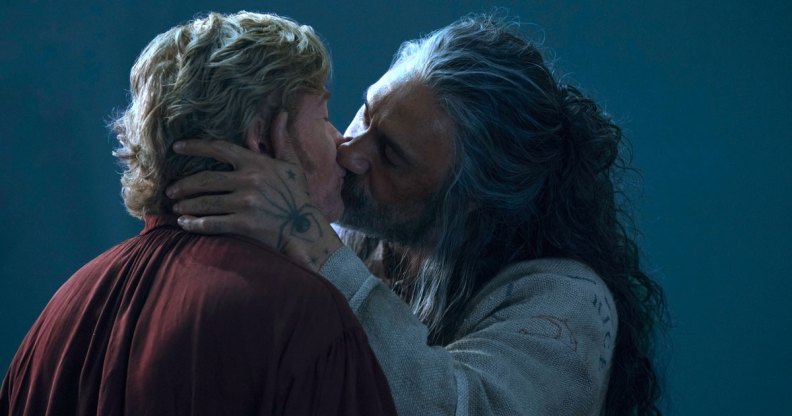
In the absence of proper documentation, we are forced to either accept the exclusion and erasure of queer histories from the record or to try to reclaim these narratives by filling in the details lost to time, perhaps erroneously in some cases. As Evans states, the lack of credible information surrounding Anne Bonny and Mary Read leaves the truth of their relationship open to speculation. That their romance is a possibility is enough for some:
Bonny and Read are, and have been, inescapably queer, regardless of whether they were ever romantically or sexually involved. They are queer in the sense of liminality, figures of ambiguity and disruption…[T]hey are fact and fiction in unquantifiable measure, shapeshifting and ungraspable, slipping through the hands like smoke. Their romance, against all odds and risks, isn’t probably real, but it’s real enough.
Tegan Evans, Australian Feminist Law Journal
In an interview with Den of Geek, Black Sails co-creator Jon Steinberg acknowledges that marginalized accounts are often left out of the history books. Here, he communicates his desire to tell human stories that don’t compromise emotional authenticity for supposed historical accuracy:
There’s some freedom in the moment you realize that the historic record is severely compromised in terms of what these peoples’ lives were like…It gives us the room to try to tell a story that will hopefully feel real. It probably won’t necessarily match up to the textbook to what happened, but I think we would probably argue that the textbook is already a narrative that somebody with an agenda put together a long, long time ago.
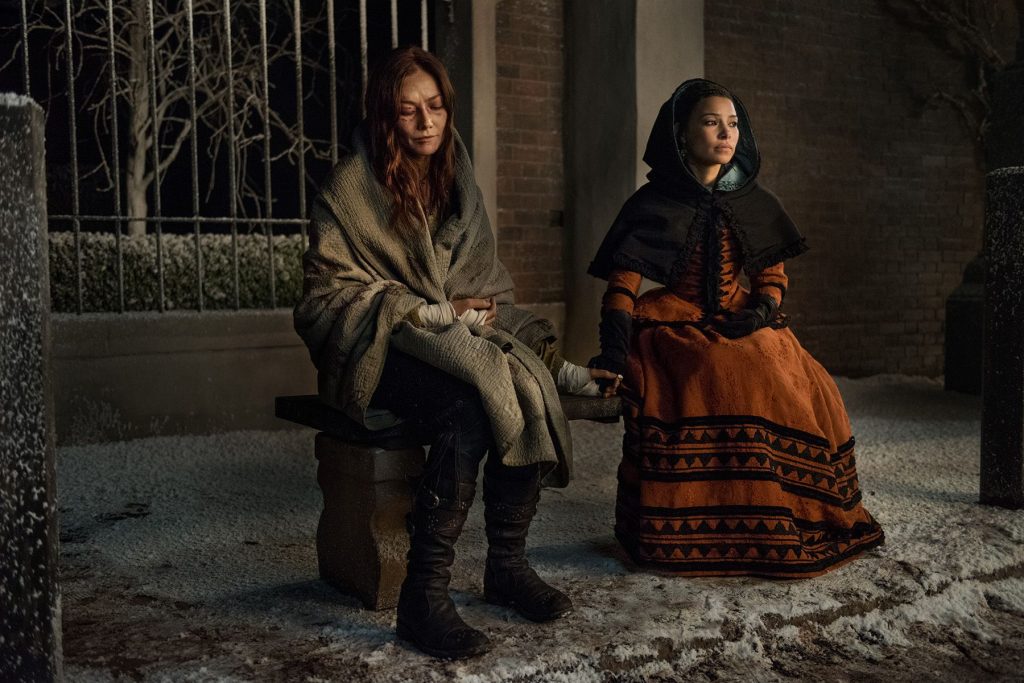
With the knowledge that historical accounts are often biased and incomplete, Steinberg was free to explore narrative elements that lacked concrete factual basis, including the queer identities of his characters. Jenkins, the creator of Our Flag Means Death, would have his own reckoning with the limitations of history as it pertained to LGBTQ+ representation in his show. The result, in both cases, was a compelling connection between queerness and piracy that became a thematic anchor of the larger narratives.
Portraying Queer Pirates
As the respective creators of Black Sails and Our Flag Means Death learned more about the real-life figures they were writing about, they began to take note of the kind of people drawn to piracy: outcasts and the marginalized. Being a buccaneer was no walk in the park. It was a gruesome job that often involved a great deal of suffering and discomfort. To give up a secure life on land for one of constant plundering, bloodshed, and war on the open seas was not a decision made lightly, and so, it had to be backed up by a critical motivation. One such incentive, as the creators realized, was escaping the repressive rules and expectations of polite society. In Jenkins’s words:
If you’re on this ship, you’re running from something, and you’re running to something that you can’t be on land. It makes sense to me through that lens that there would be somebody who’s pushing against ‘traditional’ relationships or ‘traditional’ ideas of gender.
Mashable
The more Jenkins read up on pirate history, the more he began to draw connections to the queer experience, and those realizations undoubtedly shaped his writing. Non-binary crewmate Jim was in part inspired by real historical figures like Anne Bonny and Mary Read, who disguised themselves as men to join pirate crews. Furthermore, in considering traditions like matelotage, Jenkins recognized that the world of piracy was more accepting of queerness than traditional society in many ways, saying in an interview:
The more you look at it, the more you write to the fact that this is a queer-positive world.
Mashable
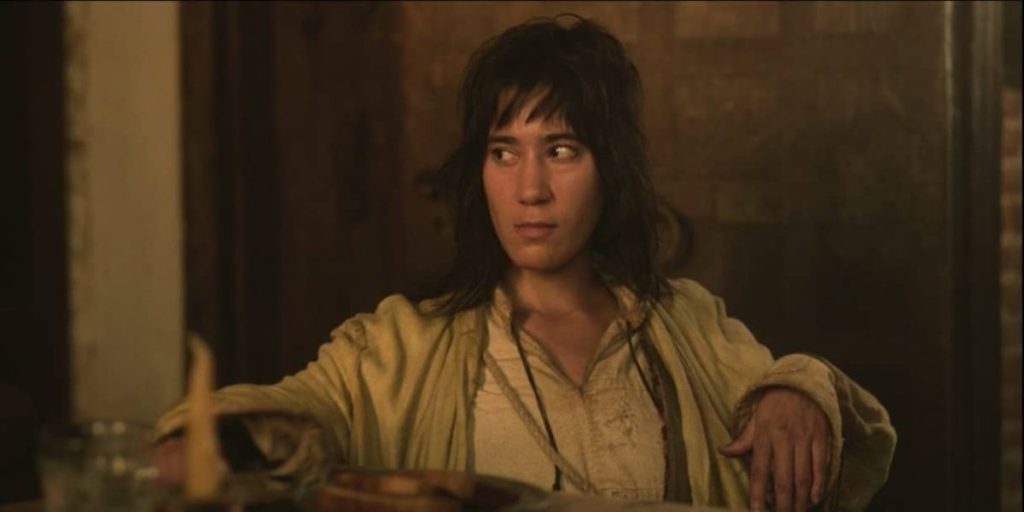
Similar themes played out in Black Sails through the arcs of Flint and other queer protagonists. What motivates Flint is a desire for retribution against the society that institutionalized and presumably killed his lover for his queerness. All Flint ever wanted was to exist, but high society denied him that fundamental right. Though he isn’t necessarily searching for or expecting it, he finds the acceptance and understanding he never received from his high-society peers in his crewmates. As critic Neil Genzlinger states:
Black Sails may be full of pirates and prostitutes, but it’s really about striving for respect, whether from an unruly crew or from polite society.
The New York Times
Pirates existed outside the bounds of traditional society, granting them a freedom not afforded to most. Although there were certainly hardships and dangers that came along with being a pirate, for many, the desire to escape restricting norms and expectations outweighed these risks. This is something both shows understand well, and it’s one of the many reasons why they strike a chord with viewers. With that said, let’s finally discuss what makes queer pirate stories so attractive.
Why We Love Queer Pirates
So why do we love queer pirates? Besides the fact that there’s been an outpouring of phenomenal LGBTQ+ pirate media in the last few years, piracy has some thematically salient connections to queerness. By highlighting these parallels, the creators behind Black Sails and Our Flag Means Death have been able to challenge heteronormative tropes and beliefs, delivering authentic queer stories the likes of which we haven’t seen before.
Redefining Masculinity
In many Western societies, queerness and masculinity are seen as mutually exclusive traits. Masculinity is often associated with aggression, dominance, competence, physical fitness, and high sexual desire for women. It’s not simply an identity but a performance men put on to seek acceptance from other men. The concept of masculinity couldn’t exist without the opposing concept of femininity, and thus, the performance of masculinity is as much a desire to present as masculine as it is a desire to not present as feminine. Queer men are frequently emasculated by society because their attraction to men and/or lack of attraction to women is viewed as a feminine trait. Appearing feminine threatens one’s status as a “manly” man, so homophobic and misogynistic views are often expressed as a way to exert masculinity.
Hollywood enforces the construct of masculinity through unrealistic depictions of men. When you imagine a traditional action hero, you likely think of rippling abs, physical capability, heroism, and assertiveness. Although pirates tend to fall into the category of “anti-hero” rather than the straightforward white knight, they are still characterized by traditional markers of masculinity: ferocity, virility, physical prowess, courageousness, and aggression. In this way, masculinity and piracy are closely entwined in the cultural consciousness.
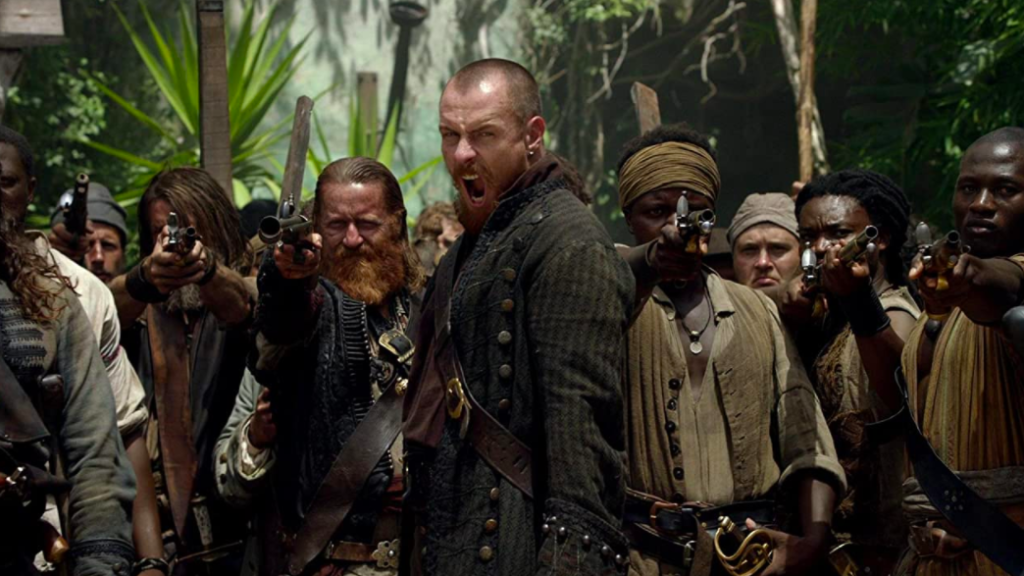
Each new addition to the pirate fiction genre that portrays its characters in this way further strengthens the association between masculinity and piracy. Jenkins wasn’t interested in reinforcing that correlation in his work. On the contrary, he wanted to break it down. When asked about how Our Flag Means Death deconstructs traditional conceptions of masculinity, Jenkins had this to say:
I feel like, particularly over the last five years, we’ve been treated to this burlesque of masculinity…It always felt oppressive to me growing up, and now we’ve hit this place where some people are really trying to hang onto these outdated ideas about gender, but society’s actually moving on and past them. I think just to take this very hetero, whitewashed genre and write into it more of what it actually was. There were a lot of pirates who were genderfluid, like Anne Bonny and Mary Read, who were doing the pirate thing before anyone was really talking about women getting into piracy. And then, as we were writing more into the ship’s queer culture, we realized that this is just more of what it was.
The Verge
By leaning into the reality of queerness and masculinity in pirate culture, Jenkins shows that there is a way to be gay and “manly” at the same time, rejecting the harmful belief that men have to be emotionless conquerors to gain respect. In a review for season one of Our Flag Means Death, critic Jax Griffin remarked on the show’s commitment to dismantling toxic masculinity by depicting healthy, supportive male friendships:
[The characters] all exist as who they are, with complete unconditional acceptance and without question. Issues they might have with each other stem from other things like jealousy, arrogance, or even their own inner demons, but it has nothing to do with their identities. It’s a wonderful and refreshing break from the barrage of toxic masculinity that seems to dominate our culture.
Jax Griffin, Film Inquiry
The absurdity of separating masculinity from queerness becomes even more apparent when considering the fan response to Flint’s queer storyline. In the first season of Black Sails, many viewed Flint as an uber-masculine warrior, the epitome of both piracy and manhood. However, the tune quickly changed when Flint’s bisexuality came to light in season two. Now, the same fans who’d once upheld him as the standard complained that his queer identity was incongruent with his masculine qualities — namely, his brutality, leadership skills, and mental and physical fortitude. The underlying assertion was that Flint couldn’t possibly be queer because queerness and masculinity are opposites, and Flint was by all assessments a very masculine character.
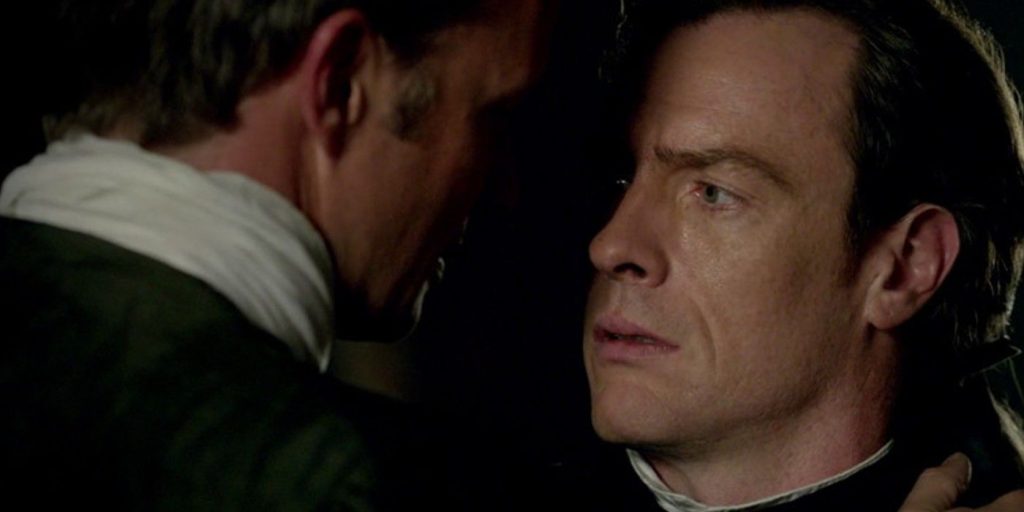
Black Sails rejects that view wholesale. In the show, traditional markers of masculinity, such as straightness, able-bodiedness, aggressiveness, and subordination of women are exchanged for qualities like self-awareness and self-assuredness. By establishing the irrelevance of sexuality to manliness, the show simultaneously dismantles traditional conceptions of masculinity and proves that pirates (and anybody, for that matter) can embody both queerness and masculinity at the same time. Some viewers ultimately abandoned the show because of its queer storylines, but for those who chose to see the series through, Black Sails is a crucial reminder that outdated beliefs about gender can — and should — be left in the past.
At first glance, the masculinity portrayed in Black Sails is a violent, omnipotent, and larger than life hyper-masculinity. But upon a closer inspection, the show heavily criticizes this and positions itself in favor of softness, acceptance, and compassion…Neither effeminancy, queerness, or disability eradicate masculinity. Masculinity is individual to everyone: it means knowing who you really are and holding on to that knowledge and not wavering from it.
Theresa Bauer, M. Ed., ResearchGate
There’s no better example of Black Sails’s approach to masculinity than the show’s leading man, Flint. Although he is savage and callous at points to gain the respect and loyalty of his crew, it’s clear that these actions are nothing more than a performance of masculinity. The real Flint is tender and bookish, values and respects women, and desires a domestic life free from violence. He’s a shining example of masculinity not because of his ruthlessness or his attraction to women but because he’s learned to be proud of his identity as a queer man despite society telling him it’s wrong. It’s by allowing himself to discard heteronormative views of masculinity that Flint finally learns what it means to be a man.
The pirate world’s rejection of conventional masculinity isn’t just something invented for the small screen. Buccaneers living during the Golden Age of Piracy existed outside British civilization’s masculine ideals. According to Bauer, they “were sometimes disabled, often non-white, and mostly consisted of uneducated sailors,” a description that embodies neither contemporary nor historical standards of masculinity. In challenging the association between piracy and masculinity in popular media, Black Sails and Our Flags Means Death make room for a new wave of pirate narratives that better understand the nuances of historical pirate culture and portray pirates in a more absorbing and relatable way for modern audiences.
Shattering Societal Norms
Pirates were considered social deviants who made a life out at sea to avoid the narrow confines of their society. Out on the open oceans, they were free to be who they were without the pressure of conforming to norms and traditions that didn’t suit them. This explains why some women and queer people might’ve found pirating to be a worthwhile lifestyle — as a pirate, the burdens imposed by gender roles could be shed. It also illuminates why piracy is such a compelling metaphor for queer resistance:
[T]he established culturally implemented idea of pirates as rebels positions them perfectly to carry any revolutionary challenges. Pirates convey a romanticized impression of conquering not only the sea but also societal norms and, with them, heteronormative standards.
Theresa Bauer, M. Ed., ResearchGate
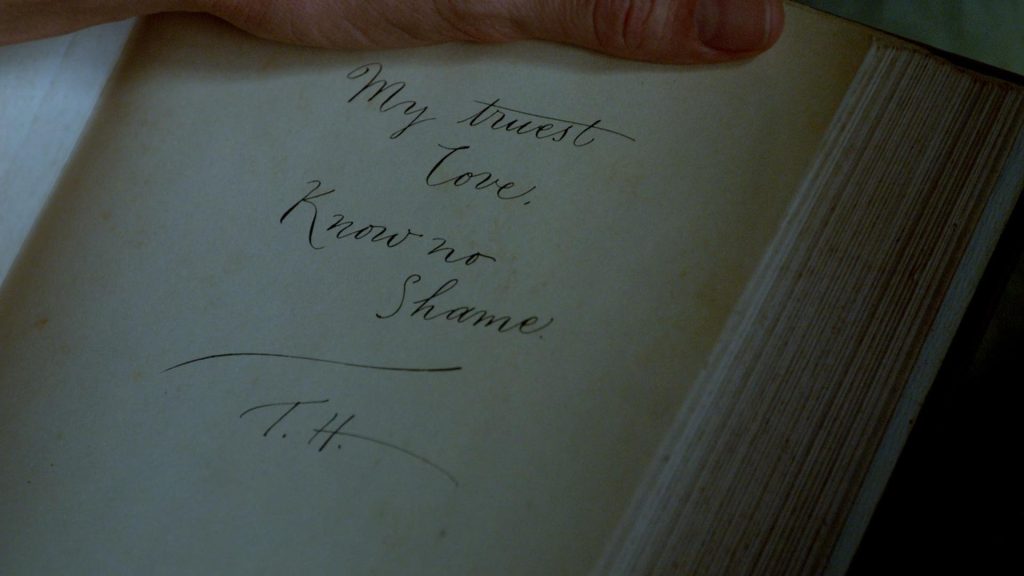
In one of the most touching moments in Black Sails, Flint’s lover, Thomas, gives Flint his copy of Meditations by Marcus Aurelius with an inscription on the inside cover that reads, “James, my truest love, know no shame.” Although society tells them their love is wrong, Thomas won’t let Flint be ashamed of his sexuality. Thomas’s unwillingness to accept society’s judgment of him is what motivates Flint to turn against Britain, the country he once fought for, and protect the pirate community that allows him the freedom to be himself.
This quote from the show’s finale further addresses its central theme of societal exclusion. The character who says these lines, James Oglethorpe, is a real historical figure who spoke out against slavery and advocated for the oppressed. Eventually, he established the American colony of Georgia to give Britain’s poor a second chance at life. Here, he talks about the treatment of those society abandons for diverging from its ideals:
What’s to be done with the unwanted ones? The men who do not fit, whom civilization must prune from the vine to protect its sense of itself. Every culture since earliest antiquity has survived this way, defining itself by the things it excludes. So long as there is progress, there will always be human debris in its wake, on the outside looking in.
Black Sails season 4, episode 10
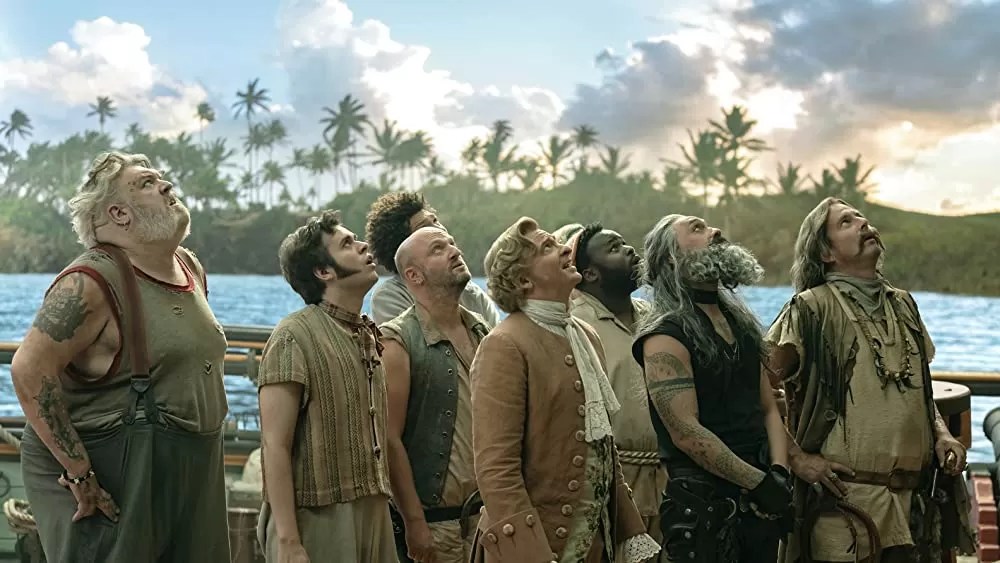
Black Sails and Our Flag Means Death deliver casts full of such “unwanted ones.” The protagonists of these shows are people who have been persecuted, ostracized, and forsaken by society, but in the end, most of them get to have a happy ending. (That is, depending on how you interpret the end of Black Sails, but I prefer the more optimistic exegesis.) They find family in their pirate comrades, who accept them for who they are. And because of that acceptance, they are able to cultivate the happiness and self-love that society tried to deny them.
In addition to having explicit representation, Our Flag Means Death wove themes of found family and queer community into its very fabric. The ragtag band of misfits at the show’s center — truly the sales rack of pirates — is packed to the brim with people who have been rejected by society for one reason or another. Despite their shortcomings, and their older age compared to the sort of LGBTQ+ characters we’re used to seeing on television, these pirates found not just love but a life worth living even in the most dire circumstances.
Patches Chance, Them
In a world where so many people seem hellbent on denying others the basic respect of tolerance, it’s not difficult to see why LGBTQ+ viewers would resonate with a story about outcasts finding love and acceptance among fellow polite society rejects. We all wish we could sail away from society’s judgments and abuses sometimes, and that’s the exact form of escapism and catharsis these shows provide. So sail on, queer pirates! We’re just happy to be along for the voyage.
In the market for more queer pirates? Check out some must-read queer pirate fiction here!
Browse the LGBTQ+ shelf on our Bookshop page for some incredible queer book recommendations!