







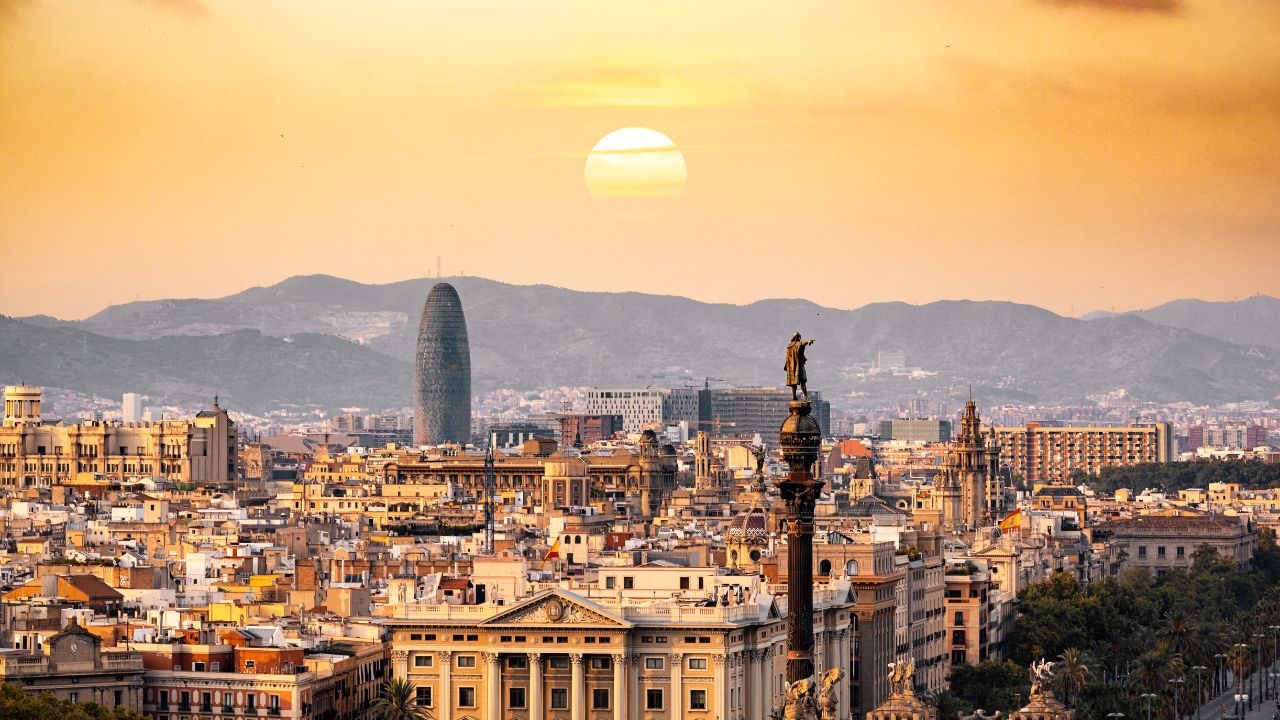
I could use a trip to Spain right about now. And what better way to wander the streets of Barcelona, or the Spanish countryside, than by immersing yourself in a book? We’ll explore some of the most sensational Spanish novels and the authors that produced them. From classics to contemporary works, we have a lot to cover. So, let’s get to it!
Don Quixote by Miguel de Cervantes
Don Quixote, written by Miguel de Cervantes, was published in two parts in 1605 and 1615. Due to his father’s work, Cervantes and his family had to travel quite a lot. He continued even after leaving his family. He joined the Spanish military, fought in battles, and even ended up as a captive of Barbary pirates. It is said that his time as a slave influenced Don Quixote.
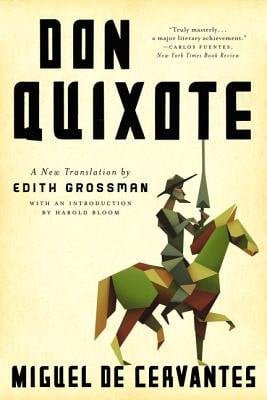
Literary critics consider this to be the first modern novel. Rather than focusing on epic adventures – as was the standard for medieval literary traditions – it satirized them. It was more a story about everyday people living everyday lives, with the exception of its prototypical comic protagonist. Cervantes also introduced other elements that are now considered cornerstones of the novel: complex characters, unreliable narration, the use of satire, and social commentary. I suppose it makes sense to compare the scale of his influence to Shakespeare’s, considering they both died on the same day (April 23, 1616)!
The House of Ulloa by Emilia Pardo Bazán
Emilia Pardo Bazán was born into a wealthy family. She had access to something that wasn’t available to many women, at that point in time: a good education. Although she was married at 16, she separated from her husband to focus on her literary career. Defying social conventions seemed to be in her blood and that deserves to be celebrated! Pardo Bazán is one of the first Spanish authors to introduce naturalism into their writing. Moving away from the romantic, idealized portrayals of life, her work focuses on objective, detailed depictions, and on social issues.
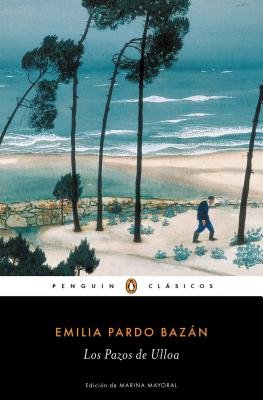
The House of Ulloa centers around an aristocratic family who live in a rural town in Spain. But nothing about them seems overly aristocratic anymore. Their estate is run down, and their behavior is corrupt and manipulative. Throughout the novel, things spiral out of control. I won’t spoil it for you, but this might not be a feel-good novel! As an advocate for women’s rights, Pardo Bazán’s work is filled with feminist thought. The House of Ulloa is no exception. Through the female characters of the Ulloa family, she criticizes gender inequality and explores female agency.
Fortunata and Jacinta by Benito Pérez Galdós
Pérez Galdós was a leading realist novelist in Spain. He was born in Gran Canaria and later moved to Madrid, where he abandoned a law degree to pursue more artistic endeavors. A lot of his inspiration came from eavesdropping on other people’s conversations. Pérez Galdós, like Pardo Bazán, saw social critique as an important mission of his writing. He is celebrated for his realistic, and detailed portrayal of Spain’s social classes.
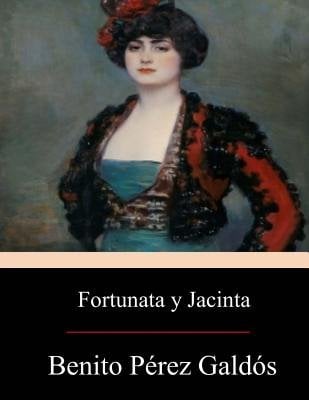
In Fortunata and Jacinta, he explores the class system and the social expectations that come with them. As the title suggests, the novel focuses on two women, Fortunata and Jacinta, who could not be more different from one another. One is from the lower class with no real education and the other a rich, spoiled only child of the bourgeoisie. As luck would have it, they both end up in a relationship with the same man: Juanito Santa Cruz. Juanito is a rich womanizer who quickly grows bored of Jacinta, though not before getting her pregnant. His mother, sick of this playboy lifestyle, sets him up with Fortunata, and they get married. Eventually, both women find out about the other, and chaos ensues. Juanito wants what he can’t have – I guess some things never change!
Even the Darkest Night: A Terra Alta Novel by Javier Cercas
Javier Cercas is not only a writer but also a professor of Spanish literature. He experienced Spain’s transition from a dictatorship under Francisco Franco to a democracy. Soldiers of Salamis, his novel about Franco’s seizure of power in the Spanish Civil War, is award-winning. Cercas belongs to a group of Spanish authors who write “historical memory fiction” by combining personal memoir with history and fiction.
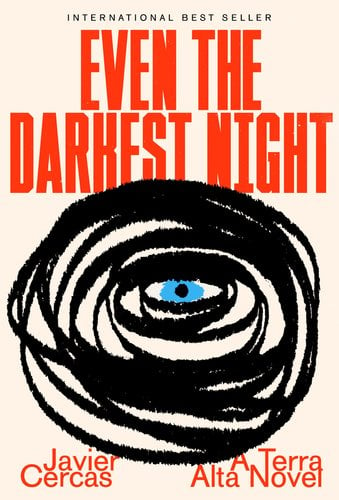
Even the Darkest Night is the first book in a detective series set in Terra Alta, a small town in Catalonia. But fear not; this is no run-of-the-mill crime novel. The main character – a criminal turned police officer – is full of surprises. We follow his journey of uncovering who killed a wealthy couple. At the same time, we also get to find out more about his past: Melchor Marín is the son of a prostitute and was a member of a drug cartel. So what is this former felon doing in a quiet town in Catalonia? Cercas explores where the line between justice and vengeance might be. For Melchor, these lines between good and evil become blurred and “doing the right thing” doesn’t seem so right anymore.
The Shadow of the Wind (Cemetery of Forgotten Books series #1) by Carlos Ruiz Zafón
Carlos Ruiz Zafón was born in 1964 in Barcelona. Throughout his life, he interacted with many different modes of writing, from working in advertising to screenwriting to becoming a novelist. The Shadow of the Wind holds a special place in my heart, and clearly, I am not the only one. It was translated into over 40 languages and is considered one of the most important Spanish novels of the 21st century. Zafón’s work with film informed the vivid, visual descriptions of Barcelona’s gothic architecture in the novel.
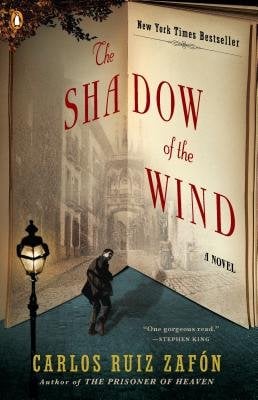
The Shadow of the Wind is a gothic mystery set just after World War II. In a nutshell, this is a book about the power of books. A bookseller shows his son a secret library called the Cemetery of Forgotten Books. The sole purpose of this library is to act as a sanctuary for texts that most people have forgotten. Daniel Sempere feels drawn to a book called The Shadow of the Wind. But, as with most books in this library, he can’t find any information about it or its author. There is a good reason for that: someone has been destroying every copy. Slowly, Daniel begins to unravel the mystery and uncovers dangerous secrets in the process. The most powerful message of this novel is that books can shape our destiny. How beautiful is that!
Spain has an incredibly rich literary history and this article only scratched the surface! But one thing is clear, these authors and their novels have transcend borders, and connect readers around the world. We hope to continue seeing you on our journey to the next country full of culture and good books!
If you want to join us on our literary journey around the world, click here.
After traveling across the globe, why not make a stop in the US? Click here to find a whole list of novels and authors from different US states!