








Trigger warning: This article discusses emotional abuse and self-esteem issues. Please exercise care while reading.
Content warning: This article contains mild spoilers for the movie KPop Demon Hunters.
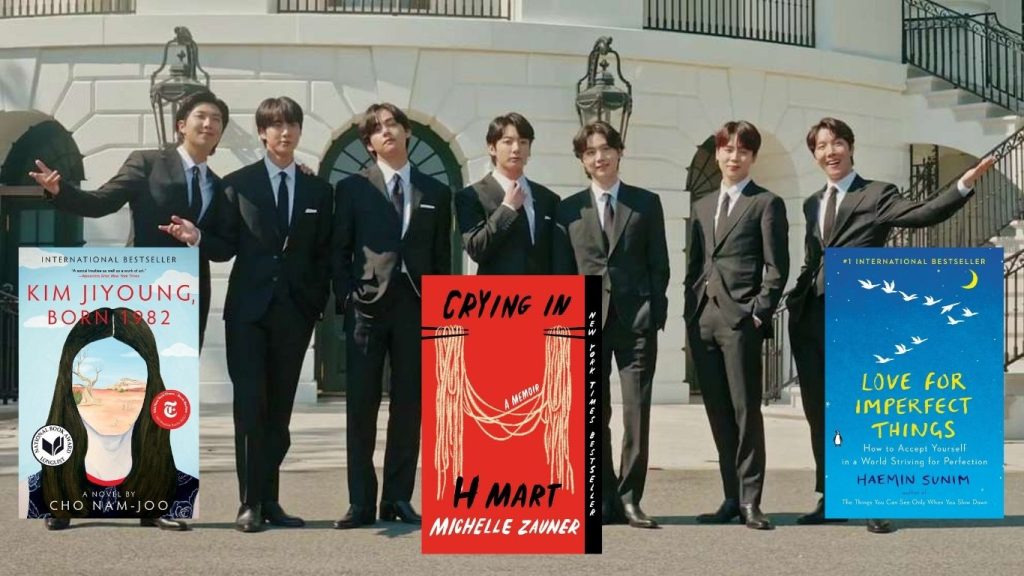
When I heard about KPop Demon Hunters, I didn’t expect much from it. I thought that it was an interesting way to capitalize on the genre’s popularity (if with a rather on-the-nose title) and that people comparing its demonic main villains to my beloved ATEEZ were probably onto something. I certainly did not expect it to blow up on my social media feeds as much as it did, or for RM of BTS himself to quote Soda Pop on the group’s first livestream since 2022. As I write this, the film’s two rival K-pop groups, HUNTR/X (pronounced “hunt-rix”) and Saja Boys, have just dethroned their IRL counterparts, BLACKPINK and BTS, on the Spotify charts. Per BBC, the movie is currently the most streamed on Netflix globally, having garnered 33 million views in its first two weeks.
Now that I’ve watched the movie, it’s easy to see why. KPop Demon Hunters is a ton of fun, full of shenanigans, visual gags, and exciting fight scenes — to say nothing of its catchy soundtrack. But it also boasts some compelling characters, as well as a surprisingly astute commentary on idol culture and internalized shame and self-acceptance. While not a perfect film, it’s certainly earned its pop culture phenomenon status — and hopefully, fostered a new appreciation for the genre among veteran K-pop fans and newcomers alike.
Synopsis
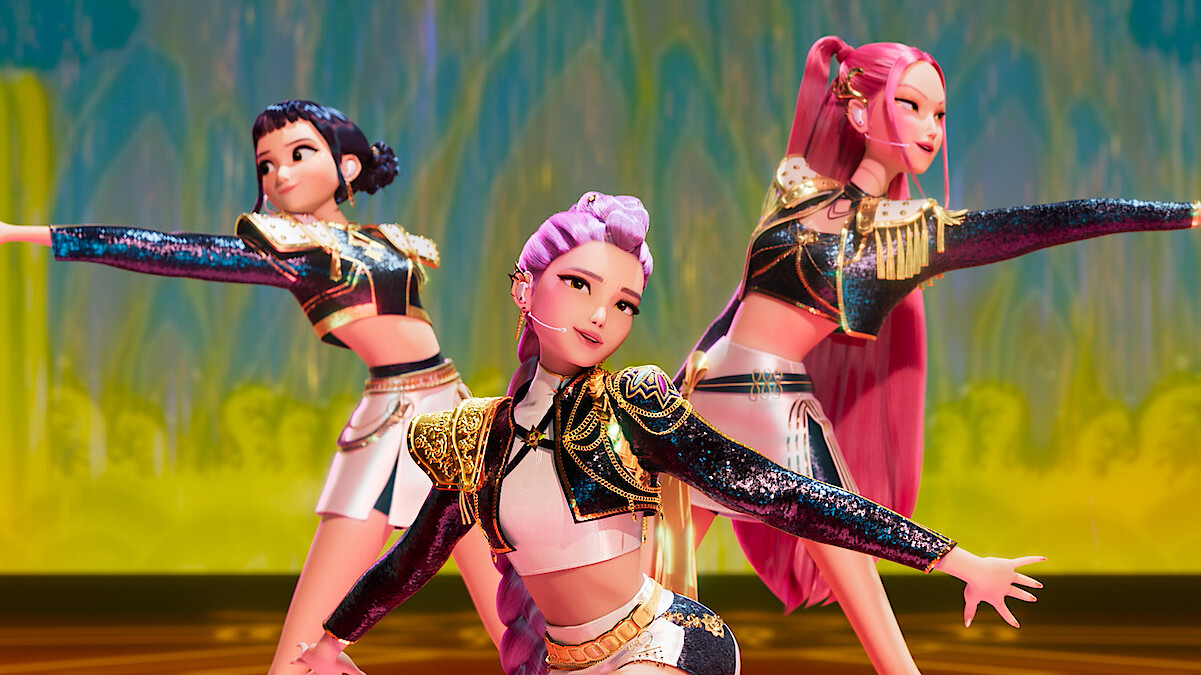
In the world of KPop Demon Hunters, the nation’s hottest idol group is HUNTR/X, comprising main dancer and visual Mira (May Hong); main rapper, lyricist, and Maknae (youngest) Zoey (Ji-young Yoo); and leader and main vocalist Rumi (Arden Cho). But HUNTR/X are more than star performers: they’re also the current generation of a long lineage of demon hunters. Through their voices, they maintain a protective magic barrier over the human world called the Honmoon, sealing it off from demonic attacks.
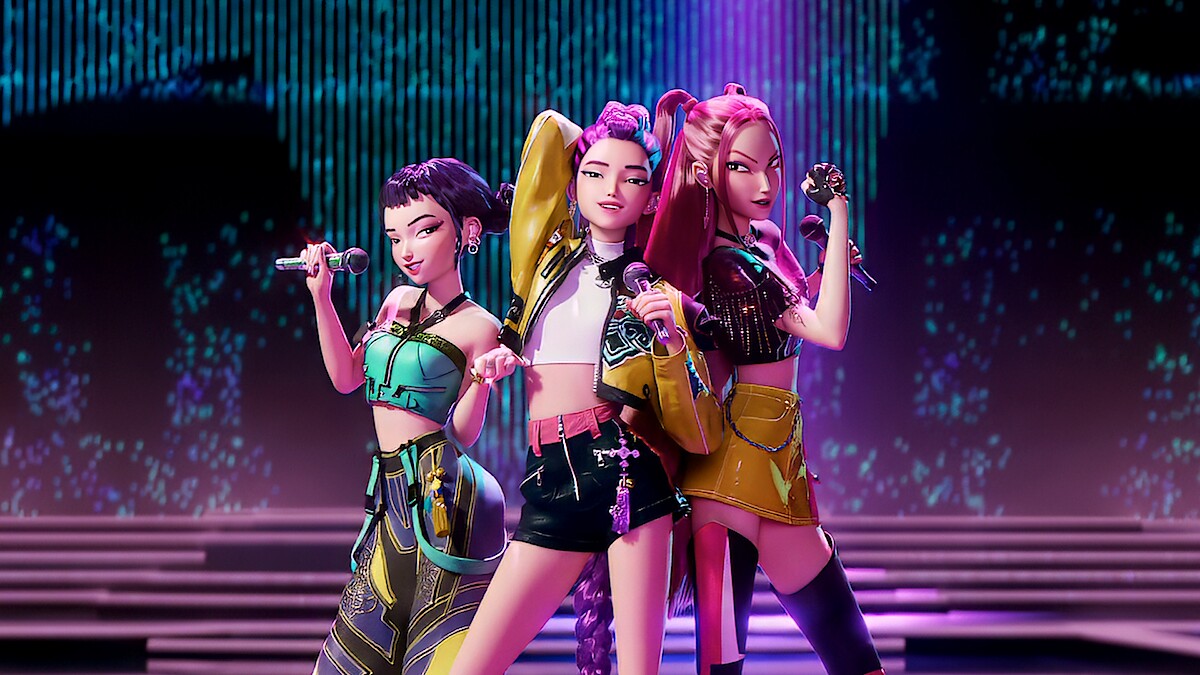
When we meet HUNTR/X, they’re preparing to release a new song, Golden, which Rumi believes will strengthen the Honmoon, turning it gold and eliminating the threat of demons for good. For Rumi, we learn, there’s more at stake than just humanity’s safety: Rumi’s skin bears the distinctive violet patterns that mark a demon. Her adoptive guardian, Celine (Yunjin Kim), has told Rumi her whole life to never show her patterns to anyone, even her bandmates. Turning the Honmoon gold, Rumi believes, will not only ward off the demons but erase her patterns — and her shame. As promotions for Golden begin in earnest, though, Rumi’s voice begins to falter — a sign that her demon side is starting to take over.
The timing could not be worse: a new K-pop craze has arrived, one that threatens more than just HUNTR/X’s chart dominance. The girls’ new rivals, Saja Boys, aren’t just pretty faces (and abs) — they’re the demons’ attempt to beat them at their own game. By luring away HUNTR/X’s fans, Saja Boys can weaken the Honmoon, allowing their demon brethren greater access to human souls.
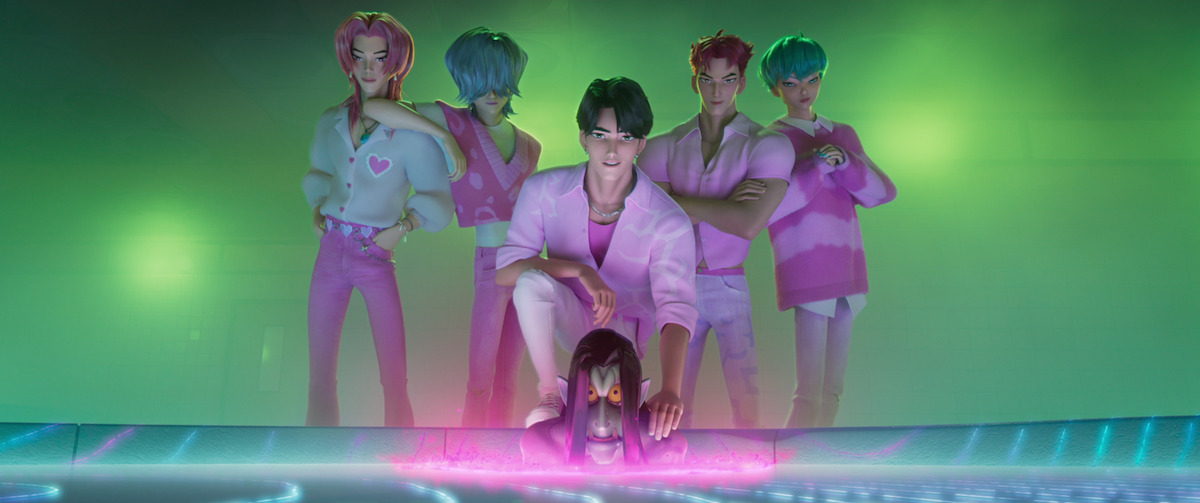
Determined to defeat the demons, HUNTR/X decide to write a diss track (Takedown) exposing their true nature, to be performed at the upcoming International Idol Awards. But Rumi develops an unexpected bond with Jinu (Ahn Hyo-seop), Saja Boys’ leader — one that has her questioning everything she’s been taught about what demons are, and by extension, who she is.
My Thoughts
I completely underestimated this movie. I came into it expecting a light romp, and yet I’m still thinking about it days after watching it. Part of that’s because the music’s stuck in my head (we’ll get to that), but a lot of it has to do with the attention given to the characters.
Rumi and Jinu’s relationship is the emotional core of the film, with the two bonding over a shared sense of isolation and shame brought about largely by toxic authority figures. In Rumi’s case, it’s Celine, who raised her after Rumi’s demon-hunting mother died and instilled in Rumi both a relentless need for perfection and an internalization of the inherent, irredeemable evil of demons. Jinu, meanwhile, suffers from hearing the voice of Gwi-Ma (Lee Byung-hun), ruler of the demons, who uses their shame and sorrow to manipulate them. In each other, the two find the understanding — and acceptance — they’ve long sought but could never find. Their vulnerability culminates, naturally, in a duet: the moving ballad Free.
“Why does it feel right every time I let you in?
— Rumi and Jinu, Free
Why does it feel like I can tell you anything?
We can’t fix it if we never face it
What if we find a way to escape it?”
Though Mira and Zoey aren’t as in focus, we do still get to see behind their idol facades. Perky Zoey is a people-pleaser, while deadpan Mira is the black sheep of her family. The dynamic of HUNTR/X feels very much like Ozai’s Angels from Avatar: The Last Airbender, only perhaps with Katara at the helm rather than Azula. Manager Bobby (Ken Jeong) provides delightful comic relief and also does a genuinely impressive job juggling the girls’ antics. Also along for the ride are Jinu’s magical companions, an unnamed tiger, and a magpie pulled straight from Korean folklore who lend the film a nice Ghibli-esque touch.
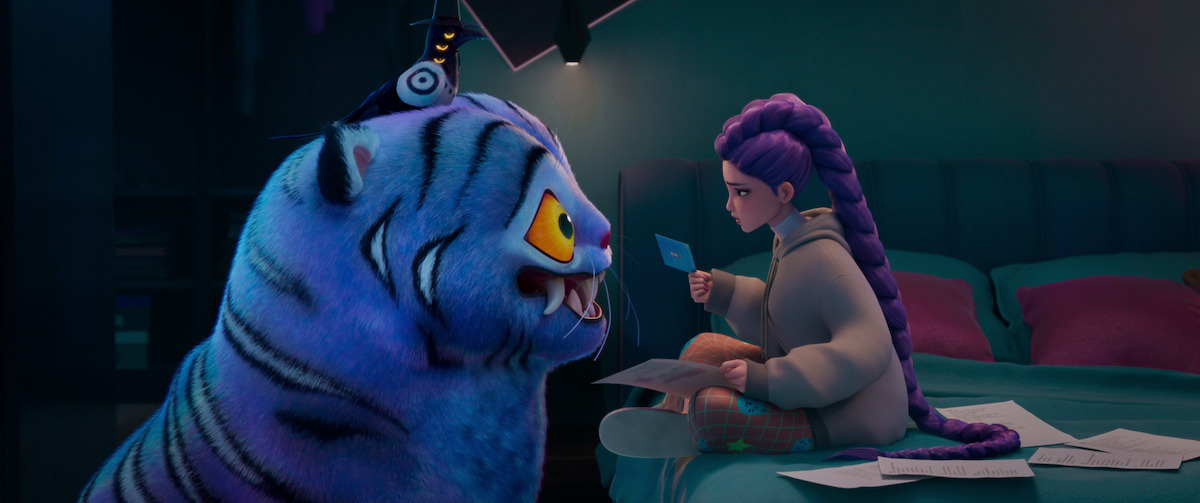
My biggest issue with the movie was how little we saw Celine. For how much of an impact she had on Rumi’s life and how much she contributed to Rumi’s trauma and shame, she barely appears. Her one significant scene comes toward the end, almost as though the writers remembered her at the last minute and slotted her back in. She demonstrates no development or change, and the new friction in her relationship with Rumi is left unresolved by the end.

The film otherwise handles its pacing fairly well, but it does pack a lot into its 100-minute runtime. I almost wonder if KPop Demon Hunters would’ve worked better as a limited series, one that would’ve allowed more space to really develop each of the characters, their backgrounds, and their relationships. We could potentially have gotten more of Mira and Zoey, or even the other Saja Boys, who have such strong NPC energy that they don’t even have real names — only stage names based on their archetype a la Spice Girls, from “Mystery” and “Romance” to “Baby” and… “Abby.” (One guess as to what body part he’s flaunting.) Even Rumi and Jinu would have benefited from a little extra room to grow their relationship, if this early concept art is anything to go by. (You’re telling us we could’ve had Rumi/Jinu aquarium date? We’ll be haunted by this lost potential forever.)
Nonetheless, there’s plenty to love here: a solid story incorporating elements of Korean mythology, strong performances (spoken and sung), incredible animation (as expected from the studio behind Spider-Verse) — and, of course, the music.
Behind the Music: A K-Pop Fan’s Rudimentary Analysis
KPop Demon Hunters owes the explosive success of its soundtrack to a variety of people, notably executive music producer Ian Eisendrath, who does a fantastic job incorporating K-pop’s signature flair into the narrative sensibilities of his musical theater background. The vocalists behind the idols, meanwhile, include multiple industry vets, from Kevin Woo of U-KISS as Mystery Saja to EJAE (composer and producer for Red Velvet, aespa, and NMIXX, among others) as Rumi. In creating the film’s soundtrack, Eisendrath told The Hollywood Reporter, the production team also sought guidance from experienced K-pop pros, such as The Black Label’s Teddy Park. Park, an in-house producer for YG Entertainment, is the hitmaker behind the discographies of K-pop juggernauts BIGBANG, 2NE1, iKON, and BLACKPINK. If there’s anyone who knows how to launch a global pop sensation, it’s him.
“Heels, nails, blade, mascara
— HUNTR/X, How It’s Done
Fit check for my napalm era
Need to beat my face, make it cute and savage
Mirror, mirror on my phone, who’s the baddest? (Us, hello?)”
HUNTR/X’s songs pack a powerful punch, by turns brazenly confident and unabashedly vulnerable. Though the BLACKPINK influence is certainly strong (How It’s Done could’ve easily been one of their title tracks), I immediately saw parallels with K/DA, the virtual K-pop girl group created for League of Legends. (We are, after all, talking about a group that soundtracks their own fight scenes.) Another group that came to mind for me was MAVE:, also made up of virtual idols. Golden feels surprisingly reminiscent of IVE’s I Am (right down to the high notes), while the climactic What It Sounds Like seems to take after Icona Pop’s All Night (also recently covered by IVE, funnily enough).
“Waited so long to break these walls down
— HUNTR/X, Golden
To wake up and feel like me
Put these patterns all in the past now
And finally live like the girl they all see”
Saja Boys, meanwhile, draw a lot of inspiration from various popular boy groups. BTS is probably the most obvious one, but I saw early comparisons to ATEEZ as well, in no small part because ATEEZ is notorious for exhibiting a “demonic” streak of their own. Like ATEEZ and many other boy groups, Saja Boys demonstrate an impressive duality. Their informal debut, Soda Pop, is true song-of-the-summer material. It’s also, if you listen closely, a horrifying foreshadowing of the group’s actual intentions with their fans:
“You’re minе, you already know that
— Saja Boys, Soda Pop
‘Cause I need you to need me
I’m еmpty, you feed me, so refreshing
My little soda pop”
Your Idol, though, was the first song from the soundtrack I heard — largely, I admit, through people making fake ATEEZ covers of it — and it is by far my favorite.
I could probably write a dissertation on the genius of this song in particular. It incorporates a backing choir and Latin phrases that portend an ominous doom, evoking an eerie religious atmosphere. Saja Boys position themselves as saviors even as they lead their fans to their doom. The ATEEZ comparisons are certainly apt (think evil Halazia vibes), but to me, Your Idol most resembles the foreboding choral drama of EXO’s Mama, with a touch of the orchestral sophistication of Kingdom Come by The Boyz. Lyrically, it’s a chilling commentary on the K-pop industry’s cultivation and exploitation of parasocial relationships between fan and idol for profit. Diegetically, it signals Saja Boys’ sinister intentions to steal the souls of their fans — but it also reads equally well as a direct message from Jinu to Rumi. I would not be surprised if (in-universe) he was thinking of her when he wrote this line:
“I’m the only one who loves your sins
— Saja Boys, Your Idol
Feel the way my voice gets underneath your skin”
Besides the original songs, the film features cameos from Strategy by TWICE and Love Me Right by EXO, as well as Love, Maybe from the show Business Proposal. Most noteworthy, though, is TWICE’s version of Takedown, performed by vocalists Jihyo and Jeongyeon and rapper Chaeyoung. It’s a notable departure from the group’s lighter usual fare, but they pull it off well. (If you’ve ever wanted to hear Jeongyeon rap, you’re in for a treat.)
Loved the Film? Read These
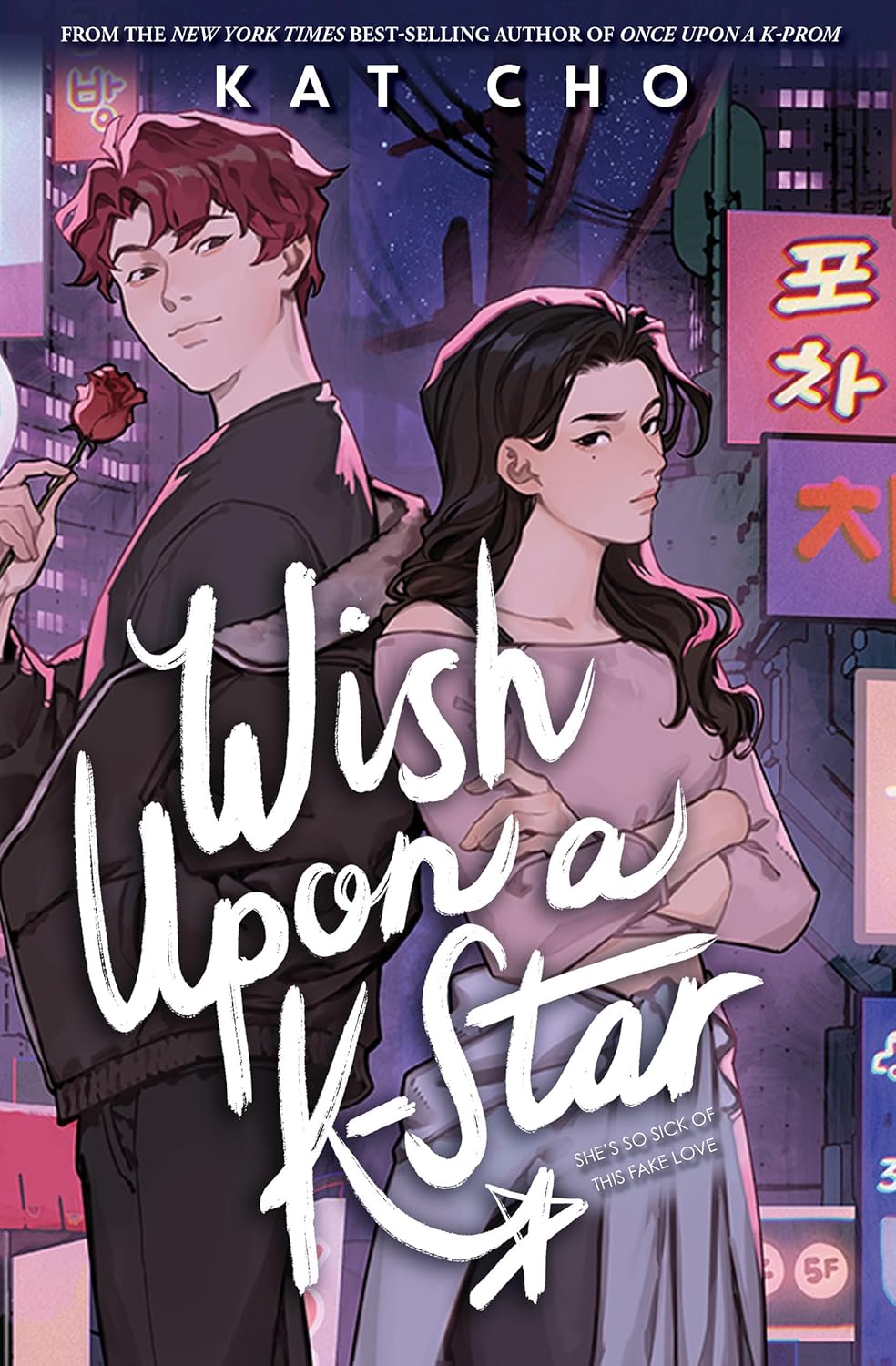
This being Bookstr, I’d be remiss to end this article without some suitable book recs. If you enjoyed KPop Demon Hunters and are also looking for your next read, Barnes and Noble has great selections for K-pop fans, while Sophie Kim’s curated a list of Korean-mythology-inspired novels for Electric Literature that includes her own work, The God and the Gumiho. Although I haven’t read it, Kat Cho’s Wish Upon a K-Star might also help ease your Rumi/Jinu withdrawal — Cho’s even described its male lead as combining the looks of ATEEZ’s Yunho with the personality of his bandmate Wooyoung, a fun bonus for all my fellow ATINY out there.
(Of course, if you’re anything like me, you’ll probably just go straight to AO3.)
KPop Demon Hunters is now streaming on Netflix, with the soundtrack available on all major music platforms. Now, if you’ll excuse me, I’m off to go beg ATEEZ for the Your Idol cover we all deserve.
Click here for our recap of the latest episode of The Amazing Digital Circus.
Stop by our Bookshop to find your next great read.