











For many people currently living in the United States, waking up and reading the news feels like walking into a war zone. The word “attack” is thrown around liberally: there are claims — some real, some imagined — of attacks on the LGBTQ+ community, racial and ethnic communities, religions, American exceptionalism, women, children, capitalism, poverty, and freedom.
It’s exhausting. It’s disheartening. It makes anyone with a shred of compassion or empathy ready to throw in the towel, I know. I feel it, too.
However, I cannot give up — and will not shut up — on this: lawmakers are currently working to deprive children of a public educational experience that measurably benefits all kids, and we need to stop them.
Texas vs. Becerra and Its Discriminatory Implications

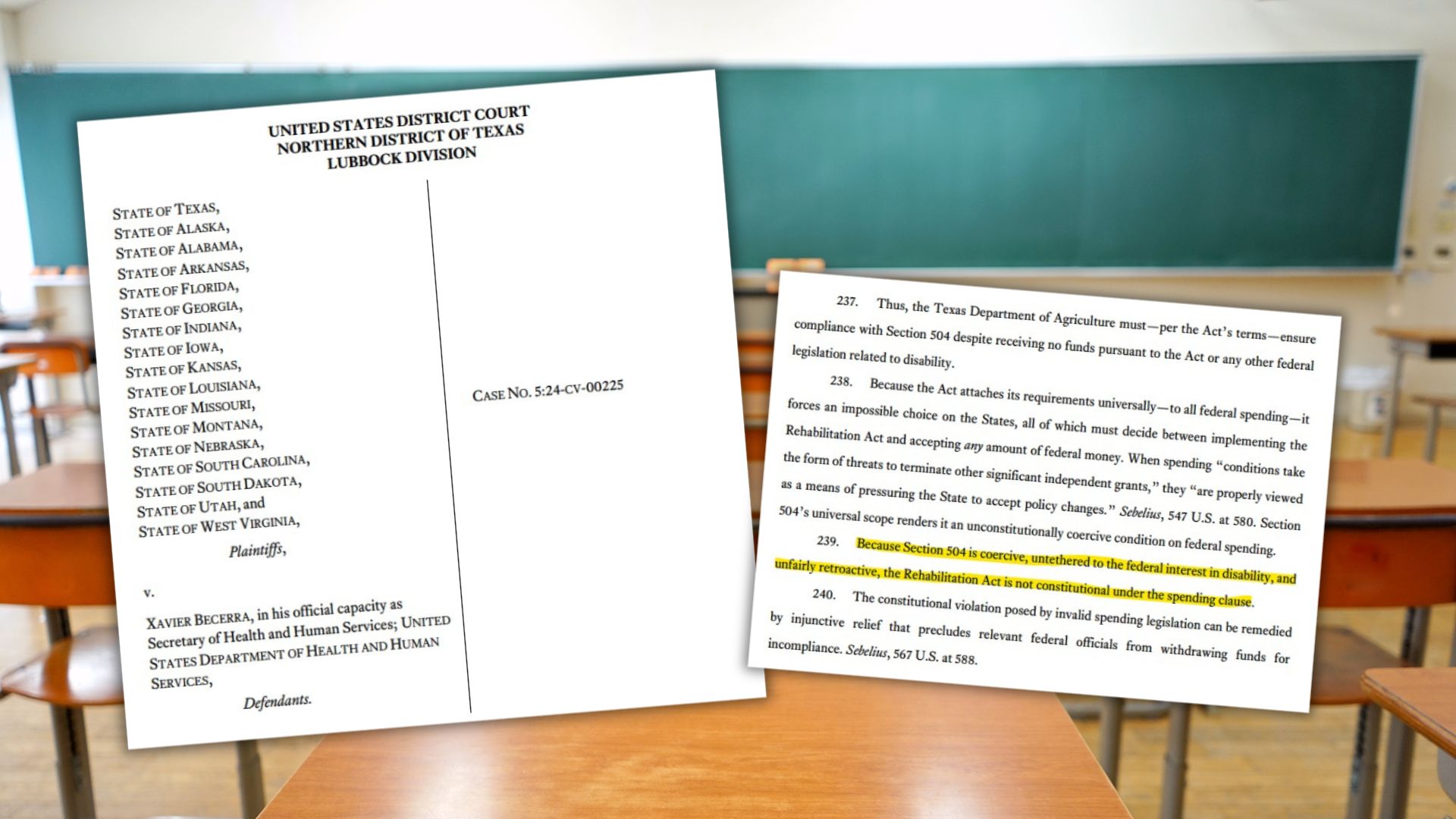
In mid-February of this year, news broke of a U.S. lawsuit filed in late 2024: The state of Texas, along with sixteen other states — including Kansas, Florida, Georgia, and South Carolina — were suing former Secretary of Health and Human Services Xavier Becerra and the Department of HHS. Their goal? The removal of Section 504 of the Rehabilitation Act of 1973, a federal law that codifies the civil rights of people with disabilities to have equal access to federally funded programs, including public schools.
The stated basis of this suit is that, under the Biden administration, 504’s definition of disability was expanded to include gender dysphoria as a means to protect trans youth from education discrimination. However, the suit itself does not call for the removal of this definition, but the complete elimination of Section 504, arguing that the law is “coercive, untethered to the federal interest in disability, and unfairly retroactive” and, therefore, unconstitutional.

Win or lose, this lawsuit opens the door to federal court cases that could lead to the nationwide removal of federal protections for people with disabilities, amongst them the support provided by schools to children and young adults with disabilities, supports that allow them to have an equal opportunity of being educated in publicly funded schools. Some districts, citing budgetary concerns, have already begun limiting open enrollment for students with IEPs (Individualized Education Programs), which ensure that children with disabilities are accommodated for their special needs in the classroom and school environment.
Recently, on an episode of the Fox News channel’s show The Five, political commentator and “comedian” Greg Gutfeld boldly said the quiet part out loud. Fellow panelist Jessica Tarlov pointed out that when she hears Republicans talking about their plans for overhauling the U.S. education system, she doesn’t “hear them talking about making sure disabled kids have access to a public education.”
Jessica: When I hear Republicans out there talking about their plan for education in America, I don't hear them talking about making sure disabled kids have access to a public education.
Greg: Because we're against it.
— Nikki McCann Ramírez (@nikkimcr.bsky.social) March 20, 2025 at 4:12 PM
“Because we’re against it,” Gutfeld quipped, gleefully confirming that the mainline conservative ideology asserts disabled children do not deserve equal rights.
Once Upon a Time, There Was an Inclusive Program…
When my daughter was four, she was formally diagnosed with autism, something that came as little surprise to me and my husband by that time. Neurodivergence ran in my family, and we had noticed early on that our child was not meeting the standardized milestones of development; she was healthy and happy but slower to crawl, walk, and speak than her peers.
There was no fear or disappointment attached to her diagnosis; if anything, it was a relief. She was about to age out of the state-sponsored program we had been utilizing to access early-intervention speech and physical therapy, a program that had facilitated her attendance in a public preschool that offered integrated or inclusive programming — a classroom setting in which children with disabilities learn alongside their nondisabled peers, rather than in segregated classrooms.
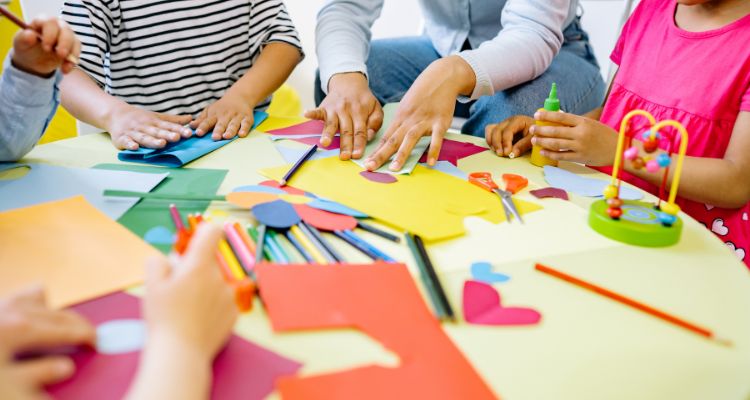
Until the COVID-19 pandemic shut down all public schools, this classroom experience had immensely benefitted my daughter, who was extremely intelligent yet struggled with speech, motor, and social delays. When she reached kindergarten — with her official diagnosis — we had hoped to enroll her in a similar immersive environment at our local public school, something the pandemic threw a wrench into. Instead, like many children during that time, she was isolated for the next year and a half as she attended school virtually.
While I did my best to act as her paraeducator, I could see the losses she was experiencing by being isolated from her peers. Where in-person, integrated programming had offered her ample opportunity to further develop her social skills and language, virtual learning in isolation was not providing those same possibilities. Despite our best efforts as parents, she began backsliding in her language and social development, entering first grade as mostly nonspeaking and entirely unwilling to interact with children her age. Her support needs were greater than they had been in preschool, and we worried that she would no longer be eligible for the inclusive special education programs.

We were lucky. Her public school, which had supported us to the absolute best of its ability during the unprecedented pandemic environment, was equally ready to support her in person. Her special education coordinator — who I am convinced is an angel wearing human skin — set up a plan to help her reacclimate to the classroom and worked patiently to help her readjust to the structure of the school day. Her in-school occupational and speech therapists helped her bridge the gap of her developmental delays, and her paraeducators helped accommodate her needs within the classrooms themselves.

Her fellow students did the rest. She was able to interact with her neurotypical peers, learning social structures and practicing communication by being surrounded by kids who were friendly, welcoming, and just wanted to play with their new friend, even if she was a little quiet and needed help holding her pencil. By the end of first grade, my daughter was speaking confidently and had a gaggle of friends. Now, nearing the end of fourth grade, she is a vivacious, intelligent, outgoing, and unfailingly kind ten-year-old who comfortably interacts with people from all walks of life.
And none of that would have happened if not for Section 504.
Lies Told in the War on Disability
It’s not going to come as a surprise to most readers that we are being lied to. When the opponents of Section 504 and the Individuals with Disabilities Education Act (IDEA) tell us that the resources being devoted to supporting disabled students detract from the education experience, they are lying. When they say it is detrimental to teachers or school administrators, they are lying. When they say that it lowers test scores and distracts nondisabled students from academic achievement, they are lying.
In fact, as multiple studies have shown, inclusive classrooms benefit nearly everyone exposed to them, socially and academically. This is called the “Curb-Cut Effect,” a phenomenon in which creating accessibility and equity for one underserved population ends up having community-wide benefits. In the way that curb-cuts allowed greater accessibility to not only wheelchair users but parents with strollers, bicycle riders, workers using dollies, etc., inclusive education gives nondisabled children a greater opportunity to develop empathy, understand diversity, and empower them to advocate for the needs and rights of others and themselves.
Here’s How to Fight This
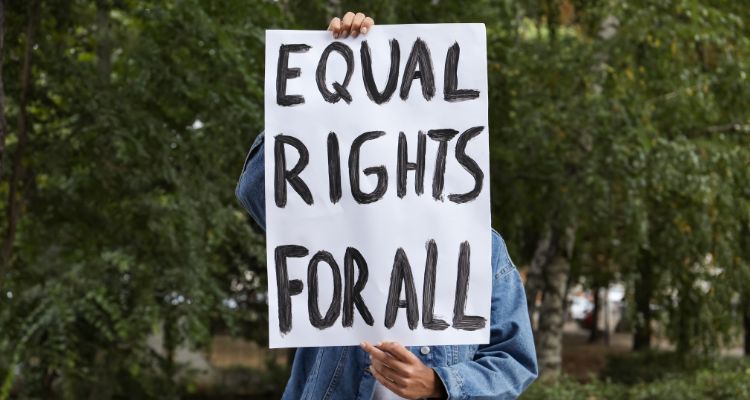
Texas v. Becerra is an embarrassment. It is blatant discrimination framed as the “protection” of children that seeks to deprive the country’s youngest and most vulnerable citizens of their right to equal public education. If you live in one of the states involved in the lawsuit (or even if you don’t), I encourage you to contact your State Attorney General and implore them to stop attacking the rights of disabled children.
I know it’s exhausting. I know it’s disheartening. I’m there, too. But all children in this country should have the right to opportunities that were afforded to my daughter and her classmates. They should have the right to an equitable education in a classroom that is inclusive of all needs, cultures, and backgrounds. And if there is anything in my or your power that can be done to preserve that, we must act now, before it’s too late.
For children’s books that embrace and celebrate inclusion, check out our article about Picture Books on Diversity to Build a Better, More Inclusive World.
To see our recommendations for books by neurodivergent authors and creators, check out our Bookshop bookshelf.