








The last week of April sees the celebration of International Dance Day and National Dance Week, a time to recognize the enduring art of dance and its indelible contributions to global culture. While dance is expressed in a measureless number of styles and genres, every type of dance is tied together with one uniting element: the movement of the body in a way that interprets music, a story, and emotions in ways that no other art form can replicate. In honor of these dancing days, we’ve gathered ten picture books that explore the diversity, artistry, and joy of dancing.
Dance by Matthew Van Fleet
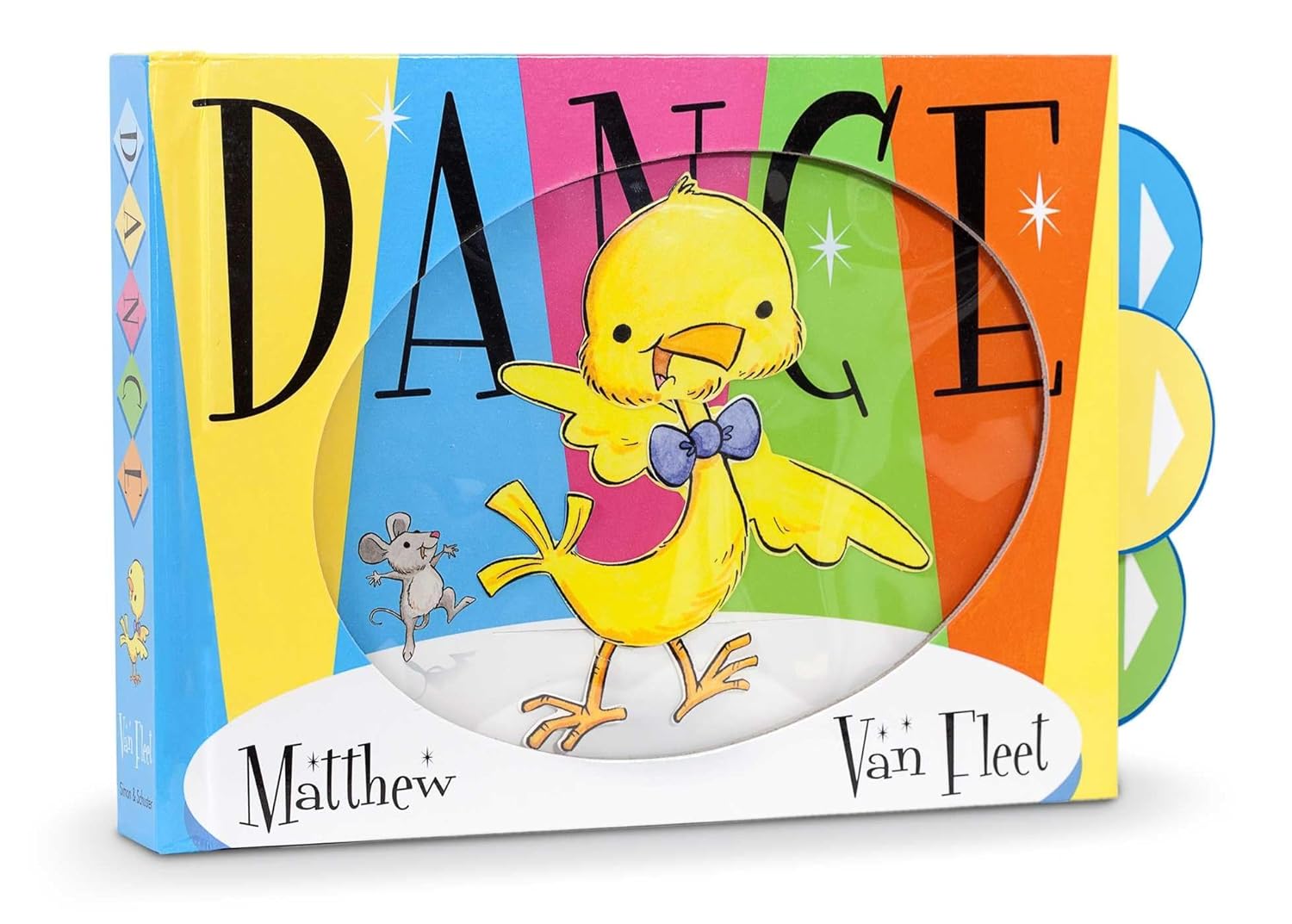
There is no greater proof that dance is an innate part of the human experience than seeing babies and toddlers express themselves through it, and this ultra-sturdy board book is a perfect encouragement to do just that. Van Fleet employs his signature artistry of making vivid and engaging interactive board books with the introduction of Chickie Baby, a newly hatched chick who is more than ready to shake a tailfeather. With the help of some keen animal friends like alligators, bunnies, and hippopotami, Chickie Baby picks up a new move on every page that little readers will be eager to emulate, culminating in a riotous dance party that will set little toes a-tappin’.
Stanley’s Secret by John Sullivan, Illustrated by Zach Manbeck
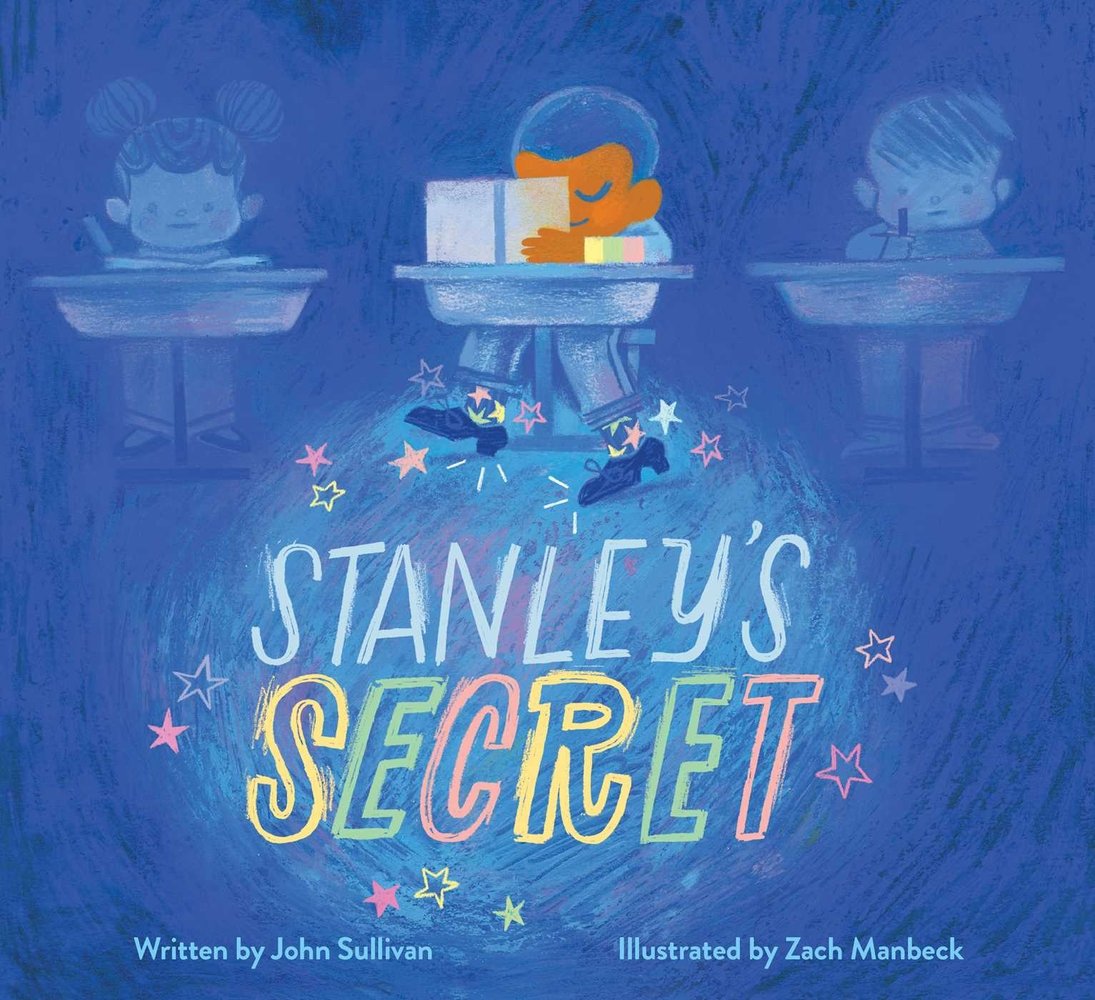
Stanley is a shy kid, so when he engages in his greatest passion — tap dance — he doesn’t like to have an audience. One day, while dancing in an empty room, he is spotted by the school principal, who raves over his talent. She convinces him to join the school talent show, but he is so nervous! Shyness and/or stage fright are challenges that plenty of young dancers deal with, and while no one should be forced into the limelight, Sullivan wisely makes it clear that Stanley’s dream is to find the courage to perform publicly. From there, the book subtly guides the reader to overcome such fears: performing for gradually larger audiences, gaining confidence through practice, and closing one’s eyes to help feel centered. This makes for a wonderfully encouraging story for young performers hoping to overcome bashfulness.
Black Ballerinas: My Journey to Our Legacy by Misty Copeland, Illustrated by Salena Barnes
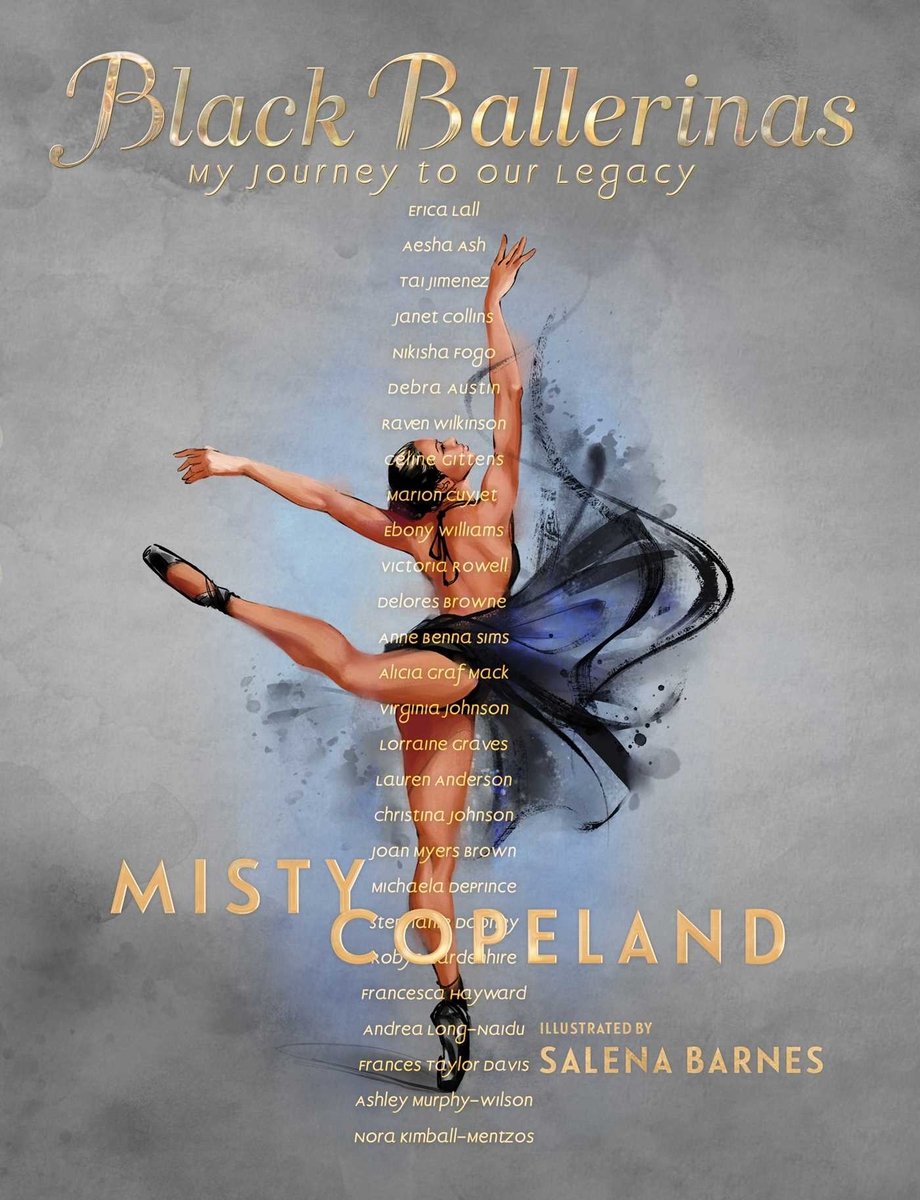
Historically, dancers of color have been marginalized within — if not outright excluded from — the world of ballet. As author and famed ballerina Misty Copeland explains, seeing another Black ballerina changed her understanding of her place in dance. With this in mind, she offers the history, biography, and artistic contributions of twenty-seven other Black ballerinas. Readers can get to know dancers like Marion Cuyjet, Debra Austin, Francesca Hayward, and many more: their struggles, their triumphs, and the legacy they are creating for future ballet dancers. With each dancer being introduced to the reader through a page of biography, a quotation, and a stunning watercolor-inspired portrait of the dancer in action, this is a lovely book that celebrates graceful and gorgeous women who are more than deserving of the spotlight.
Danza!: Amalia Hernández and El Ballet Folklórico de México by Duncan Tonatiuh
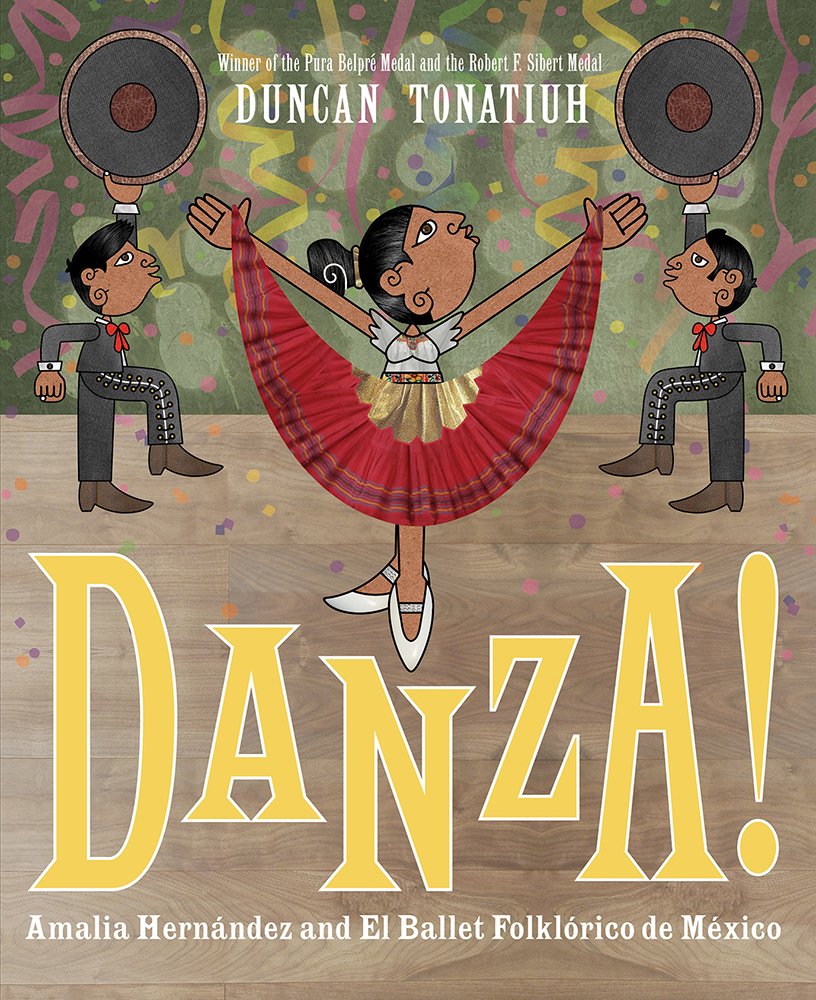
Amalia “Ami” Hernández grew up watching traditional local danzas and fell in love with dance. Her family supported her passion, and she studied ballet and modern dance. Ami had a vision: she wanted to create a dance company that performed traditional danzas and bailes from across her beloved Mexico using live musicians, elaborate costumes, and colorful sets. Hernández often combined the traditional dances with modern styles or music, creating a new style that honored Mexican tradition. Eventually, she opened her own dance school, and her Ballet Folklórico is a world-renowned dance company that performs internationally to this day. Tonatiuh’s signature folk art illustrations shine especially bright here, bringing to life the shapes, colors, and energy of the baile folkórico dancers.
Bhangra Boogie by Hena Khan, Illustrated by Sandhya Prabhat
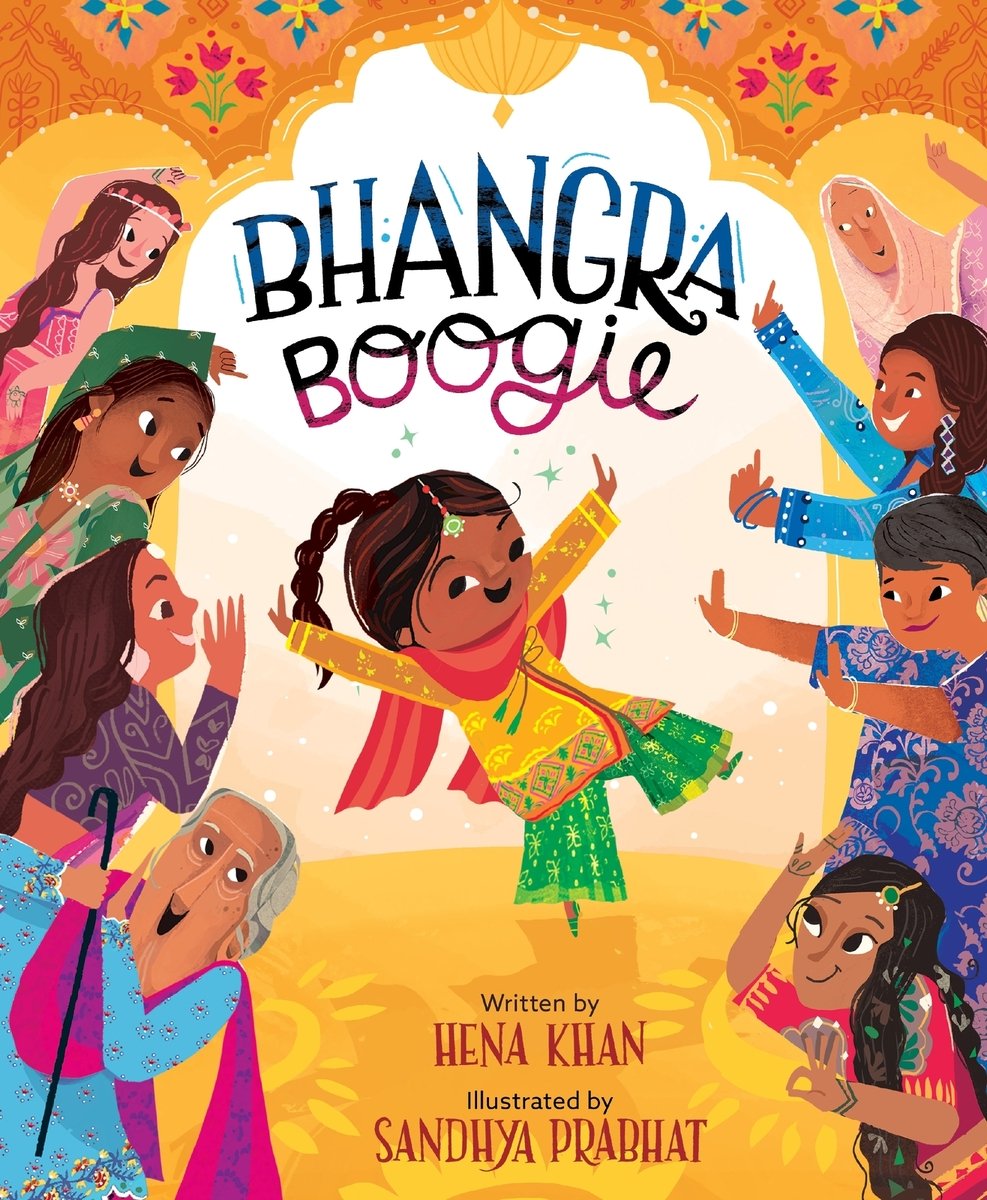
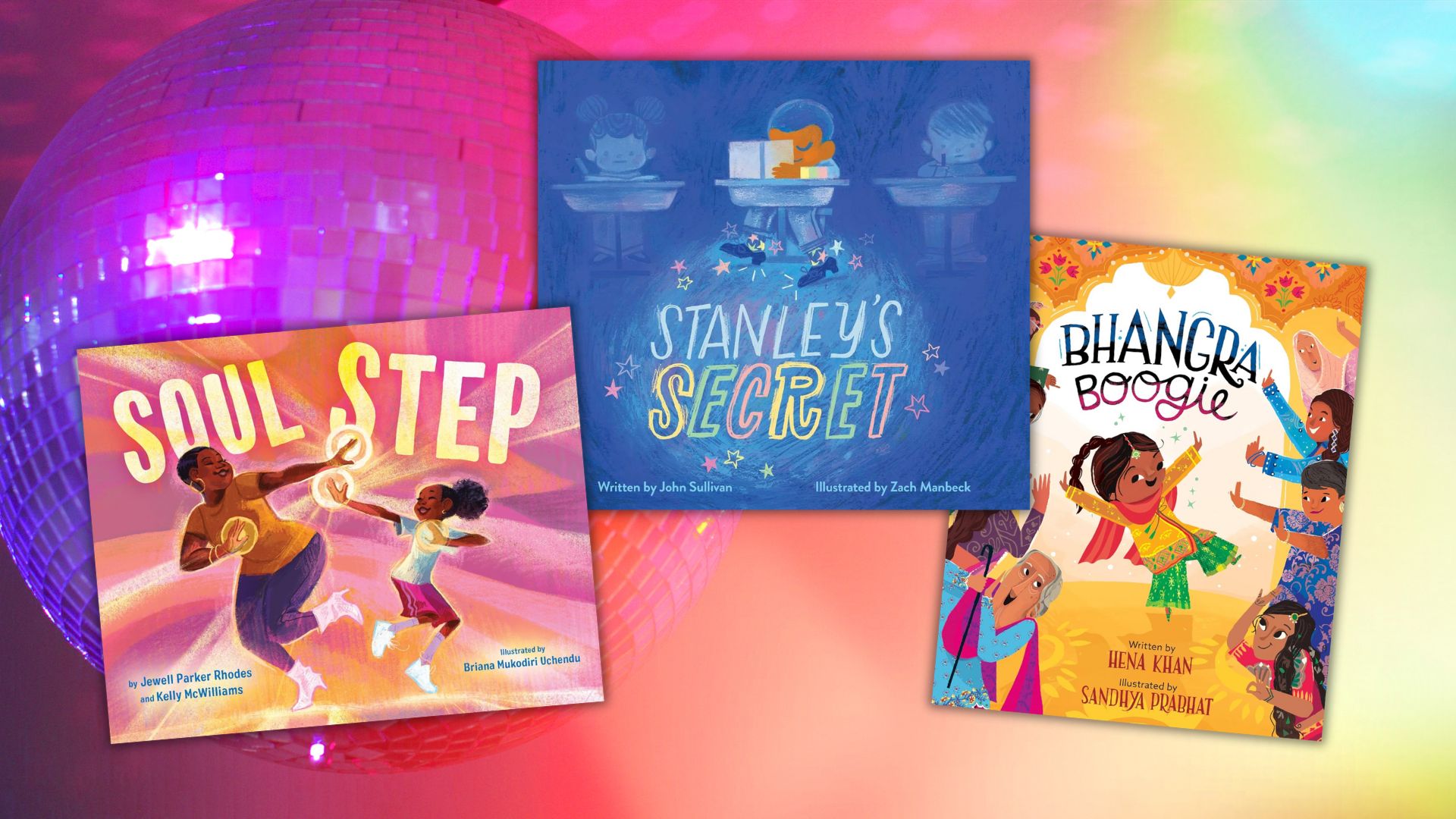
At a family wedding, Talia watches the bhangra dancers with fascination: their graceful twirls, snaps, and leaps are beautiful beyond compare. She longs to join in the dance as her relatives do, but she is far too nervous; her feet turn to “heavy clay pots” whenever she dances in front of others. She seeks solace with her Dadi (grandmother), who reveals a secret to Talia: When she was younger, she was a terrible dancer! However, no matter how silly she might have looked, it was the dancing itself that brought her joy, and she misses it now that she can no longer dance comfortably with her cane. Encouraging Talia to make use of the time we are given to fulfill our dreams, Dadi’s lesson lands with both her granddaughter and the reader: one doesn’t have to be perfect at something to love doing it.
Soul Step by Jewell Parker Rhodes and Kelly McWilliams, Illustrated by Briana Mukodiri Uchendu
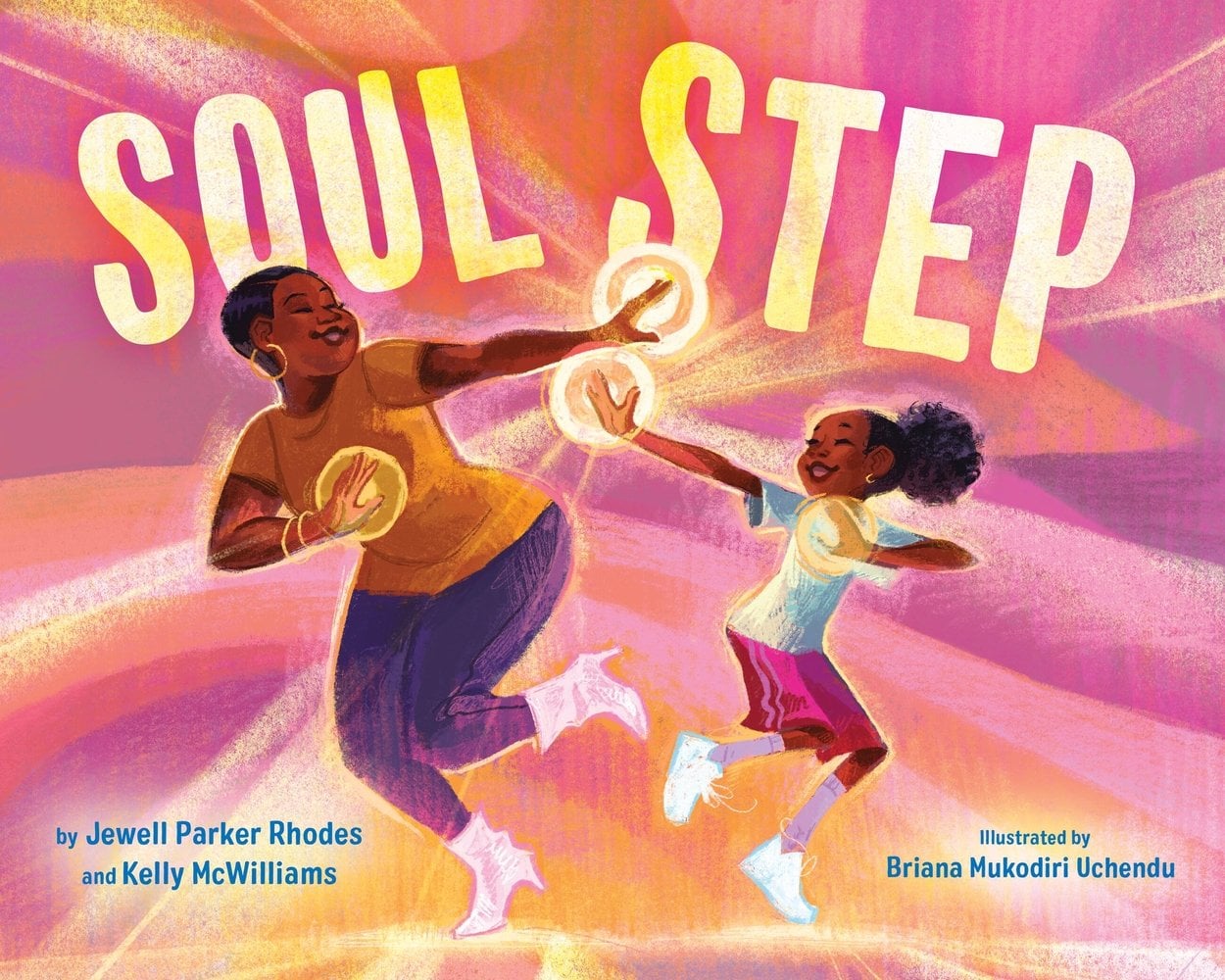
This title opens on a young, unnamed narrator and her mother, two of the only people of color in their suburb. This can lead to upsetting incidents, such as getting stopped twice in one day by police officers asking if they live in the neighborhood. On days like this, Mama puts on her dancing boots and gets to “steppin’,” a dance that incorporates stomps, claps, slides, and snaps. When the narrator asks about this, Mama advises her to go ask some of the Black women in their circle about what step dancing means to them, leading to an exploration of the history, power, and solidarity that step represents. The illustrations and story combine gorgeously to take an impactful look at a dance form rooted in the Black American identity, power, and sisterhood.
Cesaria Feels the Beat by Denise Rosario Adusei, Illustrated by Priscila Soares
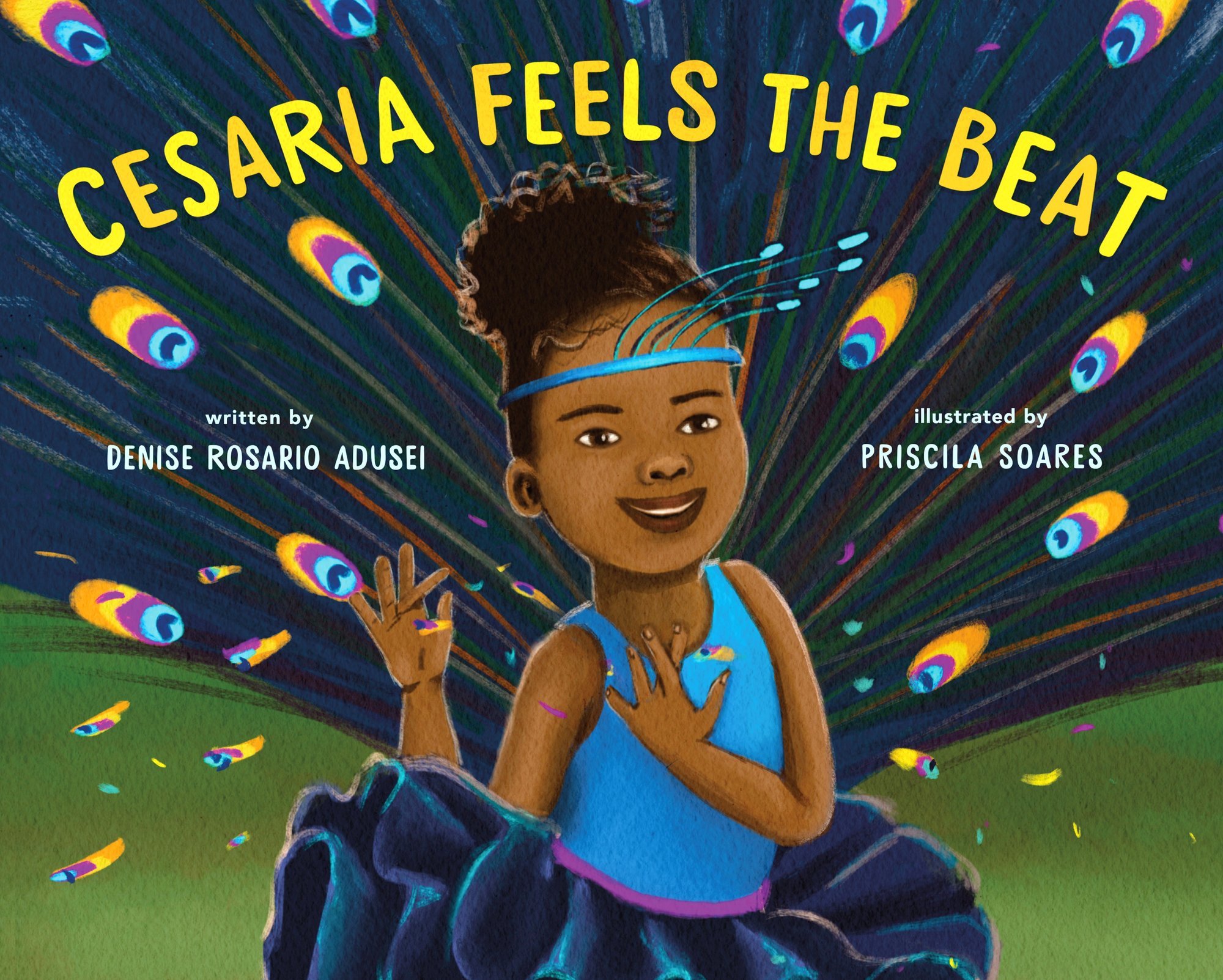
Cesaria is ready for the seaside Carnival dance performance: she has her favorite peacock leotard, headdress, tutu, and no shoes. As Cesaria is Deaf, she feels the rhythm of the music through the soles of her feet, sings the lyrics with her fingertips, and lets the ocean breeze be her melody. However, her dance director insists that she must wear dance sandals like all the other kids. Disheartened, Cesaria takes a moment to connect to the Earth through her bare feet, then dons the shoes. Onstage, she is unable to feel the beat through the sandals and freezes… until a sea breeze and the support of her fellow dancers encourage her to kick off her sandals and dance in the way that is right for her. A moving look at inclusivity and self-advocacy in dance, this title lovingly celebrates the dances of Carnival with fluid art and infectious jubilation.
Jingle Dancer by Cynthia Leitich Smith, Illustrated by Cornelius Van Wright & Ying-Hwa Hu
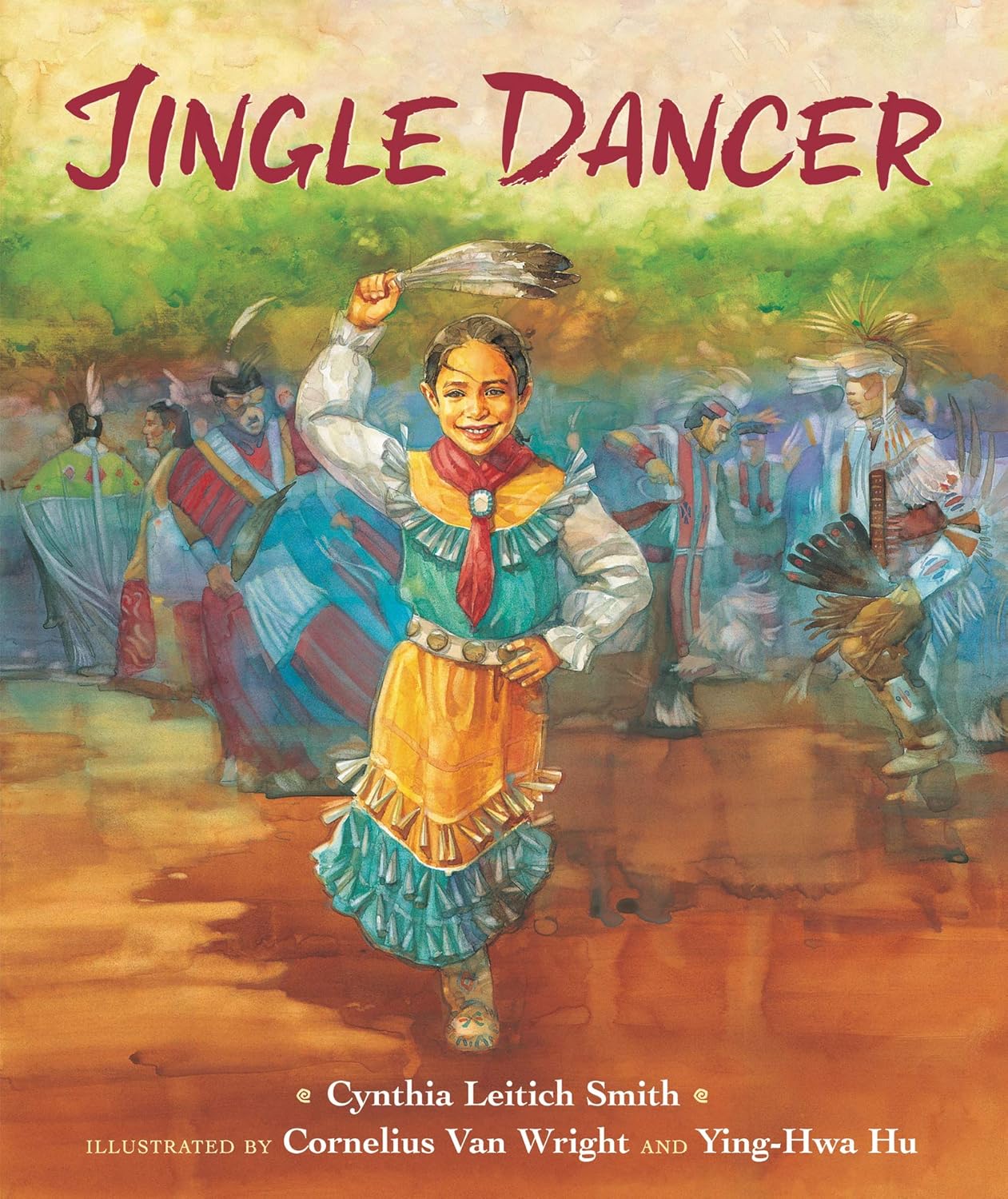
Young Jenna of the Creek Nation in Oklahoma has always loved the tradition of jingle dancing that has been passed down for generations in her family. Jenna’s been practicing her steps over and over, so when her grandmother tells her that she’s ready to perform with the other girls at the next intertribal powwow, she is ecstatic. That is, until she realizes that there won’t be enough time to order the materials to make the four rows of jingles that attach to her dress. Jenna thinks up a way to get the jingles in time, which involves the kindness and generosity of friends and family yet stays true to the signature singing “voice” of each dress. Watercolor illustrations skillfully and artfully detail the color and movement of jingle dance, as well as the warmth and pride of the Indigenous family and community at the center of the story.
Brontorina by James Howe, Illustrated by Randy Cecil
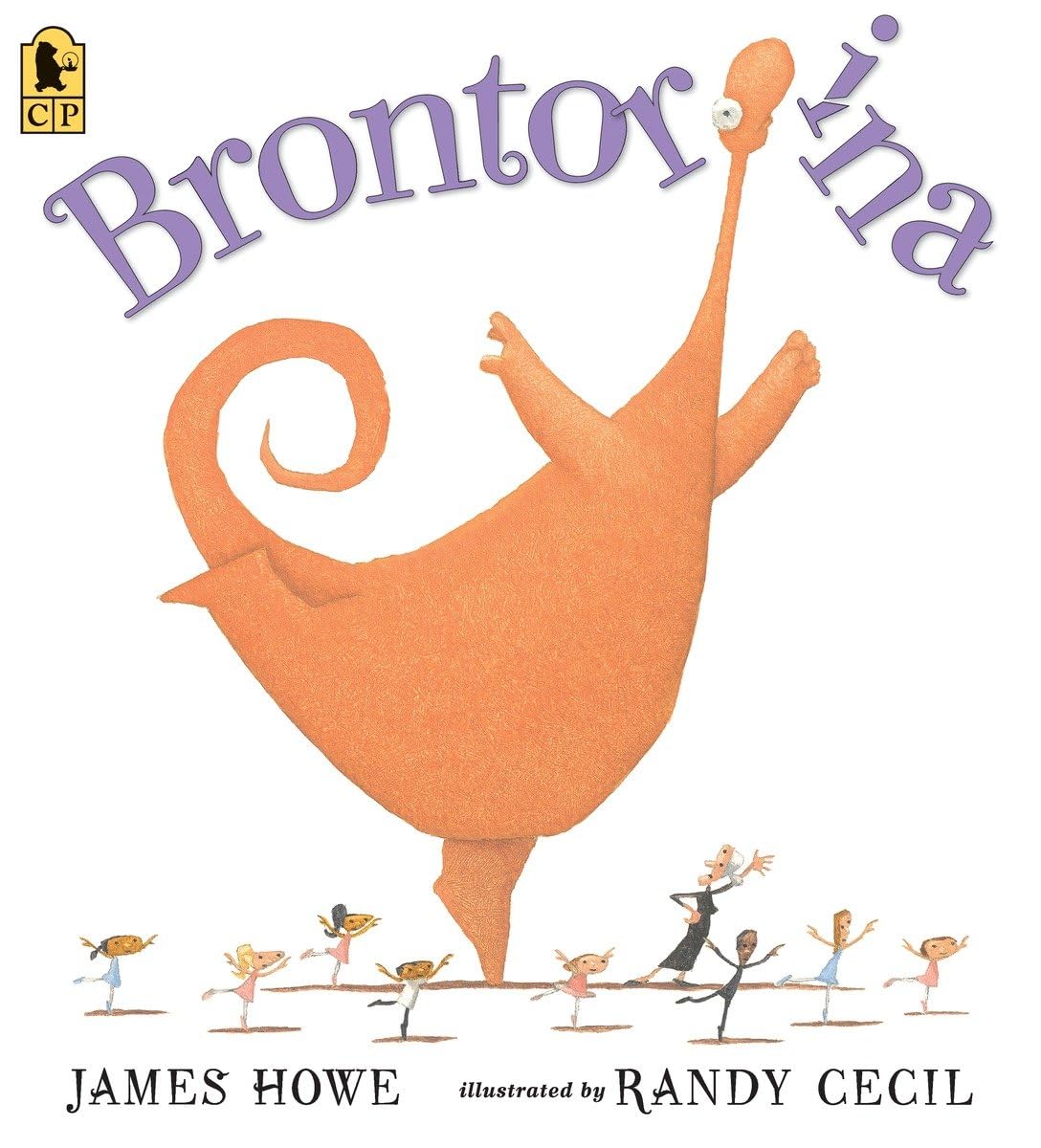
The day that an apatosarus shows up at Madame Lucille’s Dance Academy for Girls and Boys, it causes a bit of a stir. While Madame Lucille has reservations about her new student, she cannot deny that Brontorina has the heart — and the feet — of a dancer. Yet, while Brontorina is an exceptional ballerina, her massive size makes dancing inside the studio a challenge for both her and her classmates. Brontorina is ready to give up her dream, but Madame Lucille and her classmates are not! Recognizing that the problem is not their dinosaur friend but that the Academy facilities are not suited to her, the class embarks on a mission to build a school where everyone can dance. In this surprisingly moving tale, an amusing concept transforms into a beautiful lesson on accessibility that may just bring a dino-sized tear to the eye.
How Do You Dance? by Thyra Heder
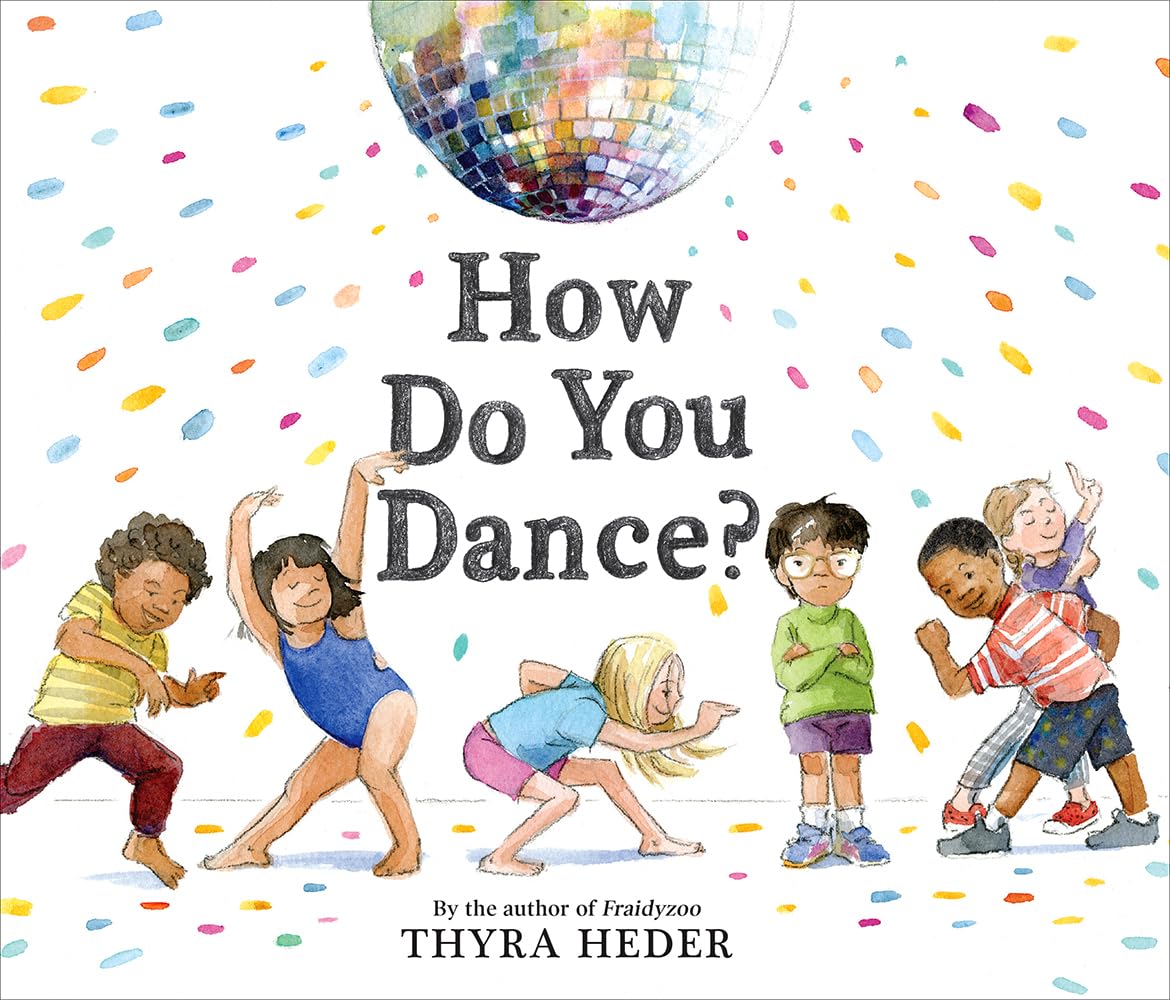
Everyone has a special dance, right? For the diverse cast of characters in this adorably celebratory title, the answer is an emphatic YES… unless you’re the kid in the glasses. While people of all shapes, sizes, ages, genders, and walks of life burst into exuberant dance around the prickly youngster, showing off their signature moves and unique styles, the child merely looks on with solemn face and crossed arms, insisting that they Do. Not. Dance. As the boogie madness reaches an incredible crescendo (disco balls, robots, and dinosaurs are involved), there is nothing that can sway the kid’s firm anti-dance stance… or is there? A marvelously silly yet liberating ode to the pure delights of dancing in whatever way makes the body feel good, this one is sure to get the giggles — and wiggles — out.
We hope that you and your young readers enjoy these books and that they encourage you to do a little dancing of your own. Go on: put on some music, tie on those dancing shoes, and happy reading!
Looking for more books that celebrate the joy of dance with little readers? Check out our article on Books for Ballet-Obsessed Kids.
To see all of our recommendations for mini bookworms, check out our Bookshop bookshelf.