


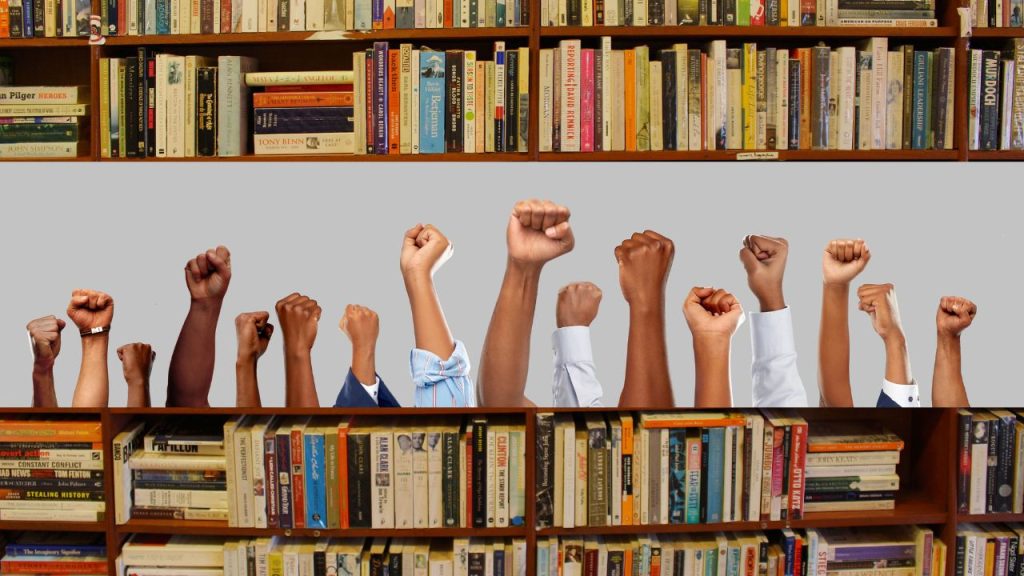








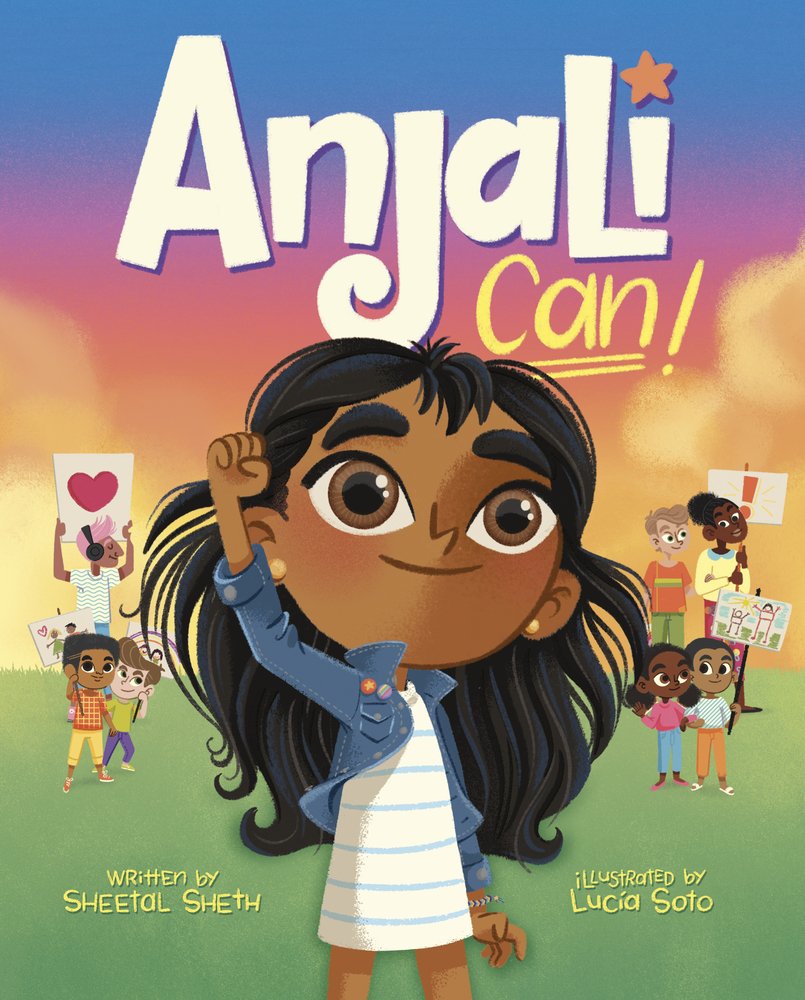
Adults often scoff at the idea of kids in politics or activism, but with contemporary social issues like book bans, school shootings, removal of inclusive programming, and discriminatory laws that target trans kids, there has been a notable rise in youth-led movements, protests, and advocacy in recent years. After all, when adults are making laws that affect children’s lives, shouldn’t they have the right to speak up? In Sheetal Sheth’s new picture book, Anjali Can!, the titular character does just that while learning the hard lesson that using her voice can come with complications. We had a chance to sit down with Sheetal to talk about her book, youth activism, and fighting for the right to read.
About Sheetal Sheth
Sheetal Sheth is an award-winning actress, author, producer, cancer veteran, and activist. She is the author of the USA Today best-selling and award-winning Anjali children’s book series (Penguin Random House), the first picture book series centering on an Indian American hero. Her book, Making Happy, won an IPPY and is an ode to mental health and self-care. Sheetal focuses on highlighting traditionally marginalized communities in all of her work and is a fierce advocate for thoughtful representation.

Sheth began her career at a time when few South Asians were making their living as actors. Despite being told she’d have to change her name to work, her successful career has trail-blazed paths for other women of color across media. She has starred in over 20 feature films and many TV shows and has earned a loyal, international following. She has delivered talks and keynotes at festivals and charity galas and has had op-eds published on CNN, The Daily Beast, Parents.com, and Thrive Global. She is one of the founders of Listen to the KidZ and is an ambassador for the global literacy nonprofit, Room to Read. She served in AmeriCorps and is currently on the board of SAYA and the advisory board of Equality Now.
Thank you so much for joining us, Sheetal! Let’s dive in.
For those readers who missed the first two books in the Anjali series, can you introduce us to Anjali and what’s going on in her life at the start of the new book?
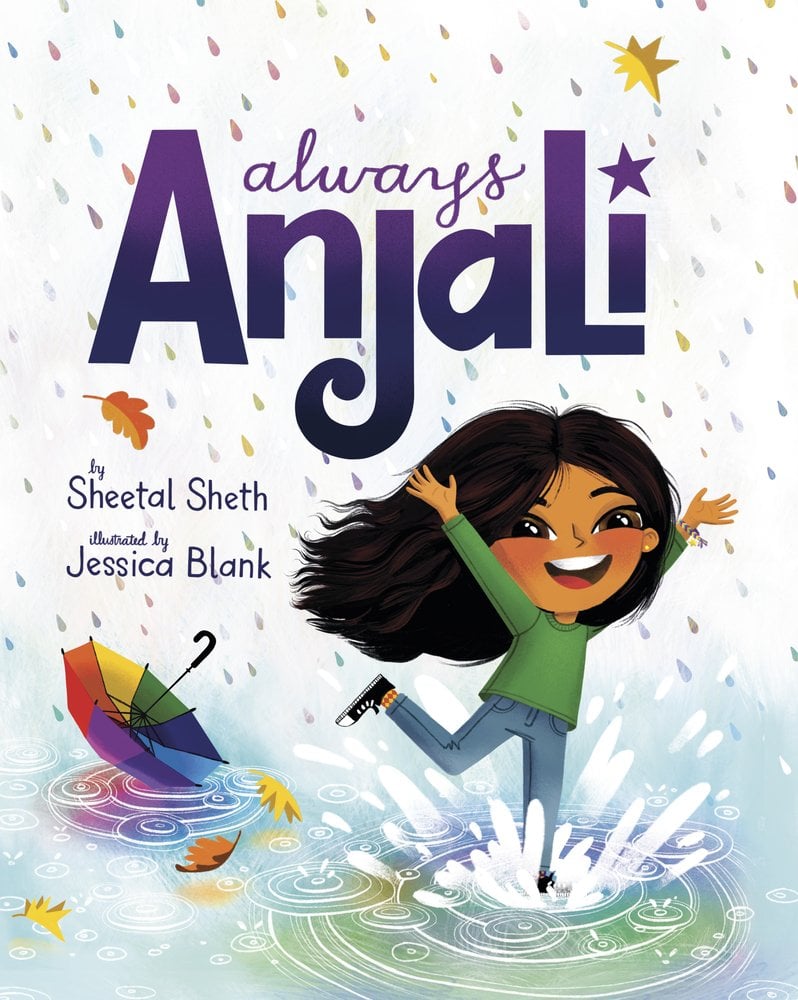
Anjali is a bold, curious, and spirited young girl who’s learning who she is and what she cares about. In the first two books, Always Anjali and Bravo, Anjali!, we see her facing challenges that a lot of kids can relate to — wanting to “fit in,” being teased, not finding her name on a license plate, standing up for herself, and learning what it means to take up space in her own special way.
With Anjali Can!, she’s starting to understand that being brave can present in many different ways — it can mean showing up, even when things feel uncertain or unfair. At the start of this book, Anjali is grappling with a situation where she knows something isn’t right, but she’s unsure of what to do. It’s a moment so many kids experience — that in-between space of “should I say something?” or “can I really make a difference?” And this book is all about what happens when she decides the answer is yes.
Anjali takes the initiative to form a movement and protest to save her local community center but finds that advocacy can be more complicated — and disappointing — than she expected. As the author, why did you want to explore the setbacks of advocacy with young readers, as well as the victories?
I wanted to tell the truth. Anjali Can! is a roadmap of action and emotion. Advocacy is powerful, and kids absolutely have the ability to lead and make change — but it’s not always easy or quick or neat. I think it’s important for our littles to understand that while their voices matter deeply, the process can come with setbacks, frustration, and even moments of doubt.
So often, we highlight the victories — and those are worth celebrating — but real growth happens in the struggle. I wanted littles to see that it’s okay to feel disappointed, to question things, and to feel frustrated. That doesn’t mean the work isn’t worth doing. In fact, that’s often where the most meaningful lessons live.
Anjali learns that doing the right thing doesn’t always get the result you hoped for right away, but showing up, speaking up, and staying true to your values — that’s what advocacy really is. The little things…and how they add up. How we show up for each other. And I hope kids walk away feeling not just inspired but equipped to keep going even when it’s hard.
You are a passionate advocate for several causes, including Equality Now, For The Love of Reading, and South Asian Youth Action (SAYA). How much of your experiences with advocacy did you bring into the story of Anjali Can!?
So much! This book is a love letter to every community organizer, to every activist, and really to anyone who does their part. A lot of my own experiences are woven into Anjali Can! — sometimes directly, sometimes in the spirit of the story. I’ve had moments where I’ve felt hopeful and energized and others where I’ve felt exhausted or discouraged. Whatever I am involved in, I’ve seen firsthand that change takes time, collaboration, and a deep belief in possibility.
With Anjali, I wanted to show what it looks like when a young person finds her voice and realizes that she can be a part of something bigger. But I also wanted to reflect the reality that advocacy isn’t just about big marches or speeches — it’s about the quiet work, the setbacks, and the courage to keep going. That’s the heart of activism. And I’ve seen that spirit in the young people I work with every day.
Like you, Anjali and her family are of South Asian descent. How important was it to you that Anjali’s AAPI culture and heritage were represented in this story without being part of the driving narrative?
It was incredibly important to me. When I was creating Anjali, I wanted to create a character whose identity as a South Asian American girl is fully present, fully celebrated, and fully normalized. Anjali’s culture isn’t something that needs to be explained or defended — it’s just part of who she is, in the same way it is for so many of us. One of the reasons I started writing was because most of the books at that time centered on holidays, cultural traditions, or mythology. You wouldn’t have known it from the books, but we also go to school, and play sports, and instruments, and do all the things all kids do!
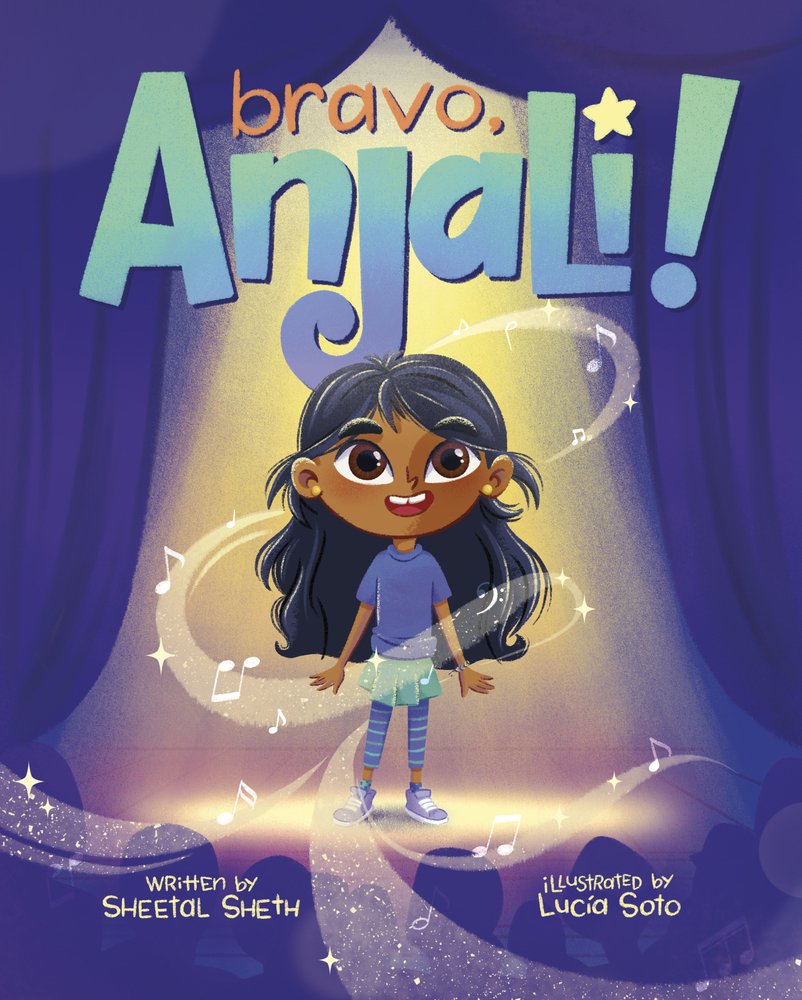
The Anjali books are slices of life stories about everyday things. I don’t take lightly that this is the first picture book series with a South Asian American hero. I also know that seeing the name “Anjali” as the title on the cover of the book is a big deal in itself. So much so that several folks in publishing questioned it. It’s so easy to take these things for granted if you haven’t lived as the ‘other.’
Representation matters, but how so is important. For me, it’s most meaningful when it’s simply embedded in the everyday. That’s how we normalize it. That’s how we expand what’s possible.
As an Asian woman and a literacy advocate, what are your thoughts on the recent movements to ban children’s books from schools and public libraries that offer inclusive representation and encourage children to engage in activism?
Deeply troubling. These efforts disproportionately target works that offer inclusive stories and encourage littles to engage with differing perspectives. Such censorship not only undermines the fundamental right to read but also deprives children of the opportunity to see themselves and others reflected in literature.
The American Library Association’s 2025 report highlights that over 70% of book censorship attempts in the U.S. were initiated by organized groups, often focusing on titles addressing LGBTQ+ themes, race, and social justice. Asian American stories are already the least shared and taught in US schools.
Simply put, books save lives. Stories bridge divides and illuminate shared human experiences. By restricting access to diverse books, we risk silencing vital voices and hindering the development of a more
empathetic society. It’s imperative that we stand against these bans and advocate for the freedom to read, ensuring that all children have the opportunity to explore stories that reflect the vast world around them.
Are there any more adventures for Anjali on the horizon? If so, can you give us a hint about what she might be tackling next?
Absolutely — Anjali’s story is far from over! She’s growing up, and with that comes new questions, new challenges, and new ways she’ll step into her power. I don’t want to give too much away just yet, but let’s just say she’ll be navigating even more of the world around her — friendships, fairness, and finding her voice in unexpected places.
We always love to ask children’s authors about the books that inspired them when they were young readers themselves. Are there any books or series from your childhood that have stuck with you?

Yes! I went through several phases. I loved mythology for a while. I loved Judy Blume for a while. I was a huge Nancy Drew fan. But honestly, I didn’t see many characters who looked like me or had families like mine, and that stuck with me, too. It planted a seed. That’s a big part of why I write the stories I do now. I want kids — especially kids who’ve rarely seen themselves reflected — to feel like they can be the hero, that they belong on every page, in every genre, in every kind of story.
Lastly, in honor of Anjali Can!, what advice would you give to young readers who are interested in becoming involved in advocacy and activism?
You are never too young. It starts with caring about something — whether it’s a cause close to your heart, a problem you want to solve, or a change you believe in. Don’t be afraid to speak up, even if it feels scary or if you think no one will listen. Your voice matters, and sometimes, it’s the quiet voices that make the loudest impact. And you never know who might join you.
Start small. You don’t have to lead a big protest or change the world overnight. Advocacy can be as simple as helping a friend, raising awareness, or just asking questions that challenge the status quo. Be curious, be kind, and never give up on what you believe is right. And remember, setbacks are a part of the journey — just like Anjali, you’ll learn, grow, and keep pushing forward. The world needs your ideas, your energy, and your heart. In the way only you can offer.
A massive thank you to Sheetal for taking the time to speak with us about her book and advocacy! Be sure to find her online at SheetalSheth.com or on Instagram, Facebook, TikTok, and Twitter/X. Lastly, don’t forget to check out Anjali Can! and add it to your family’s TBR list!
Want to read more about authors inspiring youth to use their voices? Check out our exclusive One-on-One interview with the author of Tear This Down, Barbara Dee.
To see all of our recommendations for mini bookworms, check out our Bookshop bookshelf.