
















Trigger Warning: The mention of certain topics in this article may be triggering to some readers, including depictions of death, burial practices, child mortality, and historical funerary rituals. Please exercise personal care when reading.
Vampire tales have sunk their teeth into folklore across Europe for centuries, but few places in time have taken the undead quite as seriously as 17th-century Poland. Long before Bram Stoker penned a single page of Dracula, these villagers were locking down their graves with more than prayers. Long steeped in superstition, early modern Poland worried that death wasn’t always the end. Recently, a freaky archaeological discovery unearthed new evidence of just how deep those fears ran.
What if I told you a child’s grave was turned into a supernatural time capsule with tips on vampire prevention? Some bodies were buried like they might come back… was that because of an ongoing problem they were experiencing, or just fanatical behavior of some kind? Dig in and find out — Poland’s old vampire problem has risen again.
Visual Trigger Warning: The images included in this article contain photographs of exhumed human remains and artifacts of burial rituals, which may be distressing to some viewers. Please engage in self-care as you read this article.
Dead Set on Staying Dead: How Early Poland Feared the Comeback Kid
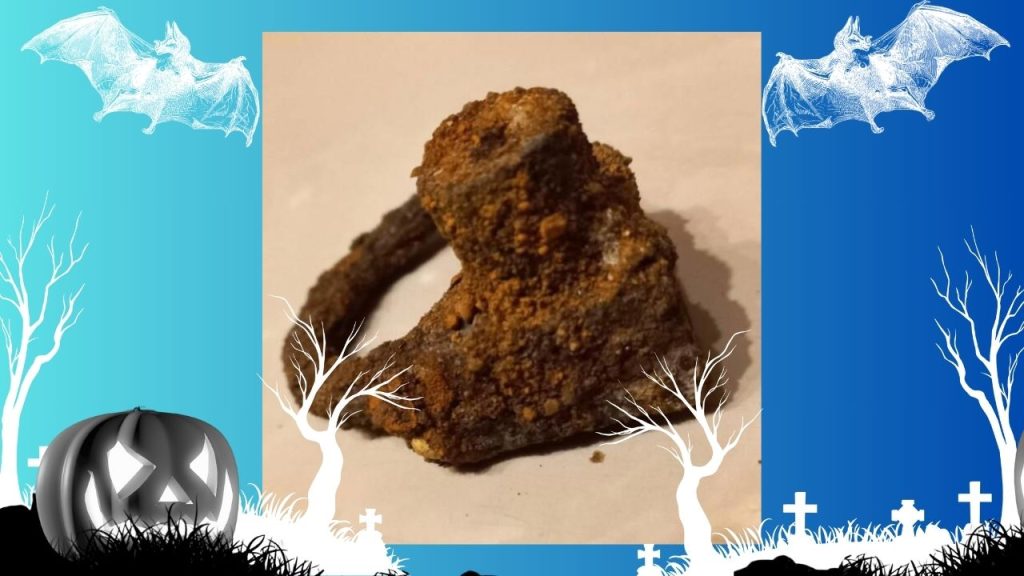
In the village of Pień, Poland, archaeologists unearthed a 17th-century child’s grave that offers a chilling glimpse into historical beliefs about the undead. The child, estimated to be between five and seven years old, was buried face down with an iron padlock attached to their foot — a combination of burial practices believed to prevent the deceased from rising from the grave. In a time where strange or unexpected deaths aroused vampiric suspicion, it’s anyone’s gruesome guess as to the child’s cause of death that led to this extreme measure.
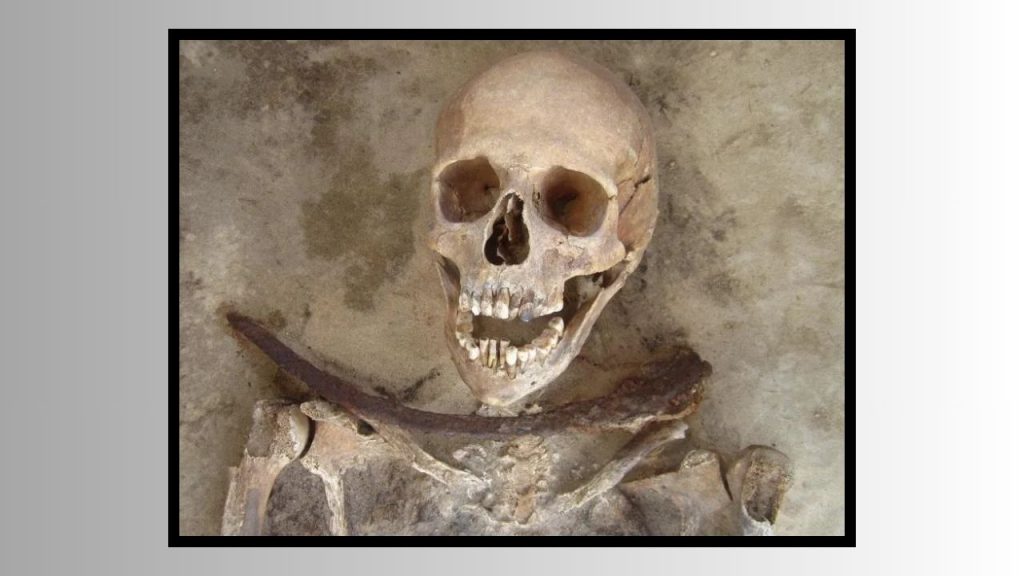
This discovery adds to a growing body(count) of evidence from the same cemetery. Just a few years ago, the remains of a woman were found with a sickle placed across her neck and a padlock on her foot, a symbolically charged, and rather sharp, way of ensuring the dead stayed dead. According to their superstitious beliefs, placing a blade across the throat would decapitate the corpse if it tried to rise, or at the very least, pin it down in the grave. The purpose of the sickle, to “cut off” the soul’s journey back to the world of the living, shows how far these communities were willing to take things just to reap peace of mind — one ill-fated grave at a time.
That particular cemetery itself appears to have been designated for individuals who were marginalized in life and, as these burials suggest, feared in death. These findings identify the intersection of folklore, fear, and funerary customs in early modern Poland. They provide tangible evidence of how communities sought to mitigate the anxieties surrounding death and the supernatural, revealing a cultural landscape where the line between myth and reality was navigated through ritual and burial practices. And hey — if the upiór threat ever was real, at least they had a scythe-shaped contingency plan to make sure no one rose again by turning six feet under into a one-way trip. Talk about cutting your losses!

Six Feet Under Suspicion: 17th Century Edition
The 17th century may not have had Netflix, but it certainly had a horror playlist — played out in graveyards instead of screens. At the heart of the Polish vampire panic was the upiór, a revenant-like creature believed to rise from the dead to feast on the living, spread disease, and torment the village it left behind. While later vampires would wear capes and dodge garlic, the upiór could be someone’s neighbor, uncle, friend, or that mysterious traveler who died under “unnatural” circumstances.
Suspicion fell on those who died suddenly. And if someone wasn’t properly buried, or — worst of all — if they had red cheeks in the coffin… well, that might be a telltale sign that they were faking death and plotting their undead comeback. Folklore was the lifeblood of these fears, and certain religious and legal texts kept the belief system well-preserved (even when they were trying to ban it).
So what kickstarted this panic in Poland? Part of the answer is Martin Del Río’s Disquisitiones Magicae. Published in Latin in 1599, it spread like wildfire across Europe’s learned circles — seminaries, courts, and curious libraries — fueling fears that the devil didn’t just tempt the living but could also rent out corpses for night work. In Poland, a deeply Catholic and superstitious territory, this hefty six-volume tome became theological kindling for the idea that the dead could return with diabolical intent.
Disquisitiones Magicae by Martin Del Río (1599)
Martin Del Rio was a Dutch Jesuit theologian. He received a degree in law from Salamanca in 1574 and, after a short political service in the Spanish Netherlands, he became a Jesuit. He wrote a treatise on witchcraft and demonic forces that first appeared in 1599 and was widely read across Catholic Europe, including Poland. While not vampire-specific, it warned against demonic possession of corpses and spirits that reanimated the dead — ideas that bled directly into upiór lore.

Disquisitiones Magicae (aka Magical Investigations) is basically the 17th-century version of a supernatural FAQ — heavy on the fire and brimstone. Del Río catalogued everything from witches and shapeshifters to demons using reanimated corpses. Meant to be cautionary volumes against magical practices, it ended up reading like a how-to guide for vampire prevention, minus the garlic recipes. This Renaissance go-to manual for moral panic had enough dark flair to make a future Dracula take notes.
When in Doubt, Dig ‘Em Out: Civic Duty and Poland’s Posthumous Blame Game
Not satisfied staying in sermons, superstition crawled into Poland’s civic life. Burial records, court cases, and village archives document actual exhumations of suspected vampires. Some bodies were buried face down, decapitated, or even had bricks placed in their mouths, all to prevent possible postmortem nibbling.
Surely, these were the delusions of isolated fanatics, right? No! Entire communities got involved. The clergy could be called to supervise various macabre proceedings. It was not uncommon for graves to be dug up at the first sign of a mysterious illness, unexplained death, or — heaven forbid — bad crops.
In a time before germ theory and forensic science, the undead offered an all-too-convenient scapegoat. If something went bump in the night (or in the fields), there was always the chance that the dearly departed weren’t quite done with the living yet. And in 17th-century Poland, better staked than sorry was often the prevailing logic.
Scholarly Scares and Sermons: Exploring the Literature That Influenced Poland
Before horror fiction or Halloween specials ever hit the shelves, there were sermons, treatises, and encyclopedic curiosities — all feeding the fear that the dead might not stay buried. Even when people were trying to ban these “pagan” practices, it only seemed to fuel things further by describing them.
In 17th-century Poland, the belief in vampires like the upiór wasn’t just whispered in the dark; it was reinforced by the written word. From Jesuit demonology manuals to theological texts that warned of corpse-possession and diabolical deceptions, the bookshelf became a breeding ground for burial precautions. Here are a few of the frighteningly real sources that helped folklore bleed into policy.
Monumenta Sarmatarum by Szymon Starowolski (1655)
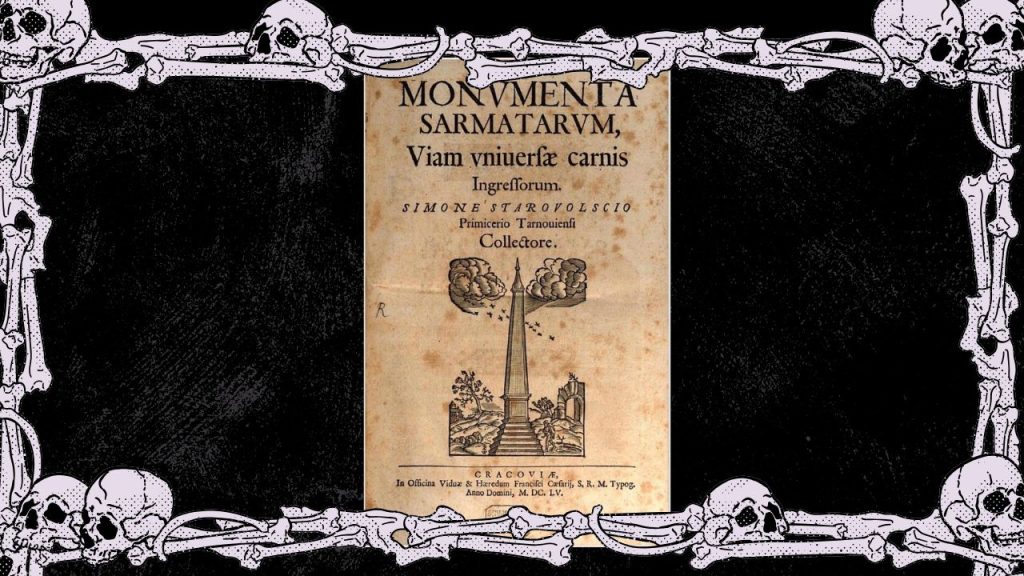
This is a collection of epigraphs and is considered Poland’s first collection of funerary inscriptions, compiled by a Catholic priest and historian who criticized folk customs. He explicitly mentions “beliefs in the dead who feed on the living” in gruesome detail, while calling them “diabolical deceptions” — a clear dig at upiór traditions in rural Poland — and because of this, some historians cite Starowolski’s work as one of the earliest Polish textual references to vampiric-ish beings.
Physica Curiosa by Gaspar Schott (1662)
A 17th-century encyclopedia that straddles the line between medieval superstition and emerging scientific inquiry, this compendium delves into topics ranging from angels and demons to exotic animals and meteorological phenomena. The first few books focus on supernatural subjects, including detailed accounts of demonic possessions and mythical creatures, while the latter six explore natural wonders and curiosities.
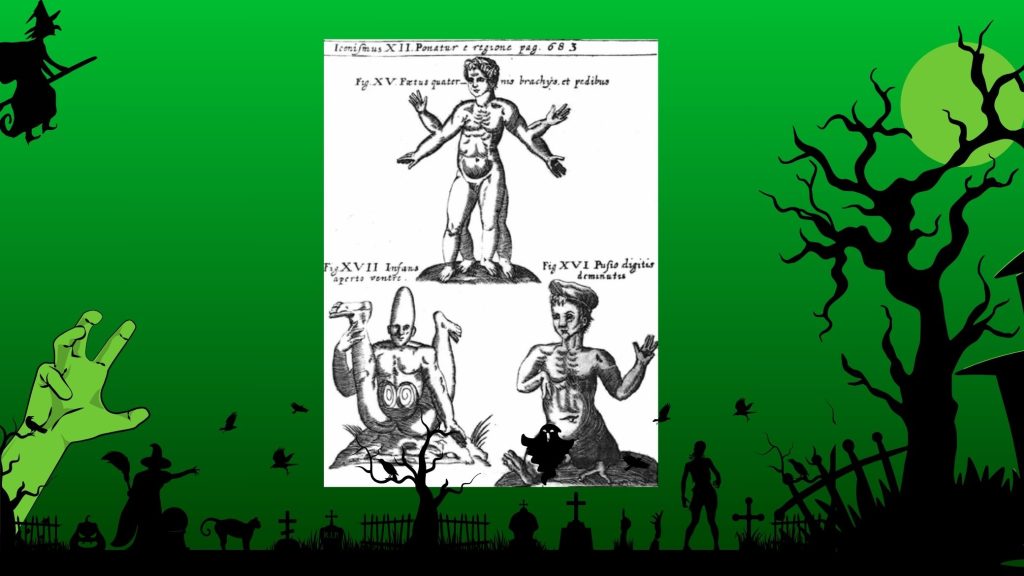
Schott, another Jesuit scholar and student of Athanasius Kircher, compiled this work by incorporating existing literature and reports from travelers and scholars. While some entries perpetuate myths, Schott is seen here at least attempting to distinguish fact from fiction, reflecting the transitional nature of scientific thought going on during his time. Physica Curiosa serves as a window into the 17th-century mindset, capturing the era’s fascination with the mysterious and the marvelous.
It found its way into academic circles, where its mix of superstitious marvels and metaphysics made it a favorite reference in theological debates. In the Polish-Lithuanian Commonwealth, clerics and scholars cited it as both a cautionary catalogue of the supernatural and a springboard for some serious religious discourse.
Ecclesiastical Court Records – Diocese of Kraków and Lublin (16th–17th Centuries)
There are Ecclesiastical court records from the Diocese of Kraków and Lublin from the 16th–17th centuries and onward that contain references to cases involving accusations of vampirism, including documentation on exhumations, corpse mutilation, and trials of the accused. Suspected vampires were often subjected to special burial customs, such as being weighed down, dismembered, or pierced with stakes. If there was a mass livestock death or a sickness spreading in the villages, you can bet they were getting suspicious of the supernatural real quick.
The End (Until Next Time)
Centuries later, the graves may be quiet, but the whispers of Poland’s vampire panic still echo through the dirt — and the footnotes. What began as local superstition bled into ritual, record, and reason, leaving behind a fascinating paper trail of padlocks, sickles, and fear made flesh. While we may not lose sleep over red cheeks in a coffin today, these discoveries remind us that the line between folklore and fact was once as thin as black burial shroud lace. And if nothing else, 17th-century Poland proved that when it comes to preparing for the afterlife, it’s best to have one foot in the grave (padlocked).
Meanwhile, check out how ancient Peruvian priests were doing drugs by reading my article: High Society: Ancient Peru’s Psychedelic Secrets Unearthed.
Keep up the vampire vibe by browsing our bookshelf for more books to sink your teeth into!