








Trigger warning: This article discusses slavery, abuse, violence, racism, sexual assault, alcoholism, and other distressing subjects. Please exercise care while reading.
For Black Americans in the antebellum era, being born free in the North did not guarantee one’s freedom or safety. Few could attest to this more strongly than Solomon Northup, author of Twelve Years a Slave. The memoir, which chronicles Northup’s time in bondage after being kidnapped and sold to slaveholders, provides a haunting, unflinchingly detailed window into the cruelty of slavery. This week on Bookstr Trivia, we’re getting to know the man whose story of survival inspired an Oscar-winning film.
The Early Life of Solomon Northup
Solomon Northup was born July 10, 1808 in Minerva, New York. His father, Mintus, had been previously enslaved in Rhode Island before moving to New York with his enslaver. Mintus became a free man upon his enslaver’s death, as his last will and testament had dictated, and married Northup’s mother, a mixed-race free woman. They had two children, Solomon and his older brother, Joseph.

Mintus worked on several farms in New York until his death in 1829. “[Respected] for his industry and integrity,” Mintus was able to purchase land of his own, which allowed him to vote in elections. He was also able to provide Solomon and Joseph with a quality education, where the two boys were taught to read and write.
“[My father] was accustomed to speak to us of his early life; and although at all times cherishing the warmest emotions of kindness, and even of affection towards the family, in whose house he had been a bondsman, he nevertheless comprehended the system of Slavery, and dwelt with sorrow on the degradation of his race. He endeavored to imbue our minds with sentiments of morality, and to teach us to place our trust and confidence in Him who regards the humblest as well as the highest of his creatures.”
–Solomon Northup, Twelve Years a Slave, Chapter I
Young Solomon spent much of his time helping his father with farm work, reading, or playing the violin (a passion that would play an unfortunate role in his eventual kidnapping). In 1829, he married his neighbor, Anne Hampton. They lived in the town of Kingsbury for a time, Northup working as a laborer and musician, and Anne as a cook, before moving to Saratoga Springs in 1834. The couple had three children: Elizabeth, Margaret, and Alonzo.
“[Now] I had reached a turning point in my existence—reached the threshold of unutterable wrong, and sorrow, and despair. Now had I approached within the shadow of the cloud, into the thick darkness whereof I was soon to disappear, thenceforward to be hidden from the eyes of all my kindred, and shut out from the sweet light of liberty, for many a weary year.”
–Solomon Northup, Twelve Years a Slave, Chapter I
Free No More
In March 1841, two White men, introducing themselves as Merrill Brown and Abram Hamilton, approached Northup with a job offer. They claimed to be from a local circus company and asked Northup if he would be willing to accompany them as a fiddle player. Northup agreed, not realizing he had been tricked.

While traveling with the two men, Northup fell ill. Delirious, he was taken to what he was told was a doctor. When he regained his senses, however, he was in chains. His freedom papers had been stolen, and when he tried to protest his status, his captors beat him. Northup had been taken to the Williams Slave Pen in Washington, D.C., where he would remain for around two weeks before being shipped off to New Orleans, and from there, sold.
“So we passed, hand-cuffed and in silence, through the streets of Washington through the Capital of a nation, whose theory of government, we are told, rests on the foundation of man’s inalienable right to life, LIBERTY, and the pursuit of happiness! Hail! Columbia, happy land, indeed!”
–Solomon Northup, Twelve Years a Slave, Chapter IV
Life in Captivity
Over the next 12 years, Northup — sold under the name Platt — would be forced to labor under various slaveholders, some crueler than others. His first enslaver, William Prince Ford, was the most benevolent. Northup described him as a “kind, noble, candid Christian man… blinded [to] the inherent wrong at the bottom of the system of Slavery” by his upbringing. Although he would win Ford’s approval for his hard work and ingenuity, Northup’s good fortune would not last long. Ford’s financial troubles forced him to sell Northup to carpenter John Tibeats — “the opposite of Ford in every way.”

Northup suffered greatly under the short-tempered, abusive Tibeats. After an early argument between them turned violent, Tibeats tied a noose to Northup’s neck and hung him from a tree, where Northup would remain for hours before finally being cut loose. His circumstances would only worsen when Tibeats sold him to Edwin Epps, the plantation owner under whom Northup would labor for the better part of the decade. Though Northup lacked the dexterity for fieldwork, Epps found value in his skills as a carpenter and musician.

Initially, Epps drank heavily, often lashing those enslaved on his plantation “for the pleasure of hearing them screech and scream” or forcing them to dance for his entertainment. In later years, Epps would sober up, becoming more reserved and self-controlled but no less cruel. On one occasion, Epps forced Northup to lash one of his fellow laborers, a young woman named Patsey, for visiting a neighboring plantation. Patsey’s plight as the subject of Epps’ sexual obsession and his wife’s jealousy made a particularly strong impression on Northup.
Free at Last
Northup’s luck finally turned in summer 1852, when White carpenter Samuel Bass arrived from Canada to work for Epps. Bass, a staunch opponent of slavery, wrote a letter to two shopkeeper friends of Northup’s back in New York, William Perry and Cephas Parker, explaining the situation. Perry and Parker informed Anne and Northup’s attorney, Henry Bliss Northup. Henry Northup, a relative of the man who had enslaved Northup’s father, obtained permission from the governor of New York to retrieve Northup. On January 3, 1853, Northup secured his freedom from an enraged Epps. He reunited with his family two weeks later.

With his lawyer’s help, Northup brought the slave trader who had sold him to trial. The trader, James Birch, claimed Northup had voluntarily sold himself into slavery—an argument Northup, unfortunately, could not dispute. Racist legislation prohibited him from testifying in Washington, D.C.; Louisiana law, meanwhile, dictated that “no man can be punished there for having sold Solomon into slavery wrongfully, because more than two years had elapsed since he was [sold.]” He and Henry Northup brought their case to New York, where the original kidnappers had been found and charged, but the case was ultimately dropped after two years of appeals. The men who had stolen 12 years of Northup’s life would, as had so many others, evade justice.
Northup, though, would not be deterred in his cause. He joined the abolitionist movement, traveling the continent lecturing against slavery. Though records of his later years are sparse to nonexistent, scholars generally believe he died in 1864.
Twelve Years a Slave
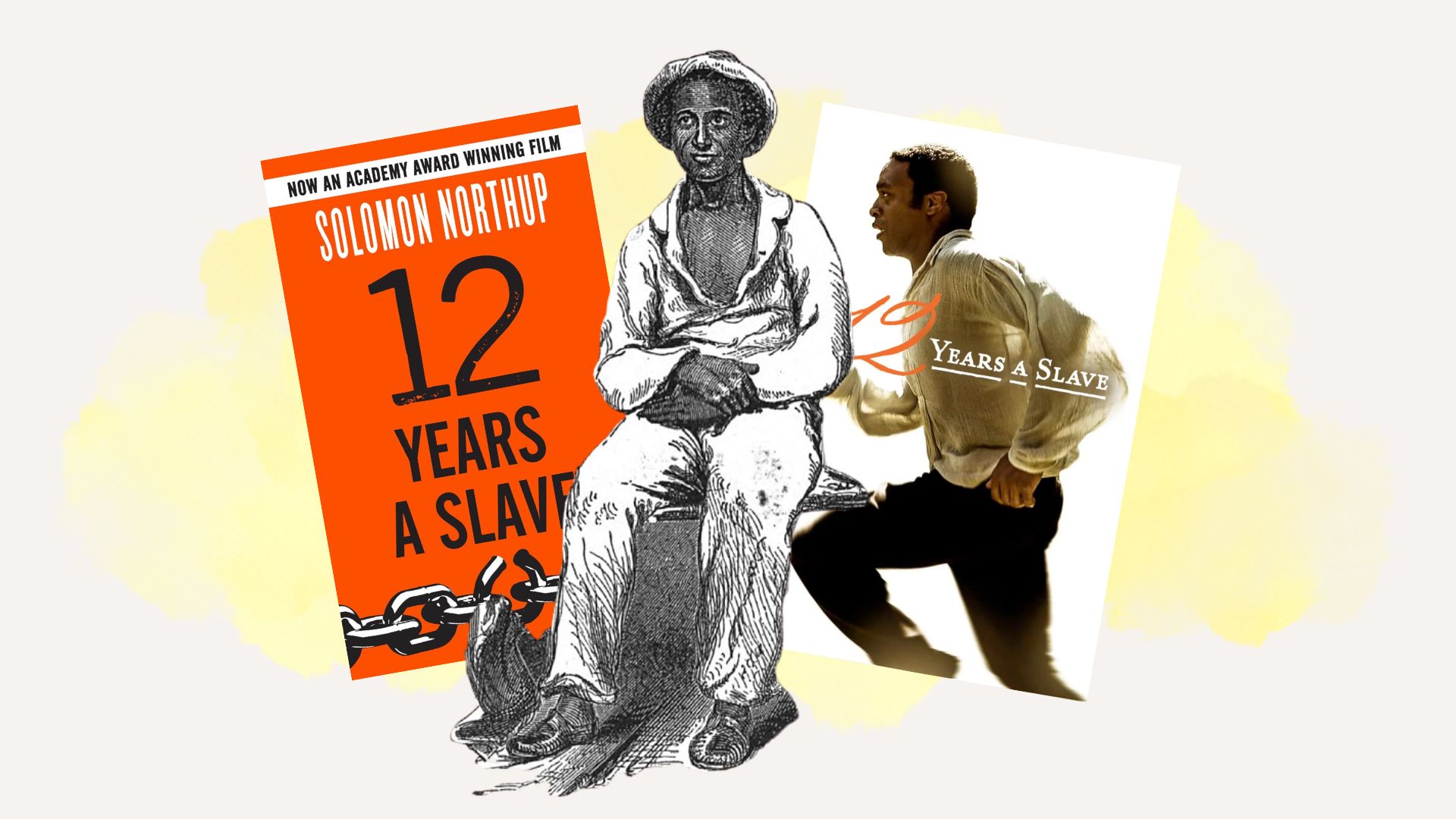
Following his release, Northup worked with New York lawyer and legislator David Wilson to write a memoir of his experiences. The result was Twelve Years a Slave, published a mere few months after his rescue. Featuring detailed recollections of the people he encountered and the suffering he and others like him endured, Northup’s memoir was an instant hit. It sold 17,000 copies in just four months and almost 30,000 total by 1855.
Within his narrative, Northup lays bare the brutality of chattel slavery in the US. From the violent and often nonsensical whims of slaveholders, to the physical, emotional, and sexual abuse faced by enslaved women, to the devastating and all too common separation of mothers from children, Northup bore witness to it all. His story, reported on in the New York Times, was one of many that influenced Harriet Beecher Stowe’s anti-slavery novel, Uncle Tom’s Cabin. Twelve Years a Slave was even dedicated to Stowe, advertised as “another Key to Uncle Tom’s Cabin.”

Northup was not the first to document his time in slavery. Scholars have recorded around 100 American slave narratives published between 1750 and 1865, with more published following the Civil War and emancipation. In 1789, Olaudah Equiano published The Interesting Narrative of the Life of Olaudah Equiano, widely considered the first book-length autobiography of a formerly enslaved person. The Life of William Grimes followed in 1825, written and sold so its author could buy his freedom from his enslaver. Other notable slave narratives include Narrative of the Life of Frederick Douglass (1845) and Incidents in the Life of a Slave Girl by Harriet Jacobs (1861).
“If it were not for the stripes on my back which were made while I was a slave, I would in my will, leave my skin a legacy to the government, desiring that it might be taken off and made into parchment, and then bind the constitution of glorious happy and free America.”
–William Grimes, The Life of William Grimes
Many have called attention to the measured approach Northup takes when describing his experiences, noting that he portrays not only the cruelty he endured but the kindness he was shown. This differentiated Northup’s tale from those of other formerly enslaved authors, many of whom were fugitives justifying their escapes in order to draw sympathy in the face of potential prosecution. These writers also often worked with White collaborators who may have exaggerated or embellished details to push their own abolitionist agendas.
David Fiske, co-author of Solomon Northup: The Complete Story of the Author of Twelve Years a Slave, observes that this more even-keeled approach, combined with an approachable delivery (Frederick Douglass’ Paper describes his “plain and candid language [intermingled] with flashes of genuine wit), seems to have made audiences more receptive to Northup’s anti-slavery lectures:
“His unaffected simplicity, directness, and gentlemanly bearing impressed us far more than many fervid appeals to which we have listened.”
–article from The Vermont Tribune, reprinted in Frederick Douglass’ Paper, March 3, 1854
Dr. Sarah Churchwell, meanwhile, highlights this quote in a 2014 article for The Guardian, in which Northup astutely points out that slavery dehumanizes the enslavers as much as those enslaved:
“The existence of Slavery in its most cruel form among them, has a tendency to brutalize the humane and finer feelings of their nature. Daily witnesses of human suffering—listening to the agonizing screeches of the slave—beholding him writhing beneath the merciless lash—bitten and torn by dogs—dying without attention, and buried without shroud or coffin—it cannot otherwise be expected, than that they should become brutified and reckless of human life… It is not the fault of the slaveholder that he is cruel, so much as it is the fault of the system under which he lives. He cannot withstand the influence of habit and associations that surround him. Taught from earliest childhood, by all that he sees and hears, that the rod is for the slave’s back, he will not be apt to change his opinions in maturer years.”
–Solomon Northup, Twelve Years a Slave, Chapter XIV
Northup’s story was adapted into film at least twice, first for PBS in 1984 as Solomon Northup’s Odyssey. More widespread fame arrived with the 2013 film adaptation, directed by Steve McQueen and starring Chiwetel Ejiofor as Northup, Michael Fassbender as Epps, Brad Pitt as Bass, and Lupita Nyong’o as Patsey. The film garnered numerous accolades, including a Best Supporting Actress Oscar for Nyong’o and an Oscar for Best Picture. Though its success largely reflects Hollywood’s ongoing obsession with Black trauma, it generated renewed interest in Northup’s memoir.

Further Reading
Twelve Years a Slave, edited by Dr. Sue Eakin and Dr. Joseph Logsdon
Twelve Years a Slave is a public domain work, available online through the University of North Carolina’s Documenting the American South project. Dr. Sue Eakin and Dr. Joseph Logsdon published an annotated version in 1968, which corroborates and contextualizes Northup’s story through extensive research. Actor Louis Gossett, Jr. narrates the audiobook, released as a companion to the 2013 film.

Solomon Northup: The Complete Story of the Author of Twelve Years a Slave by David Fiske, Clifford W. Brown, and Rachel Seligman
Published around the same time as the movie’s release (and consulted in its manuscript form by the filmmakers), this extensive biography is the most comprehensive account of Northup’s life to date. Like Eakin’s work, it fills in some of the gaps in Northup’s original narrative with information from historical records and accounts. The authors’ efforts to uncover the lost elements of Northup’s story include conversations with some of his own descendants.

Northup may very well have lived to witness the Emancipation Proclamation, Lincoln’s 1863 decree liberating enslaved people in the Confederacy. Slavery itself would not be formally abolished, however, for another two years, with the 1865 ratification of the 13th Amendment. Even still, involuntary servitude remains legal as punishment for a crime, a loophole through which the specter of slavery continues to haunt the US.
As we commemorate the extraordinary life of Solomon Northup, we can honor his legacy by continuing to strive for a world where everyone, regardless of who they are, can live free.
Want more Bookstr Trivia? Click here to learn about the history of dystopian fiction.
Browse more great Bookstr Trivia reads at our Bookshop.