

















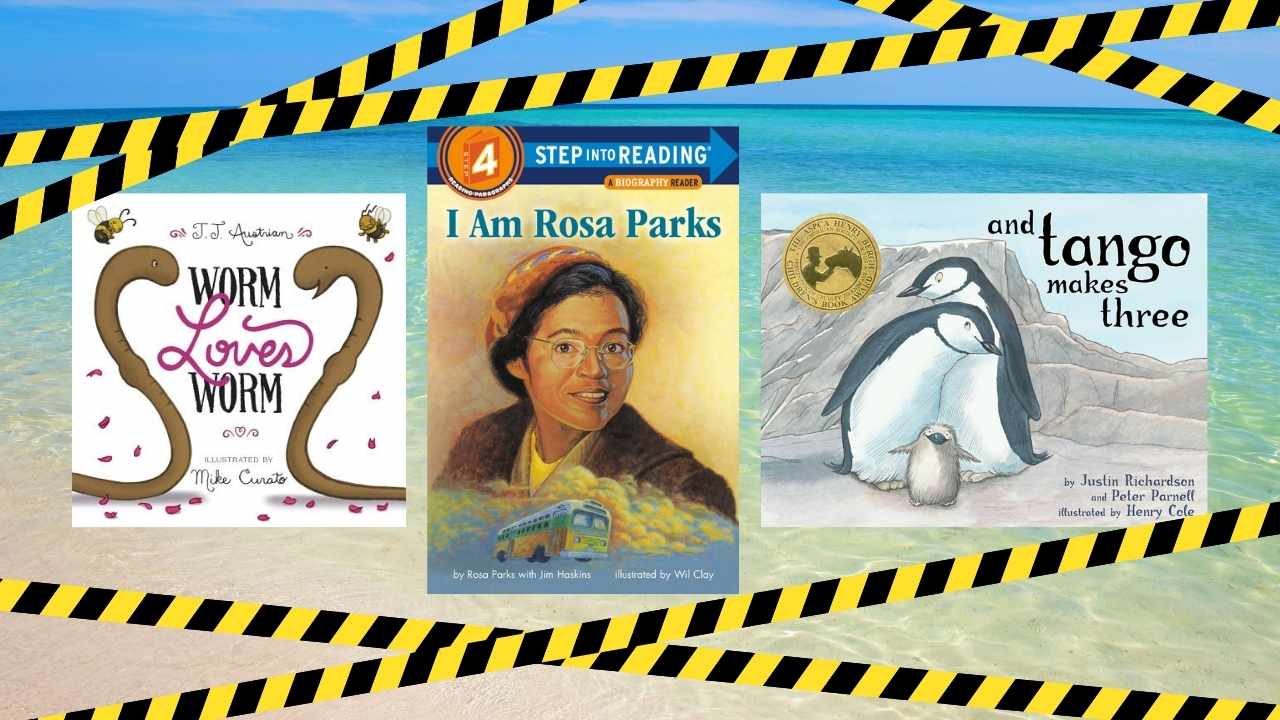
In recent years, Florida has become a focal point for discussions around public school curriculum transparency and parental rights. Governor Ron DeSantis has spearheaded several legislative measures to reshape educational content and empower communities to control what their children access in school. These bills, however, do not empower all community members. Let’s take a look at DeSantis’s detrimental issues and his book-banning legislation.
A Witch Hunt on Educators
According to PEN America, these restrictions and propositions have prompted some “LGBTQ+ Floridians to flee” and have created a metaphorical witch hunt for teachers and librarians. So many educators have chosen to vacate the state that DeSantis has proposed veterans and first responders teach without a bachelor’s degree to compensate for the teacher deficit. The rippling effects of DeSantis’ crusade are ruining the relationship between parents and educators instead of strengthening it (as he claimed he intended). This article outlines two key legislative actions put in place at the beginning of DeSantis’ reign as governor, highlights their implications, and reflects on the broader impact of these changes on Florida’s education system.
DeSantis began his trek toward education reform from the parents’ perspective. As Governor, he wanted to increase the transparency of Florida’s educational institutions to improve parent relations with the industry. He figured the more they knew, the more active they would become in their children’s education. Generally, educators want parents involved in their students’ lives to help encourage discovery and nurture a love for learning. However, the degree to which parents should be involved is up for debate. Educators already have multiple sets of grueling standards they must meet (some contradict others), they are overworked and underpaid, and they rarely have all the resources they need to service their students’ needs. Adding these restrictions on behalf of the parents does little to ease the stress of these already exasperated teachers. It has led to an incredibly strained relationship between them and the families they serve.
Florida House Bill 1557
However well-intentioned this journey may have begun, it has led to many administrative issues and sown discord between educators and parents–the exact opposite of the movement’s mission. Let’s look at his first major piece of legislation: House Bill 1557 (HB 1557), also known as the Parental Rights in Education Act or the “Don’t Say Gay” law. HB 1557 reinforces the parents’ fundamental right to make decisions regarding the education and care of their children in a public school setting using a few key phrases that led to a scarily efficient book-challenge-pipeline for books that discuss specific themes.
This bill prohibits classroom instruction on sexual orientation and gender identity in kindergarten through third grade, which has led to the objection and removal of a disproportionate number of books that discuss LGBTQ+ topics in some Florida public school districts. Many argue the law leads to self-censorship among educators, which creates fear of persecution in their careers and limits access to diverse literature. The law’s language suggests these non-traditional families suppress, even disguise, their literal identities to make the majority feel comfortable. This is not freedom.
The positive effect diverse representation has on children’s ability to visualize their lives on the page aids their cognitive development and socio-emotional regulation skills. Children need guidance to learn algebra; they also need guidance to learn appropriate socialization and emotional regulation. A person’s worth is not determined by their sexual orientation or their gender identity. If select parents — and non-parental community members/organizations — continue to diminish another person’s identity via book bans, the message to children is clear: you are only accepted when you exhibit characteristics expressed by the majority, and any deviation from that majority is not tolerated.
Worm loves Worm
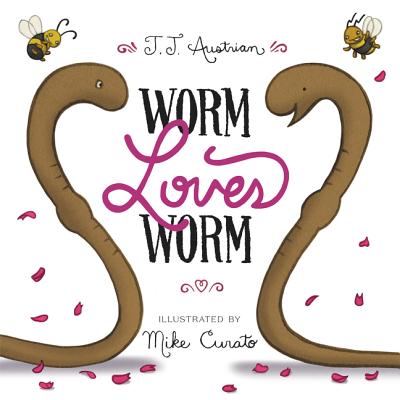
One such picture book that has been removed for themes of gender identity in some Florida public school districts is Worm Loves Worm by J.J. Austrian, illustrated by Mike Curato. In this sweet tale, two worms fall in love, and their friends want to know which is the bride and which is the groom. The worms and their friends go back and forth, each worm saying they could go either way. Worms are born either male or female, but they can also change sexes, and some are trisexual. For worms, this is a “realistic” situation — and for children deciding roles for a game, this could also be a “realistic” situation. Stories, more often than not, carry multiple themes throughout the narrative because people are multifaceted creatures. We are complex, so for young children, stories help navigate experiences, emotions, and future aspirations. Each child, no matter their heritage, should have opportunities to learn about themselves, and banning/challenging books drastically limits the number of learning opportunities these children have.
And Tango Makes Three
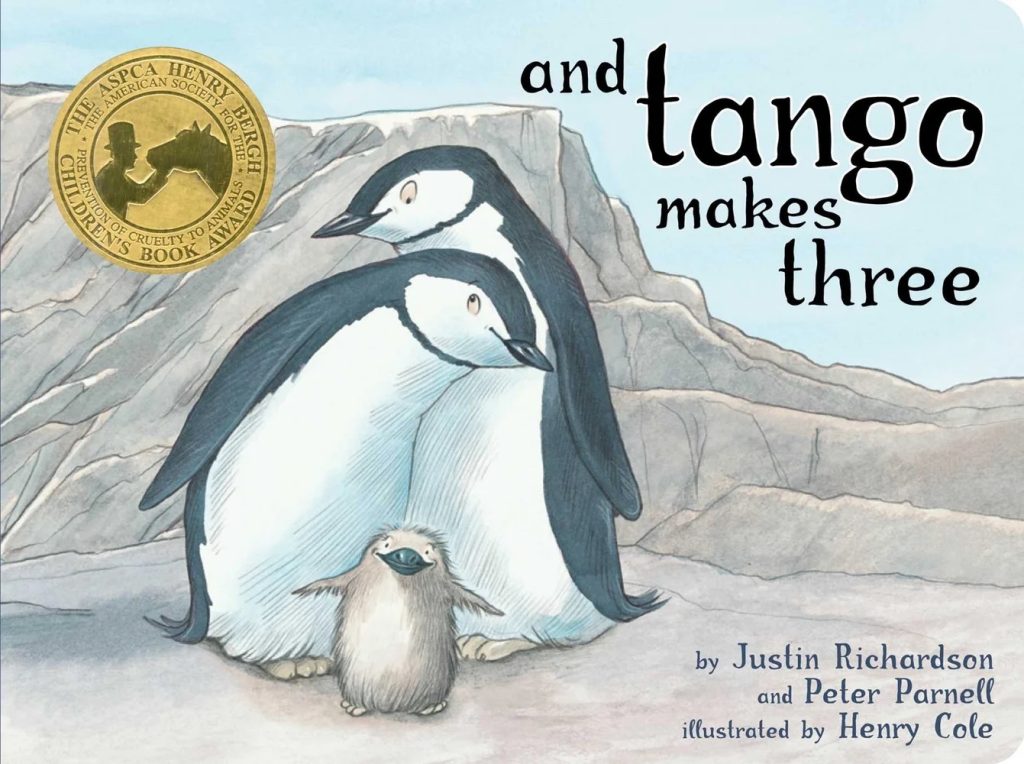
Another commonly challenged picture book is And Tango Makes Three by Justin Richardson and Peter Parnell, illustrated by Henry Cole. Tango the penguin was the first baby penguin at the zoo to have two daddies. They taught Tango how to sing and swim, and they cuddled her and showed her she was loved. Two daddies is a “non-traditional” family structure — it implies sexual orientation and, therefore, has been removed from many public school districts by way of HB 1557. We are an extremely diverse society. The family structures I encountered in my brief time as a Head Start teacher were rarely traditional, and the more my classroom talked about the differences, the more we also found similarities. We need to learn how to engage in intellectual and respectful dialogue with one another regardless of our differences (i.e., socialization skills) if we, as humans, are to continue to progress, innovate, and solve much larger problems than “I don’t like what my neighbor’s daughter is reading.” These conversations begin in childhood.
Florida House Bill 7
Up next on our legislative tour is House Bill 7 (HB 7)! Also known as the Stop WOKE Act, this bill encourages public educational institutions to discuss the intricacies related to systemic racism and America’s racial history. However, there is a caveat that limits the scope of these discussions to the materials that are permitted in schools. If the material is not on the approved list, faculty and other public school employees/representatives are not allowed to discuss first-hand accounts and factual history if it is not included in those texts. Unfortunately, many of the texts that do express an authentic portrayal of racism have been challenged or removed from schools. This limits what teachers are allowed to discuss with students to potentially “white-washed,” or biased, historical accounts in many Florida school districts.
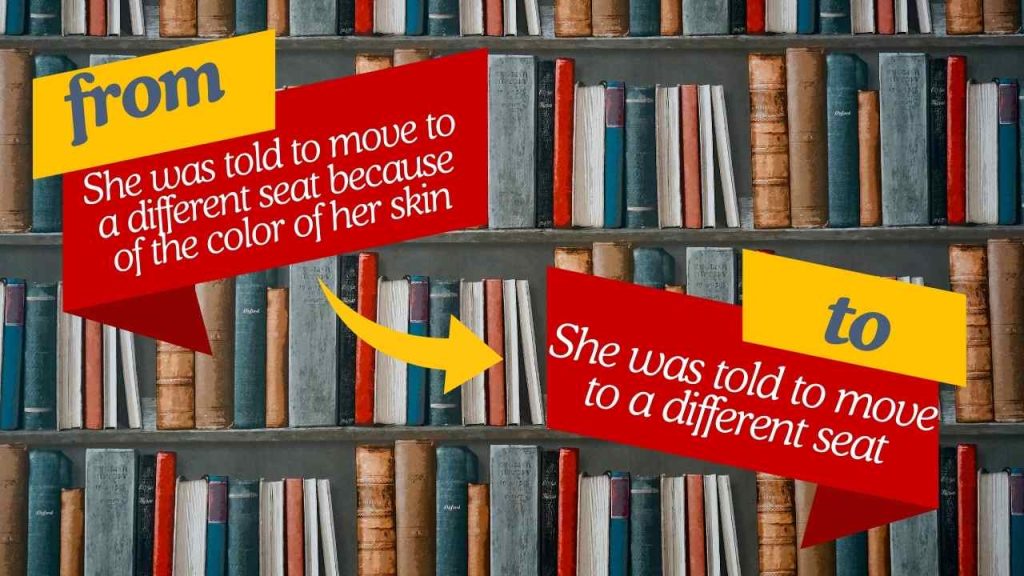
In one academic publishing house, Studies Weekly, an employee made revisions removing race from the story of Rosa Parks due to an “overreact[ion] to their interpretation of HB 7.” The revision was a caption change from explaining Parks’ refusal to move seats as a peaceful protest against segregation to Parks not wanting to move seats that day. Without race, this caption means something completely different altogether. When the seeds of a story are removed from the narrative, the story loses its meaning. Although accidental (allegedly), certain cultural roots are being ripped from the ground because of these book challenges, and we risk compromising children’s developing sense of identity when we do.
HB 7 states that the State Board of Education “shall develop or adopt a curriculum to inspire future generations through motivating stories of American history that demonstrate important life skills and the principles of individual freedom that enabled persons to prosper even in the most difficult circumstances, and shall be known as Stories of Inspiration.” It should be noted that at the time of this publication, there is only one member of the school board who can claim racial diversity. As a result, many books have been challenged/banned that discuss African American history that is inconsistent with the State’s perspective of what that historical account should look like.
This severely impedes access to authentic cultural experiences and deprives future generations of learning about their heritage. Being a kid is tough, and reading stories about other kids who look, celebrate, and live as they do can encourage them to keep following their dreams. Every child deserves at least this kernel of hope for the future. In her TIME article, Anna Gifty Opoku-Agyeman, a public policy and race-economics expert, Opoku-Agyeman describes a time when she was five years old, and the new/only black girl in an affluent private school (because she received an academic scholarship to attend).
Florida’s legislative landscape surrounding education has rapidly evolved under DeSantis, driven by an official “focus” on parental rights and curriculum transparency. While these laws aim to empower parents and enhance educational accountability, they also raise critical questions about censorship, access to diverse literature, and the potential for political manipulation in educational settings. As these measures continue to unfold, their long-term impact on students, educators, and the broader community remains to be seen. The ongoing debate highlights the delicate balance between parental control and the educational freedoms necessary for nurturing well-rounded, informed students. The outlook of this book-banning journey is grim but not lost. Educators and policymakers are rising to the challenge of creating a better world for us all. A world in which a girl can read a story about his two daddies in school, and a black child can read about Rosa Parks’ bravery in her passive activism.
Want to learn more about Florida’s reform and its impact on publishing? Read more about big publishers’ lawsuit against Florida here.
Find more amazing Banned Books here!
