

















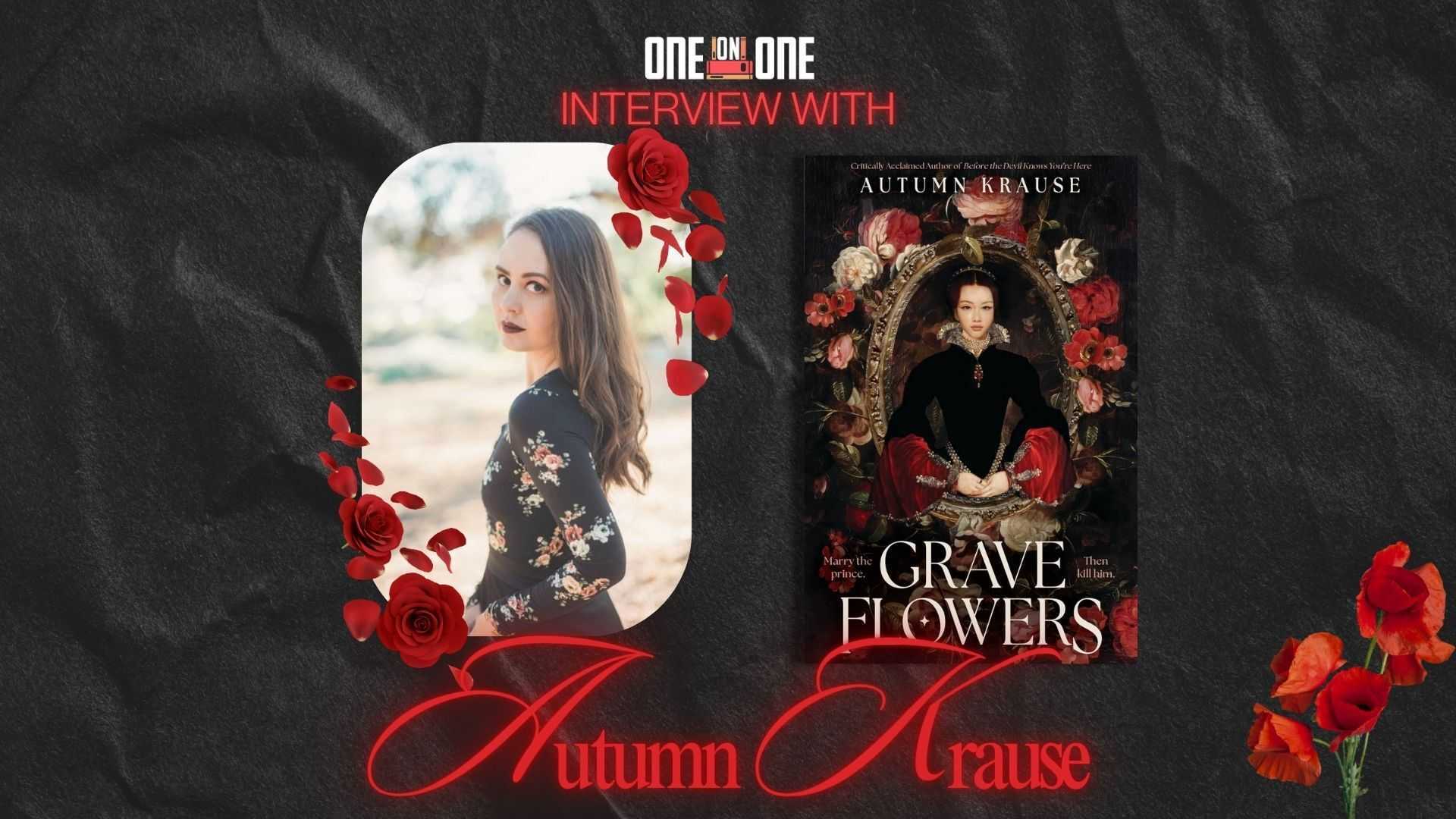
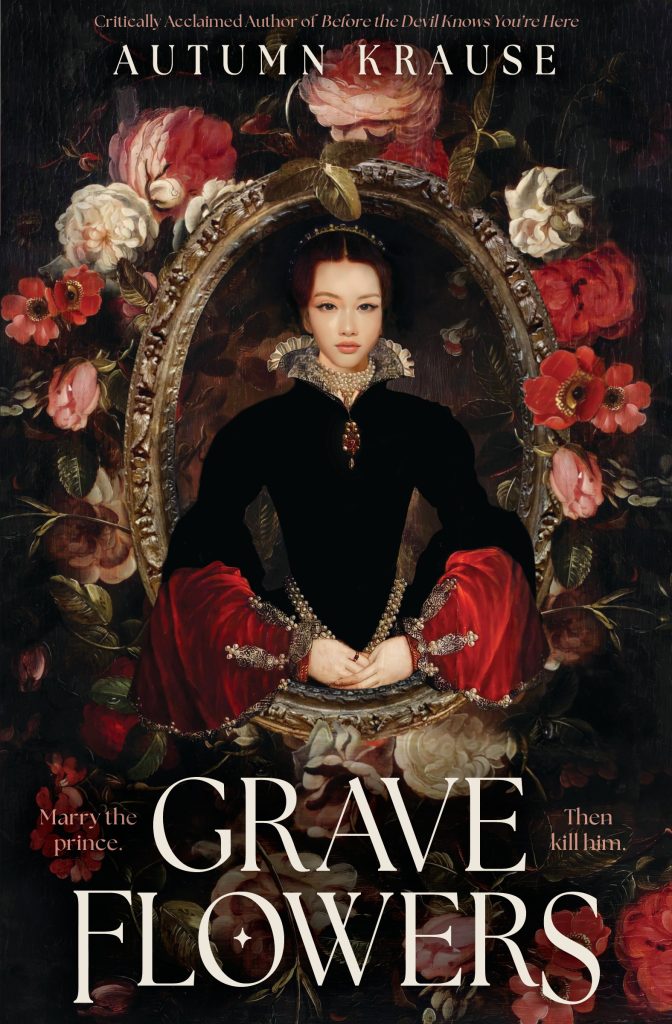
Friends, today, we here at Bookstr hold a proverbial mirror up to all forms of nature, and let Autumn Krause expose the dark and twisty world of Acus and Radix in her newest book, Grave Flowers. In this Hamlet-inspired gothic tale, readers follow Madalina as she is forced into the role of obedient daughter after her twin sister Inessa’s betrothal to the Acusian prince, Aeric, goes horribly wrong. Desire and duty are at war from the minute Madalina leaves the safety of her garden. Every choice she makes has an earthquake of consequences. This princess must decide who to be (or who not to be). Dig into all the nitty gritty details and find the method in the madness with us.
About Autumn Krause
Autumn Krause is the critically acclaimed author of the YA novels A Dress for the Wicked (Harper) and Before the Devil Knows You’re Here (Peachtree Teen). She currently lives in Orange County, CA, with her husband and three children. Most of the time, she can be found wearing a black lace dress and refinishing old vintage frames. Other times, she can be found — in the tradition of Emily Dickinson — out with lanterns, looking for herself and stories.
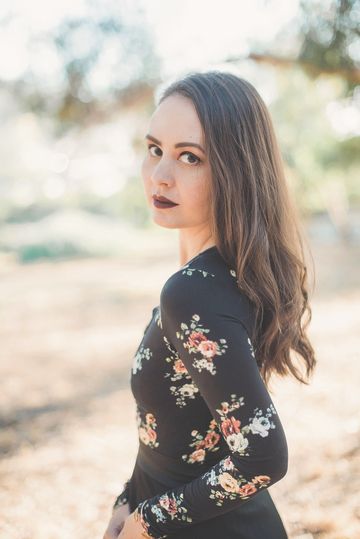
Thank you, Autumn! Let’s begin!
Grave Flowers is a love letter to Shakespearean tragedy wrapped in a gothic horror black bow tie, from its inspiration in Hamlet to the Anne Boleyn parallels. Can you talk us through your decision to combine these stories into a new YA royalcore fantasy?
I found the intersection between the fictional pathos of Hamlet and the real-life ambitions of the Boleyn family to be an irresistible combination. Both are rife with drama, tragedy, and this deep exploration of the human quest for power and purpose, which are themes I’m always naturally drawn to. It was so fun to explore them in a gothic world of my own creation.
Madalina is a twin who struggles with identity outside of Inessa in such a way that it literally feels like she’s splitting herself apart. Why was this idea of duality (even within oneself) so important to you?
I think everyone has a duality of nature (and in a variety of ways — the pull between our better and worst selves, our public face versus our private one, etc), and it was the perfect framing device for the book to use twins to literally examine this phenomenon that we all experience.
There is a duality that also comes from the framing device of the “Guide to Grave Flowers” and the timeline it showcases. Did you always know you wanted this “found document” included in Grave Flowers?
I can never resist complicating a story for myself! It made it trickier as far as weaving together the two different storylines, but I loved having this long shadow of Madalina’s ancestor reaching through history to impact her story in real time. I always knew I wanted it, and I love how it added the sort of brutal “voice” of her royal house to the book.
Last year, in an interview with Matthew Mellema on the Believe to See podcast, you said you see history through a different lens as a tri-racial author. How does that influence your process for world-building, in regard to decisions such as time period and setting?
As a mixed-race author, I often write through the lens of my heritage, and I delved into the lives of minority communities under medieval English rule. Creating Madalina, the mixed-race main character, was very close to my heart, particularly as she faces a unique set of struggles, even as a princess. Unlike me, who grew up immersed in the culture of the Japanese and Mexican side of my family, Madalina does not have access to her heritage and must choose to uncover it on her own, and I found it fascinating to explore what that might look like for someone in her situation.
This book is also built on a lot of political intrigue and diplomacy across nations and kingdoms. How much of the political system did you have in mind before drafting, and what developed within the actual writing process?
I’ve always been fascinated by court intrigue, particularly across different kingdoms. I wanted to present this idea of a small continent where everyone has the same faith and language, which sort of implies that there’s this cohesion from a macroscopic view. However, when you zoom in, you discover vast differences in the microscopic view. I had this in mind from the outset, but LOOOVED just sitting down and letting each kingdom with their differences spin from my imagination.
The descriptions of dresses (as you say in your author’s note) ooze extravagance. How much of the detailing comes from research of the Tudor era, and how much of it is lived experience from working as a bridal gown stylist? Does that influence the way you research all garments when crafting a character description?
I definitely winked and nodded a lot, specifically to Anne Boleyn’s historical garments — Madalina has a gown embroidered in pearls with her initials, and she likes a headpiece akin to a hood, as Anne Boleyn did. However, my heart belongs to couture from my years of working in bridal, so I poured all that beauty and extravagance into a very anachronistic fantasy fashion, which reinforced the variances between royal houses and kingdoms.
How has your love of re-tellings (both in Grave Flowers and in Before the Devil Knows You’re Here) pushed and/or nourished you as a writer, especially when it comes to writing historical fiction?
Yes! I think of myself as an inheritor of all these fascinating stories, which have survived the test of time, and love being in dialogue with them in my own writing. These stories nourish my soul, so therefore, I would say yes — they nourish my writing as well!
Lastly, what is your best advice for writers who want to craft deeply dark atmospheres like yours?
Go into the deep, dark woods of your soul and have a look around. Come back to the page and describe it. Practically speaking, I’d say dark atmosphere is best cultivated through a variety of eerie senses (for example, decadent fabrics like velvet paired with grotesque smells like decay), the shadowy sides of the objects and architecture found within the world, and using the main character as a filter for the reader, so everything is seen through an agitated or uneasy mind.
A huge thank you to Autumn for creeping around with us in the world of Grave Flowers and showcasing the horror! Be sure to check out Grave Flowers when it releases on September 2, 2025.
Be sure to follow Autumn on her socials!
INSTAGRAM | PINTEREST | TIKTOK | WEBSITE
To check out more of our exclusive talks with creators, check out our entire One-on-One Interview series!
To see more YA horror recommendations, check out our Bookshop!
