










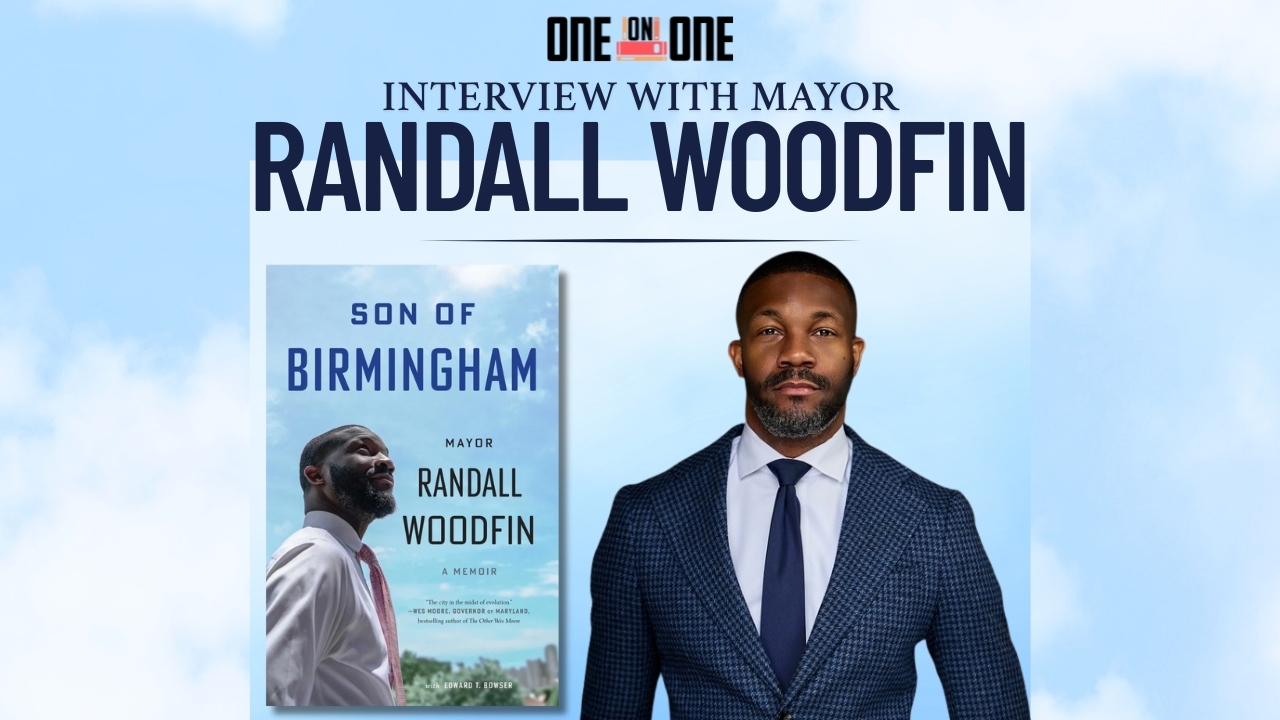
Deep in the heart of Alabama lies a town synonymous with Civil Rights, an HBCU college, and the crooning notes of famous jazz and soul musicians. It’s a place where history and modern living collide every day. Mayor Randall Woodfin is here to sing its praises, acknowledge its legendary history, and document the stories of its residents and his own experiences. We’re sitting down with the progressive, hands-on, and dedicated leader to discuss his memoir and leadership.
About Mayor Randall Woodfin
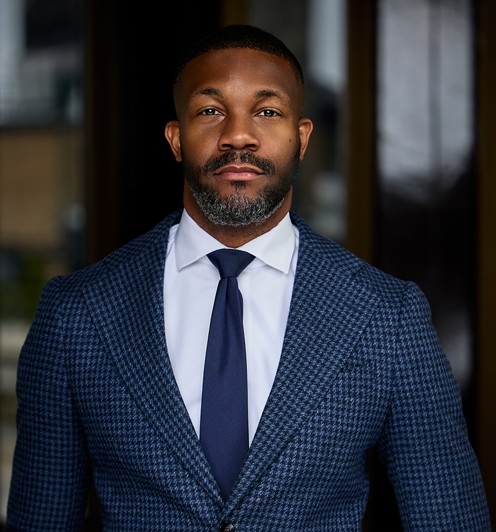
Mayor Randall L. Woodfin’s philosophy of “putting people first” has guided his leadership.
Revitalization of the city’s 99 neighborhoods is his top priority. He is focused on enhancing education for young people, fostering a climate of economic opportunity for all residents, and leveraging public-private partnerships to make the city the best version of Birmingham it can be.
His vision to create new education and career opportunities for students led to the Birmingham Promise, a public-private partnership that provides apprenticeships and tuition assistance to cover college costs for Birmingham high school graduates.
Mayor Woodfin led a regional effort to invest in the renovation and expansion of the Birmingham-Jefferson Convention Complex, making the city an emerging destination for sports and entertainment.
Through Pardons for Progress, he removed a barrier to employment opportunities and offered a second chance with the mayoral pardon of 15,000 misdemeanor marijuana possession charges dating back to 1990.
He entered his second term as Birmingham’s 30th mayor on November 23, 2021.
A graduate of Morehouse College and Samford University’s Cumberland School of Law, he previously served as president of the Birmingham Board of Education.
You can follow him on his socials: Instagram, Facebook, and X.
Thank you for your time, Mayor Woodfin. Let’s get started.
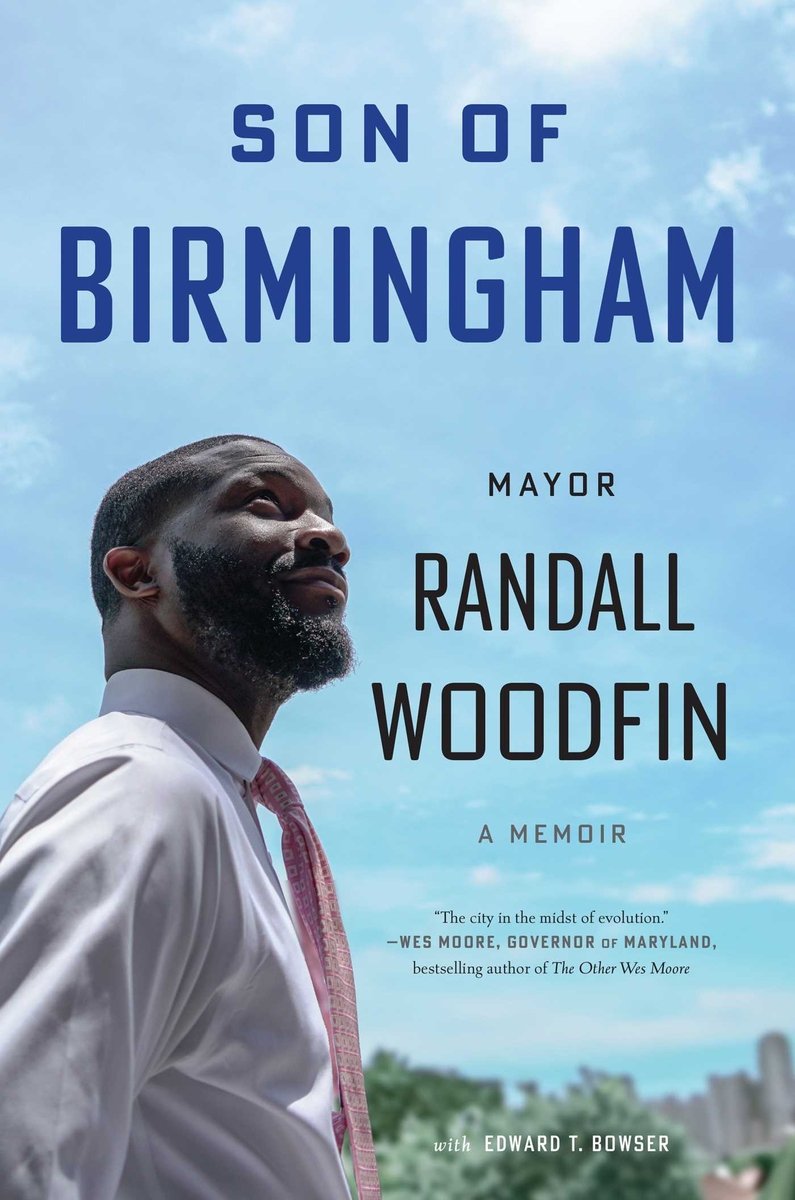
What motivated you to write your memoir, Son of Birmingham, and what message do you hope readers will take away from it?
When we initially announced that I’d be writing my first memoir, I recalled a few people saying, “It’s too soon,” and wondered if, “I’ve lived enough life.” It’s funny because those were the same reactions to my first campaign for Birmingham mayor in 2017. In both cases, timing is everything, and in the case of Son of Birmingham, it was time for not only my story but the story of our city to be shared.
We’re living in times where there is a demand for authentic, compassionate leadership. People want to be heard. They want empathy. They want hope. Those characteristics define the story of Birmingham, the blueprint for social justice change in our world. As a son of this city, those lessons are part of my DNA. There’s no better time to share those lessons, especially for a world hungry for hope.
How did you decide which stories and experiences to include in the book and which to leave out?
My goal was clear – I wanted to tell my full story, as honestly and earnestly as possible. Not just the good, the bad. Not just the hopes and wins, but the anxieties and losses, too. There’s a running theme throughout the book – that razor-thin line between hope and fear. Those two sides have tugged at me my entire life, and that balancing act has shaped me as a son, a leader, a husband, and a father. I didn’t want to leave anything out – I wanted to tell it all because I know that readers can relate to my truths.
Birmingham is often seen as a symbol of the civil rights movement. How do you see the city’s role in the ongoing struggle for racial justice?
Birmingham’s role hasn’t changed at all. We’re still a beacon for freedom. But what Son of Birmingham hopes to do is restructure the narrative. So much of our story has been rooted in the traumas that happened here. Not enough time is spent on the victories and how they were attained. The planning, the strategizing, the power of faith communities, the immeasurable strength of young protesters – our Foot Soldiers – those are the lessons that remain as relevant as ever today. Our role hasn’t changed, I think we just need to remind the world that we’re more than tragedy, we’re also triumphant.
Mayor Woodfin, Son of Birmingham paints a vivid picture of the city’s civil rights history. How do you see the legacy of that era shaping Birmingham today?
The Birmingham of the Civil Rights Era was a gritty, scrappy underdog that beat insurmountable odds. That’s still who we remain today. Though Birmingham paved the way for so much social change in our nation, we look at current headlines and see that many of those advancements are being limited and best and unraveled at worst. Birmingham, again, will stand its ground, marching, protesting and fighting for those without a voice.
Birmingham has such a rich and painful history. How do you balance honoring that history with the need to move forward and create a more equitable future?
History cannot be cherry-picked. We can’t celebrate moments of hope and ignore moments of hate. One begets the other. The only way we progress is by remembering the sacrifices of those who literally risked their lives for us to sit in the positions we hold today. We build a better Birmingham and a stronger society by standing on the foundation our forefathers and foremothers left us. We honor that. We remember that. To ignore that means our foundation is not sound. Our past reminds us that hatred and evil exist, but our present shows us that we can defeat them. That’s why the future doesn’t scare us.
You have worked to revitalize Birmingham’s neighborhoods. How do you balance the needs of older, established neighborhoods with the development of new areas within the city?
I like to say that we’ve learned to walk and chew gum at the same time. Simply put, we can do both. Our goal is to pour into historically underserved neighborhoods while likewise building upon the momentum of some of our growing sectors. For those underserved neighborhoods, we’re providing hope, showing residents that they’re not forgotten. For those emerging sectors, like our entertainment districts, we continue to make investments that are luring big-ticket sports events and major concerts to our area. Birmingham doesn’t succeed if any neighborhood is left behind.
You have been noted for your use of social media and your connection to younger generations. How do you feel that this connection has helped you to be a more effective leader and to connect with the people of Birmingham?
It’s critical to meet people where they are, and it is also important to communicate on a level that resonates with listeners on each platform. My social media presence is much different than my cadence at, say, a press conference. I understand that the audience for Facebook or Instagram is much different than those attending a town hall meeting or watching a news interview. My goal is that every person, no matter their walk of life, feels invited and heard. So while the intent of the message is always the same, the delivery might be tweaked for each platform. Plus, social media allows our residents to see Randall outside of the mayoral suit. We might talk hip-hop and movies, or we might talk potholes and street pavings. No matter the topic or the platform, it’s all authentically me – I will always be a son of Birmingham, after all. And I think our residents respect that.
The removal of Confederate monuments has been a significant action you’ve undertaken. How do you believe this decision impacts the lived experiences of Birmingham residents, particularly those in the Black community? Further, what role do you see the removal of these monuments playing in fostering a more inclusive and unified community in Birmingham?
It’s simple. The Black community did not want a Confederate monument, a symbol of everything this city fought against, towering over them. It was a mockery of the sacrifices made on our streets for our freedom. Removing that monument showed that our residents will not stand for bigotry and will not be relegated to second-class citizens in their own city. It’s a signal to the world that when Birmingham says we’re going to do something, we’re going to do it. We will always do the right thing for the good of our residents, no matter who tells us it can’t be done. Birmingham is pretty great at defying unjust authority, after all.
To close, what gives you hope for the future of Birmingham and for the future of race relations in America?
Without question, our young people. They have a fire in their eyes, a fearlessness. I never want to see that passion burn out. That’s why my administration has been so committed to their growth – from our early childhood education programs to our mental health initiatives in schools and, of course, the Birmingham Promise, which ensures that every graduate of Birmingham City Schools can attend an in-state college debt-free. The changemakers and history makers of the civil rights era poured into my generation; it’s vital that we do the same for our sons and daughters. It’s the Birmingham way.
Thank you for your time, Mayor Woodfin, and for the insight into your wonderful town. Be sure to pick up his memoir today!
We sat down with Chief Rondo, the police chief in charge during the George Floyd murder. Click here to read that interview and discover his new memoir, Chief Rondo.
Find Chief Rondo and Son of Birmingham on our Bookshop shelves here.