

















Trigger Warning: This article discusses homophobia and transphobia. Please exercise personal care when reading.
There is a popular belief that queerness is a modern phenomenon. However, for as long as humans have been story-telling, queer writers have contributed their own stories to the mix and have created a rich literary tradition. LGBTQ+ authors have fought for hundreds of years to see themselves represented in literature. This representation has changed significantly over time as more and more queer writers make their voices heard.
While LGBTQ+ literature certainly has a long history, beginning with Sappho’s poems in the seventh or sixth century BCE, the genre has undergone a rapid transformation in the past 100 years as readers actively seek out queer stories and as queer authors continue to produce diverse narratives. From classic heavyweights to more contemporary reads, we’ve created a list of novels that represent major moments in LGBTQ+ literary representation.
Gender Fluidity
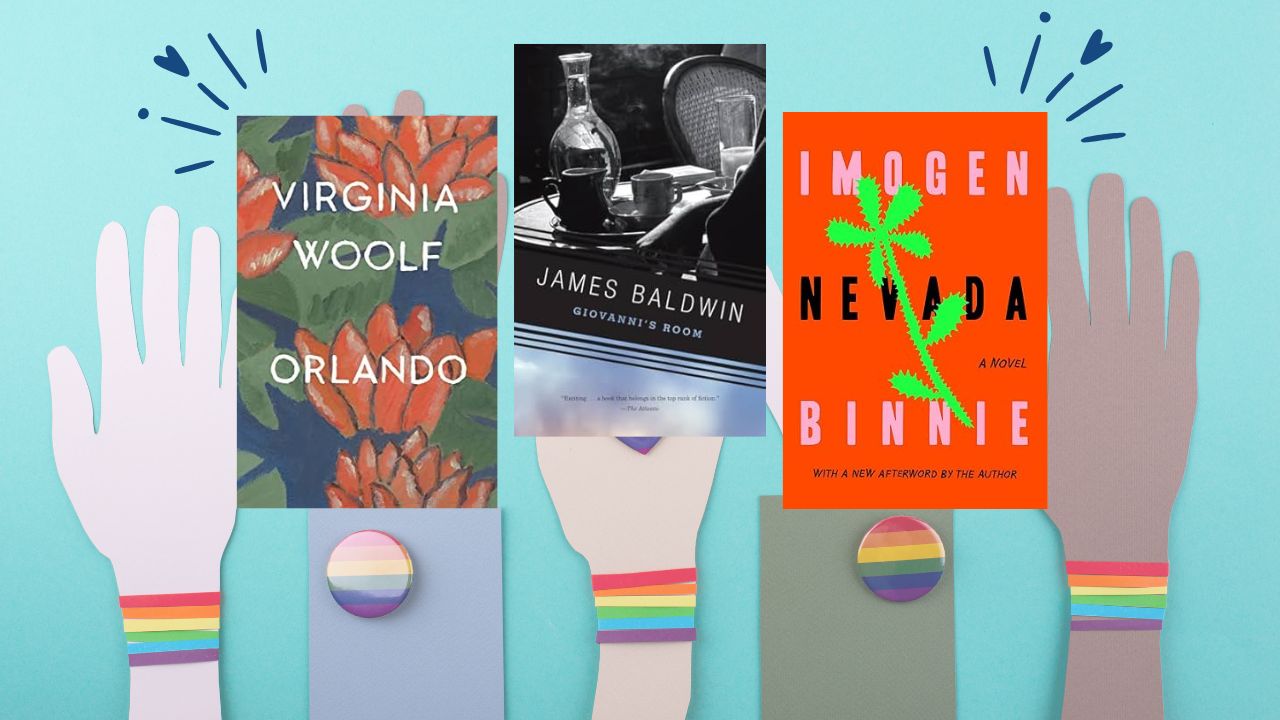
Orlando (1928) by Virginia Woolf
Inspired by Virginia Woolf’s real-life friend and lover Vita Sackville-West, Orlando chronicles the transition of a young poet from an English nobleman to that of a woman. The novel spans nearly 400 years, tracing gender norms — and the characters who defy them — through the Elizabethan era to the Modernist period of Woolf’s present day. Orlando is widely considered the first novel to directly address gender fluidity in a time when things were finally beginning to change for women in England after the end of the stifling Victorian era.

Lesbian Identities
The Well of Loneliness (1928) by Radclyffe Hall
1928 was a landmark year for LGBTQ+ literature as it also saw the publication of Radclyffe Hall’s novel The Well of Loneliness. The first lesbian novel to be published in Britain and the United States, Hall’s book shocked the general public for its explicit depictions of lesbian relationships. The Well of Loneliness follows Stephen Gordon, an aristocratic woman born in Victorian England, and her often tragic relationships with women. Its groundbreaking portrayals of lesbianism are the very reason why it was banned for violating the Obscene Publications Act of 1857.

Rubyfruit Jungle (1973) by Rita Mae Brown
Perhaps the most popular coming-of-age lesbian novel ever written, Rubyfruit Jungle is a triumph of LGBTQ+ literature. Brown’s debut novel is semi-autobiographical in nature, with the life of the book’s heroine, Molly Bolt, closely mirroring that of the author’s own experiences. Although Molly struggles as a young lesbian in the American South and later New York City, she refuses to conform to the broader heteronormative culture. She embraces her sexuality with pride (no pun intended) and remains hopeful despite adversity. While Rubyfruit Jungle definitely isn’t the first lesbian novel on this list, it is the first to approach the protagonist’s identity with a sense of joy, marking a significant shift from previous LGBTQ+ writers.

The Color Purple (1982) by Alice Walker
The Color Purple is well-known for its film and Broadway adaptations, but did you know that a queer love story is central to the novel? While the relationship between protagonist Celie and jazz singer Shug Avery is often downplayed in the reimaginings of Walker’s novel, Walker considers it an essential aspect of her work. Celie’s relationship with Shug contrasts with the abuse she faces from the different men in her life. Not only was The Color Purple radical for its inclusion of a loving lesbian relationship, but it was also subversive for suggesting that Black women might engage in such relations. In fact, The Color Purple is the only novel featuring a Black queer woman protagonist to win a Pulitzer Prize.

Stone Butch Blues (1993) by Leslie Feinberg
Stone Butch Blues is a novel that almost defies classification as its protagonist, Jess Goldberg, is gender nonconforming throughout her life. Her lesbian identity, however, remains a key aspect of the story despite how her gender presentation shifts over time. Largely autobiographical, Feinberg’s novel follows Jess as she learns about and becomes a part of the broader lesbian community in New York and accepts her gender nonconformity. While this book is a heavy read as it deal with themes of homophobia, transphobia, Anti-semitism, and sexual assault, it remains an essential work to understanding how a person’s different identities intersect and impact their life.

Gay/Bisexual Identities
Giovanni’s Room (1956) by James Baldwin
James Baldwin was a revolutionary writer known for his works concerning civil rights and gay rights. Detailing the affair between David, an American, and Giovanni, an Italian bartender, Giovanni’s Room tackles themes of masculinity and shame as David navigates his bisexuality in 1950s Paris. He addresses not only the homophobia that queer people experienced in the 20th century but also the internalized homophobia that many gay men felt as they struggled to come to terms with their identities. Baldwin’s novel caused quite a stir in the literary world since he was a Black man writing about the experiences of white men. Today, it is consistently recognized as one of the greatest LGBTQ+ novels of all time.

Intersex
Middlesex (2002) by Jeffrey Eugenides
Even in a community as inclusive as the LGBTQ+ community, some identities are not highlighted nearly as much as others. That’s why the publication of Jeffrey Eugenides’ novel Middlesex was so monumental, as it was one of the first novels to feature an intersex protagonist. Although not intersex himself, Eugenides conducted extensive research on the condition, a move for which he has been both praised and criticized. Middlesex centers around the life of Cal/Callie Stephanides, an intersex man living in Detroit. Initially raised as a girl (Callie), Cal assumes a male identity once he learns of his condition and eventually comes to terms with the ways it affects his relationship with his Greek immigrant family. The novel was awarded the 2003 Pulitzer Prize for Fiction.

Polyamory
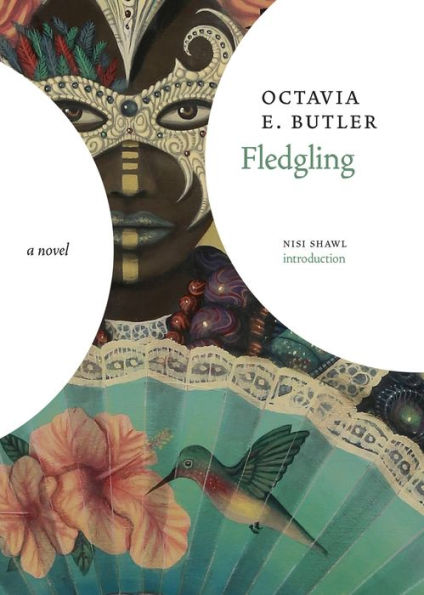
Fledgling (2005) by Octavia E. Butler
Octavia E. Butler was not only a powerhouse in the science fiction world but also a trailblazer for queer representation within the genre. Famous for pushing the boundaries of race and class in her works, Butler’s approach to gender and sexuality was no exception. In her final novel, Fledgling, Butler introduces readers to the Ina, a vampire-like species that relies on human blood for survival. Unlike typical vampires, the Ina have a symbiotic relationship with humans: in exchange for keeping them alive, Ina venom boosts humans’ immune systems and extends their lives by 200 years. The Ina also engage in polyamorous relationships with humans and Ina alike, having both heterosexual and homosexual bonds with multiple partners. The inclusion of polyamory in her novel challenges the norms of the sci-fi genre.
Transgender Identities
Nevada (2013) by Imogen Binnie
When Imogen Binnie’s debut novel, Nevada, was first published, it received little attention from the wider literary community. Over twelve years after its original publication, however, critics and writers alike acknowledge that Binnie’s novel had an enormous influence on trans literature (Torrey Peters, the final author on this list, even cites Binnie as an inspiration for her own work!). Nevada is important because it is not a book to help cisgender people understand transgender people. Rather, through the eyes of the protagonist Maria, readers glimpse the struggles of a trans woman as she navigates a breakup, job loss, and a road trip to nowhere.

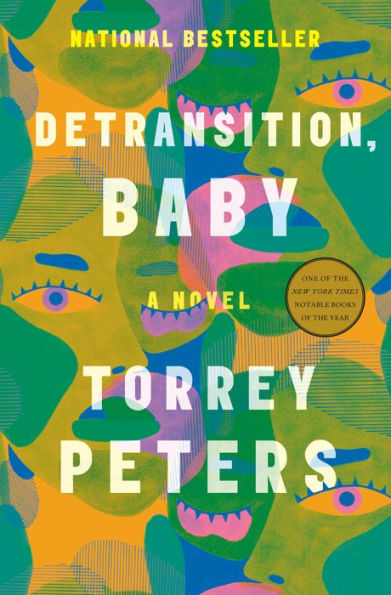
Detransition, Baby (2021) by Torrey Peters
The most recent novel on our list, Detransition, Baby, received critical acclaim when it was first published. Peters was nominated for the Women’s Prize for Fiction for her debut novel, but, in spite of positive reviews, faced backlash because of her trans identity. Still, Detransition, Baby is a notable LGBTQ+ work because of its presentation of complex queer relationships and family dynamics. It challenges the typical nuclear family structure by centering a transgender woman (Reese), a detransitioned man (Ames), and a biracial, cisgender woman (Katrina) as parents to a yet-to-be-born child. Binnie pushes the boundaries of gender in a way that invites future queer writers into literary spaces and encourages them to tell their own stories.
LGBTQ+ literature has a long and fraught history marked by discrimination from the straight, cisgender public. Despite immense challenges, representation for the queer community has flourished over the past century. These novels represent huge achievements and can provide a jumping off point into the world of queer stories, helping readers to discover their own identities.
Want to find more LGBTQ+ reads? Click here to discover publishers focusing on queer stories.
Check out Bookstr’s LGBTQ+ book recommendations here!
