












TRIGGER WARNING: The following article includes mentions of murder, police brutality, and racism. Please exercise personal care when reading.
Five years have passed since the world watched in stunned silence as George Floyd’s life was tragically extinguished beneath the knee of a Minneapolis police officer. That singular horrific event on May 25, 2020, incited a nationwide civil movement of protest, laying bare the deep-seated issues of racial injustice and police brutality that have long fractured communities. The city of Minneapolis, ground zero of this momentous shift, became a focal point for both righteous anger and a desperate yearning for change. Now, as the fifth anniversary of Floyd’s murder approaches, the man who stood as the first Black police chief in the Minneapolis Police Department’s history, Chief Rondo, steps forward to offer a unique and vital perspective.
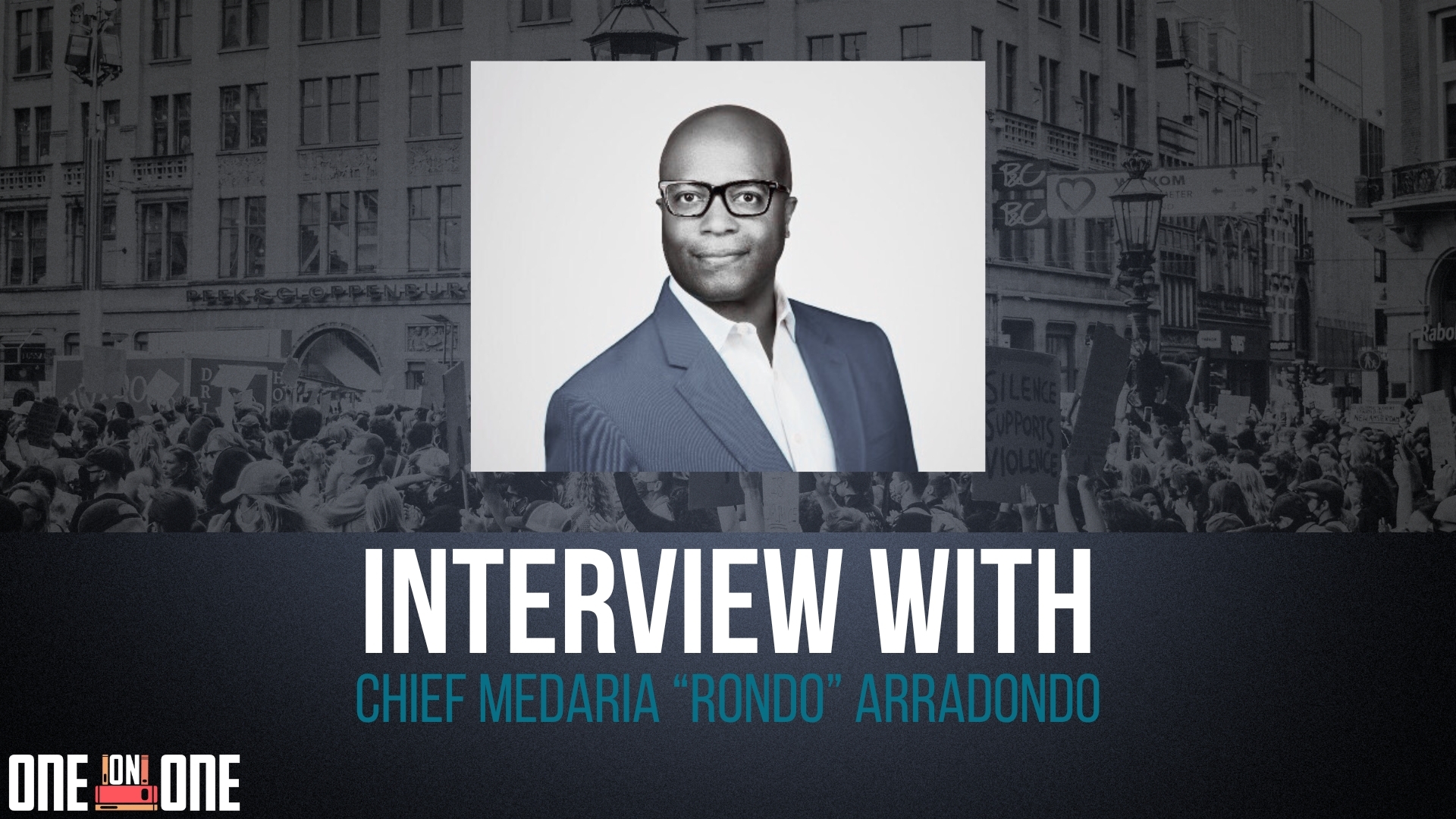
In his newly released memoir, Chief Rondo gives an eye-opening perspective into his experiences leading the city through the immediate aftermath of the crime, the ensuing historic protest movement, and the nationwide reckoning on race and policing. This interview offers a compelling glimpse into his insights on leadership forged in the crucible of crisis, his understanding of justice in a system grappling with its past, and his reflections on the profound civil unrest that continues to shape our sociopolitical landscape.
About Chief Medaria “Rondo” Arradondo
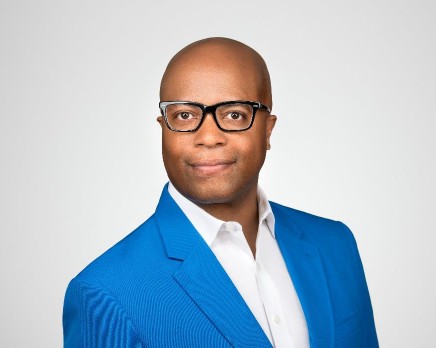
Former Minneapolis Police Chief Medaria “Rondo” Arradondo became the face of progressive policing in America for his leadership following the murder of George Floyd.
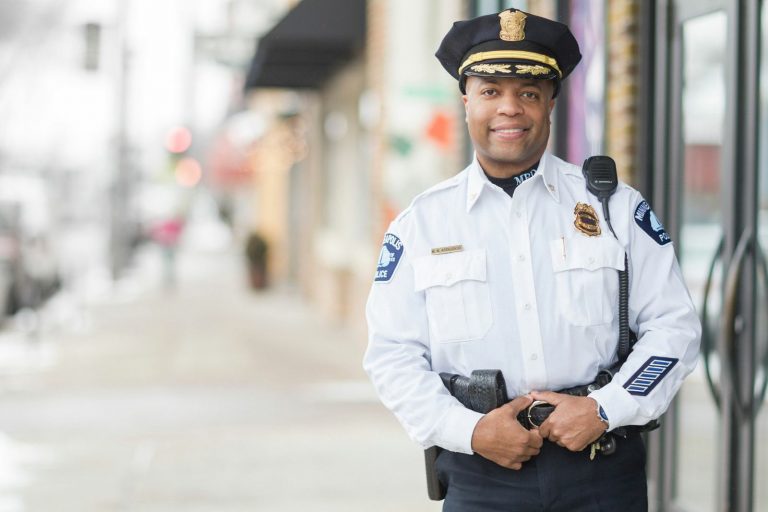
In 2017, Rondo was appointed the first Black chief of police in the 155-year history of the Minneapolis Police Department. The department serves the largest city in Minnesota with over 435,000 residents. As chief, Rondo oversaw 850 sworn officers and 300 civilian employees. As a civil rights advocate and law enforcement leader, Chief Rondo was expected to walk the line between blue and Black. Instead, he drew a line between right and wrong, choosing principle over tribe to guide the city through a dark and devastating time.
Chief Rondo’s timely, critical decisions charted a path toward one of the greatest social justice victories of our time: the state and federal convictions of Derek Chauvin and the other officers involved in Floyd’s murder. Unfortunately, Floyd’s was not the last death of a civilian at the hands of police. But in rewriting the playbook for police chiefs, Rondo shifted public and professional expectations toward greater accountability.
National awareness of Rondo’s role in bringing justice for George Floyd has resulted from his high visibility, top-tier national media appearances since 2020, including 60 Minutes, The Situation Room with Wolf Blitzer, Real Time with Bill Maher, CNN News, Fox News, MSNBC, ABC, CBS, NBC, and NPR.
During his time as Minneapolis police chief, Rondo improved recruitment, hiring, and promotions, all centered on procedural justice guidelines of respect, voice, neutrality, and trust. He introduced critical new policies for public accountability, including body-worn cameras, a duty to report and intervene process, and reshaping the field training program. Rondo established the city’s first public online data dashboards to provide residents and businesses with transparent, real-time crime statistics.
In January 2022, Rondo retired after 32 years of service in the Minneapolis Police Department. He continues to serve the community as a Minneapolis Public Housing Authority Commissioner and an Executive Board Member of Fentanyl Free Communities.
Today, he is President and CEO of Optimus Sui Consulting, LLC. “Optimus Sui” is Latin for “best self.” As a speaker and consultant, Rondo helps individuals, organizations, and communities find their way to the best version of themselves and their work. His expertise in procedural justice and leading through crisis is sought internationally. Currently, he is consulting with the President of Liberia and the Inspector General of Police to support police reforms in Africa’s oldest republic. He recently delivered the keynote speech at a policing leadership gathering in Monrovia, Liberia. Other clients include: International Entrepreneurs Organization, Faegre Drinker Biddle & Reath LLP, UnitedHealth Group, and the Major Cities Chiefs Association.
Thank you for talking with us, Chief. Let’s get started.
Chief Rondo, can you briefly tell us about the topic of your memoir?
Upon the fifth anniversary of the murder of George Floyd, my book shares with the reader my views on leadership, justice, and race, and never-before-shared details on what it was like to be the first Black police chief in the history of the Minneapolis Police Department and lead our city beyond the crime, the historic protest movement, and the nationwide reckoning on race and policing.

Chief Rondo, this book comes at a crucial moment: not only for the 5th anniversary of Floyd’s murder, but also for the shaken state of civil unrest we’re witnessing due to the increased division of the sociopolitical climate. What prompted you to share your story now?
I was very intentional on first getting our city through that turbulent time. After much reflection and observing how polarized and divisive our country has become, I felt now more than ever we didn’t need more polished professionals but rather principled people. The lessons in leadership that I cultivated and practiced, I believe, should be shared, and there is no better time than the present.
Writing this book must have been an intensely personal journey. What were some of the most challenging moments in reliving those events and putting them on paper?
Writing this book was indeed very personal and, in many ways, cathartic for me. Leading in the eye of the storm keeps you intensely focused. I knew then that my main priority early on was no more funerals. In reliving those events and writing my book, I realized that luck and a higher power watched over our city during that time. I’m reminded that all of this was taking place at the start of the pandemic, and we were still grappling with a spike in violent crime in the city, and the MPD was the focus of a lot of people’s sheer anger across the country.
You’ve chosen to be very candid about the internal struggles within the Minneapolis Police Department. What do you hope readers will understand about the complexities of police culture from your perspective?
I hope readers will understand that, similar to our country’s experiment in democracy over the past two-hundred-plus years, the American policing experiment continues to evolve almost one hundred and ninety years since it was established. Its history is steeped in culture, complexity, tragedies, and triumphs. Our American society is imperfect, and police agencies across the country recruit and hire their officers from society. We are not seeking perfection but trying to do right by those we serve with each and every encounter.
The book highlights the “blue wall” of silence. What did it take for you to break through that, both in your actions and in writing this book?
What enabled me to break through the “blue wall of silence” was the values that were instilled in me as a child by my parents. Treating people with respect, having a moral compass, and being truthful, even if it means standing alone. It’s those very same values that guided me in the process of writing this book.
The events of 2020 ignited a global movement. In your view, what lasting changes have resulted from George Floyd’s murder and the subsequent protests?
It is my hope that some of the lasting changes that have resulted from George Floyd’s murder are that all of the more than 18,000 police agencies in the United States recognize that the sanctity of life applies to ALL those we engage with. That all those who wear the badge, regardless of rank or tenure, have a solemn oath and duty to intervene verbally and physically if one of their own is violating the rights of someone or acting in a manner that is unethical or inhumane.
What are the most significant systemic changes that need to occur within police departments to prevent future tragedies like the one involving George Floyd?
The most significant systemic change that needs to occur within police departments to prevent future tragedies is that police departments and their leaders must center humanity in policy. After George Floyd’s murder, we rewrote the MPD oath of office. The most radical word we included? Love. That oath is now a promise to serve with humanity, not just authority. Leaders must revise not just what they do, but WHY they do it. Police must name the rot to heal the root. You cannot heal what you will not name.
After viewing the video for the first time, I did not hesitate to say publicly that what occurred to George Floyd was murder. Every leader must identify what’s broken and be willing to uproot it. Police departments must genuinely hold their communities they serve as the North Star. The community is your boss, and always remember: if it doesn’t serve the people, it doesn’t serve at all.
As the first Black police chief of Minneapolis, you faced unique challenges. How did your personal experiences shape your leadership during a time of crisis?
First, the values my parents taught me since childhood helped shape my leadership during times of crisis. Knowing the history of the MPD and my communities, and forging relationships in the quiet moments, cultivating them before the crisis, cannot be overstated.
What advice would you give to young people considering a career in law enforcement, particularly those from marginalized communities?
To effect real change in systems, you need allies working from outside the system, and you must have courageous, values-driven individuals working within those very systems to challenge the status quo. My late grandmother would say, “The world is run by those who show up.” To be a part of the change you want in your community, you have to show up and participate. To be a peace officer is a calling and a noble endeavor. Communities need good peace officers. You can make a difference.
Chief Rondo, as we close this interview, what gives you hope for the future of policing in America?
In spite of the many challenges facing policing in America today, we continue to have selfless, caring, and brave individuals who will run into harm’s way for a stranger. These men and women are proud to be guardians of their communities, recognizing that we are all part of the human family and that all are necessary.
Thank you, Chief Rondo, for the interview, the insights, and your incredible bravery.
At a moment when the chasm between law enforcement and the communities they serve often feels insurmountable, Chief Rondo’s candid account promises to be a crucial step toward fostering understanding, bridging divides, and charting a path forward built on principle and a shared pursuit of justice.
Pick up your copy of Chief Rondo’s memoir today.
Looking for more memoirs? Check out Caroline Topperman’s featured review here.
Visit our Nonfiction Titles for the Enlightened Mind bookshelf on Bookshop.org and grab a copy of Chief Rondo today.