

















It wasn’t very long ago in the United States that it was illegal to even openly identify as a member of the LGBTQIA+ community. Those who were openly queer and/or trans faced the possibility of violence, arrest, and institutionalization for the “crime” of being anything other than heterosexual and cisgender. And while public opinion and government protections for queer and trans people have improved in the last few decades, there is still a long way to go with plenty of people who are actively working to undo this progress.
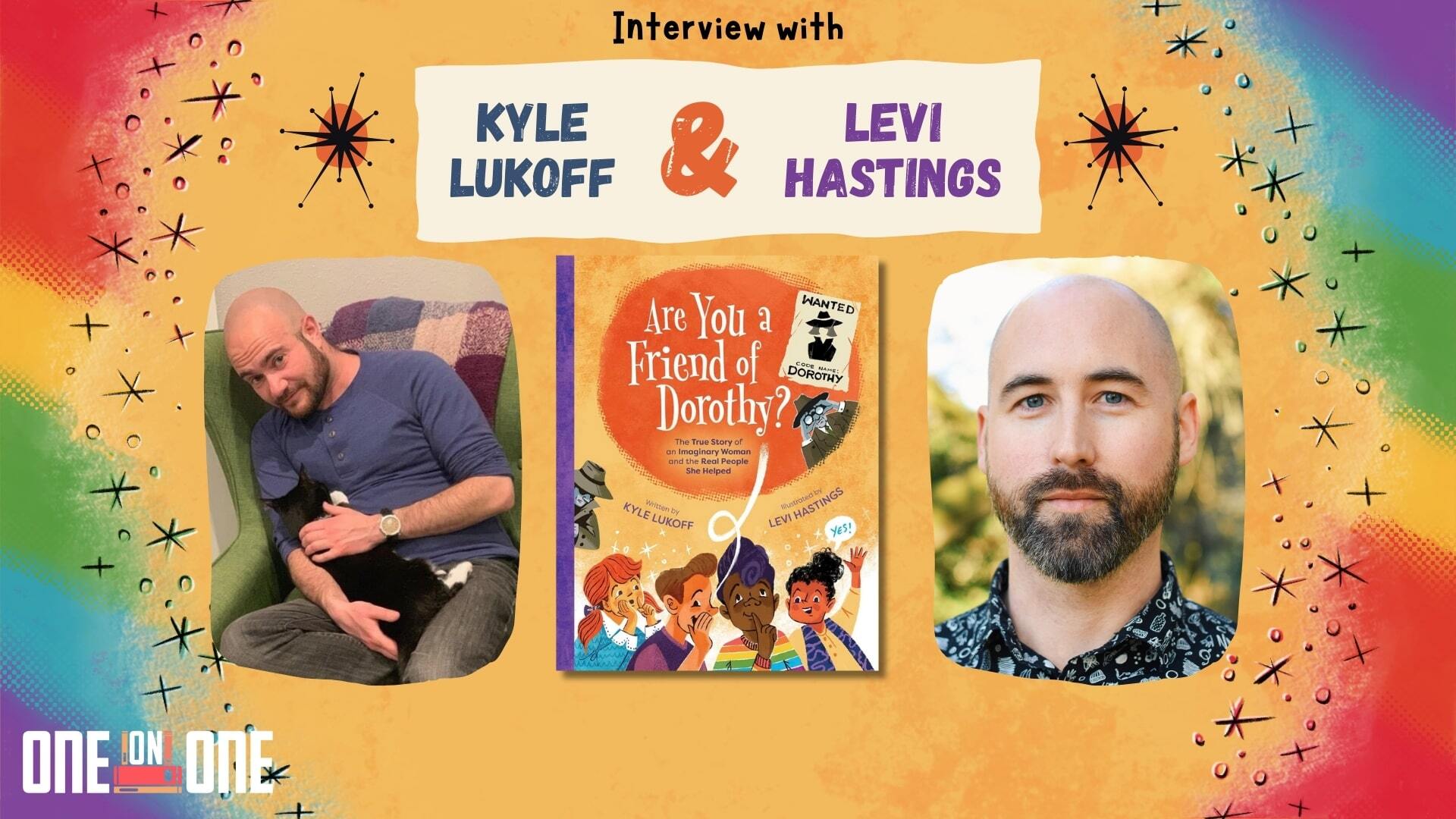
In the picture book Are You a Friend of Dorothy?, author Kyle Lukoff and illustrator Levi Hastings explore a time in which the LGBTQIA+ community developed a way to protect and support one another under oppressive laws and social views. We had a chance to sit down with Kyle and Levi and talk about why sharing queer history, culture, and joy with the younger generations is so important.
Trigger Warning: This article discusses homophobia and suicidal ideation. Please exercise personal care when reading.
About Kyle Lukoff
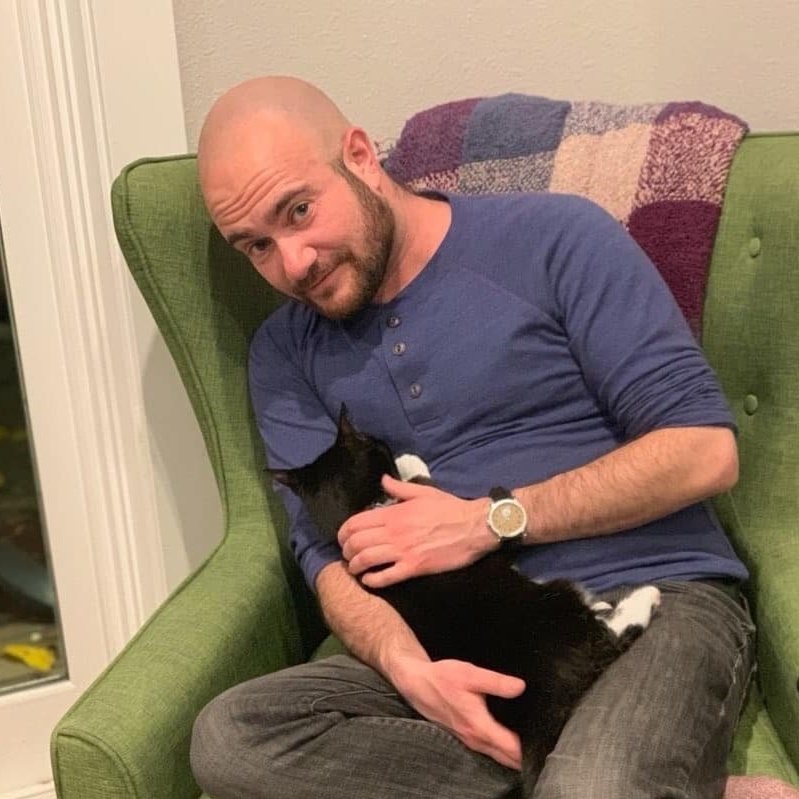
Kyle Lukoff writes books for kids and other people. Before becoming a full-time writer, Kyle worked at five bookstores, in four libraries, for three schools, as two genders, through one intersection: people and books.
About Levi Hastings

Levi Hastings is the illustrator of Mayor Pete: The Story of Pete Buttigieg by Rob Sanders, Are You a Friend of Dorothy? by Kyle Lukoff, and The Spirit of Springer by Amanda Abler, about which The New York Times raved, “This beautiful book tells a suspenseful, heartrending true story.” Levi lives in Seattle with his husband.
Thank you both so much for joining us, Kyle and Levi! Let’s get started.
For those not in the know, what does it mean to be a friend of Dorothy, literally and historically?
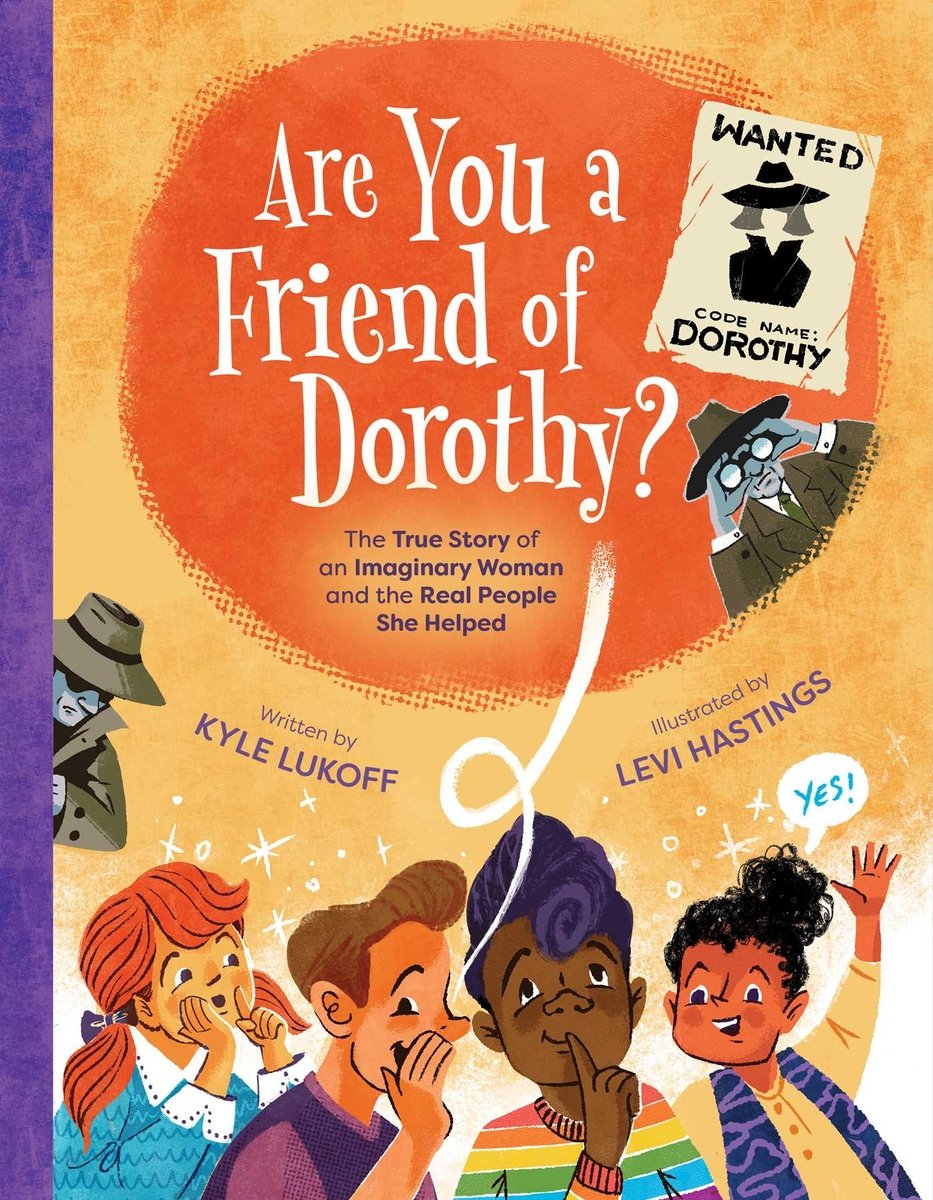
Kyle: Literally? I guess literally it means that you have a friend and her name is Dorothy! One of my best friends in high school was named Dorothy. But, historically, the term “Friend of Dorothy” was code for “Is he gay?” or “Is that person part of the LGBTQ community?” There’s a mystery around how the term developed, of course, because communities and language are complex, ever-evolving things, but most people assume it’s related to The Wizard of Oz, given the connection to both Judy Garland (a favorite among older generations of gay men) and rainbows.
Levi: A “Friend of Dorothy” refers to someone who identifies as queer, and the code was originally used as a covert way for a person to identify and connect with other LGBTQ people at a time when it was explicitly illegal and unsafe to do so. It has since evolved into a more casual, affectionate slang term, and the origins of the phrase have been largely forgotten.
This book focuses on a time in which it was not safe for LGBTQIA+ people to live honest, open lives, leading them to develop the Dorothy code. Why do you think this topic is especially important to talk about with young audiences in the current social and political climate?

Kyle: When I first wrote this story, I anticipated this question and planned on talking about the importance of history, and how much it meant to me as a young queer person to know that we always found ways of finding each other. Unfortunately, this book about finding community while keeping yourself safe feels more relevant than I wanted it to be. Another really interesting tie-in is how language online evolves to get past algorithmic censors — “unalive” instead of “suicide,” the watermelon emoji instead of Palestine, that kind of thing. And now that federal funds are being withheld from researchers studying gender-affirming care, diversity, that kind of thing, I think this sort of linguistic trickery may undergo a new renaissance out of sad necessity.
Levi: Given the increasingly hostile environment young queer people are facing in this country, it’s important that kids learn the history of how LGBTQIA+ elders survived — and even thrived — under adverse conditions. By learning the lessons from the past, young readers will hopefully be inspired to find safe ways of finding one another and their queer community in difficult times.
Kyle, while the book has moments of levity and joy, you also explore some of the real dangers that queer and trans individuals have faced in the past and continue to face today. How were you able to find that balance, especially when writing for elementary-aged kids?

Kyle: I didn’t have to find the balance; I simply had to show the balance that exists in real life. Queer joy has always coexisted with danger from straight society, so much so that I don’t know how to separate the two. And, also, I know that many kids are drawn to these hard topics, are curious about scary things, and want to know more about the more upsetting things that adults often want to protect them from. It comes down to respecting the fact that young readers have as much breadth in their interests as adults; it’s just a matter of making it accessible and relevant to them.
Levi, your artwork in this book plays a lot with the contrast between shadows and light, color and monotone. What led you to this visual concept while creating the illustrations?

Levi: I have always been inspired by mid-century illustration styles, and since much of the story takes place around that time period, it seemed like the appropriate aesthetic in which to tell this story. It’s a style that lends itself to rendering difficult and serious subject matter in a way that is still inviting and pleasing to the reader.
Many vocal movements and politicians want to remove books with diverse representation — especially LGBTQIA+ representation — from school and library bookshelves. Why do you think access to queer and trans stories is so critical for young audiences of all identities?

Kyle: Because you cannot separate queer stories from queer people. Those who are arguing that books like this are inappropriate for children are bare steps away from removing kids from their two-mom or two-dad families, keeping trans kids locked away at home in the same way that Ryan White was prevented from going to school, and banishing out queer people from every arena of public life.
Levi: It’s crucial for young readers to see themselves reflected in the stories that they experience. The road to self-acceptance is much easier when a person can relate to a character they’re seeing in a book, movie, or any other art form. There was no queer media available to me when I was a child, and I know it would have made such a difference if I had grown up with more positive examples [of] LGBTQ+ characters.
Can you describe the collaborative process of working on this book together for our audience? How did the words and art come together for the finished book?
Kyle: Oh, we didn’t work together at all! I wrote the words, and then the art team worked with Levi on the art. I’m so curious to hear from him what that process was like.
Levi: The manuscript was already finalized by the time I was offered the project, but I was thrilled at the opportunity to illustrate one of Kyle’s books. I worked very closely with the brilliant art director Laurent Linn to create the visual narrative around Kyle’s brilliant storytelling.
We love to ask those who create art and literature for children about the children’s books that inspired them when they were young. Are there any books or series from your youth that helped inspire the creator you are today?

Kyle: I can’t say that I was directly inspired by anything specific, but the rhythms and language in the books I read as a child implanted deeply in my brain, so I don’t know how I would approach writing picture books if I hadn’t read a lot of Shel Silverstein, Kevin Henkes, and Mercer Mayer in my earliest days.
Levi: I grew up loving the Frog and Toad series and much of Maurice Sendak’s work (long before I knew they were both queer authors). The Dinotopia books by James Gurney were foundational to my aesthetic and inspired me to become an illustrator.
Lastly, in honor of Are You a Friend of Dorothy?, do you have any bits of secret code or passwords that you use with friends or family? If so, will you reveal them to us?

Kyle: Sure! Sometimes, if I’m out in the world and see someone that I think might be another trans guy, I’ll quietly ask my husband if he sees “a you or me.” That comes from a Daniel Lavery piece about raccoons, which he says “CAN SWEAT LIKE A YOU OR ME, A PERSON OR PANT TO COOL DOWN AS THEY CHOOSE.”
Levi: I couldn’t possibly reveal the family secrets ;)
A huge thank you to Kyle and Levi for sharing their time and insights with us! Readers can learn more about Kyle’s work online at KyleLukoff.com or follow him on Instagram, Facebook, TikTok, and Twitter/X. You can find Levi’s work at LeviHastings.com, as well as follow him on Instagram and Bluesky. Lastly, don’t forget to add Are You a Friend of Dorothy? to your family’s reading list!
For more picture books that offer affirmation for trans youth, check out our article on Timely Children’s Books With Fantastic Transgender Representation.
For all of our reading recommendations for mini bookworms, check out our Bookshop bookshelf.
