













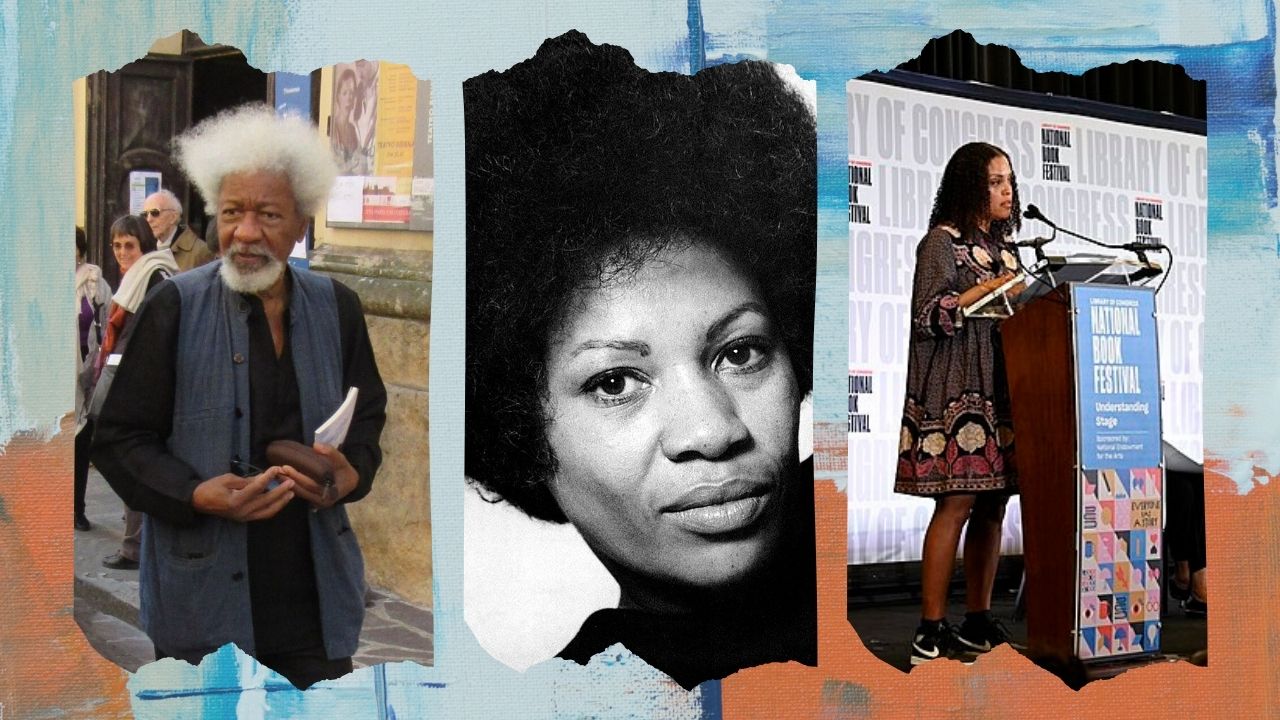
Like movies and television shows, accomplishments in the literary scene are celebrated through numerous professionally recognized accolades. Literary awards are significant for several reasons, whether they are more general awards based on the sheer brilliance of a piece of work or because the author excelled in their chosen genre, such as with the Hugo or Bram Stoker Awards. The industry helps authors gain mobility in the literary world, as winning a prestigious award like a Pulitzer Prize increases book sales, print runs, exposure, and publicity. Additionally, cash prizes amount to thousands of dollars.
A Brief History of Each Award
However, this centuries-old institution has flaws, and recipients of color were neglected to be recognized well after awards were first established. Let’s examine the first Black male and female recipients of the prestigious Nobel Prize, Pulitzer Prize, National Books Awards, and the Man Book Prize and the importance of showcasing marginalized voices in the literary community.
Nobel Prize in Literature
Beginning with the Nobel Prize in Literature, established in 1901 by Alfred Nobel, the award was meant to honor authors and their work of literary excellence. It is the first literary award of its kind and is presented to authors who write in more than 50 languages. Currently, a group of 18 members of the Swedish Academy decides the award’s finalists. These members also serve on this committee for life.
Pulitzer Prize
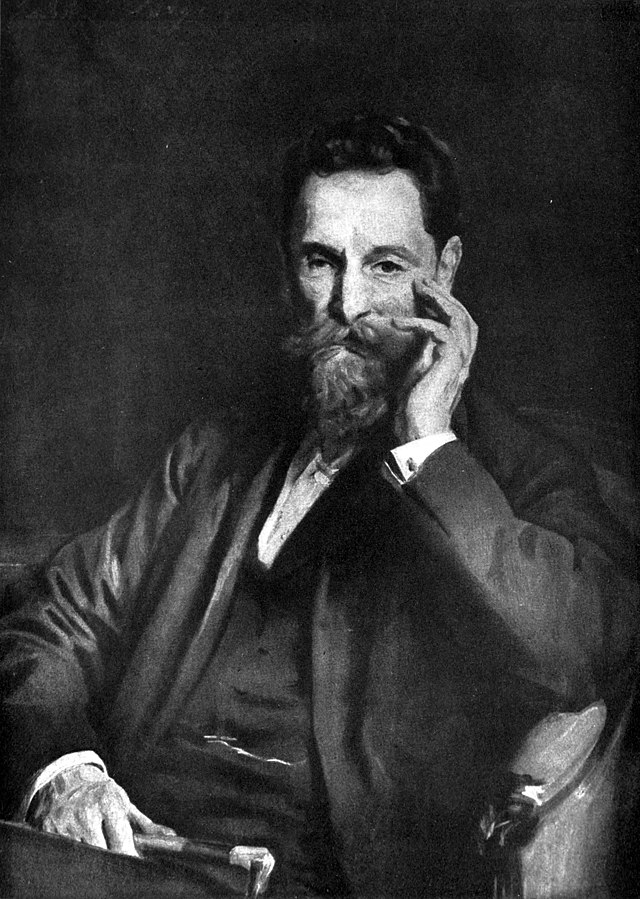
Following the creation of the Nobel Prize, the Pulitzer Prize, designated by the will of American journalist Joseph Pulitzer, is divided into specific categories according to genre and was incorporated in 1917 by the Ivy League institution Columbia University. Established in 1950, the National Book Awards recognizes the best literature published by American authors. In 1969, the Booker Prize was one of the most prestigious awards based on a full-length novel. Initially, the company Booker McConnell only recognized work from the U.K., the Republic of Ireland, and the Commonwealth countries. But, in 2014, a section of the awards opened to English-language writers worldwide. Lastly, the Neustadt Prize for Literature has recognized international poets, novelists, and playwrights since its establishment in 1969.
Nobel Prize in Literature – Wole Soyinka and Toni Morrison
In 1986, playwright, poet, novelist, and essayist Wole Soyinka became the first black male author to win the Nobel Prize in Literature. His all-encompassing perspective on culture and remarkably poetic study of the human condition motivated this momentous win. Soyinka writes in English, but his works are rooted in his native Nigerian and Yoruba culture, often taking inspiration from legends and traditions and intertwining them with classical Western tragedies and contemporary dramas. Honorable mentions of his work include the essay collection Myth, Literature, and the African World and the play Death and the King’s Horseman.
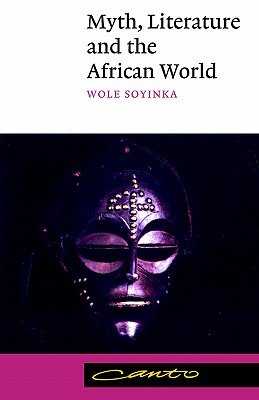
From 1958 to 1959, Wole Soyinka was a dramaturgist at the Royal Court Theatre in London, where he was awarded a Rockefeller bursary that allowed him to travel to Nigeria and study African drama. Across universities in Ibadan and Lagos, he taught both drama and literature, as well as comparative literature at a university in Ife. Having founded theater groups The 1960 Masks and Orisun Theatre Company, Soyinka was about to produce his plays and participate in acting. In 1967, Soyinka penned an article during the Nigerian civil war calling for a ceasefire and was arrested on the grounds of conspiring with Biafra rebels. Most notably, Wole Soyinka is remembered for his stunning, thought-provoking plays.
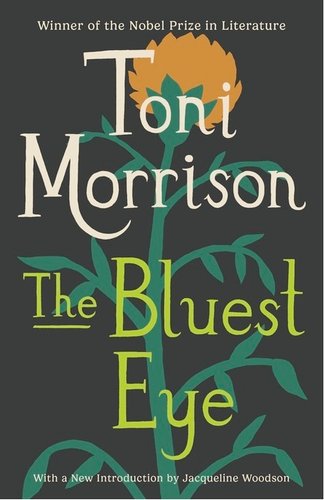
Toni Morrison pioneered continuously throughout her life, being the first Black woman to be a senior fiction editor for Random House and a Nobel Prize winner. Her renowned book The Bluest Eye, published in 1970, was influenced by a short story of a young Black girl who wanted blue eyes and earned her the Nobel Prize in 1993. Morrison claims her sense of language and heritage was instilled in her by her parents through African-American folktales, ghost stories, and songs. This is evident in her literature, portraying the nuanced experiences of a Black woman.
Morrison’s unapologetic, distinguished voice and writing showed the world that great literature isn’t exclusive to men or people of European descent. Her outstanding body of work thus inspired and encouraged a new generation of Black writers, including the illustrious Toni Cade Bambara, Angela Davis, and Gayl Jones. In addition to the Nobel Prize, Toni Morrison’s Song of Solomon won the National Book Critics Award, and Beloved won a Pulitzer Prize.
Pulitzer Prize – Charles Gordone and Gwendolyn Brooks
Charles Gordone was the first Black male playwright to win a Pulitzer Prize, and he won in the drama category for his off-Broadway play No Place to Be Somebody. This play, influenced by his various acting and directing gigs and his wait staff job at the Greenwich Village Tavern, was an instantaneous success after its debut at the New York Shakespeare Festival Public Theatre in 1969. It follows the story of an African American bar owner and a diverse cast of characters navigating a world dominated by Eurocentric standards. In addition to winning the Pulitzer Prize in 1970, No Place to Be Somebody was awarded the New York Drama Critics Award and the Vernon Rice Award. After moving to the Morosco Theatre on Broadway, the play was shown over 900 times for the two years after its debut.
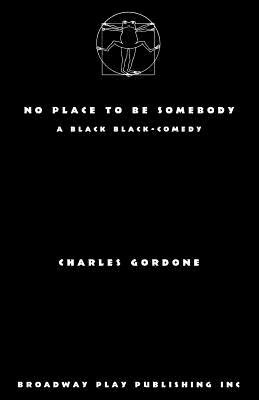
Before moving to New York to pursue his dreams of acting and directing, Charles Gordone spent a year at the University of California Los Angeles, joining the U.S. Army Air Corps as an entertainment organizer for two years. He then studied music at Los Angeles City College and a B.A. in drama at California State University. In 1962, Gordone founded the Committee for the Employment of Negroes to lobby for more employment opportunities for Black people in theater. Unfortunately, none of Gordone’s work claimed the same amount of recognition as No Place to Be Somebody. In the 1970s, he participated in the Cell Block Theatre Program in New Jersey, a theater rehabilitation program for inmates, and then began teaching at Texas A&M University in 1986.
Poet Gwendolyn Brooks won a Pulitzer Prize in Poetry for her book Annie Allen in the year 1950. She authored more than 20 poetry collections in her lifetime. Having started writing in her early teens and being published in American Childhood magazine at 16 years old, Brooks was a regular contributor to the Chicago Defender’s “Lights and Shadows” poetry column. Further, accomplished authors Langston Hughes and James Weldon Johnson were eager supporters of her early work.
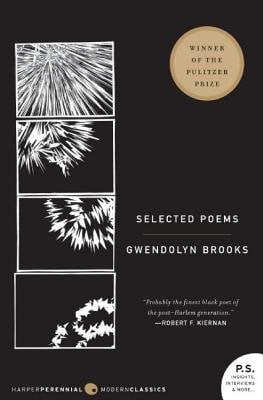
Gwendolyn Brooks had participated in the Black Power movement by holding poetry workshops in her home and helping teach renowned authors Sonia Sanchez, Nikki Giovanni, and Don L. Lee. Not only was she the first female author to win a Pulitzer Prize, but she was also the first Black woman to join the National Institute of Arts and Letters and become a poetry consultant to the Library of Congress.
In addition to these accolades, Brooks was named a poet laureate of Illinois and is a recipient of an American Academy of Arts and Letters Award, a Frost Medal, a National Endowment for the Arts Award, a Shelley Memorial Award, and a National Medal of the Arts. She’s earned fellowships from the Academy of American Poets and the Guggenheim Foundation and holds over 50 honorary degrees. In her later life, Brooks volunteered her time reading poetry at prisons and hospitals and funded and attended poetry contests for school-aged children.
National Book Awards – Ralph Ellison and Jesmyn Ward
After serving in World War II, Ralph Ellison wrote Invisible Man, winning him a National Book Award in 1935. He had previously studied music for three years at Tuskegee University. He wrote a mix of short stories, reviews, and essays for periodicals because of the support he harnessed from fellow author Richard Wright. Ellison also worked on the Federal Writers’ Project and was also the managing editor of The Negro Quarterly.

The Invisible Man is a bildungsroman, a novel form that portrays the way the protagonist develops throughout the story, both morally and mentally. The unnamed protagonist in Ellison’s novel, a Southern Black youth, moves to Harlem to join the fight against oppression. But, once he gets there, he is ignored by his peers. The Invisible Man was praised for its innovative style that combines classic literary motifs, Black culture, and dialect, fashioning a unique angle of the contemporary composition of the African American identity. Ellison regarded his novel as a work of art alongside its significance as a societal critique. However, other Black novelists saw this perspective as undevotion to social justice issues.
Jesmyn Ward was both the first woman and first Black American to win the National Book Awards twice. She earned her MFA from the University of Michigan and is teaching creative writing at Tulane University.
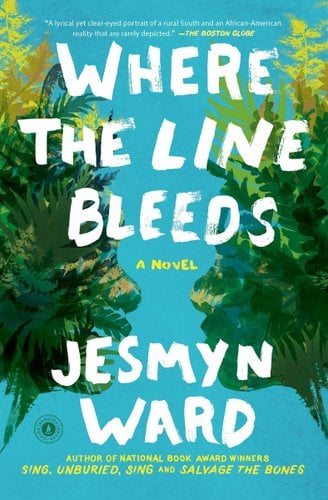
In 2011, Where the Line Bleeds and Salvage the Bones earned Jesmyn Ward the National Book Awards. Where the Line Bleeds is Ward’s first novel and follows twins Joshua and Christophe during one pivotal summer. They live with their extended family on Mississippi’s Gulf Coast, raised by their blind grandmother. In the aftermath of Hurricane Katrina and following high school graduation, they set out to find jobs. Yet, amid the difficulty, Christophe begins to sell drugs while Joshua successfully finds work on the docks. Suddenly, the twin’s parents reappear, mirroring the twins: Cille, who left the family for a better job, and Sandman, who is an addict. Sandman provokes a confrontation with Christophe that ultimately reveals vital information that could potentially do more harm than good to this family.
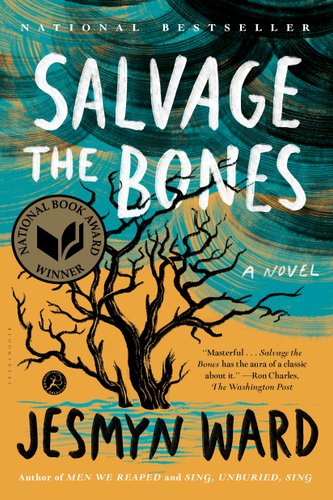
Salvage the Bones occurs in the same setting but before Hurricane Katrina hit. A raw novel containing exquisite poetry, the story follows Esch, a pregnant 14-year-old girl, her alcoholic father, three brothers, and their daily struggles as a family against all odds. It focuses on critical themes of community and the real-life, underrepresented experiences of those in rural poverty.
The Booker Prize – Ben Okri and Bernardine Evaristo
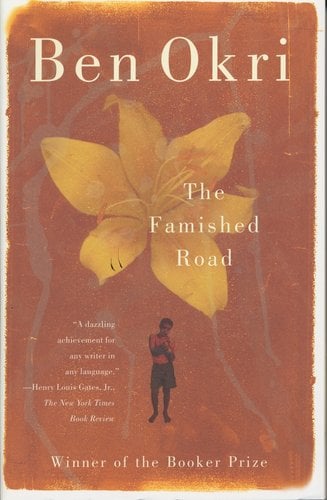
Nigerian novelist, poet, and short-story writer Ben Okri’s The Famished Road won the 1991 Booker Prize. It details the story of Azaro, a child who failed to honor a pact he made with the spirit world. Taking place in an impoverished African city under British rule, The Famished Road depicts Okri’s characteristic portrayal of Nigeria’s social and political unrest using the tool of magic realism. Okri’s poetry collection, An African Elegy, published in 1992, urges Africans to overcome the opposition in their countries, and the undertones of Ben Okri’s essays reiterate the message that Africans must reforge their identities.

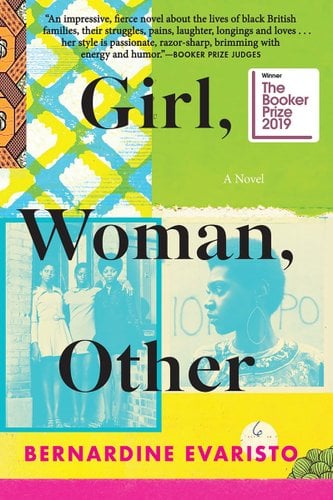
Recently, in 2019, Bernardine Evaristo made history as the first Black female author to be awarded the Booker Prize. Her matchless novel Girl, Woman, Other maps the lives of 20 different women throughout their lives in Britain. The richly diverse characters offer powerful perspectives of those of different races, social classes, and generations. Much of Evaristo’s short fiction, reviews, essays, drama, and radio writing critically explores the African diaspora’s historical, modern, real, or otherwise imagined aspects. Currently, Bernardine Evaristo is a creative writing professor at Brunel University London. She is also Vice Chair of the Royal Society of Literature. In addition to the Book Prize, Evaristo received an MBE in the 2009 Queen’s Birthday Honors List.
Neustadt International Prize for Literature – Kamau Brathwaite and Edwidge Danticat
Barbadian poet, essayist, and critic Kamau Brathwaite was honored with the Neustadt International Prize for Literature in 1994. Brathwaite’s stunning literary works explored Caribbean culture’s African and indigenous roots, dealing with themes of cultural identity. He studied at Harrison College in Barbados, Pembroke College in Cambridge, and the University of Sussex.

Kamau Brathwaite gained international recognition for his poetry collections Rights of Passage, Masks, and Islands, which were combined into a trilogy titled The Arrivants. Notable essays and literature studies of culture and history include Folk Culture of the Slaves in Jamaica, The Development of Creole Society in Jamaica, History of the Voice: The Development of Nation Language in Anglophone and Caribbean Poetry, and Roots. Brathwaite’s works analyze the human condition, illustrating the interconnectedness between identities and the challenges they face.
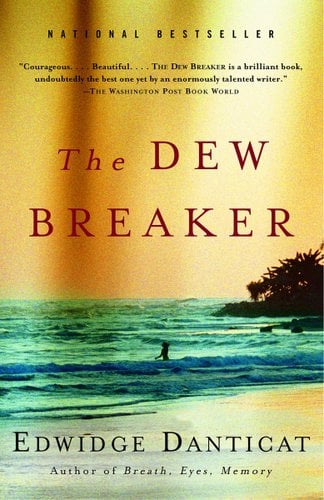
In 2018, prolific author Edwidge Danticat won the Neustadt International Prize for Literature for her tremendous portrayals of national identity, nationalism, family, grief, and immigration. Her literature is rooted in Haitian culture and storytelling. The Dew Breaker, published in 2004, is one of her most renowned novels, as she investigates Haitian history and the rule of François Duvalier through a series of stories about a Haitian immigrant who mistreated and killed those who resisted the rule of the oppressive politician.
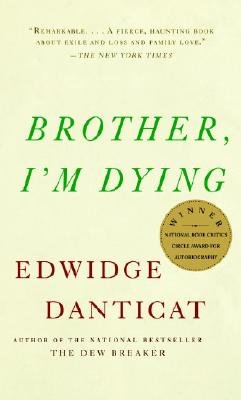
Edwidge Danticat, in addition to the Neustadt International Prize, was a National Book Award finalist, a recipient of the Pushcart Short Story Prize and the National Book Critics Circle Award for her autobiography, Brother, I’m Dying, as well as a MacArthur Fellow. Danticat graduated with a degree in French literature from Barnard College before getting an MFA from Ivy League institution Brown University.
The best way to educate oneself on social justice issues is to learn directly from the experiences of those affected by the injustice. Progression towards a truly multicultural and equitable society can only be achieved if everyone works to understand the past and present problems at hand, working together to uplift the voices often overlooked.
The authors above not only created spirited, nuanced literary works that highlight the plight of underrepresented communities but have fought to create space so that other Black authors feel safe expressing themselves and their experiences in mainstream media. It is crucial to celebrate Black voices in the literary scene, which prides itself on its accessibility to vital information and educational aspects.
Want to explore more interesting trivia? Click here.
To explore more best-selling authors, check out our Bookshop here.