


















Dystopian literature — especially YA — has become the backbone of popular literature in the past few decades. Divergent, The Hunger Games, The Maze Runner, and others have taught us the value of personal freedom, of standing up for the common man and persevering to achieve your ideal society. Their protagonists face emotional and physical hardships as they fight not just for themselves, but also for every person in their fictional society as they attempt to create a better world.

These novels also provide biting commentary on our societies today, relating the problems of their fictional dystopia to our current social and economic problems. Additionally, the issue of climate change has become much more prevalent in both society and in fiction. As our planet changes, so does our dystopian literature.
Dystopia, Science Fiction, and Frankenstein

Dystopian fiction is very similar to science fiction; they both comment on present-day society through fictional versions of more (or less) advanced civilizations and their politics and values. The appeal of these novels lies in their realism. In fact, Mary Shelley’s Frankenstein is well-known as one of the first science-fiction novels; she writes of technology not achievable in her time and the issues it creates. The eponymous character of Dr. Frankenstein is a realistic — yet unlikable — scientist with an ambition that’s likely deep-seated in all of us: power and control. I could go on and on about Frankenstein, but that’s not what we’re talking about here.
Mary Shelley: Tying It All Together

Like science fiction, dystopian literature exhibits a realistic version of a society like ours; only oppression, poverty, disease, and other political and economic disasters are even more prevalent. Mary Shelley hit the jackpot with Frankenstein, providing influence to many future science-fiction writers. But you probably didn’t know that she also wrote the pioneer dystopian novel, right? Most people have no idea where the genre came from or believe it stemmed from popular and influential titles like H. G. Wells’s The Time Machine or We by Yevgeny Zamyatin. Nope. It was Mary Shelley, all the way back in 1826.
The Origins of Dystopia
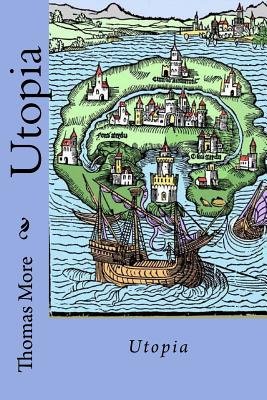
Humanity’s focus on idealistic societies began with Sir Thomas More’s Utopia. It was in this 1516 novel that More coined the word utopia, writing about a perfect society. Ironically, this novel is actually a satire of England at the time, and the name Utopia itself is a pun: It combines the Greek eu-topos (meaning “good place”) and u-topos (meaning “no place”) to reflect More’s belief that utopias are too far outside the realm of societal possibilities and could never exist.
It is believed that the term “dystopia” was created as an antonym to the idea of utopia; it was actually created by 19th-century philosopher John Stuart Mill to describe the English government and its land policies. That’s right, the word dystopia was first created to describe our very own society. No wonder it’s such a popular topic!
While the word itself was coined decades after Mary Shelley’s novel, it perfectly matches the content and thematic elements of her book and, therefore, provides an ample way to describe one of the most influential stories of the last century. Who knew the very first dystopian novel was written by a woman?
The Last Man by Mary Shelley
The Last Man stemmed from Mary Shelley’s tragic experience with death in her family. Self-isolating after the death of her children and husband, she churned out this exceptional prophetic work detailing the downfall of humanity and the social and emotional aftermath of destruction.

The novel follows the titular “last man” — Lionel Vesey — and how he deals with his grief, the unbearable loss that comes from watching the planet’s humans slowly die from plague, war, and corruption. The Last Man is an incredibly moving story about Vesey’s emotional suffering, but it also thematically zooms out to explore the planet itself: the devastating loss of human life tied to the regrowth and renewal of Earth’s natural flora and fauna.

This novel answers both the past’s and the present’s questions about man’s influence on our planet and if it’s possible to live in a peaceful and non-invasive way among our natural resources. Shelley grows hope out of despair — like most other dystopian novels — as we watch Lionel Vesey attempt to save humanity. Unlike other dystopian novels, though, Vesey’s attempts come less from a physical, social, and political angle and more from metaphysical morals and emotions. Vesey isn’t trying to save the Earth’s population of humans. He is attempting to conserve the ideals that make humanity unique: empathy, kindness, and humaneness.
The Last Man poses the question: What would happen if humanity finally faced the consequences of their own actions, falling prey to their violent wars and corruptible governments? If nature strikes back with a plague to end all plagues, killing most of humanity, can the survivors live and let nature reign supreme? Can we live in a society that doesn’t revolve around us? Or must the power and control we seek be our ultimate undoing?
Check out our article if you want to learn more about the incredible influence that Mary Shelley had on the literature world.
Want to read more books by awesome female authors? You can browse our bookshelf for options!
