

















In a discovery that hits all the right notes, a long-lost waltz by Frédéric Chopin has pirouetted out of the past and into the present. Unearthed from the depths of the Morgan Library and Museum, this nearly 200-year-old composition is poised to enchant classical music lovers all over again. As Chopin’s melodies grace our ears once more, his genius continues to orchestrate a symphony of wonder across the ages. Keep reading to get the full scoop.
Frédéric Chopin (1810 – 1849)
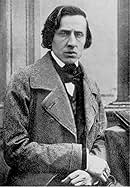
Frédéric Chopin was a famous Polish composer whose life reads like a symphony of passion and genius. Full of prodigious talent and a flair for the dramatic, Chopin’s early years were a prelude to his illustrious career. His compositions, often described as the poetry of the piano, have left an indelible mark on the world of classical music. Chopin is celebrated for inventing the instrumental ballade and for his extensive body of work, including sonatas, mazurkas, waltzes, nocturnes, polonaises, études, impromptus, scherzos, and preludes. Everything he did not only showcase his technical prowess but also his ability to infuse deep emotion into his music, earning him a place among the greatest composers of the Romantic era.
Chopin’s life was a page-turner when it came to romantic escapades and artistic triumphs. He was the darling of Parisian salons, where he enchanted the crème de la crème of society with his music. Chopin’s health might have been frail, but his spirit was as resilient as a well-bound book. His relationship with the novelist George Sand was a saga in itself — filled with passion, creativity, and, at times, discord.
In his final years, Frédéric Chopin continued to compose and perform, despite the severe decline in his health. His last public concert occurred on Nov. 16, 1848, in London’s Guildhall. Then, supported by his admirer Jane Stirling, Chopin spent his remaining days in Paris, where he passed away at the age of 39 on Oct. 17, 1849. Today, Chopin’s music remains a constant, lyrical narrative that still resonates with audiences.
The Musical Find of the Century
Robinson McClellan, Associate Curator of Music Manuscripts, made this remarkable find while cataloging manuscripts. This is the first discovery of music by Chopin in nearly 100 years. An expert in Chopin himself, McClellan came across one that seemed to be a waltz by Chopin — but one he didn’t recognize. It was written on a small manuscript card with Chopin’s handwritten name, dated somewhere between 1830 and 1835. After a team of external experts and conservators joined in, it became clear that this really was an entirely unknown Chopin work.
The manuscript has 24 notated measures that the pianist repeats once. The beginning has several moody, dissonant measures that culminate in a loud outburst, and then a melancholy melody begins. The fascinating thing is that none of Chopin’s other waltzes start this way! It’s also the shortest of his waltzes, lasting about a minute, though it does have the signature “tightness” found in his finished works.
Only slightly larger than an index card (about 4 x 5 inches), this waltz was likely meant as a gift for someone’s autograph album. Because this one is unsigned, and since Chopin usually signed gift manuscripts, it’s possible that he changed his mind about sending it (or completely forgot to).
From Vault to YouTube
This previously unknown waltz adds to the already rich legacy of Chopin’s compositions, gifting us with a fresh glimpse into the creative genius of the universally beloved Polish composer. This serendipitous discovery is a lyrical reminder that every past can have an encore.
Discover melodic fiction that feature classical music by clicking here.
Try browsing our bookshelf for recommendations that combine music and literature.