

















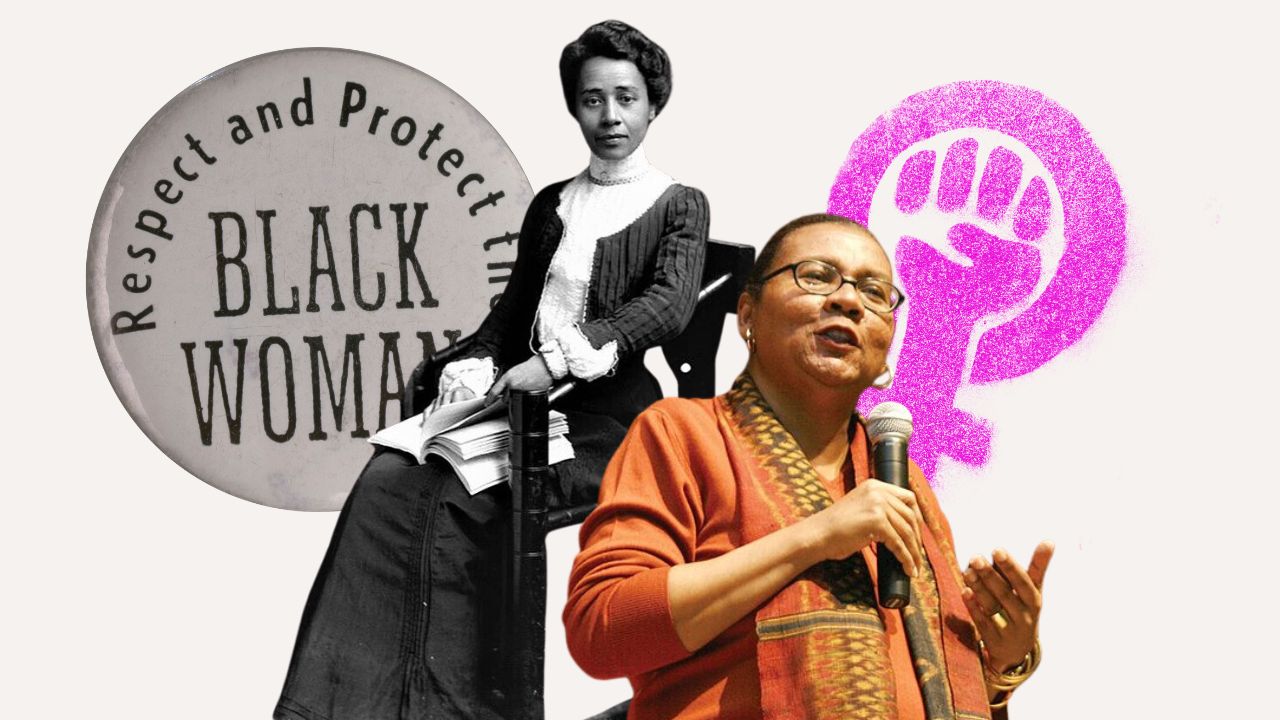
Black women have been at the forefront of major social change in the United States for much of the country’s history, from the Revolution to the Stonewall riots to Black Lives Matter. Despite this, their contributions have not always been acknowledged, and their experiences have often been sidelined.
Black feminism arose in America in the 1960s to address a gap in the mainstream feminist and Civil Rights movements: the overlapping experiences of racism and misogyny that Black women face, also known as misogynoir. Many of these women were writers who contributed their ideas and voices to the movement.
Join us as we explore the history and evolution of Black feminism and meet some of the amazing women whose work made it possible.
Late 19th-Early 20th Century: Suffrage
The roots of Black feminism originated in the late 19th and early 20th centuries, as the United States grappled with the aftermath of emancipation and Reconstruction as well as the question of equal voting rights. Prior to the Civil War, the antislavery and women’s rights movements had been deeply intertwined. Black women and abolitionists, such as Sojourner Truth, participated actively in the emerging women’s suffrage movement, attending and speaking at conventions across the country.

However, the suffrage movement was fraught with racial tensions. The 15th Amendment, which granted voting rights to Black men, created a divide between white and Black suffragists. Many white suffragists, including Susan B. Anthony and Elizabeth Cady Stanton, believed white women’s voting rights should be prioritized over Black men’s. To gain support from white Southern women, they often resorted to using racist rhetoric that demonized Black men and alienated Black women. The increased tension led many Black suffragists to break away from white-led suffrage groups and create their own, such as the Colored Woman’s Franchise Association and the National Association of Colored Women.
Even after the 19th Amendment was passed in 1919, numerous states enacted voting policies designed to prevent Black Americans from voting. With the white-led women’s suffrage groups disbanded, Black women continued to advocate for unrestricted voting rights until the passage of the Voting Rights Act in 1965.
One pioneering but often overlooked early Black feminist figure is Dr. Anna Julia Cooper, whose groundbreaking 1892 book, A Voice from the South, contains much of the early seeds for Black feminist theory. Cooper was one of the first writers to describe the overlap between racialized and gendered oppression that Black women face.

1960s-1980s: The Second Wave
The 1960s was a time of great social upheaval for the United States, encompassing both the civil rights and women’s liberation movements. The National Organization for Women (NOW) was founded in 1966 by a group of women that included law professor Dr. Pauli Murray.
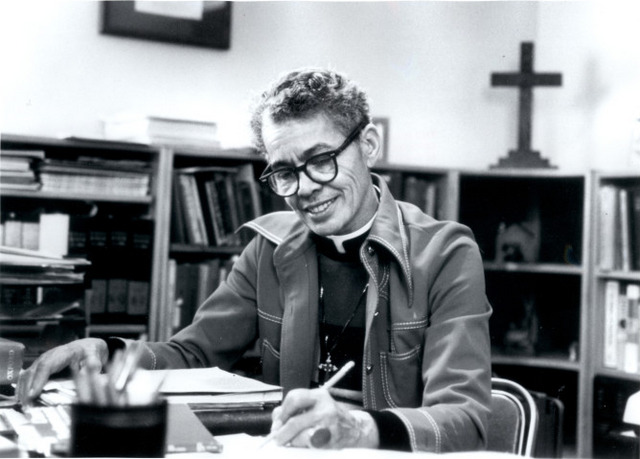
Murray played a pivotal role in advancing civil rights protections through her work with the American Civil Liberties Union (ACLU). The only female student in her class at Howard University, she argued tirelessly for courts to defend sex as a protected class under the Civil Rights Act. Ruth Bader Ginsburg credited Murray in the brief she wrote for Reed v. Reed in 1971, the first time the Supreme Court ruled sex discrimination unconstitutional under the 14th Amendment.
As the “second wave” of feminism gained traction in the 1970s, Black women grew concerned that the mainstream feminist movement was not addressing their needs. Organizations such as the National Black Feminist Organization and the Combahee River Collective arose, often calling for a more radical approach to social justice. Many leading Black feminists were queer and lesbian women who felt particularly ostracized from mainstream Black and LGBTQ+ rights groups.
Writers were central in building the Black feminist movement. Author Alice Walker created the term “womanist” in 1982 to describe a women’s liberation movement that centered on Black women.

“Womanist is to feminist as purple is to lavender.”
–Alice Walker, In Search of Our Mother’s Gardens: Womanist Prose
Poets Audre Lorde, Cherrie Moraga, and Barbara Smith co-founded Kitchen Table: Women of Color Press in 1981 to amplify the voices of feminist writers of color. Lorde herself wrote extensively about being Black and a lesbian, and both her essays and her poetry reflect her multifaceted identity.

“There is no such thing as a single-issue struggle because we do not live single-issue lives.”
–Audre Lorde
Writer bell hooks also contributed greatly to the Black feminist canon, advocating for a version of feminism that addressed the many differences between women, such as class and race.

1990s-Today: Intersectional Feminism
The ideas originally put forth by Black feminists finally came to the mainstream in 1989, when UCLA professor Kimberlé Crenshaw developed the theory of intersectionality. Crenshaw’s theory described how different forms of oppression can overlap and cause people of multiple identities to be further marginalized. It echoed the concerns that many Black feminists had raised for years, bringing them into wider discourse around activism and social justice.

Black feminists continue to advocate for themselves and draw attention to how racial and gender-based violence affects Black women disproportionately. Now more than ever, we must amplify their voices and continue their work to protect and uplift all marginalized communities.
To learn about more Black writers spearheading social change, click here.
Explore the words of these and other amazing Black authors at our Bookshop.
