








Fairytales and folktales have gone through many evolutions in just the last century alone. But have all these changes helped audiences to understand the story better, as many translators have claimed, or have these tales been warped to fit the ideals or virtues that are prized in society at the time they are rewritten?
We’ve known the answer to that question for a long time. In these examples, how stories are told is just as important as who is telling the story. And so, dearest readers, we shall begin our arguments in true storytelling fashion: Listen well, for just three stories we have to tell, all with messages and truth hidden, but for now and forevermore, no longer shall they be forbidden.
Trigger Warning: This article discusses sexual assault, victim-blaming, coercion, and gaslighting. Please exercise personal care when reading.
Little Red of Little Red Riding Hood

Like many folktales, the origins of Little Red Riding Hood lie in the oral tradition of storytelling. Anthropologist Jamie Tehrani estimates that the first instances of the Little Red Riding Hood myth emerged over 2000 years ago, likely as a variant of the Middle Eastern tale “The Wolf and the Kids” (“kids” used here to mean baby goats). Initial versions of the story consistently paint the wolf not only as a villain but also as a metaphor for the male sexual predation of young women and children. Several European versions of an early oral folktale called “The Story of Grandmother,” “The False Grandmother,” or “The Grandmother’s Tale” featured the wolf luring a young girl into a cottage where, after tricking the girl into consuming the flesh and blood of her murdered grandmother, the wolf would coax her into removing her clothes and getting into bed with him.
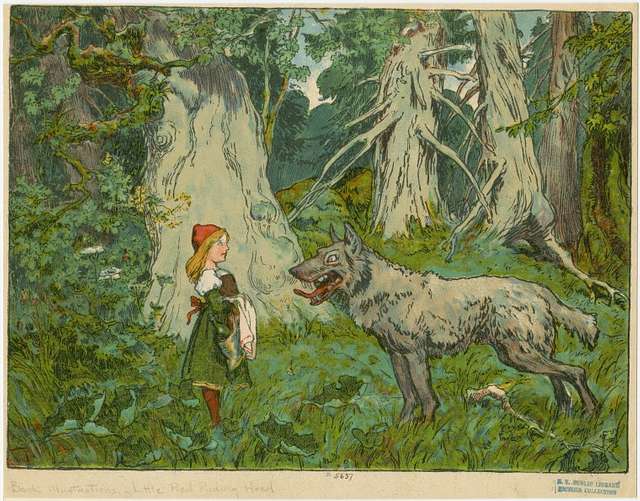
These early iterations, however, presented a version of Red Riding Hood that was clever, resourceful, and self-sufficient. Upon realizing that she has been duped, she makes a — ahem — biological excuse to leave the bed, and when the wolf ties a cord around her to ensure her return, she fastens it to a tree or rock outside to slip away and run home to safety. In some versions, she garners the assistance of some nearby laundresses, who help her escape and then drown the wolf in the river. Overall, these original stories were cautionary tales of predatory natures but also celebrations of female ingenuity and cooperation.
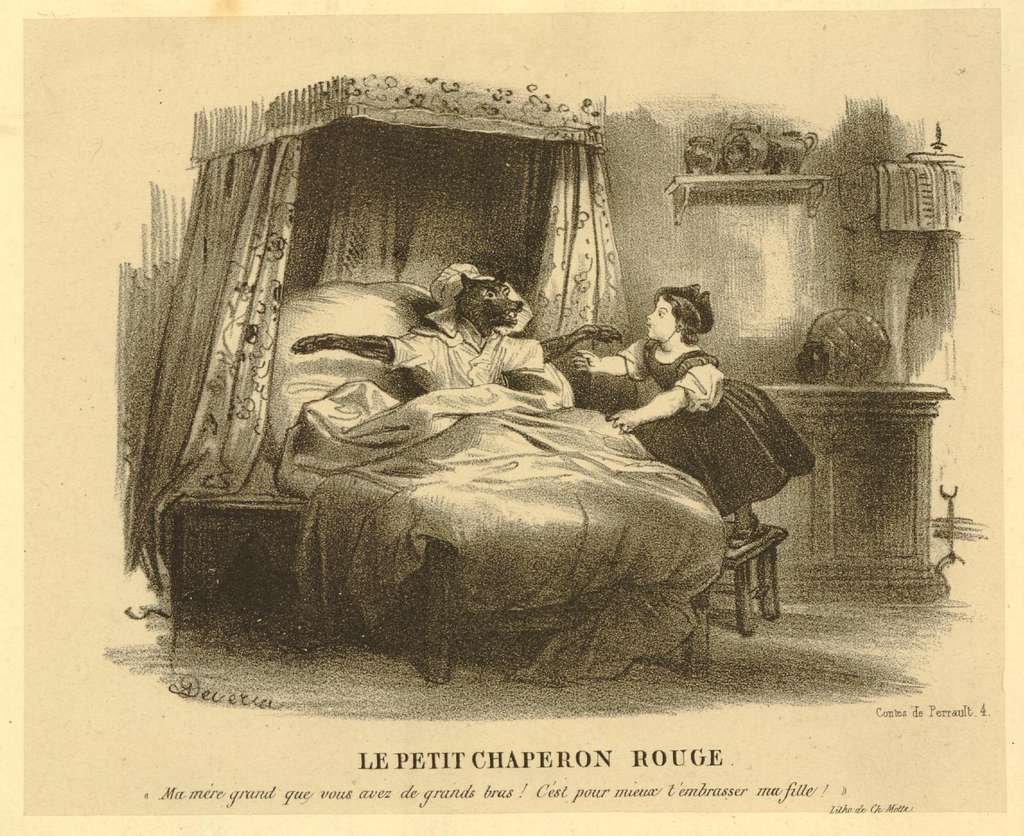
This changed with the two most famous print adaptations of the oral folktale: “Le petit chaperon rouge” by Charles Perrault in 1697 and “Rotkappchen” by the Brothers Grimm in 1812. Perrault was not a folklorist interested in preserving oral tradition and mainly adapted folktales to serve as moral lessons to his mostly wealthy, upper-class readership. In his version of Little Red Riding Hood, Red is a gormless ninny who obeys the commands of the wolf without any consideration of her safety and cannot escape the fate of being “devoured” — considered by most scholars to be a metaphor for sexual assault, something that would leave a girl or woman “ruined” by the moral standards of the time. Perrault even “helpfully” drives this point home in his version’s epilogue:
“Children, especially attractive, well-bred young ladies, should never talk to strangers, for if they should do so, they may well provide dinner for a wolf. I say ‘wolf,’ but there are various kinds of wolves. There are also those who are charming, quiet, polite, unassuming, complacent, and sweet, who pursue young women at home and in the streets.”
— Charles Perrault, “Le petit chaperon rouge”
The Grimms’ version does little better: while Red and her grandmother survive their brush with the wolf, they only do so with the intervention of the male woodsman, who rescues them from their terrible fate. Oddly, this creates a double standard in which one male stranger (the wolf) should not be trusted, and another male stranger (the woodsman) acts as a savior. And while the epilouge of the Grimm’s version does allow grandmother and Red to save themselves from a similar wolf attack later on, both the Grimms’ and Perrault’s versions stray from the original folktale in the same significant way: the wolf’s attack is not framed as the fault of the wolf, but of the careless and foolish Little Red Riding Hood herself.

Fortunately, changing viewpoints have led to several modern retellings of Little Red Riding Hood that subvert the misogynistic and victim-blaming implications of these versions of the story. Movies like Hard Candy and Trick ‘r Treat have used the better-known versions of Little Red to subvert expectations of victimhood, while writers and poets such as Angela Carter, Carol Ann Duffy, and Barbara G. Walker have crafted feminist retellings that restore Red’s agency. There are even children’s books, such as Wolves Will (Not) Be Wolves, that caution young audiences against victim-blaming and excusing predatory behaviors.
Gerda of The Snow Queen

If you were anywhere near a young child in 2013, you probably think you know the story of The Snow Queen by Hans Christian Andersen, but I promise you don’t know the half of it. The 1867 publication of The Snow Queen is split into seven parts: “A Mirror and Its Fragments,” “Kai and Gerda,” “The Magician Woman’s Garden,” “The Prince and the Princess,” “The Little Robber Girl,” “The Lapp Woman and Finn Woman,” and “In the Snow Queen’s Palace.” If the whole story had been adapted, it might have caused an uproar with the Disney executives. The tale begins by introducing a mirror that, when shattered, allows its fragments to enter a person and corrupt them. The second part introduces Gerda and Kai, two young friends who happen to be playing in the snow when Kai gets enchanted by the shards of the mirror and sets off away from Gerda, lured by the beauty of the Snow Queen.
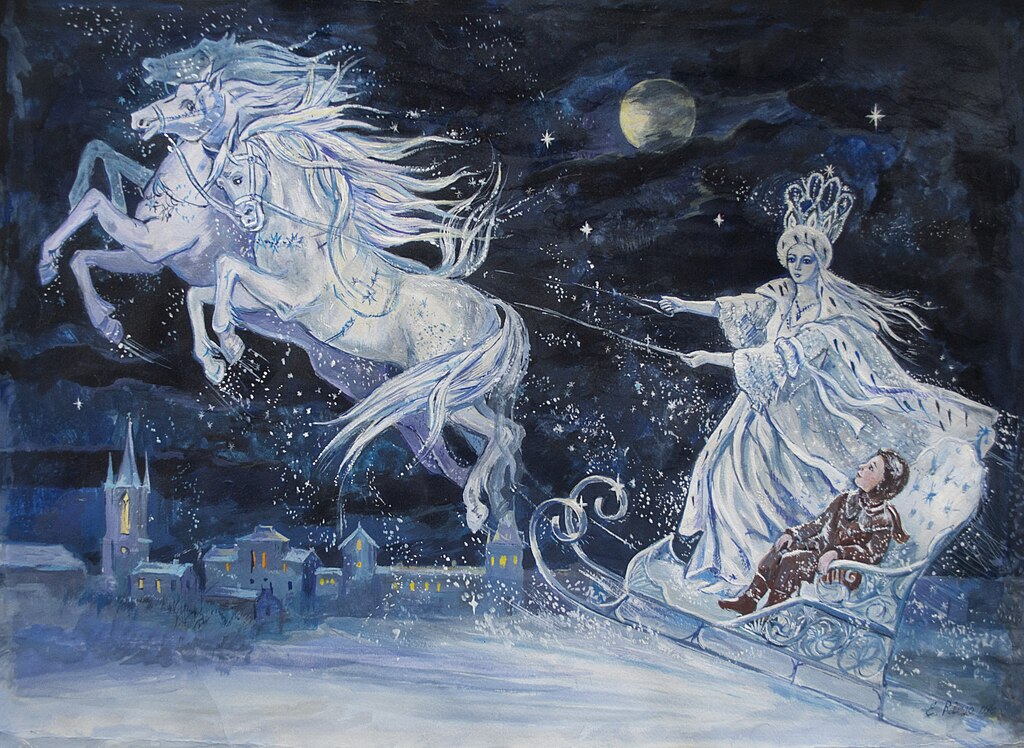
Gerda is then forced on a journey to find Kai. Many readers, however, also interpret it as Gerda’s self-discovery and a Bildungsroman, or coming-of-age story. Throughout the next two parts, Gerda learns more about “the power of love” and how she can use it as a weapon against the Snow Queen. But the fifth part is where the story takes a different turn: Gerda meets the Robbergirl, the first interaction that Gerda has with another child since Kai went missing, and it is fascinating to see this dynamic change in the course of the story. Many people interpret their relationship as a friendship blossoming into young love (and while reading this section, we found ourselves agreeing).
First, the Robbergirl seems to be very possessive of Gerda from the second she pulls her from the carriage, stopping her mother from killing her and insisting that Gerda share a bed with her. There is a clear tonal shift from one of a nurturing nature to a spark of something more. The Robbergirl is also the only one who questions what Gerda wants to do, whether she truly wants to find Kai, and if that will bring her happiness. Once Gerda asserts that it will, the Robbergirl gives up her prized reindeer to be Gerda’s travel companion for the remainder of her mission.

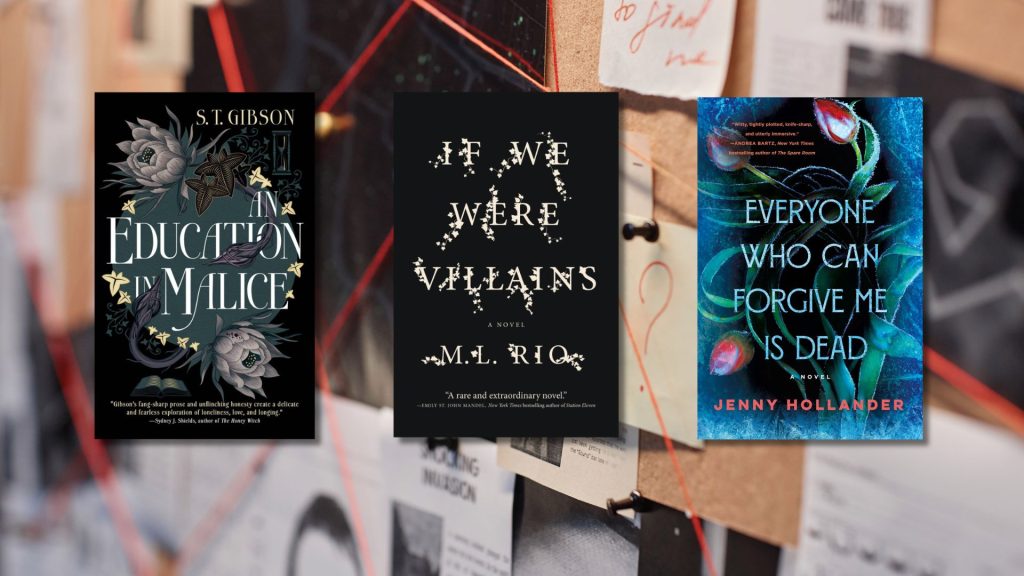
Gerda’s sexuality has become highly debated by scholars, readers, and even Tumblr fanatics. So much so that this very story was used in a retelling by S. T. Gibson titled Robbergirl, which expands on the short but tender relationship. However, none of these queer elements are explored in other adaptations of this story. Gerda is mangled into parts of a character and the heteronormative version of “Robbergirl” is traded for a man, meaning what once was a point of development and inner conflict — as well as a proto-representation of queer romance — is now nonexistent (even if there are still whispers of such on the far reaches of the internet).
Beauty of Beauty and the Beast

The tale as old as time that is Beauty and the Beast may be a story of acceptance in the Disney days, but in the first translated version by Ernest Dowson, it is filled with coercion, manipulation, and brings to light major consent issues that are glossed over in the adaptations within the modern canon. The version of this novella we would most recognize today comes from Madame Gabrielle-Suzanne de Villeneuve in 1740. She is a French writer who was “influenced by the fairy tales written by authors, such as Marie-Catherine d’Aulnoy and Charles Perrault.”
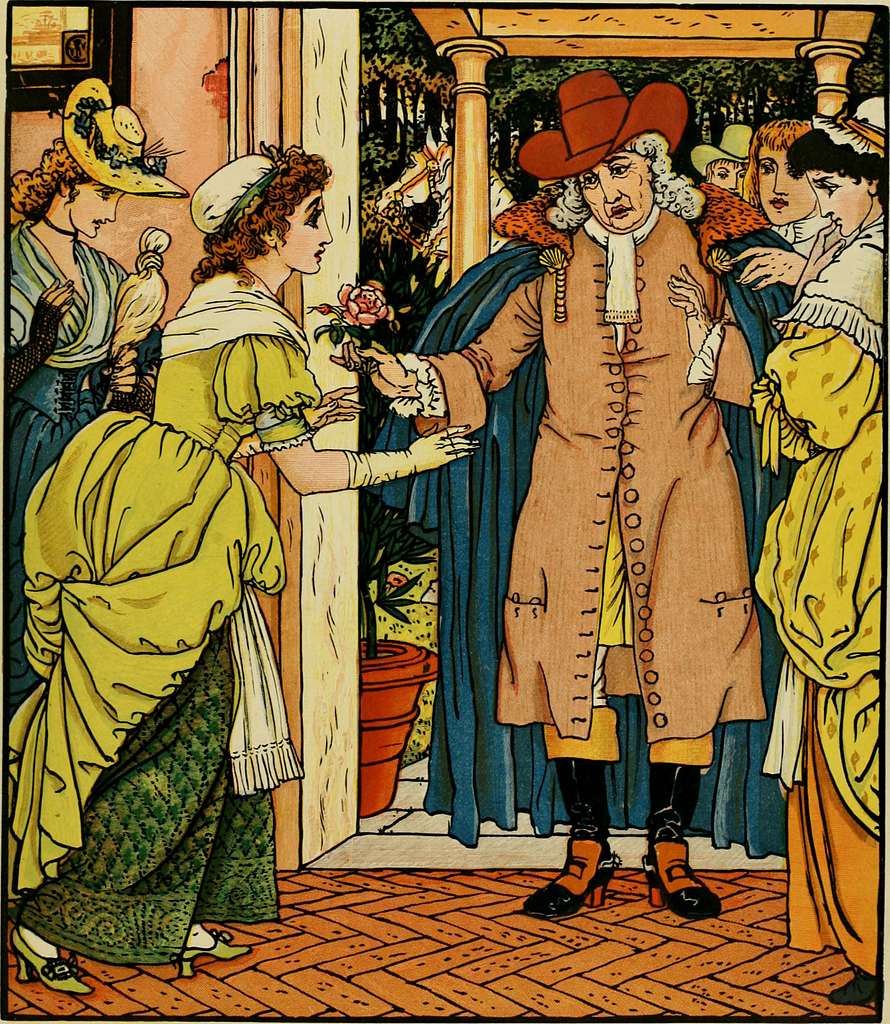
The coercion is apparent from the very beginning of the tale. As soon as the father returns from the Beast’s castle, telling his family of the trade he made in order to survive, his two eldest daughters immediately say that Beauty should be the one to be sacrificed. They convince him that because it was she who asked for the rose, she is at fault for bringing this “misfortune” upon them. She is so beside herself with grief about the situation that she is basically catatonic and unable to consent to her fate. In our opinion, that is not “coming on her own accord,” as the Beast stipulates.
That is textbook gaslighting by the sisters of not only Beauty but her father as well. She may not have been physically forced to go by her family, but she definitely is only going because she feels like she needs to right this “atrocity” she’s been manipulated into feeling responsible for. Even as Beauty is introduced to the Beast, there is no resistance by her as there is in modern adaptations. In fact, he even says that “her docility pleases him” and that he is so glad she is “willing to submit fully.” In our opinion, she’s only docile because she believes she’s going to die and that her fate is inescapable.

Now, on the topic of consent, we must make a comparison. Of the first two translations we could find in full, Ernest Dowson’s was more directly translated into English from French. While in search of the other translation by J. R. Planché, we came across an interesting inclusion in both: a moment in which the question that the Beast asks Beauty each night is “May I sleep with you?” and then later, near the end, the Fairy asks if she truly does want to marry the Beast. This implies a certain agency over her life that isn’t present in the contemporary social constraints that this story was originally written to reflect.
Of course, as it has been modernized over the years, choice and bodily autonomy have become more central to the tale than just in the two questions that the Beast and the Fairy ask of Beauty. In this case, the modernization has also created more conversation around Beauty’s fairness and ability to look past imperfections, rather than the dark beginnings of the novella itself.
Folklore and fairytales have always been a beloved way to spark the imagination while exploring themes of morality and humanity. As feminist scholar Marcia R. Lieberman once wrote, “Millions of women must surely have formed their psycho-sexual self-concepts, and their ideas of what they could or could not accomplish, what sort of behavior would be rewarded, and of the nature of reward itself, in part from their favorite fairy tale.” And if contemporary versions of these stories are teaching young female — and male — audiences are lessons that are rooted in heteronormativity, passivity, and coercion, perhaps we should rethink which “classic” fairytales should be shared, and which should stay on the shelf.
Want to learn more about the birthplaces of famous folklore? Check out our article on The Fascinating Origins of Fairy Tales.
To see our recommendations for reads that explore global folklore, check out our Bookshop bookshelf.