

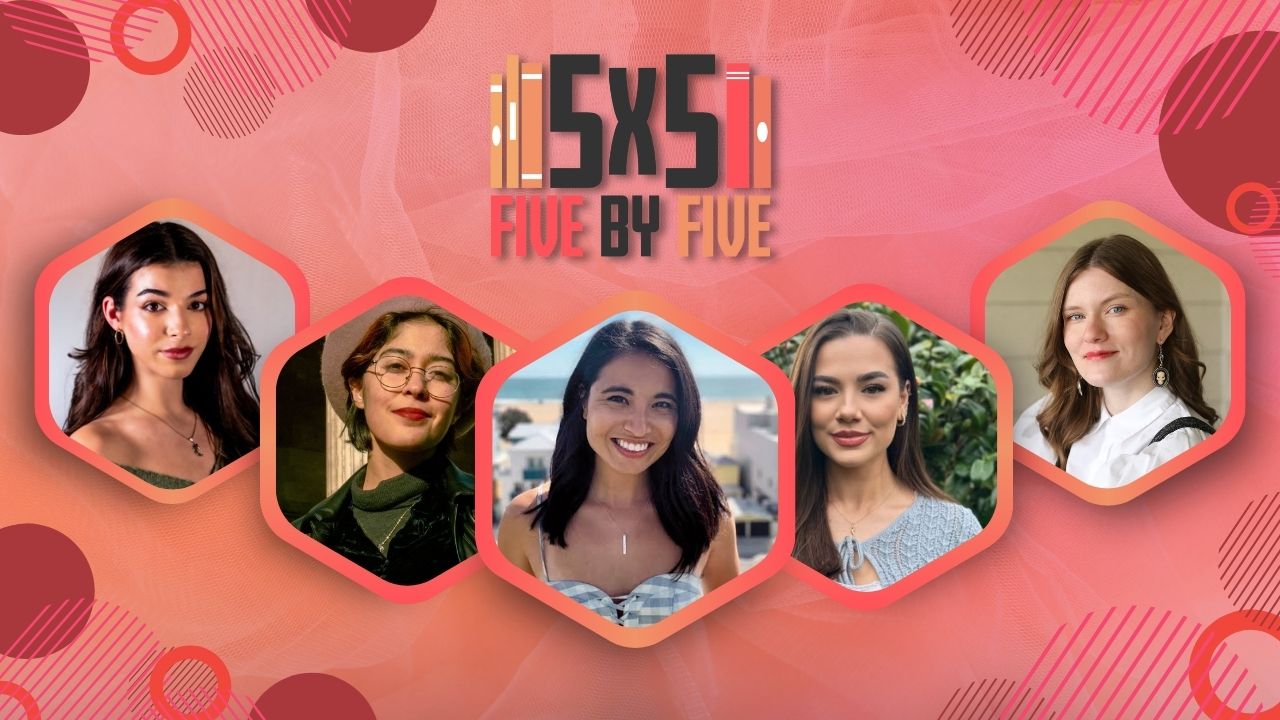
For this installment of our 5×5 series, we’ve gathered 5 Authors who began their careers in indie publishing before becoming traditionally published. Alongside Isabel Agajanian, Olivie Blake, Olivia Rose Darling, Imani Erriu, and Sophia Slade, join us on a fascinating journey through publishing. Along the way, you’ll learn about the challenges of both sides of the industry, see sneak peeks into these authors’ upcoming re-releases, and get some incredible indie recommendations! But first, let’s get to know our authors a little bit better.
The Authors
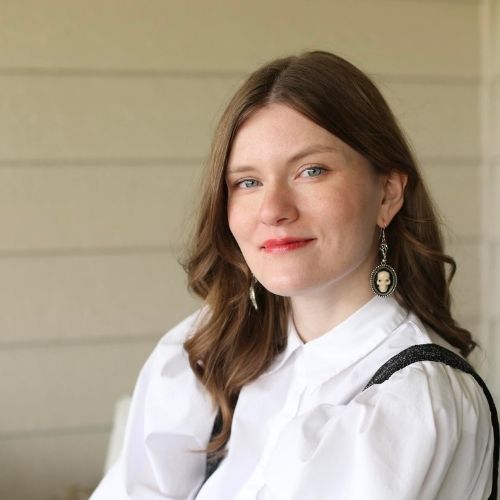
Isabel Agajanian
Isabel Agajanian (they/them) is a writer and illustrator living in the United States. Raised in California and spirited away to Florida, then Oregon, Isabel never writes in one place for too long. They are joined in their pursuit of good stories by a hefty grey cat named Mosse and at least one roommate at a time. Modern Divination is their first published novel at the crux of a hundred unpublished stories.
Olivie Blake
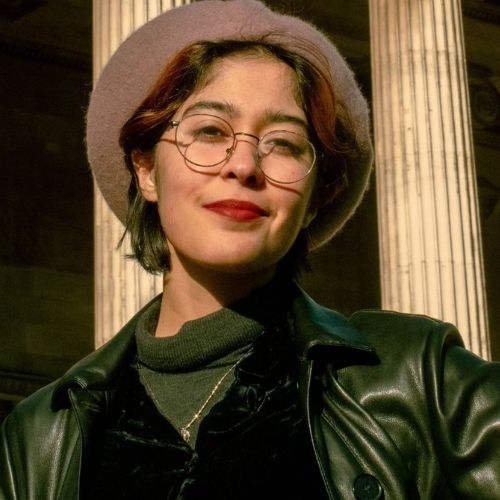
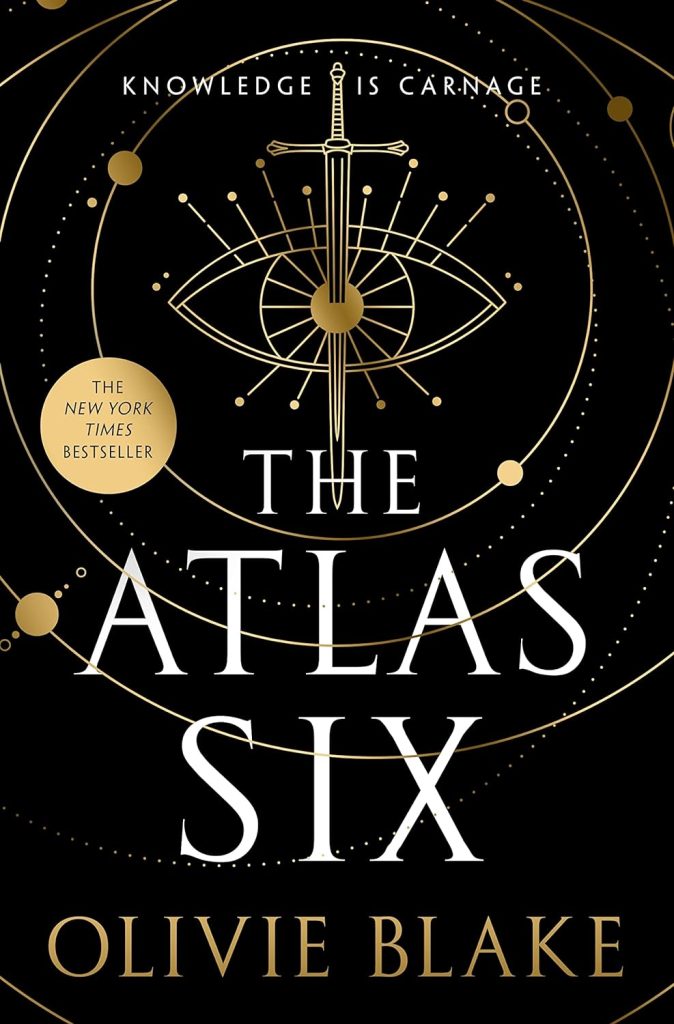
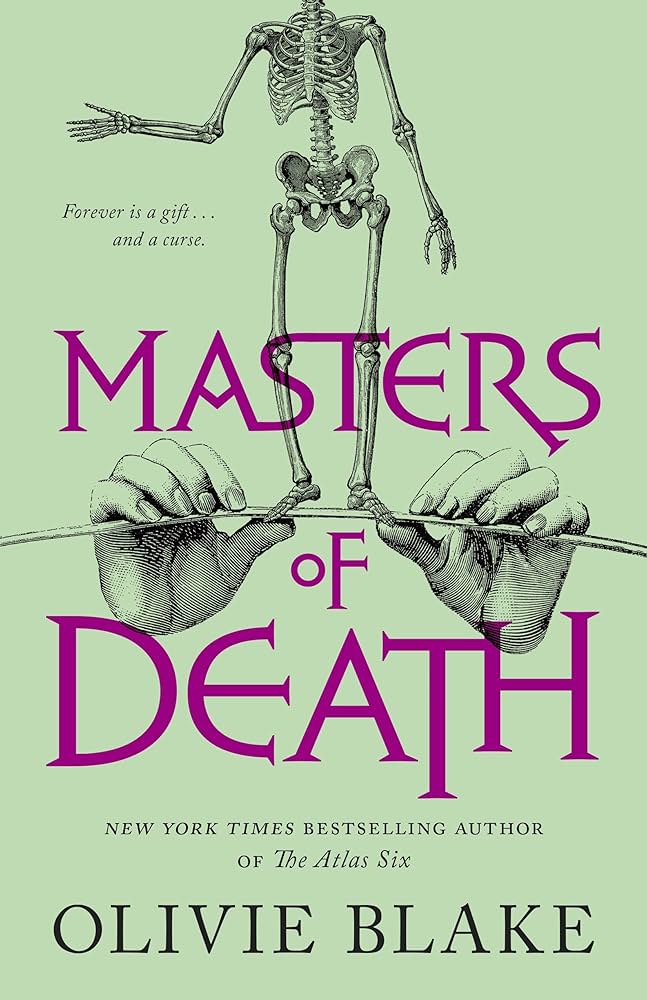
Olivie Blake is the New York Times bestselling author of The Atlas Six, Alone with You in the Ether, One for My Enemy, and Masters of Death. As Alexene Farol Follmuth, she is also the author of the young adult rom-coms My Mechanical Romance and Twelfth Knight. She lives in Los Angeles with her husband and goblin prince/toddler.
Olivia Rose Darling
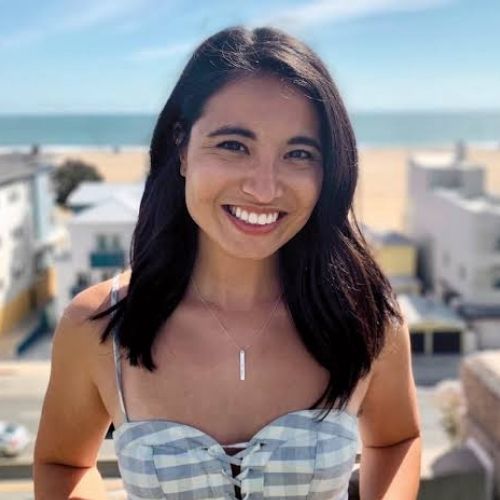
Olivia Rose Darling split her time growing up between New York City and Manchester, Vermont. She developed a passion for writing from a very young age, always scribbling poems onto napkins and short stories into her school notebooks. She graduated from Pace University and attained a degree in English with a concentration in creative writing. The Lord of the Rings was Darling’s favorite movie series during her childhood and helped form her fantasy obsession. Being an author and living a life filled with words and magic has always been her dream.
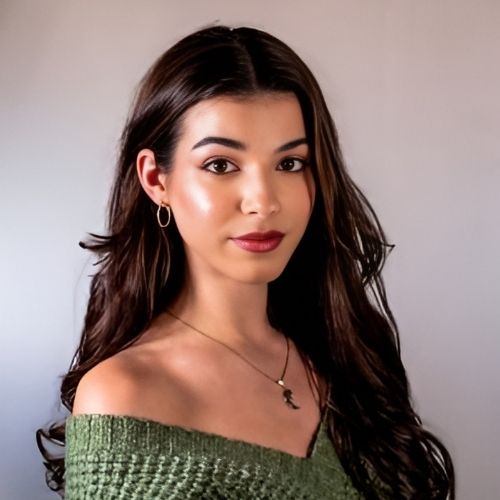
Imani Erriu
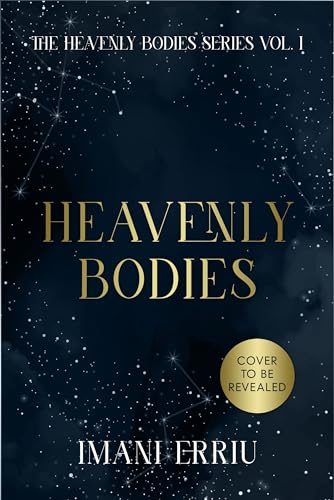
Imani Erriu is the author of the romance fantasy series Heavenly Bodies. She is a graduate of the Manchester Metropolitan University, where she received a Bachelor’s Degree in English Literature and Creative Writing. She spent most of her childhood in the forests of the English countryside, which definitely gifted her an overactive imagination. When she isn’t crying over her own fictional characters or daydreaming up her next plot twist, she can be found eating pasta and watching The Office on repeat.
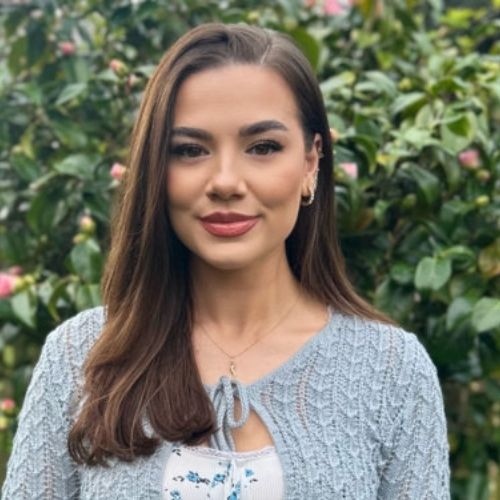
Sophia Slade
Sophia Slade has been writing since she was still losing her baby teeth. She independently published seven books ranging from dark fantasy to poetry before signing with Orbit Books. Sophia is a graduate of New York University and now lives in the Midwest with her lovely husband and their two cats, Mothman and Matcha. She loves antiquing, Twenty One Pilots, and frogs.
The Questions
1. Can you tell us a bit about your author journey, from being an indie author to where you are now?
Isabel: I had no official background in writing. I did not graduate college or pursue creative writing as a course of study; I just always had a propensity for good stories and big words. I was a precocious child and grew up to be a very isolated adult. What better way to keep myself occupied than to sit for hours in my bedroom and write about characters who could be sociable and have adventures for me? I drafted and edited my debut novel, Modern Divination, while working a white-cubicle office job where no one really bothered me, and I could scribble dialogue into my notebook. It never occurred to me to query it because I knew, going into it, that it was a weird book. (It was) not fantastical enough to appeal to SFF editors and unconventional as far as romances go. It falls imperfectly into the romantasy genre. I didn’t think a traditional publisher would know how to market it better than I could, which was highly specific and extremely personal. I held it close to my heart and went straight to self-publishing.
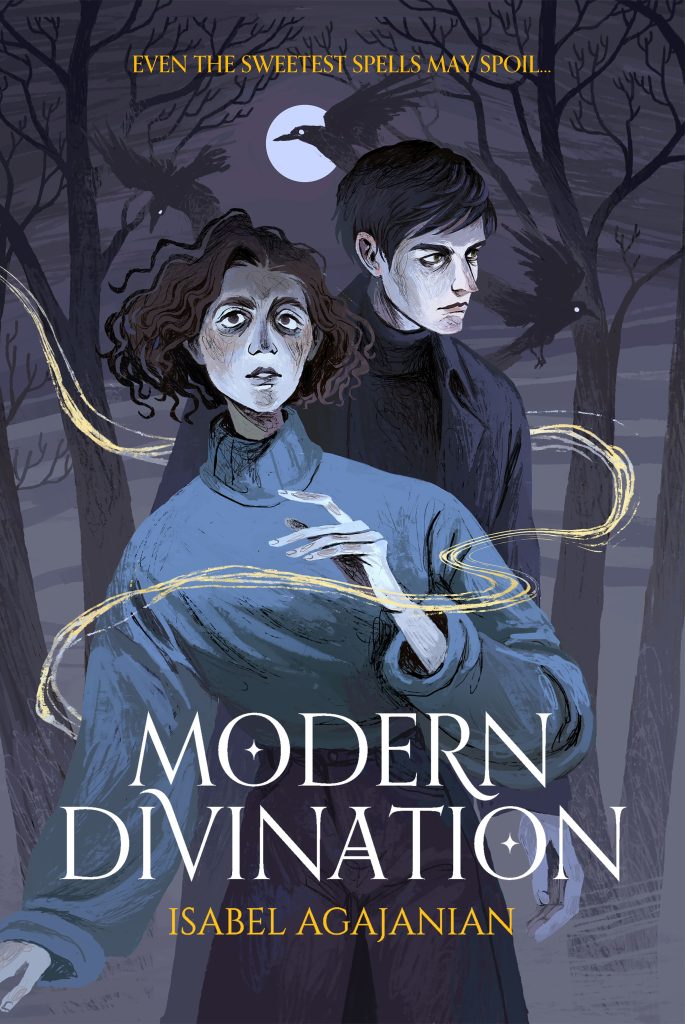
Somehow, this worked out for me. Despite being mostly absent on TikTok, my marketing efforts led to a wave of readers sharing Modern Divination online. I owe its initial success to the swath of generous booktokers and bookstagrammers who made gorgeous edits, reviews, and flat lays for the book. I haven’t even seen most of them because my TikTok account has been utterly defunct. I assume this is how my current editor at Pan Macmillan found me. I was contacted via Instagram DM on a morning when I was working a YA book festival for the job I took after leaving the office where I wrote Modern Divination. It was so early in the morning when I read it that I closed the message and forgot it was there until midday when my coworkers made me leave to respond. An editor from Tor, my dream publisher, had read and loved my book! They sent me an offer after an enthusiastic video call, and I scrambled to find an agent to represent me. I sold them the Modern Divination series in a two-book deal.
Olivie: I technically started my writing career by writing fanfiction from a place of mental illness (she says, facetiously but not falsely). I have bipolar, and I discovered after some years of struggle that the best version of my brain was the one doing creative work. I knew I ultimately wanted to be traditionally published because I don’t like the administrative tedium of production/marketing/promotion, but querying is a hard, unpredictable road. I’m very prolific (again from a place of mental illness), so every time I had an “unmarketable” idea, e.g., vampires in the time of Twilight burnout, I would self-publish for as low a price as possible in the hopes that someone would enjoy the story, but never with the intention to make a living on self-publishing.
That my best-known self-published work, The Atlas Six, took off on the burgeoning wings of 2020 BookTok was a totally unforeseeable accident. I was very pregnant, very cranky, very offline. I had gotten my agent and first traditional publishing deal only a few months before that, for my YA book My Mechanical Romance, and it was my agent who took Atlas on submission when I told her I wanted to traditionally publish the remainder of the (as-then unwritten) trilogy. At that point, I had far more leverage than the average debut author, purely because I’d gone viral. It’s a very interesting pathway to publishing because you never really shake the feeling of just being lucky to be there, even though you’re there specifically because you had value built in.
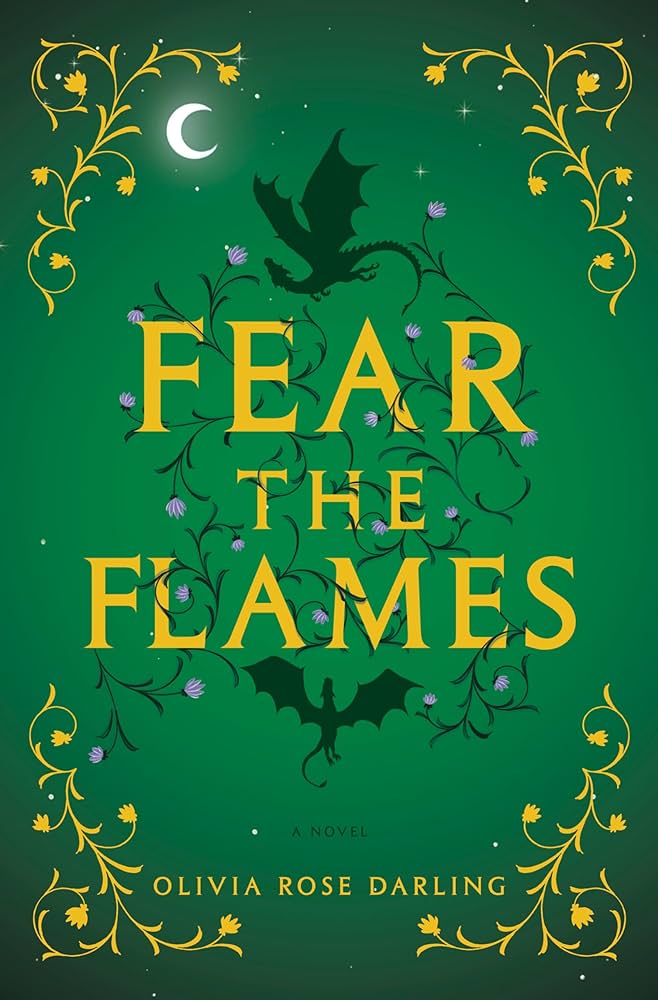
Olivia: My author journey began back in 2022 when I was fresh out of college and completed writing my debut fantasy romance novel, Fear the Flames! I always knew I wanted to be an author and Fear the Flames was an idea that was stuck in my head years before I began writing it. A few months after I published, I began seeing more people reading, reviewing, and posting, which was such a surreal feeling. I couldn’t believe so many people wanted to meet the characters that felt more like my friends than figments of my imagination.
My agent actually reached out to me a few days before my dad went to Sloan Kettering for surgery, and it was a time that we all needed a positive sign. The first thing he asked me when he woke up was if I had signed my contracts yet. After I signed with Jessica Watterson, I went on exclusive submission with Shauna Summers at Dell Romance, an imprint of Penguin Random House, and here I am now!
Imani: I published Heavenly Bodies two and a half years ago as an indie, and it started to gain a lot of traction on social media. From there, an agent reached out to me and said she’d love to represent me. From there, it’s been a whirlwind, and I couldn’t be more grateful for my amazing agent, editors, and publishing houses that I now work with.
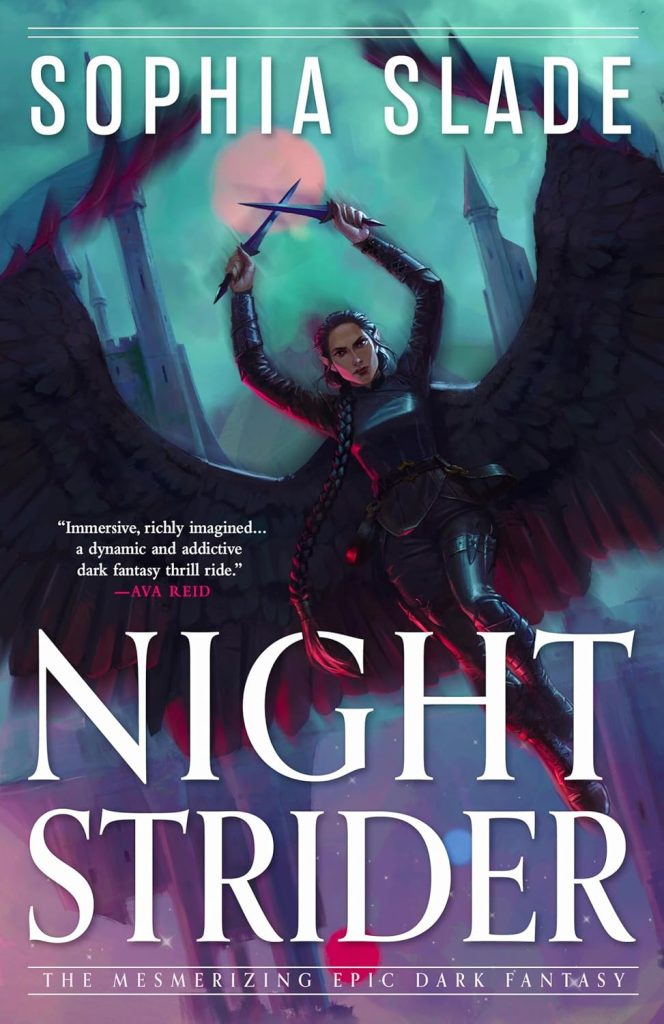
Sophia: I decided I was going to be an author when I was eight, and I have pursued that goal with borderline obsessive determination since. I self-published six books as an undergrad at New York University — a YA steampunk dystopian trilogy and three volumes of poetry. I was snapped up by an agent at 22 and stayed with them for almost three years before I chose to end that partnership. Without going into detail, I felt neither I nor my work was being treated with respect. After that, I self-published my seventh book, Nightstrider. I launched it with a Kickstarter that ended up being funded by over 400%! Nightstrider blew my six previous titles out of the water in terms of sales and hype, and I guess it did not go unnoticed because, in late 2023, a publisher reached out to me. While things did not work out with them, they did work out with Orbit, who had also demonstrated interest. I knew I needed an agent to help navigate all this, so I reached out to Bethany Weaver, who was recommended by a colleague, and signed with her that same week. Her vibe was fabulous, and her skills backed it up. She landed us a four-book deal for the Nightstrider Series with Orbit that month — and now here we are!
2. What are some of the unique challenges of being an indie author versus being a traditionally published author?
Isabel: I would say that finances were a much bigger deal to me as an indie author, having commissioned art for the cover and could rely on no advances, but the truth is that I still pay out of pocket for a lot of things as a traditionally published author. External promotional material like commissions for preorder incentives and travel for events aren’t things publishers will contribute to, but they do make a world of difference when it comes to marketing. Additionally, I sometimes despair at the amount of eyes I have on my work during the editing stage. Opinions conflict, editor to editor, and they’re usually not communicating with each other — just to me. Fielding those notes can be frustrating.
Olivie: I always like to begin by saying that pending the genre/age group you write for, you can absolutely make a living self-publishing. The caveat is that you have to enjoy running your own business, which I do not. I never hired editors so my books had proofreading errors; I did my own interior design with many initial mistakes and learned as I went; I disliked promotion and simply didn’t do it beyond one initial post to say the book was out. I’m not on TikTok and never have been. I should never have succeeded as a self-published author, but somehow I did, so I attribute my virality to my one actual genius move, which was to commission my collaborator and friend Little Chmura for interior illustrations.
I also like to emphasize that success as a self-published author happened to be, for me, a traditional publishing deal. But that is by no means a universal definition of self-publishing success. Many people like the creative control of self-publishing, and it definitely is a compromise either way — for me, it was compromising control for access to resources. Cover conversations are one example. After a certain point, I’m simply informed that I’m looking at the final cover whether I have further criticism or not, and I accept that even when I don’t love it because it means, among other things, that I don’t have to worry about sub-rights or audio production.
Olivia: My main challenge that was alleviated was having a consistent editor who loves my character and is invested in their growth. When I was indie I didn’t know where to look to find an editor, and was also fresh out of college so my budget was very small, so I ended up doing the work myself. I love both publishing paths and recommend all writers to look into both before deciding what route to take!
Imani: I think most indie authors would answer that a big challenge is putting your trust in others. We do absolutely everything ourselves as indie authors and are in control of every tiny detail. I think my biggest challenge was letting go of that and trusting that the people around me have the best intentions for the book and will take care of it!
Sophia: The first challenge that comes to mind is money. When you are indie, you pay for everything. Editing, covers, formatting, stock, travel, ads, trade reviews–the list goes on. It is an undeniable barrier for the vast majority of people. That is not to say that the second you get scooped up by a traditional publisher, everything is magically free. For example, I paid for the art and the printing costs for the prints for my pre-order campaign and will cover shipping costs. I will have to pay my own way for cons and signings, but I did not have to pay for the things that go into actually making the book. Beyond that, I think that while things have improved considerably in recent years, there is still something of a stigma attached to being an indie author. You are not taken as seriously. “Are you self-published or real published?” rings in your ears. Even some traditional authors look down their noses at you. Trad publishing comes with its own trials, but surviving and thriving as an indie author is nothing to sneeze at.
3. What has been the highlight of your career as an author so far?
Isabel: At my very first author event, which was offered to me by incredibly supportive bookseller friends of mine despite me having no existing following at the time, a reader brought me a blend of tea they made for my book in a gold-tinted glass bottle. The book in question, my self-published debut, heavily centered on the sharing of tea as a way to chart the development of the main romance and the color gold as a visual representation of magic. I have yet to drink the tea because I can’t stand the thought of not having it anymore. The gesture was so thoughtful and kind. I keep it on my bookshelf with the ingredients tag out and find myself looking at it all the time.
Olivie: Meeting readers, of course. The internet can be as cruel as it is devoted sometimes, but being face to face with people who tell you how much their work means to them or showing you a tattoo they got inspired by your work or anything like that is just otherworldly. It’s so hard to choose one highlight, though. I truly would have done anything it took to put food on the table and a roof over my head by writing fiction — I’m definitely a book person at heart, but I looked into writing video games. I wrote screenplays just to have one lying around, just in case. It never mattered what the medium was as long as I could be creative and live.
All of which is to say, every single thing that’s happened to me has been completely beyond my expectations. I guess the first time I really felt I wasn’t in Kansas anymore was a panel I was asked to do very early on in the Atlas promotional run with absolute legends Charlie Jane Anders and Seanan McGuire. Just a few years prior, I had asked a panel that included Seanan about whether we had a responsibility as female SFF authors who’d grown up with a pantheon of male heroes to write more female characters into our genre works. So I couldn’t believe we were later seated at the same table discussing the women that I had written into the canon of SFF.
Olivia: The highlight of my author career so far is knowing that there are readers who love my characters, see themselves in them, and have used the world I created to escape reality for a bit. Being able to give someone an experience I value so highly is an incredible gift. Through social media, I’ve been able to interact with so many of them who have given me tear-jerking messages, thoughtful reviews, and hilarious memes that honestly make my day a bit brighter whenever I’m tagged.
Imani: There are so many ‘pinch me’ moments that have happened. I think right now it’s Waterstones creating a special edition of my book. Although, I think when I see my book in a shop for the first time, that will be the ultimate highlight that I’ll never recover from.
Sophia: Oh man, I have so many. Obviously, signing with Orbit was a dream come true. Words fail, ironically. Getting blurbs from some of my favorite authors and cracking the top 300 on B&N. Some other big things I am not able to talk about yet (hehe). But honestly? Some of my favorite moments thus far have been the little things. One reader tagged me in a meme they made about a character in Nightstrider, another messaging me to say the worlds I created made them feel the way they felt when they first started reading fantasy, a creator making jewelry inspired by the characters… Those little moments are pure gold, and I hope I never take them for granted.
4. Being a traditionally published author often gives writers a chance to reach wider readerships. What’s one thing you’re most excited for new readers to experience while reading your book(s)? What is one thing you’re excited about for established readers, those who read your book(s) when they were indie-published, to read or experience in the traditionally published version?
Isabel: I was able to rectify a lot of the insecurities I had with the self-published version of Modern Divination in the new version. You’ll never write a book that pleases everyone, but you can write a book you’re proud of, and I’m much more confident in the version I’m sending out now.
Although Modern Divination was the first project I ever committed to publishing from the beginning of its creation, it was still a very self-indulgent project. I improved from draft to draft, and by the time I hit ‘publish’ on it, it was more a matter of relinquishing control than feeling officially done with it. I could find things in the manuscript to edit until the day I die. But having had so many eyes on it since self-publishing it — publishing professionals, readers, reviewers, and fellow authors — I was able to elaborate on aspects that got lost in the translation from writer to reader.
A lot of what was confusing for readers will be clarified in this version. It was easy for me, being so close to the book and so singular in my efforts, to lose sight of what information the reader might not know or might need more help seeing. Having a team of editors and a supportive agent helped me figure out what to hone in on. In doing so, I got to add a prologue that had been previously cut from the self-published version. I was always very keen on it and gutted to take it out, so I’m glad they felt it necessary.
Olivie: For me, it really varied per title. With The Atlas Six, I still had the rest of the trilogy to write, so I was focused mainly on the future anyway. With my backlist books like Masters of Death and One for My Enemy, it was excitement over the chance to give books I felt such fondness for a second chance at life. But because publishing’s job is to make all books seem universally appealing to some extent, I did not initially want to traditionally publish Alone With You in the Ether. It’s a very quiet book with a very personal message about being worthy of love despite your brokenness — it’s not for everyone’s tastes.
And because I experimented a lot with syncopation and form to try to recreate the experience of being inside a mental disorder, I knew it wouldn’t satisfy the reader looking for contemporary romance. But in the end, the possibility of reaching even one person who would find value in the story was worth the risk of people disliking or even hating it. I think, ultimately, I make art because I’m desperate to be understood, and the possibility of reaching someone who will experience something as I’ve felt it — someone who can benefit from what I’ve finally been able to put into words — is the entire point. Most other reasons for creating art are doomed to fail, but not that one.
Updating my backlist works stylistically to give them a second life was such a gift; my publisher would have gladly published them as is, but I chose to sacrifice a lot of blood, sweat, and tears (and sleep—my son was an infant who did NOT sleep through the night, or at all) to reshaping those stories to fit the evolution of my voice. Most of my self-published books were stories I wrote from a place of passion and excitement and experimentation, so to revisit them with a proverbial ten thousand hours under my belt was an incredible opportunity to augment those moments in my craft.
But to actually answer the question: It’s really exciting to see what people’s pull quotes are—whether they come from the original version or the new one. Whenever it’s a line from the new one, I feel so excited that I actually did make the work better. It’s not always productive to linger on old work—nothing is or can ever be perfect and the better option is usually to move on and make something new with greater skill. But the chance to revisit a period of my life creatively, to say something more to the audience who was with me in the ether once before, is a very precious thing.
Olivia: I’m so excited for Fear the Flames to be translated into other languages! I’m also looking forward to the audiobook coming out. I’ve dealt with hearing issues all my life so being able to widen the accessibility of Fear the Flames is incredible. No matter what language you’re reading in or what format you’re consuming the content in, Ravaryn is there for everyone who wishes to step into it.
I’m genuinely so excited for readers to read the new content I’ve added. One of my absolute favorite scenes in the book is the little adventure Elowen and Cayden go on in part two that fits so seamlessly into the book that I have no idea how it existed without it. Sometimes I feel like my characters just do things and I go along with it.
Imani: I’m so excited for my book to be more accessible, and for them to be able to pop down to their local bookshop and be able to buy it. I’m so excited for them to see the new and improved content. I always say that this version of Heavenly Bodies is my dream book, and everything I wanted to change, improve on, or add has been done. Having wonderful editors with me has really helped to hone the story I think.
Sophia: The bones of Nightstrider are the same, but it has been expanded and refined considerably! The main characters have been aged up — they are now in their early to mid-twenties rather than late teens — which has allowed me to lean into the inherent darkness of the story undaunted. I pull fewer punches and examine the resulting wounds, so to speak. Caine and Ila (two of the four main characters) also get more time in the spotlight, which I love!
Bonus Questions!
Can you recommend any indie or indie-turned-traditionally published books that aren’t your own for our readers?
Isabel: So many. On the indie-turned-trad front, I’m a huge fan of Sophia Slade’s Nightstrider series. Indie authors I love include Vivien Rainn, author of Solita and Silencia, and Meg Smitherman, who writes a variety of SFF romance. I’m also really looking forward to reading Yves Donlon’s Smile and Be a Villain and Arden Powell’s Faerie Hounds of York.
Olivie: Modern Divination by Isabel Agajanian is a gorgeous academic contemporary fantasy; Hither, Page by Cat Sebastian is a delightful cozy queer mystery.
Olivia: Yes, so many! Heavenly Bodies by Imani Erriu is one of my favorite series of all time, written by one of my closest friends, and was picked up by a traditional publisher. I also love The Road of Bones by Demi Winters, The Ever King by LJ Andrews, The Book of Azrael by Amber V Nicole, and the Chestnut Springs Series by Elsie Silver.
Sophia: Oh, I have so many! Modern Divination by Isabel Agajanian, The Poisoner by I.V. Ophelia, A Wolf Steps In Blood by Tamara Jerée, The Fox and the Dryad by Kellen Graves, The Phoenix King by Aparna Verma, A Song of Silver and Gold by Melissa Karibian, and Her Soul To Take by Harley LaRoux. I’m also very excited for Thrum by Meg Smitherman, which isn’t out as of my writing this, but it will be soon! Some of these are very dark and/or spicy, so be sure to check content warnings!
What is your wildest author dream?
Isabel: Honestly, I’d like to be able to write full-time without working other jobs, which might seem like a near-sighted goal, but many of your favorite authors are juggling other jobs with writing to make ends meet. I can’t imagine how much of a relief it would be to only focus on this as a source of income.
Olivie: Being on “Hot Ones.” It’s never going to happen but I don’t care! None of this was ever going to happen!
Olivia: I want a cookbook filled with all the recipes from my series! Most people wouldn’t consider that wild but I love food and how it enriches a world and culture. It’s something that brings so many people together and has been a huge part of my upbringing. I’ve been my mom’s assistant in the kitchen since I’ve had to stand on a chair beside her to see the counter, so being able to have something like that would be unbelievable.
Imani: To become a Sunday Times or New York Times bestseller!
These authors showcase the many paths to finding success and readerships within publishing! We hope you gained some valuable insight into this at-times mystifying industry, got some top-notch recommendations, and found some new favorite authors. Be sure to follow the authors to stay up-to-date on their upcoming releases, and don’t forget to preorder! A massive thank you to today’s authors for participating in 5×5.
Find Isabel here.
Find Olivie here.
Find Olivia here.
Find Imani here.
Find Sophia here.
To get more insights into publishing via 5 YA Romance authors, click here.
To shop these books and more, click here for our Bookshop!