




If I close my eyes, I can still remember my fourth-grade classroom like it was yesterday: the scent of my teacher’s coffee brewing in the air, his schedule written in cursive on the whiteboard, the sound of Black Warrior pencils being sharpened in the back of the room. Every day after recess, we’d fetch our legal pads from our cubbies and sit down at a table to write stories. It was in this spirited atmosphere of creativity, creation, and occasional collaboration that I decided I wanted to be a writer.
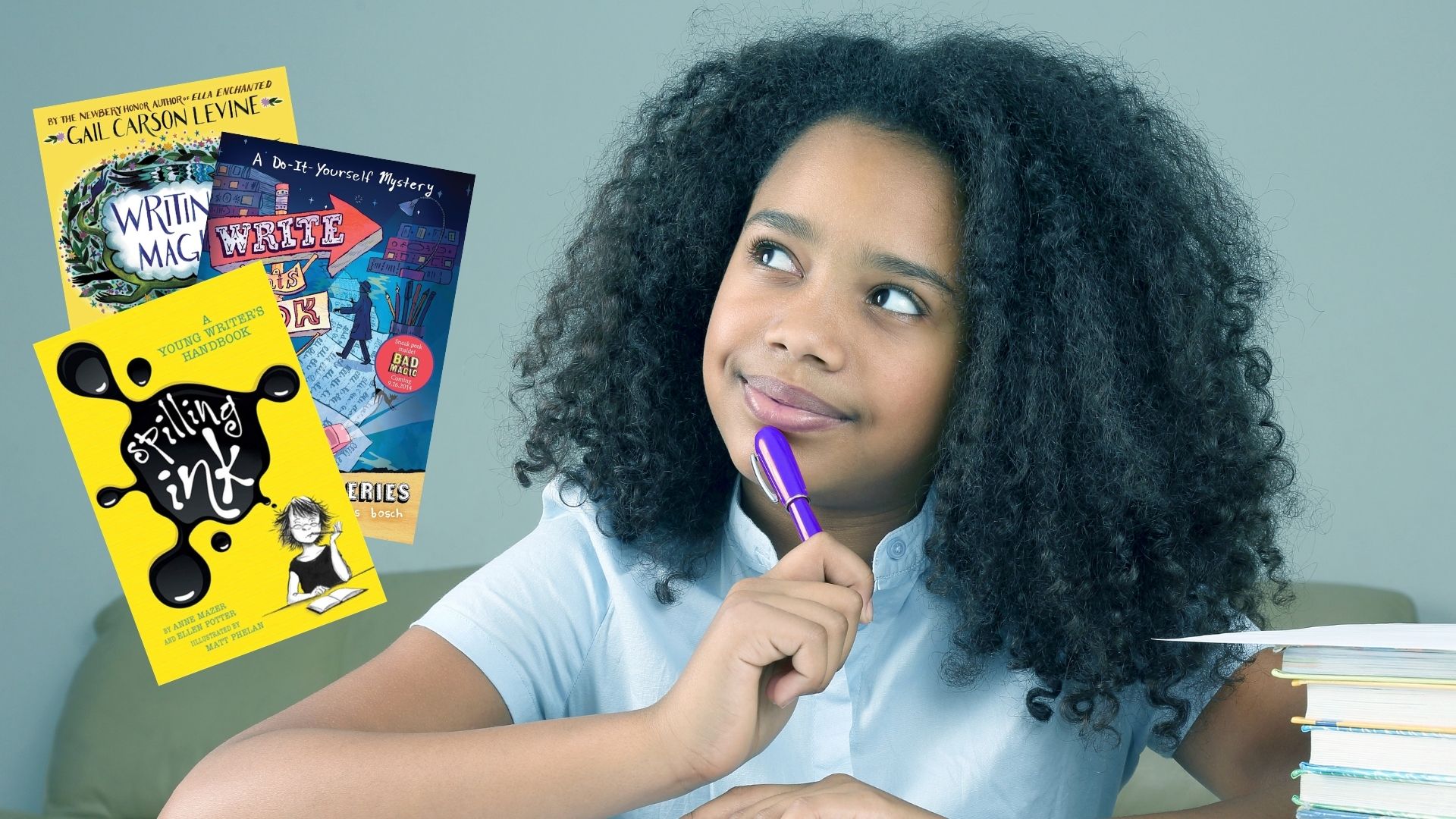
Naturally, as a dedicated student of the craft, I wanted to get my hands on every writing resource at my disposal, online and print. And so I amassed a small but mighty collection of writing guides, which taught me a lot about the art of storytelling and provided me plenty of opportunity to exercise my writerly muscles. Several of the books on this curated rec list are ones I still have on my bookshelf and can vouch for personally. These picks are sure to help your future novelist, poet, or even screenwriter kickstart their career like a pro.
I’ll tell you the truth. Here’s the best part of being a writer: Your words can change the world.”
Anne Mazer, Spilling Ink: A Young Writer’s Handbook
Spilling Ink: A Young Writer’s Handbook by Anne Mazer and Ellen Potter, Illustrated by Matt Phelan

After receiving tons of fan mail from beginning young writers seeking advice, children’s authors Anne Mazer and Ellen Potter teamed up to provide their readers with a comprehensive guide to the craft. Split into three parts, Spilling Ink tackles more than just the technical nitty-gritty of assembling a story (plot, characters, narrative voice, dialogue, etc.). The book also delves into the challenges of the writing process itself, from the necessity of revisions to dealing with writer’s block and criticism. With warmth, approachability, and a wealth of personal anecdotes to draw on, Mazer and Potter have created an essential resource young writers will turn to again and again, like an old friend. (I know I certainly have.)
Write This Book: A Do-It-Yourself Mystery by Pseudonymous Bosch, Illustrations by Gilbert Ford

Around the time I had my great career epiphany, my fourth-grade teacher had gotten me hooked on Pseudonymous Bosch’s Secret Series. When I stumbled upon Write This Book in my local Barnes and Noble, buying it was an absolute no-brainer. I love this book, not just because it’s a companion to a series that was a staple of my childhood, but because it’s the only writing book I know of that is structured like an actual novel.
Bosch, see, has a conundrum: He has a book to write, but (for undisclosed reasons) he hasn’t written it yet. So he’s come up with a (literally) novel solution: You, the reader, will write it for him! Sounds intimidating, but never fear: Bosch provides the reader with the plot and some bare-bones characters, along with a few chapters to help them get started.
In between are tips, tricks, and procrastination pages saturated in the author’s signature snark, along with Gilbert Ford’s delightful illustrations — and plenty of room for the reader-author’s own creativity. Quiche, Bosch’s assistant and pet rabbit, also pops up from time to time to pester him. Though fans of The Secret Series will likely recognize their new magnum opus’s “entirely coincidental” similarities to its plot, this book functions well as a standalone.
Writing Magic: Creating Stories that Fly and Writer to Writer: From Think to Ink by Gail Carson Levine
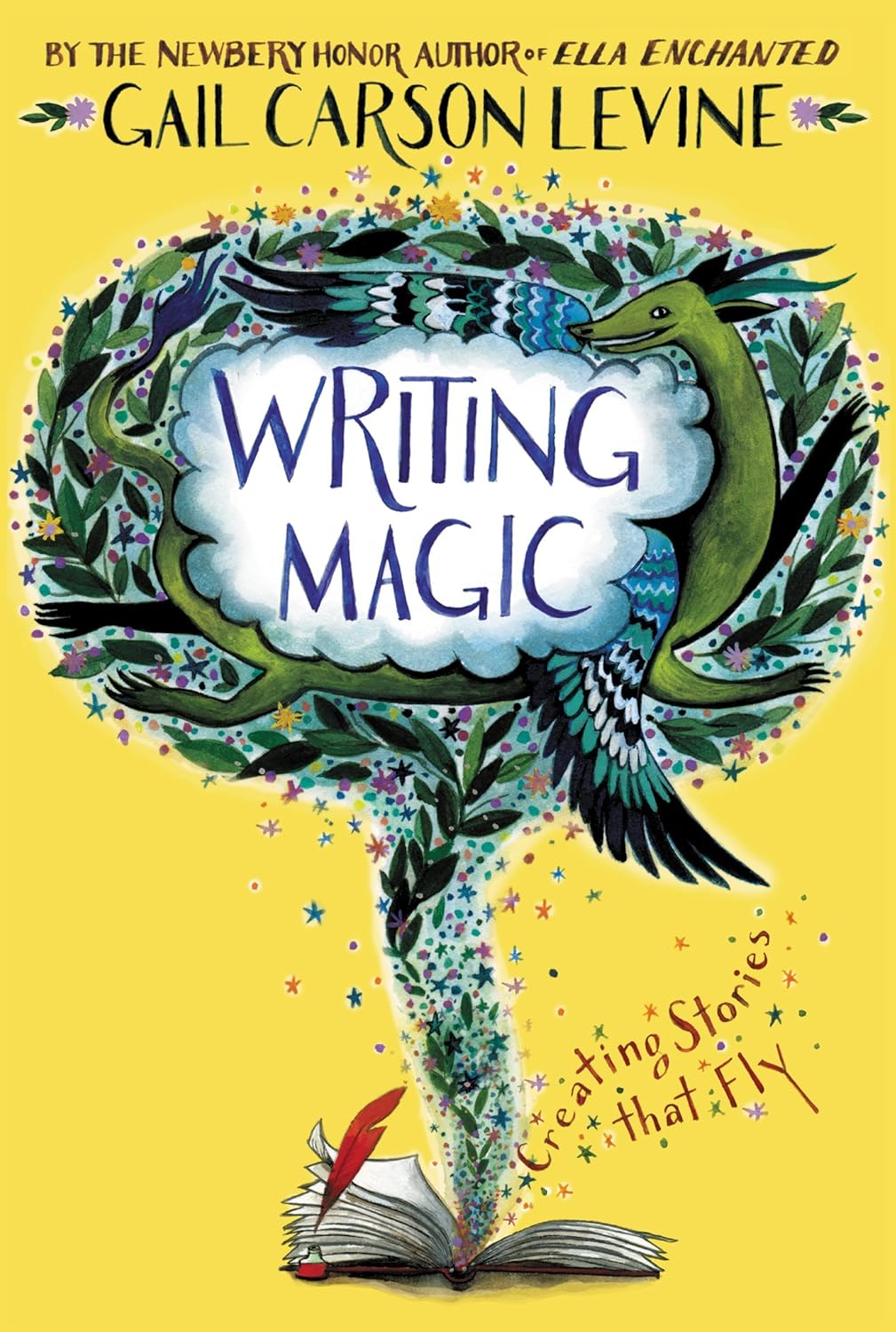
Perhaps the definitive young writer’s handbook, Writing Magic features detailed, thoughtful advice from a fantasy powerhouse. Gail Carson Levine’s writing is accessible but never condescending, taking the reader seriously without intimidating them. Levine offers an excellent primer on the components of good storytelling, incorporating examples from her own work as well as other authors she admires. Particularly poignant are moments where she opens up about her writing’s emotional significance, like her experience leading a student workshop after 9/11 or writing Dave at Night, a book about an orphan, while grieving the recent loss of her parents.

Writer to Writer picks up where its predecessor left off, acting as a printed continuation of the advice column Levine maintains on her blog. In addition to expanding on many of the story elements discussed in Writing Magic, it includes a new section on poetry, as well as deeper insight into the publishing process and pointers for starting a blog of your own. If you pick just one book from this list for your future Literary Ace, let it be this one.
Usborne Write Your Own Series

As someone who grew up on Usborne activity books, I wish I’d had their writing resources as a kid — I’m sure I’d have gotten a lot of mileage out of them. Among Usborne’s extensive, diverse catalog are several selections for young writers to choose from. For the jack-of-all-trades — or the writer who hasn’t yet figured out a niche — try The Usborne Creative Writing Book, featuring prompts for everything from romance and horror to reviews and even ad slogans. Dedicated fiction writers can cut their teeth on the more focused (but no less fun) Write-Your-Own Story Book. Genre enthusiasts can try their hand at adventure stories or sci-fi and fantasy, while Write Your Own Scripts covers film, theater, and even podcasts. Write and Design Your Own Magazines, meanwhile, is excellent for the kid who keeps sneaking into your People magazines (guilty as charged). Young writers can also visit the Usborne Quicklinks page to explore additional resources, including videos and online games.
The Highlights Book of Things to Write

Leave it to the country’s most famous children’s magazine to provide readers with hours of creativity-stimulating material. With over 175 prompts and activities, The Highlights Book of Things to Write will nurture your child’s curiosity and observational skills — both qualities essential in a good writer. It’s a fantastic way to help them explore the world around them while dipping their toes into a multitude of writing arenas.
I write fiction for lots of reasons. One is power. I’m in charge when I write. So are you. You create the world of the story. You make the rules.”
Gail Carson Levine, Writing Magic: Creating Stories that Fly
642 Things to Write About: Young Writers’ Edition

San Francisco-based nonprofit 826 Valencia does incredible work mentoring and educating young writers. Their contribution to the 642 Things series is chock-full of prompts designed to get the creative juices flowing, created with input from “kid brains, writer brains, pirate brains, and tutor brains.” The sheer volume of ideas in this book makes it ideal for days when inspiration is running low — and kids can even fill in their own author bio once they’ve reached the end!
(Note: Barnes and Noble doesn’t seem to carry the original version of this book. They do, however, stock 642 BIG Things to Write About — perfect for big thinkers.)
You’re a Poet: Ways to Start Writing Poems by Sean Taylor, Illustrated by Sam Usher

This unique picture book follows young Piglet, who discovers he has a knack for poetry. As readers join Piglet on his adventures, they can learn to write alongside him. Sean Taylor provides step-by-step guides to writing five different kinds of poems, accompanied by Sam Usher’s beautiful illustrations. You’re a Poet shows children that much like Piglet, everyone has poetry inside them: They just need to learn how to unleash it.
The Story Pirates Present Series

Founded in 2004, Story Pirates helps kids bring their stories to life, enlisting a crew of writers, educators, entertainers, and even celebrities to adapt young writers’ ideas into songs and comedy sketches. In addition to their award-winning podcast, they’ve published three books based on pitches from real kid writers! With each novel, readers can step into the world of an original story from someone just like them — but the fun doesn’t end there. At the end of each book, Story Captain Vincent Rolo escorts budding writers into the Story Creation Zone to try their hand at creating a tale of their own! If they’ve got a story they’re proud of, they can even submit directly to Story Pirates to be considered for one of their podcast episodes.
Draw Out the Story: Ten Secrets to Creating Your Own Comics by Brian McLachlan

Storytelling isn’t limited to words! Cartoonist Brian McLachlan distills the art of comics into ten simple secrets, taking readers through the ins and outs of crafting visual narratives. Each pointer emphasizes the amount of intention that goes into every panel of a comic, encouraging young artists to be deliberate with their work and consider how every element on the page tells the story. It’s a testament to how intricate this deceptively simple art actually is — but if you’ve got a doodler who spends hours on end in your local comic book store, they’re most certainly up for the challenge.
Write On: My Story Journal

A lot of these books are designed for older children, but that doesn’t mean younger writers can’t get in on the fun! Wee Society’s fill-in-the-blank story journal will encourage your little ones to go wherever their imagination takes them. They might experiment with new names, write a song, or make up a secret code. Quirky, colorful illustrations prompt them to invent personalities for cars, cats, and submarines. The journal even includes story cards for readers to tear out and arrange into new combinations, as well as stickers they can use to review their favorite books.
And there you have it: a wealth of resources to help young authors share their stories with the world. As your kids embark on their writerly journey, take a page from Levine’s book: Make sure they have fun, and save what they wrote!
Want more book recs for young writers? Click here.
Find your little bookworm’s new favorite read at our Bookshop.