

















Whether they’re exploring new worlds or reimagining old favorites, graphic novel artists have helped redefine our expectations for how stories can be told. Today, five of these incredible talents take us inside their creative process and offer their perspectives on this flourishing artform. From children’s horror to LGBTQ+ YA romance and Afrofuturist classics, each artist’s work opens up a portal to an exciting new universe.
The Artists
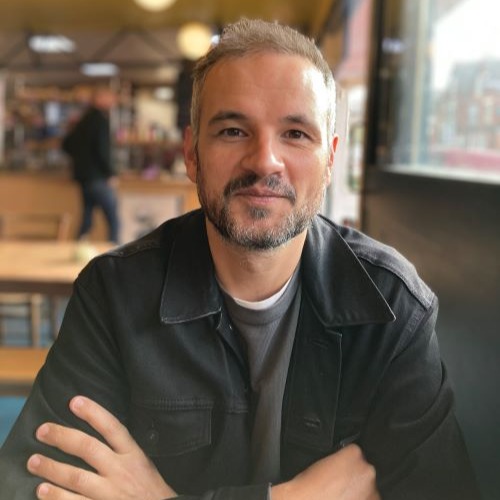
Graham Annable
Graham Annable is a Canadian cartoonist and animator living just outside Ottawa, Ontario. His work is described as “visual poetry” and “life and death with googley eyes!” He is the creator of the middle school horror graphic novel Eerie Tales from the School of Screams by First Second, along with his First Second early-reader series Peter & Ernesto. Alongside his books, Annable is active in the television, film, and video game industries. The “Twin Peaks meets Fargo” video game series, Puzzle Agent, was based on his Grickle universe. He co-directed the animated feature The Boxtrolls from Laika, along with storyboard credits for Guillermo del Toro’s Pinocchio, Coraline, ParaNorman, and Kubo and the Two Strings. His self-produced animated shorts are popular among YouTube watchers. You can find his daily drawings on his Instagram feed @grickle14 or Bluesky account @grickle.bsky.social.
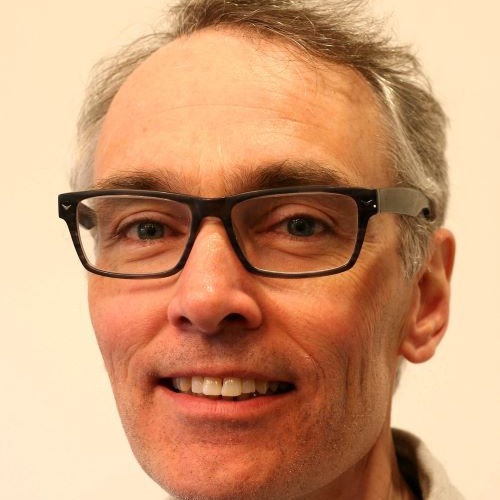
Niki Smith
Artist, writer, lover of fine comics (and some pretty trashy ones too), Niki Smith’s work is joyously queer, and she is the author of the Lambda-Literary-Award-nominated graphic novels The Deep & Dark Blue and Crossplay. Her book The Golden Hour was a Kirkus, SLJ, and NYPL Best Book of 2021. Her newest book, Sea Legs, is a collaboration with Jules Bakes and has received glowing reviews. When she’s not making graphic novels, she’s collecting embroidery hoops and mini-comics and learning to draw boats. Niki now lives in Munich, Germany with her wife and two bilingual cats.
Anjan Sarkar
Anjan Sarkar is an illustrator based in Sheffield in the north of England. Since focusing on children’s illustration in 2015, he has created artwork for over 35 books. These include picture books, black and white chapter books (for young and middle grade readers) and full-colour graphic novels.
In 2020, he illustrated Agent Asha: Mission Shark Bytes by Sophie Deen, which was nominated for a Little Rebels Children’s Book Award and shortlisted for the Royal Society Young People’s Book Prize in 2021.
Anjan is currently working on the graphic novel adaptations of Stuart Gibbs’ Spy School series, the first of which was published by Simon & Schuster New York in February 2022. He is now up to Book Five in the ongoing (New York Times Best Selling!) series.
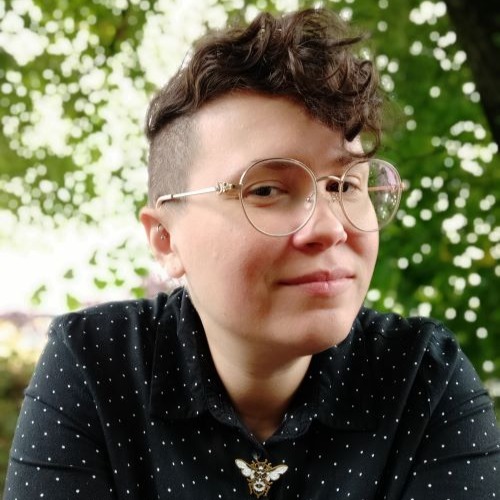
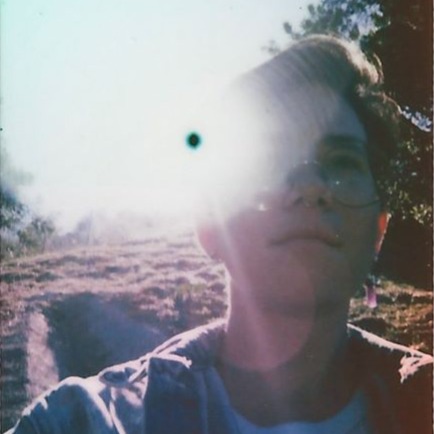
Molly Knox Ostertag
Molly Knox Ostertag is an Ignatz- and Prism-Award winning graphic novelist, 30 Under 30 Forbes scholar, and TV writer currently living in Los Angeles with wildly talented husband ND Stevenson.
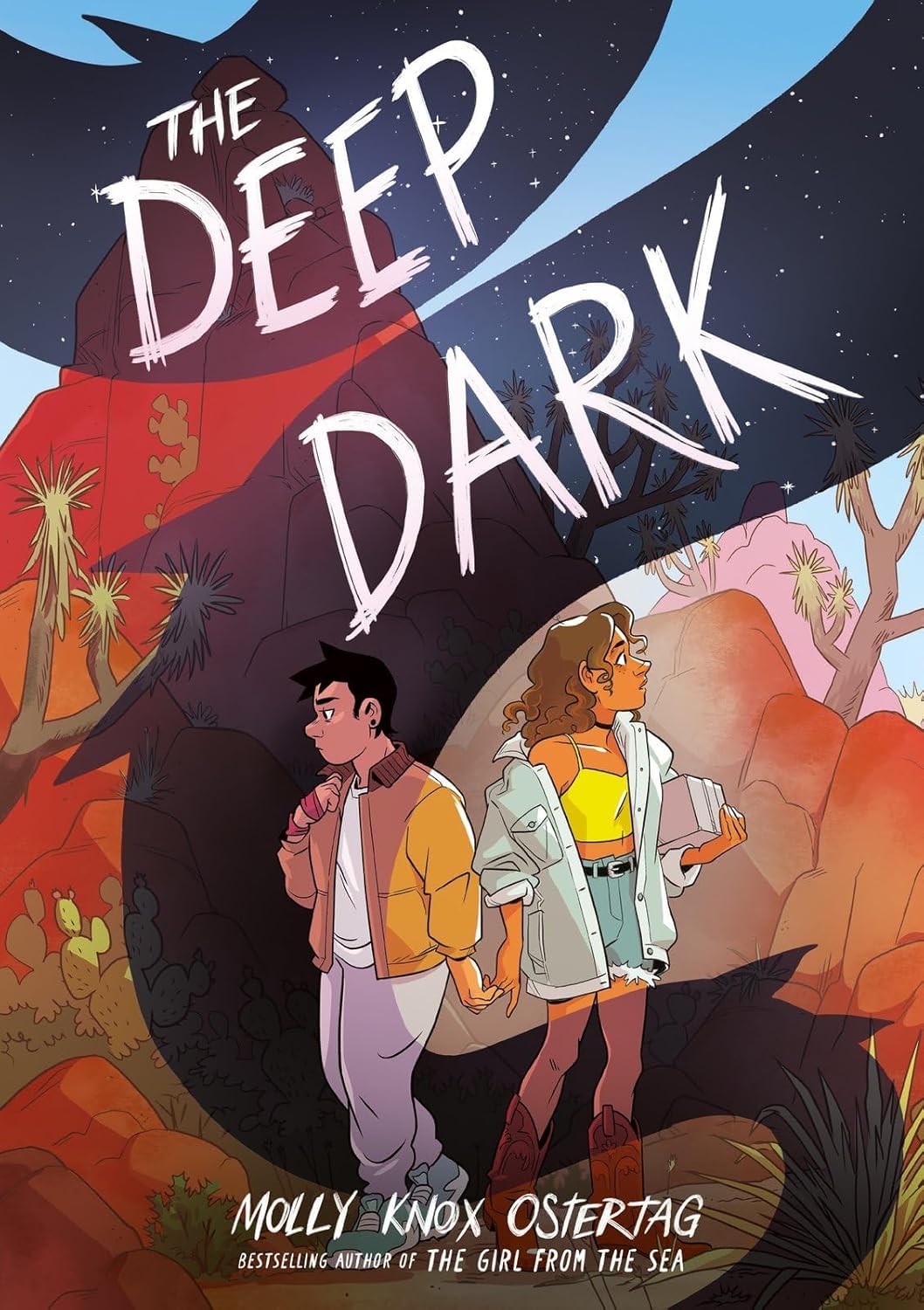
Molly’s middle grade graphic novel debut, The Witch Boy, came out in 2017 from Scholastic, and is being adapted into a feature film by Netflix. It’s followed by the sequel, The Hidden Witch, in 2018 and NY Times bestseller The Midwinter Witch in 2019. The next graphic novel, The Girl from the Sea, debuted as a #1 YA Bestseller on June 1, 2021. Beginning in 2021, Molly began serializing a new YA graphic novel, Darkest Night, via Substack newsletter. It was published by Scholastic under the title The Deep Dark in 2024.
Molly is also the writer of a trilogy of middle grade Dungeons and Dragons books, Dungeon Club, with illustrator Xanthe Bouma.
Molly also writes for children’s TV animation — notably, the GLAAD-nominated and Peabody-Award-winning episode Enchanting Grom Fright for The Owl House.
John Jennings
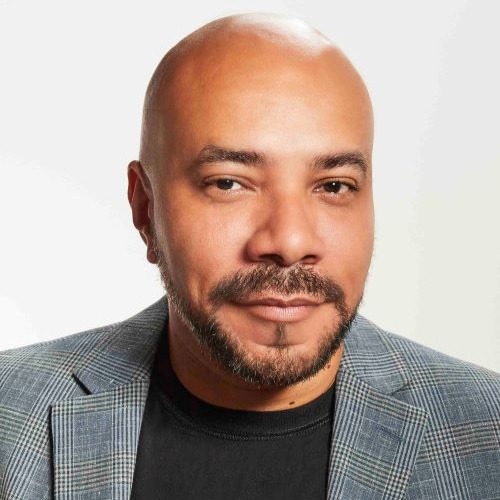
John Jennings is a professor, author, graphic novelist, curator, Harvard Fellow, New York Times Bestseller, 2018 Eisner Winner, and winner of the Hugo Award for his co-adaptation of Octavia E. Butler’s dystopian novel The Parable of the Sower. As Professor of Media and Cultural Studies at the University of California at Riverside (UCR), Jennings examines the visual culture of race in various media forms, including film, illustrated fiction, and comics and graphic novels. He is also the director of Abrams ComicArts imprint Megascope, which publishes graphic novels focused on the experiences of people of color. Jennings is co-editor of the 2016 Eisner Award-winning collection The Blacker the Ink: Constructions of Black Identity in Comics and Sequential Art (Rutgers) and co-founder/organizer of The Schomburg Center’s Black Comic Book Festival in Harlem. Jennings also created Marvel’s new AfroCaribbean cosmic superhero, Ghost Light, with artist Valentine Delandro. His newest book is the graphic novel adaptation of Octavia E. Butler’s Parable of the Talents, also co-adapted with Damian Duffy and David Brame.
The Questions
1. What is your artistic process for creating characters and settings? Do you plan ahead, or do you let it evolve and take form as you work?
Graham: I generally start from doodles or a single drawing. I’ve always felt more confident in my visual skills than in my writing. So my stories tend to spring out of a drawing or visual idea that I then begin to build a narrative around. And that creative process applies to everything I’ve published, whether it’s my early reader series, Peter & Ernesto, or my latest middle grade horror novel, Eerie Tales from the School of Screams.

Niki: I’m a big planner when it comes to writing my graphic novels — it’s almost built into the format. The vast majority of comics are written as script (or a combination of script and thumbnail sketches) first, because it’s much, much faster to edit a few lines of written text than it is to redraw (and ink, and color) a whole comic page!
But even before that, I do a lot of pre-planning. Turning a few disconnected story ideas into the detailed outline that will become my script is one of my favorite parts of the process. I jump around from scene to scene, not really knowing what order they’ll end up in until later, and I love to build connections between them and see the story take shape. The Golden Hour started with the idea of a boy bottle-feeding a calf, like my friends did when I was growing up in Kansas.
Anjan: I am mainly working from scripts and stories written by other people, so I try to absorb as much information from the text as possible. I give the story or script a read through first (without making any notes or sketches), just to understand the story and see how the characters and plot evolve. With Spy School, I really need to nail the characters and environments down before I start the main event of drawing the artwork, otherwise there would be a lot of revisions to make at the end! I’d love to be able to be more experimental, but I probably need to keep that for other projects (future picture books, maybe?!).
Molly: Every project is different. For my most recent graphic novel, The Deep Dark, the main characters arrived pretty much fully formed in my head with their personalities and quirks, and the first designs I did for them were the ones that I ended up using. But that’s rare! For other books, it’s been a combination of figuring out what role the character plays in the story, what their voice is, and what parts of myself I can explore in order to make them feel real.
Graphic novels are such an exciting medium because while I’m mulling over all these factors, I can draw the characters and think in visual terms as well. I remember drawing Aster from The Witch Boy and figuring out his personality based on the emotions that it felt the most natural to draw on his face. There’s an intuitive aspect to drawing that makes the characters come alive for me.
John: Everything is set around the themes of the story. I think of stories as technologies that help us solve problems, explore ideas, and ponder human existence but at a safe distance. So whatever issue I am dealing with or problem I’m wrestling with is reflected in the world that I build and the characters that live within that world. They are both part of the system that helps move the story and, hopefully, successfully execute the themes.
Another thing that helps me is choosing a genre. Each genre has a set of tropes and affordances that make it that genre. So, depending upon what tone and affect, I may bend those rules, fuse those genres, or do away with conventions altogether. Again, it depends on the central question I am asking in the story. If I’ve done my job, the characters will lead me to the answers.
2. What are some of your favorite tools and techniques for developing graphic novel illustrations?
Graham: I always begin with pencil and paper at the start. As I work things out and play around with ideas, I’m most comfortable doing it all in front of me in a sketchbook or pile of paper. Once I start to feel confident with the story I will move into digital by drawing more finished images on my Cintiq monitor with a stylus.
Niki: I work entirely digitally using a program called Clip Studio Paint, which is designed specifically for making comics. It has built-in tools for panels and word balloons, and if I need to change the font for the whole book, that’s something I can do in just a few clicks. It also lets me import 3D models, like I used for Manuel’s DSLR camera in The Golden Hour. I could rotate it and set the perspective or foreshortening just how I needed it, without struggling to make it up in my head.

Anjan: In terms of the Spy School graphic novels, drawing quickly is important because of the timeframe, so I’m always looking for ways to speed up the process, without sacrificing the quality. So, I use some 3D software to build environments that appear multiple times — like the SPYDER training compound in Evil Spy School. I also create character sheets with the characters drawn from multiple angles, that I can quickly refer to when sketching scenes.
Molly: I work entirely digitally because it gives me a lot of freedom to change things. I use Procreate on my iPad for sketching, designs, and thumbnails. This is a fun stage because it’s so portable, so I can work anywhere. For the finished art I sit down at my desktop computer and use Photoshop on a Cintiq.
John: I use Procreate on the Apple iPad with an Apple Pencil. I made the transition over a decade ago and I have no regrets. I carry an iPad with me everywhere and it’s become a great way to get ideas down quickly and then flesh them out later if need be.
3. How does your cultural background or personal experience influence your approach to both tradition and innovation in your work?
Graham: I’m quite certain it influences everything I do. I very much try to stick with the mantra “write what you know.” Every story and character I create is mostly just me trying to figure out, “what would I do to solve or resolve this situation?” So I’m sure that subconsciously my cultural background and experience in this world shows up in everything I draw and write.
Niki: I grew up in Kansas, the “town kid” taking part in the local 4-H program by exhibiting my drawings and photography, just like Manuel does. I’m also queer, and it’s really important to me to be able to share that part of myself through my graphic novels — something that’s always there, woven into the story without it being the story. The bond Sebastian and Manuel share is an essential part of The Golden Hour, and I really wanted to write about queer kids who aren’t yearning to “escape to the big city.” They love the open fields and Kansas sunsets and the lives they have.
Anjan: I didn’t grow up reading lots of comics or graphic novels, but I did love the work of Raymond Briggs as a kid. Later on, I also found and loved Jamie Hewlett’s Tank Girl artwork. I never really developed a style of comic illustration until I started illustrating children’s books around ten years ago. By then I was already working digitally, and the short publishing deadlines that I’m working to have meant that I’ve not had a chance to experiment more with traditional pen and ink. I’d love to do that at some point, because I love the look of hand-drawn comic pages with their ink washes, brushstrokes, screen-tone, etc.!

Molly: I’m very interested in how to create new narrative archetypes, especially around queer characters and their stories. How can I depict my community and our vast web of experiences in a way that feels familiar to us, and engaging to people who don’t share those experiences?
John: My identity as a Black man in America who is from Generation X is at the core of most of my work. My interests in Afrofuturism, Black history and politics deeply inform my work, process, and my life in general.
4. What are some emerging trends in graphic novel illustrations that are pushing the boundaries of tradition?
Graham: I’m not sure, to be honest. I definitely don’t see myself as someone who has a finger on the pulse of what’s happening in the world of graphic novels. I will say that I’ve very much enjoyed watching the world of topics and content being represented in graphic novels expand immensely in the last decade or so. We no longer live in a time when the only graphic novels being published are about superpowered beings dressed in long underwear fighting crime. Not that there’s anything wrong with that genre, but it’s just nice to also see books about different people’s coming of age stories, adventures in a variety of cultural backdrops, memoirs, etc.
Niki: There is some really incredible, playful coloring being done in middle grade and young adult graphic novels that we weren’t seeing ten or fifteen years ago — it felt like things were often expected to be “true to life,” color-wise, and I love seeing current artists and colorists be given the freedom to use color to express a whole spectrum of feelings. And I’d really love to make a single, spot-color graphic novel someday! I love working with limited palettes like that.
Anjan: I feel like there isn’t really a “tradition” when it comes to graphic novels. When I go into a bookshop and look at the graphic novel section, I see such a huge range of subject matter and different artistic styles that I feel like anything is possible. That’s a great thing, and how it should be.
Molly: It’s been great to see graphic novels grow so much in popularity over the past decade or so, but I can’t really think of current trends without thinking of the book bans across America. Because our stories are told visually, it’s easy for reactionary activist groups to open a graphic novel and see a queer kiss, or a nonwhite character, or education about the human body, or whatever else they’ve decided the children of America can’t handle. As a result, graphic novels are disproportionately targeted by these small, vocal, often dangerous groups (many of whom are not actually parents or involved in education in any way).
My hope is that graphic novel creators and our publishers do not bow to these attacks, and that we continue to tell truthful, challenging stories about a wide variety of human experiences. A powerful attack means that what we do is powerful, and I hope we don’t forget that.
John: I honestly don’t know if I’ve noticed any strong trends outside of genre. Right now, the “romantasy” is very popular. Romance-plus-fantasy stories seem to have taken off. As for style, Japanese manga still seeps into everyone’s portfolio these days in one way or another. Sometimes the effect is wonderful. Other times it tends to make the work very monolithic.
5. How do you stay current with emerging trends and techniques while maintaining your unique style?
Graham: It’s honestly not something I think about or consider really. I just truly try to create books that I know I myself would want to read and draw. I’m sure there’s some level of subconscious reaction to our current times that inevitably shows up in my stories, but I don’t think I’m skilled or astute enough to analyse trends and techniques and chase after them in any fashion.
Niki: I don’t! I don’t worry about that at all, in either direction. Worrying about “maintaining a style” feels like such a limitation — I love to play, and I love to change things with every book I do. I’m always trying to learn something new and try out new styles or new inking or coloring techniques. The art and story are fully entwined, for me, and I do my best to figure out what art style will work best for the book I’m currently drawing. That might mean readers of The Golden Hour might not immediately recognize me in the thick inks and bright, flat colors of my newest book, Sea Legs, but I have faith that they’ll find me!
Anjan: My main concern when producing artwork is to make sure that I’m doing the story justice. I’m always trying to improve my artwork, but I don’t consciously try to keep up with trends. I read widely and enjoy seeing work from new illustrators, as well as appreciating those who’ve got lots of experience — I feel like this is a good way to stay in touch with what’s going on.
Molly: This isn’t really something I worry about. I just focus on telling stories that matter to me, in the style that makes sense for me to draw in. As the expanded use of AI to generate images pushes actual artists to define what makes our work valuable, I feel more and more strongly about the power of art as a way to communicate an author’s innermost thoughts. My voice and viewpoint are unique, not because I’m special in any way, but because every person has a unique and irreplaceable voice and viewpoint. I’m the most interested in art that shows me how other people see the world, that lets me into another person’s mind; and so I am always trying, through words and drawings, to better convey my own.
John: A style is a system of decisions that result in a visual representation. So I’ve been doing what I’ve been doing for over 20 years now. I think at this point, this is what it’s going to be. LOL. I think that your only competition is yourself and that chasing trends ends up with a sea of sameness. I think you should “do you” and make the work you need to make. Your visual style will garner followers because it’s unique. You just need to be patient and consistent.

Bonus Questions
6. If you were to hang out with one of your characters, who would you hang out with and why?
Graham: Ha, when you’ve written a horror graphic novel that’s a trickier question! Maybe Luanne in my short story The Face in the Forest from Eerie Tales from the School of Screams? I feel like I created a pretty miserable situation for her to exist in, and she seems like a good person and certainly not deserving of the place I put her in. So maybe to make amends and provide some possible comfort, I’d want to hang out with her and tell her everything will be all right in the end.
Niki: Ohhh, that’s tough to say! I love different parts of all of them. But photography was an enormous, enormous part of my life in high school, so I’d love to hang out with Manuel and talk about composition and color — or just sit comfortably, quietly side by side while we both make our art. That’s the kind of friendship I treasure.
Anjan: I’d probably try to hang out with Nefarious from Evil Spy School. He’s a young man who plays computer games all day and lives on toxic-looking cheese-flavoured snacks. I’d make him a healthy meal, get him out for a walk in the countryside, and generally try to be a positive influence. He’d probably hate me, but I would persevere!
John: I think I’d love to hang out with Frank “Half Dead” Johnson. He’s my protagonist from the Blue Hand Mojo series I created. I think he’d be great to hang out with. But not too long. I wouldn’t want his luck to rub off on me.
7. If you were to take a portal into one of your illustrations, which one would you like to visit?
Graham: In Eerie Tales from the School of Screams, I enjoyed the way the windy shoreside cliffs in my short story The Village that Vanished turned out. I wouldn’t mind spending quiet time there listening to the waves and seagulls. Minus the people-eating fish folk that inhabit those waters, of course.
Niki: There’s a big spread from The Golden Hour that really captures the nostalgia I felt while drawing this book…I’d love to walk down those dirt roads again, the horizon wide as can be.
Anjan: I’d visit the planet of Tragas in the Alien Next Door books. A couple of the kids in the book stow away in a spaceship and get a guided tour of this amazing planet inhabited by friendly aliens. I’d be happy to visit and take a tour as well!
John: I think I’d love to visit the Mothership image I did for Rosarium Publishing. I love that drawing and it’s so whimsical. Still one of my favorites that I’ve done.
Thanks to these wonderful artists for stopping by to chat with us! We can’t wait to see how graphic novels continue to evolve — and how these artists shape that evolution.
Find Graham Annable here.
Find Niki Smith here.
Find Anjan Sarkar here.
Find Molly Knox Ostertag here.
Find John Jennings here.
