

















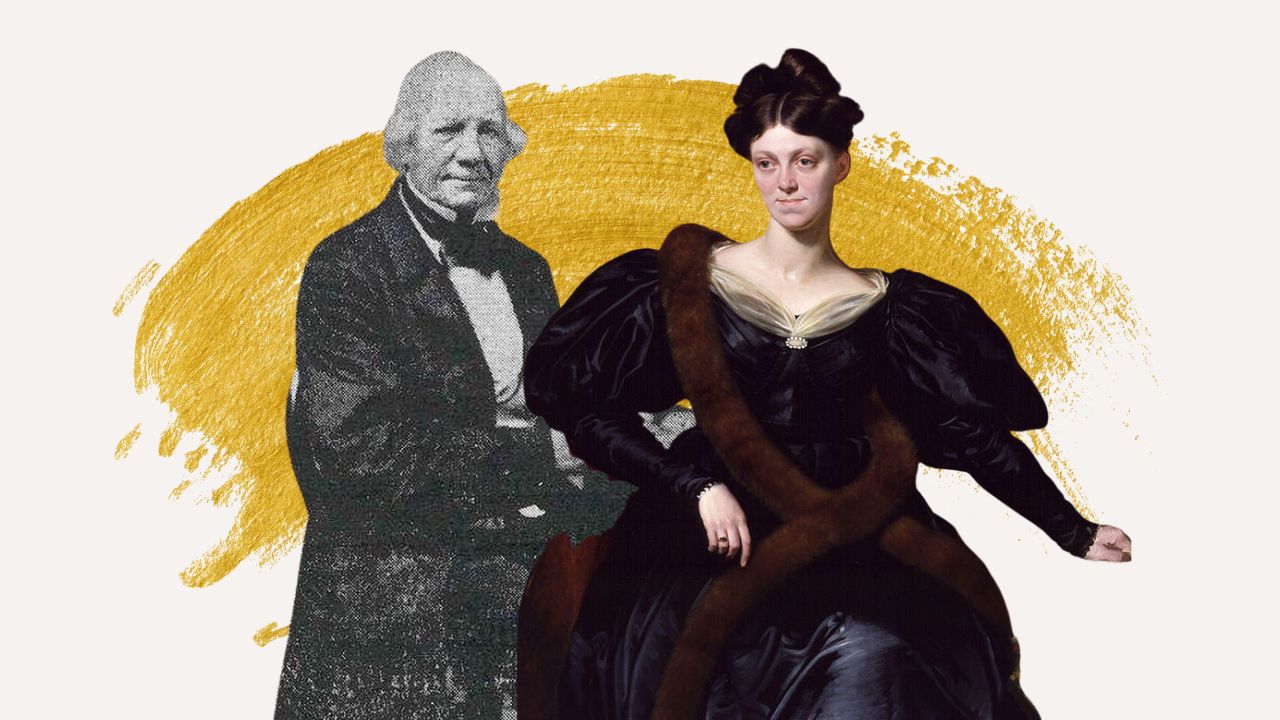
Deaf history and culture often go overlooked by the hearing world, as do the accomplishments of many outstanding Deaf individuals. Faced with prejudice, discrimination, and many other challenges, these figures advocated for themselves and their community in times and environments where deafness was misunderstood and highly stigmatized.
Meet four trailblazing Deaf writers and scholars whose remarkable contributions to education, academia, and literature have left a lasting impact.
Pierre Desloges

French writer Pierre Desloges (1747-1790s) was one of the first to write about the Deaf experience and community. Although Desloges became deaf in childhood, he did not learn sign language until he was 27 years old. He had moved to Paris at age 19, where he worked as a bookbinder and billposter. While living there, he also became acquainted with Abbot Charles-Michel de l’Epee, an educator who founded the first free school for Deaf students and developed an early formal sign language.
In 1779, Desloges published Observations of a Deaf-Mute on a Course of Elementary Education for Deaf-Mutes. Desloges was responding to Abbot Deschamps, a teacher from Orleans and a major rival of Abbot de l’Epee, who advocated for Deaf people to learn spoken language. Drawing on his experiences, Desloges deconstructed Deschamps’s argument and explained the development and importance of sign language to the Parisian Deaf community. His work provided important insight into the history of Parisian Deaf culture and challenged many people’s perceptions of Deaf people at the time.
Laurent Clerc

Deaf education in the United States owes a lot to the work of French educator Laurent Clerc (1785-1869). An excellent student, Clerc attended and eventually taught at the Royal Institution for the Deaf in Paris. In 1815, he met Thomas Hopkins Gallaudet, who had come to the Institution to learn about education for Deaf people. Clerc taught Gallaudet sign language, and Gallaudet invited him to accompany him back to the United States.
In 1817, the two men co-founded a school for Deaf students in Hartford, Connecticut, now known as the American School for the Deaf. Modern American Sign Language (ASL) developed in large part from the Old French Sign Language that Clerc used and taught, along with various sign languages his students used and brought over from their own communities.
Harriet Martineau
Considered the “mother of sociology,” Harriet Martineau (1802-1876) was a prolific author, journalist, and abolitionist. She came from a progressive Unitarian family that believed in women’s education and began her career writing articles for the Monthly Repository, a Unitarian journal. In 1832, she published Illustrations of Political Economy, a story collection exploring how economic conditions affected people in their everyday lives. It was a commercial success, launching Martineau’s career and allowing her to secure financial independence, which was very important to her.

Martineau completed much of her writing during periods of chronic illness, including the 1841 children’s book The Playfellow and an anonymous essay collection, Life in the Sick-Room. She advocated for autonomy over her own medical care at a time where women were commonly considered unstable and unfit to exercise it. Martineau wrote extensively about her illness as well as being Deaf, an early example of marginalized writers discussing their lived experiences and asserting control over their own narratives. Toward the end of her life, she advocated for various causes, including women’s suffrage and women’s participation in the medical industry. She also campaigned against the Contagious Diseases Acts, which enabled police to arrest and forcibly inspect suspected sex workers under the guise of preventing the spread of venereal disease.
In total, Martineau published 35 books, including various histories, novels, and political critiques, plus an autobiography that was released after her death. She also wrote a number of articles, essays, and stories for various publications, including over 1500 articles for the Daily News.
Dorothy Miles
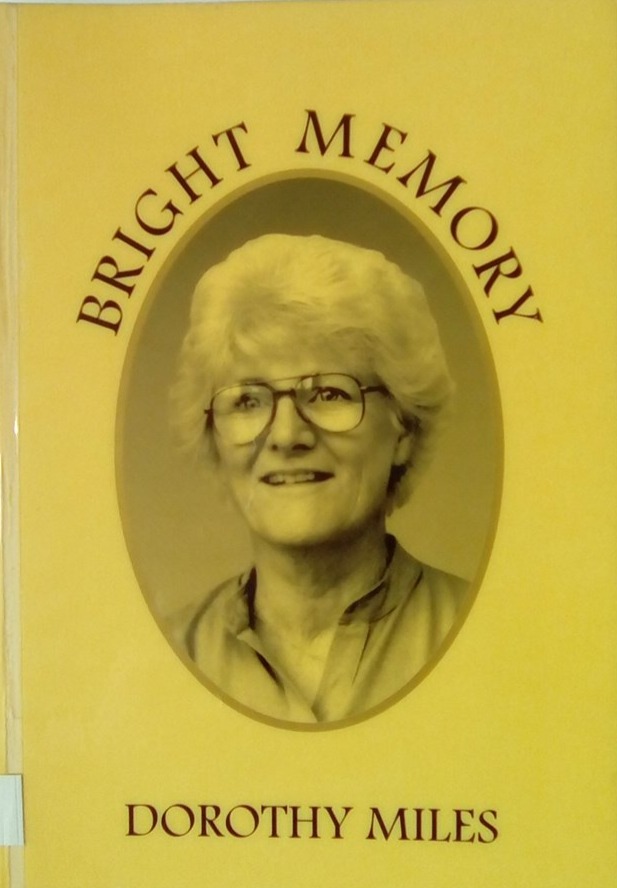
Welsh poet, performer, and playwright Dorothy Miles (1931-1993) built a remarkable legacy with her work for the British Deaf community. After graduating from Gallaudet University, Miles joined the National Theater of the Deaf, where she wrote poetry that she would perform in sign language. She is widely considered the first poet to integrate sign language into her work, her goal being to bridge the gap between hearing and Deaf audiences. She published two poetry collections, Gestures and Bright Memory, accompanied by filmed sign performances of her poems.
Miles lived in the United States for 20 years as a student and then a teacher before moving to England in 1977. There, she advocated for the Deaf community to adopt British Sign Language (BSL) into common use. Miles also helped produce and create TV programming geared toward the Deaf community for the BBC, including an episode of the series Open Door presented by the National Union of the Deaf and the series See Hear, which spotlighted issues directly affecting the Deaf community. She went on to join the British Deaf Association (BDA), where she helped develop BSL tutoring curricula and educational programs.
In 1992 the Dorothy Miles Cultural Centre, now known as Dot Sign Language, was created to commemorate her work. Wales honored Miles with a Purple Plaque in 2024, part of a campaign to recognize the achievements of trailblazing Welsh women.
These four incredible pioneers are only a handful of the amazing Deaf writers, scholars, and artists history has to offer. Gallaudet University’s Historical Resources page is a great starting point to explore more Deaf history and uncover more fascinating stories.
Want to learn about more awesome Deaf writers? Click here.
Check out our Bookshop for more incredible recs here.
