

















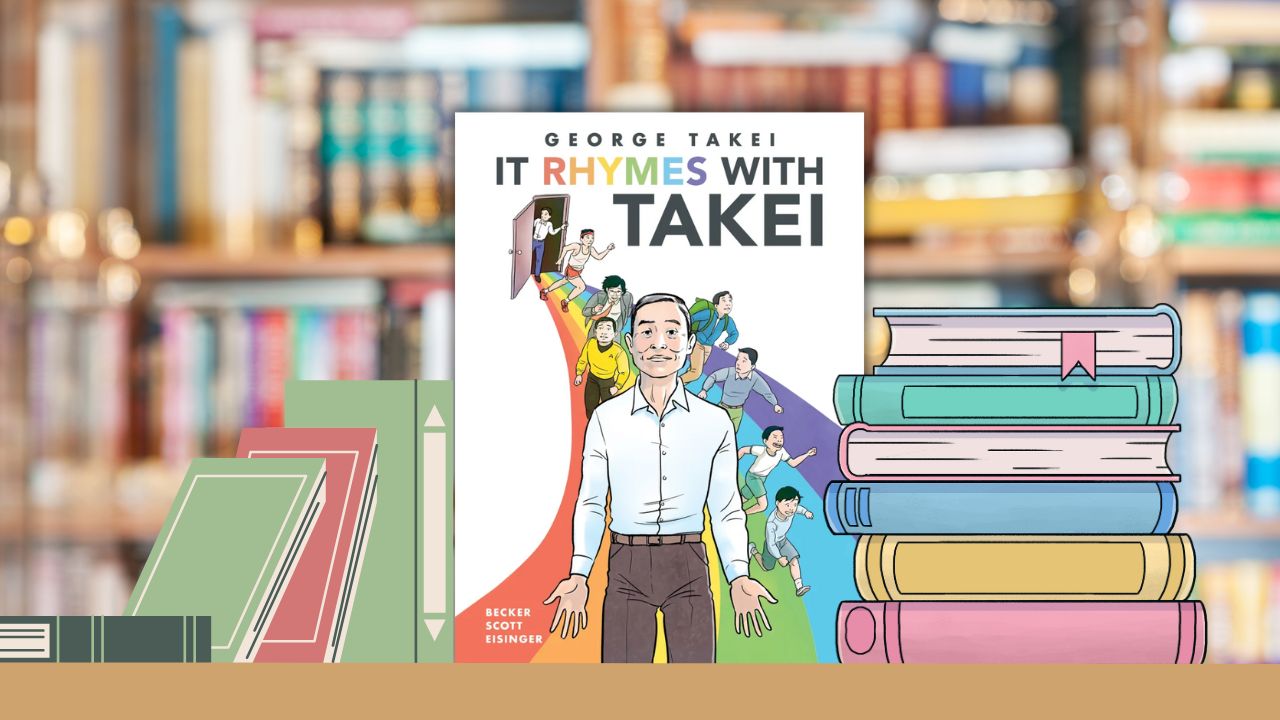
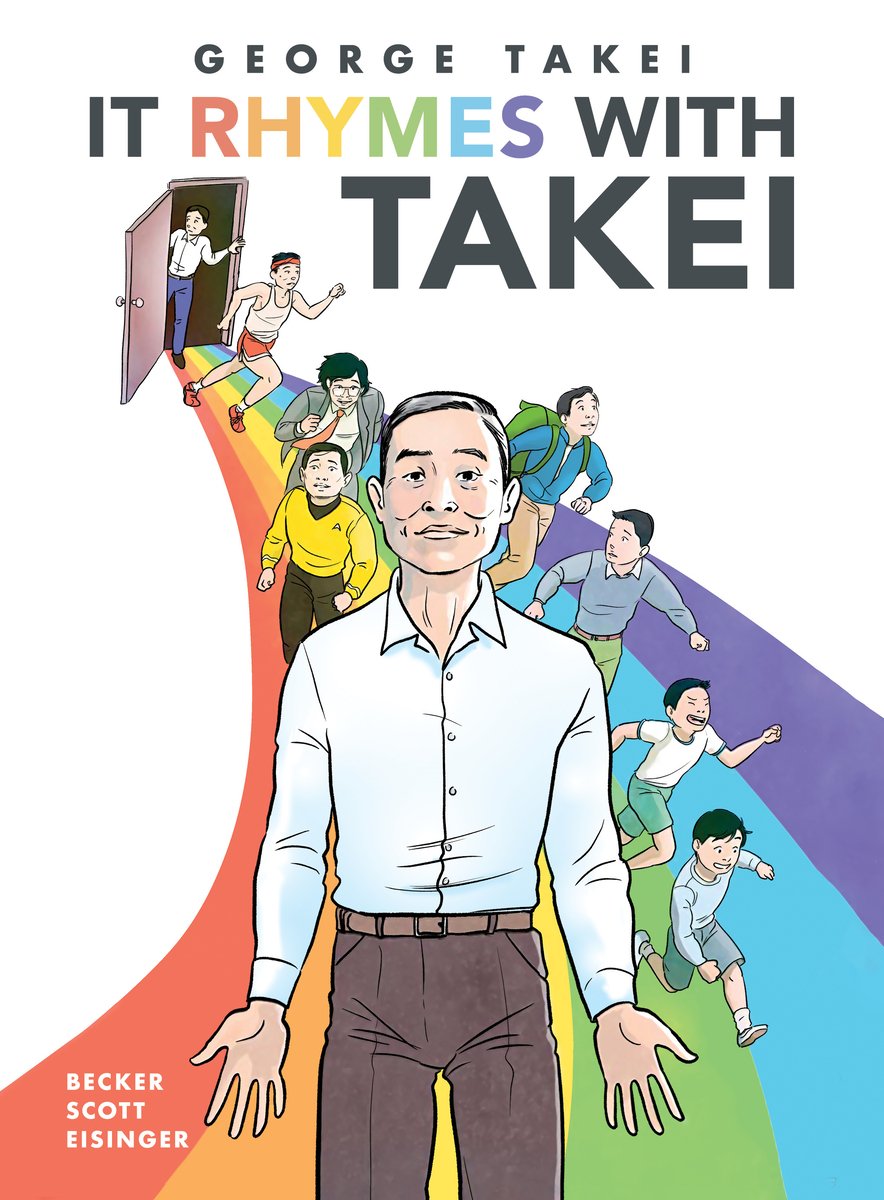
Those who know George Takei know there are many parts of his life with enough stories to fill a book — his role as Hikaru Sulu in the original Star Trek series, and millions of followers across social media platforms, have rendered him an internet sensation and TV star. Beyond that glamor, his journey to becoming a well-loved actor, author, and activist is also brimming with tales of grit, grief, and the courage of embracing one’s identity. His newest graphic memoir, It Rhymes With Takei, was released on June 10th. It unpacks Takei’s long and winding road in grappling with his sexuality and coming out publicly as gay at the age of 68.
It Rhymes With Takei
Long before George Takei revealed his sexuality to the public in 2005, the story of It Rhymes With Takei begins with Takei as a boy coming of age in the 1950s, and follows along through his evolution into adulthood. With hardships from the fear of being outed to finding a place in a secure community, and through times of immense loss and devastation, including the AIDS epidemic, his journey in It Rhymes With Takei is far from an easy one. Times of joy also find their places within its pages; however, as Takei celebrates the love he shares and the marriage he has built with his husband, Brad.
George Takei: Published Author
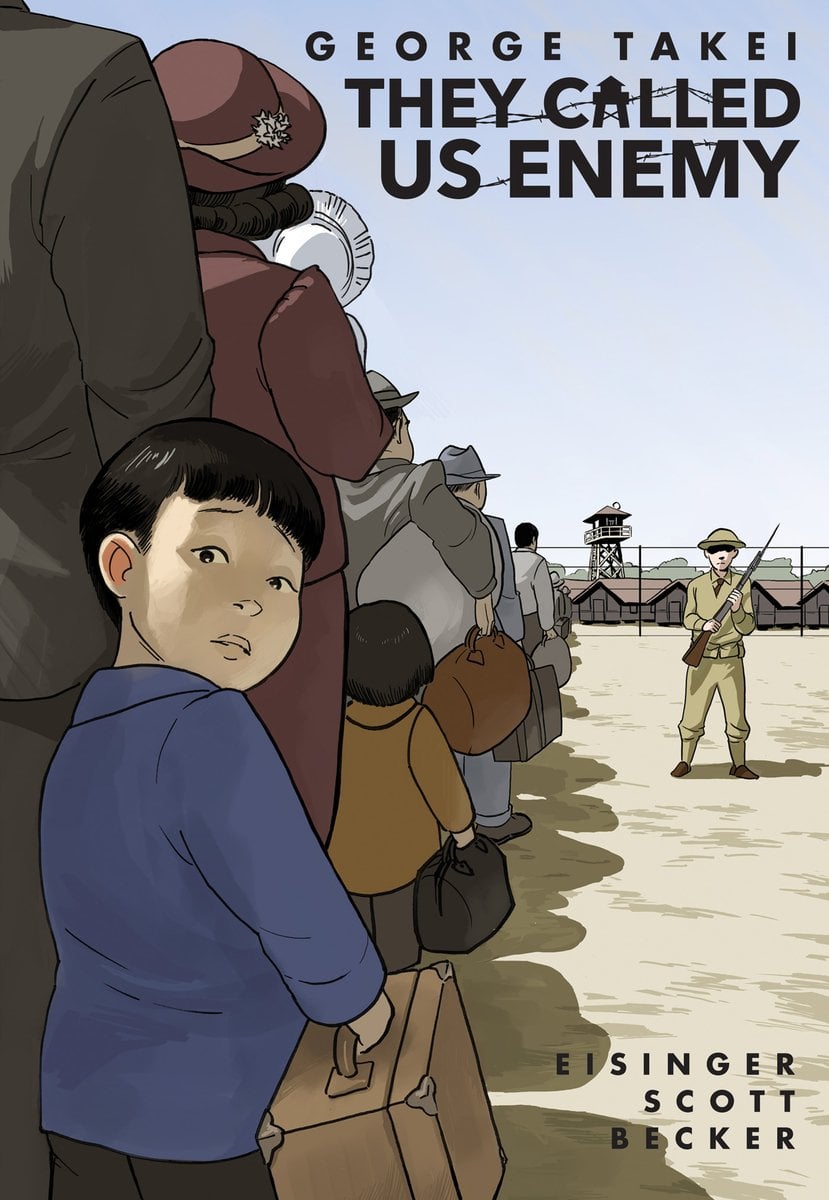
It Rhymes With Takei marks Takei’s sophomore venture into the literary world, having established himself as a graphic memoir storyteller with his 2019 release, They Called Us Enemy. His first publication was a collaboration between himself and authors Justin Eisinger, Steven Scott, and Harmony Becker, with Eisinger and Scott contributing to the book’s writing, and Becker illustrating. They Called Us Enemy follows Takei’s childhood experiences in several Japanese internment camps across the United States during WWII, and how his family faced racist policies of displacement and wrongful imprisonment. While Takei’s debut book takes a different focus, its stories are an essential part of his larger narrative, making it a read that contributes greater insight for those who wish to understand Takei’s life through many contexts.
The Graphic Memoir
While many first encounter graphic novels as a form of YA fiction, the genre also packs a punch when telling complex and mature stories. With both visual and written narratives playing out across the pages, readers are immersed in not only the craft and style of the written word, but also the language and evocations of the illustrations. In her memoir, Jennifer Daniels Klug argues in an essay that this allows greater understanding of a story beyond its exact truth. “Graphic novels can’t solve that problem or answer the question of what ‘really happened,'” she writes. “What they do, however, is keep the awareness of this slippery nature of truth in the forefront of the reader’s mind, and in doing so, they address a larger truth — it’s not always what ‘really’ happened that matters. Sometimes the point is our experience of it.” To experience Takei’s memories through a graphic memoir is thus not only an informational exercise, but a peek into his unique relationship to his own past.
It Rhymes With Takei is a book brimming with both sorrows and joys, each playing a part in uncovering dimensions of an actor and author we know and love. George Takei’s newest publication takes a hard look at the American history that aimed to keep LGBTQ+ people in the shadows, and declares that no part of his identity will be erased.
Want to read more on new LGBTQIA+ releases? Click here!
Find more titles from powerful LGBTQ voices on our Bookshop Hooray for Representation – LGBTQ Voices list!
