






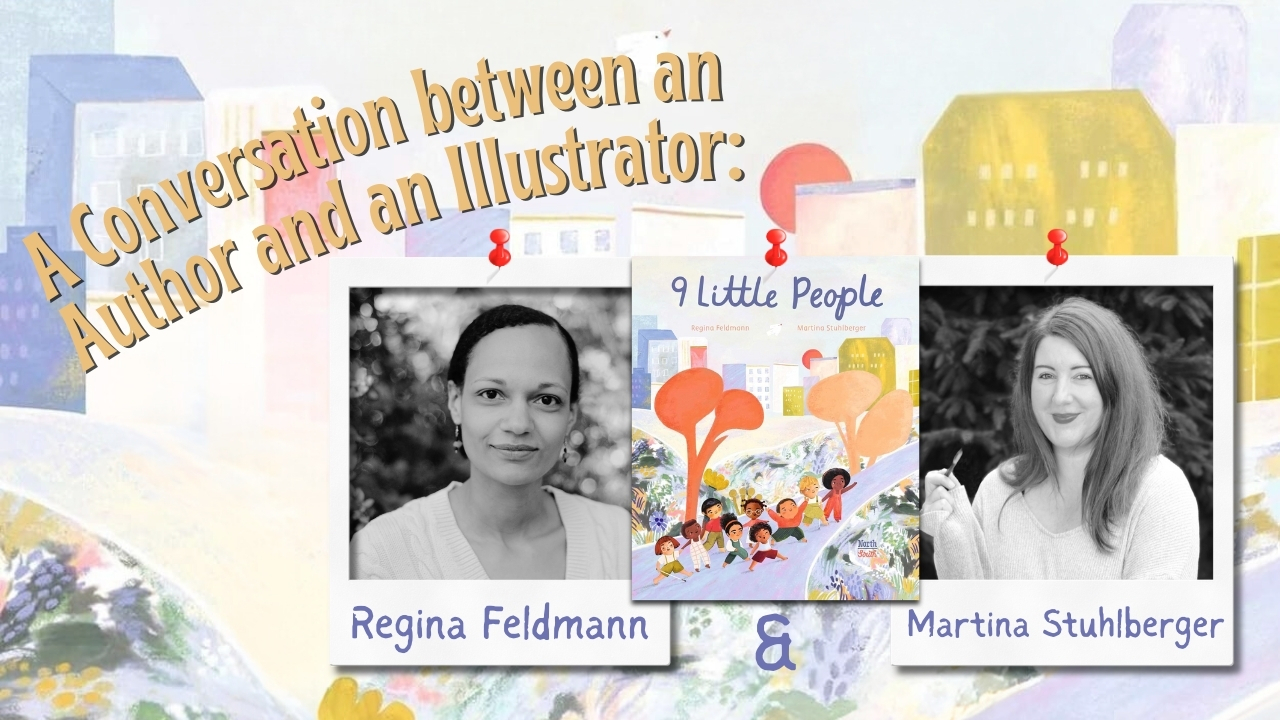
The whimsical notions and lively adventures of children’s books are brought to life through both words and images, their pages often filled with color and artistry as well as story. Illustrators and writers thus make an important team, especially in the realm of literature that helps shape young people’s understanding of the world. In conversation with writer Regina Feldmann and illustrator Martina Stuhlberger, their insights reveal the intricacies in bringing multiple modes of storytelling together, and their skill and sensitivity in creating 9 Little People, a book devoted to inclusive and diverse representation.
The Authors
Regina Feldmann
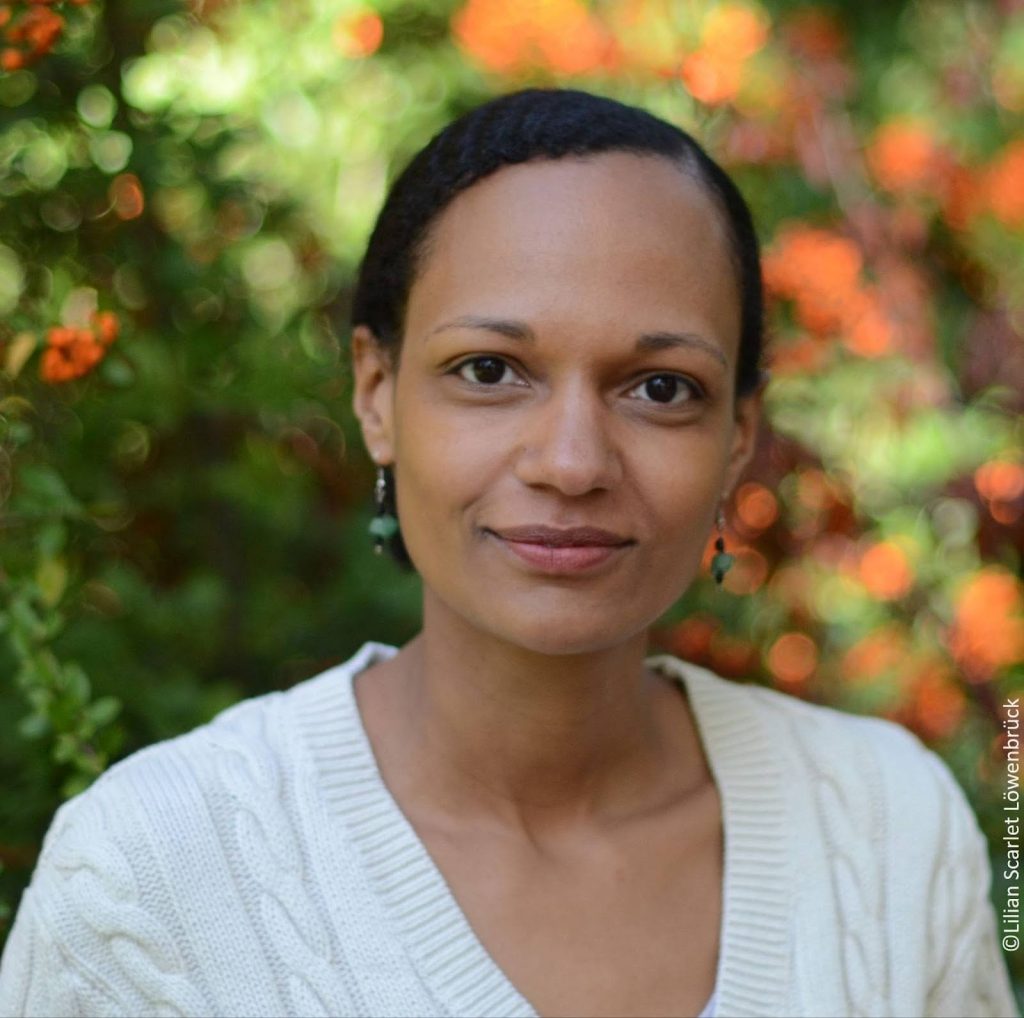
Regina Feldmann was born in Germany. After living in Malta, Ireland, New York and Portugal, she now lives in Berlin with her family. Regina writes and translates children’s books and is also involved in projects that promote a diversity of voices in children’s literature.
Martina Stuhlberger
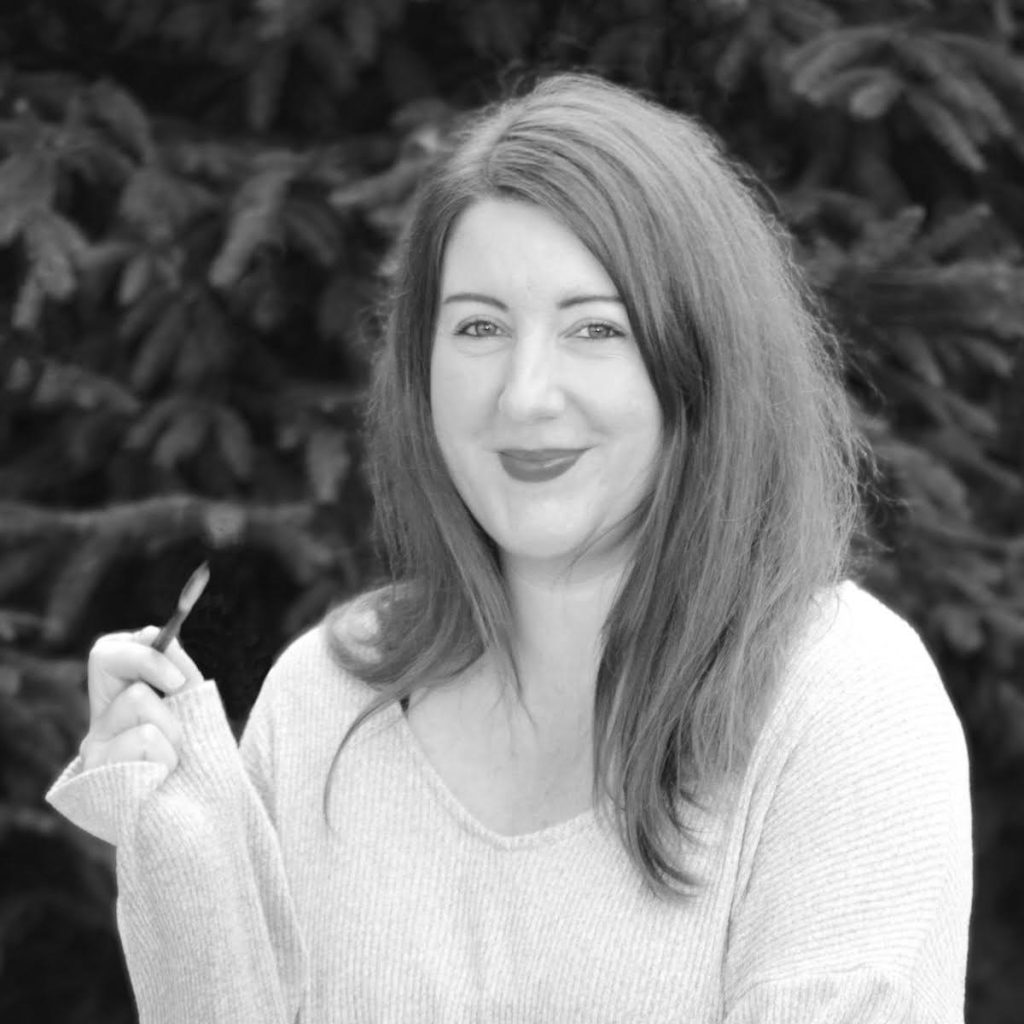
Martina Stuhlberger lives and works near Linz, Austria. Before realizing her childhood dream of becoming an illustrator, she studied journalism and languages in Salzburg and Nicaragua, and later worked as a copywriter and screenwriter. Her work is inspired by foreign worlds, the beauty of nature, diversity and cohesion.
The Questions
Can you give a quick elevator pitch for 9 Little People?
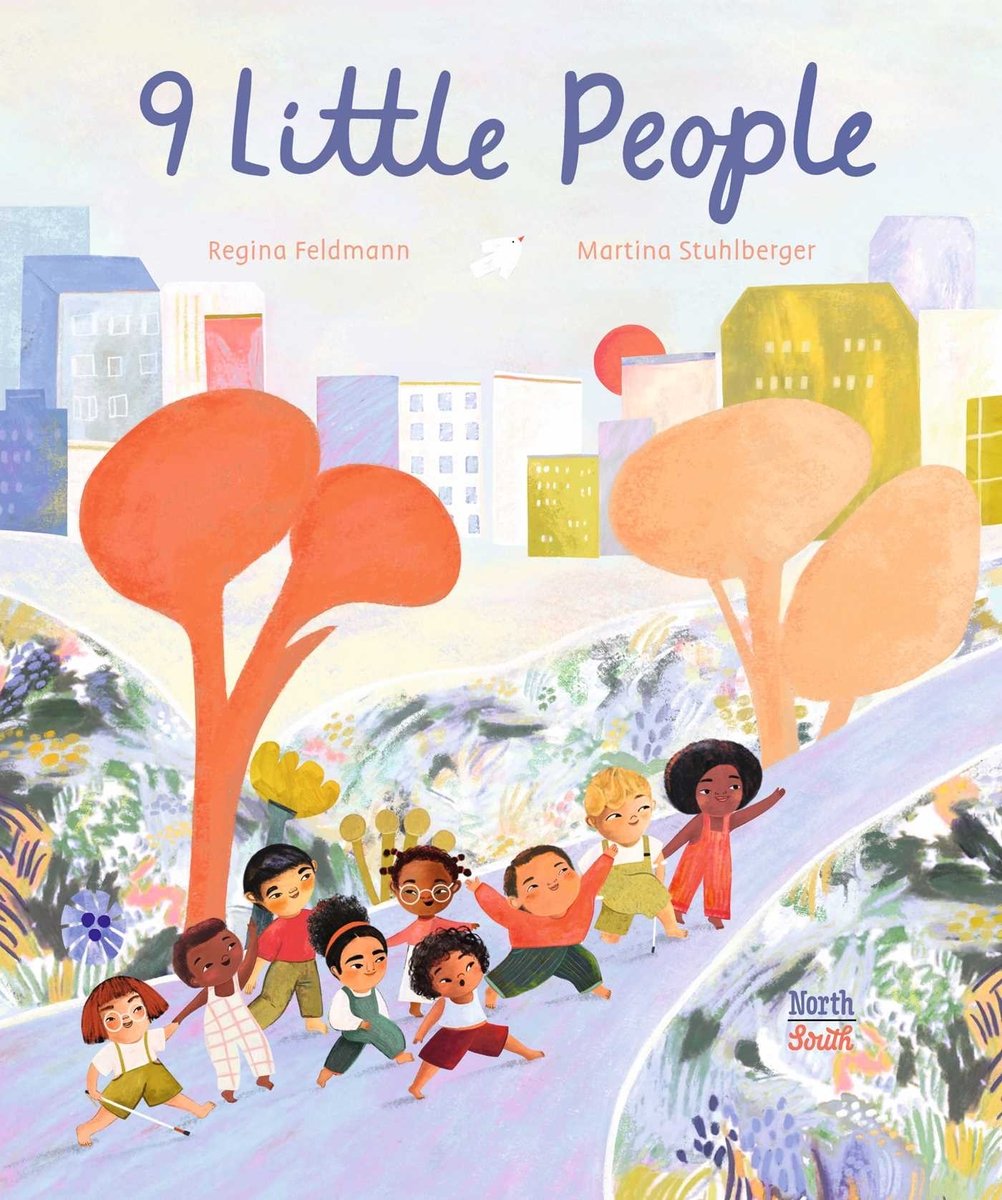
Regina: The book is about nine children who were all born on the same day. They live in the same neighborhood and grow up together. Although the nine children, their backgrounds and families are completely different, it is their similarities and friendship that bind them together.
9 Little People celebrates diversity while embracing our similarities. Why is it so important to teach children this message at a young age?
Regina: As a parent of three, I observe how young children start out in the world without prejudice. Of course, they notice differences between people, which is important. However, it is us adults who categorize these differences and often pass on our prejudices to the next generation. Although it was very important to me that the illustrations, which Martina has drawn so beautifully, show as much diversity as possible, I tried to leave the word ‘differences’ out of the text. Instead, I tried to focus on words that unite rather than divide us, such as “together,” “play,” and “friends.”

In all your books your illustrations are characterized by a great deal of diversity. Why is diversity important to you and what challenges does illustrating diverse characters (such as different ethnicities or people with disabilities) entail? How do you deal with these challenges?
Martina: Honestly, I’ve never really questioned why I use a diverse cast of characters in my work. I’ve always done it and it just comes and feels natural to me. And I really think, it just should be this way in all children’s books!
Here, in the German speaking market, it took a long time to find non-blonde and not solely white characters in picture books. Now, thankfully there is an increasing amount of books and also publishers devoted to a more diverse representation of characters and themes. But we’re still not quite there. I think it’s so important for children to be able to see themselves in books, whether they have a different skin color than their classmates, a disability, a different body shape, whether they’re coming from another social background, and I could go on and on.
For our 9 Little People we had a lot of talks about disabilities and how to show them in an appropriate way. Regina’s daughter was the muse behind the “but isn’t nine equally beautiful as ten” thought, so as we have 9 Little People it also felt natural that not every child has to have ten perfect fingers or toes. So we have a child with a first amputated and then prosthetic leg, a visually impaired and a deaf little girl, for example.
We even did two Sensitivity Readings and were in touch with a Sign Language Association to ensure we are showing things as correctly as possible.
Of course, it can be a huge challenge to illustrate such a diverse book with children and parents having different disabilities too, but I find it so rewarding when you get one of those beautiful and touching message afterwards, like a disabled mother writing “I’ve never seen a pregnant mom in a wheelchair represented so beautifully in a children’s book before.”

How can the impactful message of the 9 Little People be utilized for both children and their parents in today’s world?
Regina: In today’s world, where social media plays a significant role and people increasingly isolate themselves in their own bubbles, it’s crucial that we remain open-minded. The best way to do so is by having conversations and encounters with people with different life experiences than ours. However, not everyone has the opportunity to do so in real life, due to different circumstances. Books can be a good start. I firmly believe that children’s books are not only a reflection of our diverse society but also play a key role in shaping it. Therefore, I hope that as many children as possible continue to have access to books that promote tolerance and empathy.

Your books have a wide range of colors. You chose a beautiful pastel color palette for the 9 Little People. What was the intention behind this?
Martina: Finding the perfect color palette for a project is always a bit of a process. Colors can add so much, they can convey emotion and set the mood, communicate the story visually and be a real eye-catcher.
I always tend to use limited color palettes in my books, as I think it makes them stand out more.
When starting, it’s always helpful to ask yourself some questions, like: Are there any seasons present? Lots of night scenes? How is the book written, in a humorous or more sentimental way?
Answering these questions already helps getting an idea of which colors might work or not.
For our 9 Little People, I thought using contrasting colors would make the diverse range of children with different skin tones really pop on the page. So I added pastel colors in blue hues for the backgrounds and city skyline, for example. Which were also perfect for scenes like the swimming pool or the very last picture shown on the endpapers, where the 9 Little People are all lying in bed, surrounded by a beautifully illuminated city by night.
Both of you have lived in locations around the world. How has this motivated your writing and art?
Regina: I am so glad that I have had the opportunity to live in different places, get to know various people, and experience different cultures. I still try to travel as much as possible with my children. I find it enriching to learn new things, hear beautiful languages, and try new foods. There hasn’t been a trip where I haven’t come home with at least one new idea for a children’s book.

Martina: While studying Journalism and Spanish, I spent half a year in Nicaragua as a 20 year old. Together with a colleague and a local artist we were leading an art project at a local primary school, bringing the history of Nicaragua to life on the blank murals around the school building together with the kids. This semester abroad has shaped my life not just personally on such a deep level, I’m also quite sure the rich landscape, flora and fauna, and Nicaragua’s wonderful people had a deep impact on how I see the world as an artist now.
Every year, when I have the feeling that I’ve run out of creativity and ideas, traveling to a new location is a must for me as an illustrator. Seeing different places and people, discovering local specialities and little curiosities here and there, taking lots of pictures, that’s what fills my cup so much. And as someone who studied Journalism, I truly love any type of research.
You never know if an encounter you made will find its way into your next picture book.
Can you think of a moment from your childhood when this book would have been helpful in a difficult situation?
Regina: Definitely. Since I grew up in a small town in Germany in the late eighties/early nineties, there were hardly any children’s books featuring children who looked like me. The few that did exist depicted Black people in a racist way. But not only people of color, also people with disabilities were hardly ever represented in a positive way back then. I believe that if we had had a book like 9 Little People in kindergarten, it would have empowered not only me, but many other marginalized children.

What other profession would have interested you if you weren’t working in children’s publishing?
Regina: I actually studied tourism management and worked in this field for a long time. Although I have always loved storytelling, I never thought I would write children’s books until I had children of my own. Now, I can’t imagine a more rewarding job than writing and translating children’s books, giving readings, and contributing, however small, to making the world a bit more colorful.

Did you always know you wanted to be an illustrator? And were there any books in your childhood that inspired you to pursue this career?
Martina: One of my first childhood memories is making my own books, filling pages with art and stories, and dreaming of doing this for a living once I’m grown up. As a child, I adored Astrid Lindgren’s books, the bravery in her stories and the beautiful worlds, known or far away, she describes.
Life sometimes has some unexpected paths and turns, so I worked in Marketing and as a Screenwriter before finally rediscovering my true passion, illustrating children’s books.
But I’m glad for all the experiences I made, because now all my different backgrounds are helping me so much, as certain aspects of the publishing process are beautifully melting together with my former career, like design and promotion of my books, or having cinematic scenes or camera angles in mind when working out the perfect visualization of a story.

In your personal time, what are some of your favorites on your reading list?
Regina: One of my favorite books that I read recently was Percival Everett’s James. Homegoing by Yaa Gyasi was also a real highlight for me, not least because I have Ghanaian roots and could therefore relate to the story in a personal way.
As I also blog about children’s and young adult books, I read lots of children’s books in my free time. Recently, I really enjoyed “Bog Myrtle” by Sid Sharp. I also love Lisa Aisato’s books, as she is one of my favorite illustrators.
Martina: In the last couple of years, my pile of picture books has grown steadily. As an illustrator you quite often have your very own, ever growing library at home, including books of authors and illustrators you admire, and also your very own picture book copies.
Personally, I feel very drawn to contemporary artists like Felicita Sala, Marc Majewski, Yas Imamura or Olivia Holden, to name just a few. But also to those grand mid-century artists like Miroslav Šašek or Alice and Martin Provensen.
I also own multiple books of the Little people, big dreams series, published by Quarto.
As I already wanted to write my own stories as a kid, this will be the next step for me and I’m quite excited about this journey.

Can you give us a peek at what you’re working on next?
Regina: I am thrilled that two of my books will be published in Fall 2025: a new children’s novel and a new picture book. I’m currently working on some new publications for 2026 and 2027, including a new picture book, which will be published in German by NordSüd Publishing and in English by NorthSouth Books, just like the 9 Little People. Once again, I will be collaborating with an amazing illustrator. Having the opportunity to work with all these talented illustrators is one of the best parts of my job anyway.

Martina: The publishing world has its very own timelines, as a book you’ve been working on quite often takes months or even years until it is finally out in the world. Then, while you’re already working on new titles, publication day often comes a bit by surprise. I’m very lucky that two of the books I illustrated last year will be out this Fall, and another two right at the beginning of the new year and in Spring 2026. Including a book with HarperCollins about celebrations around the world, which I’m quite excited about! It’s always such an honor to dive deep into new worlds, and to bring wonderful stories to life!
9 Little People is an important addition to the world of children’s books that you won’t want to miss when it is released on September 2nd, 2025! Regina Feldmann and Martina Stuhlberger’s creativity and attention to detail in every aspect from book’s color palette to its title show their dedication to their craft, and to the important work of representing children of all backgrounds and bodies in joyful color and friendship. To keep learning about them and their stories, you can find Regina Feldmann here, and Martina Stuhlberger here.
Keep discovering talented members of the literary community that Bookstr has chatted with here!
Find 9 Little People and more titles for children on our Bookshop Mini Bookworms Delightful Recommendations shelf