













Like many marginalized communities, members of Asian diasporas in the West have long been misunderstood. We’ve been caricatured, stereotyped, and flattened to fit into a small predetermined box that sidelines our experiences in favor of centering Whiteness. Viet Thanh Nguyen refers to this as “narrative scarcity”: a “lack of characters who looked like us, and when they looked like us, were not really human.” This narrative scarcity affects how members of marginalized communities see themselves and the possibilities for their lives. For young adults, who are in the process of discovering themselves and understanding their identities, representation — and its absence — can be particularly impactful.
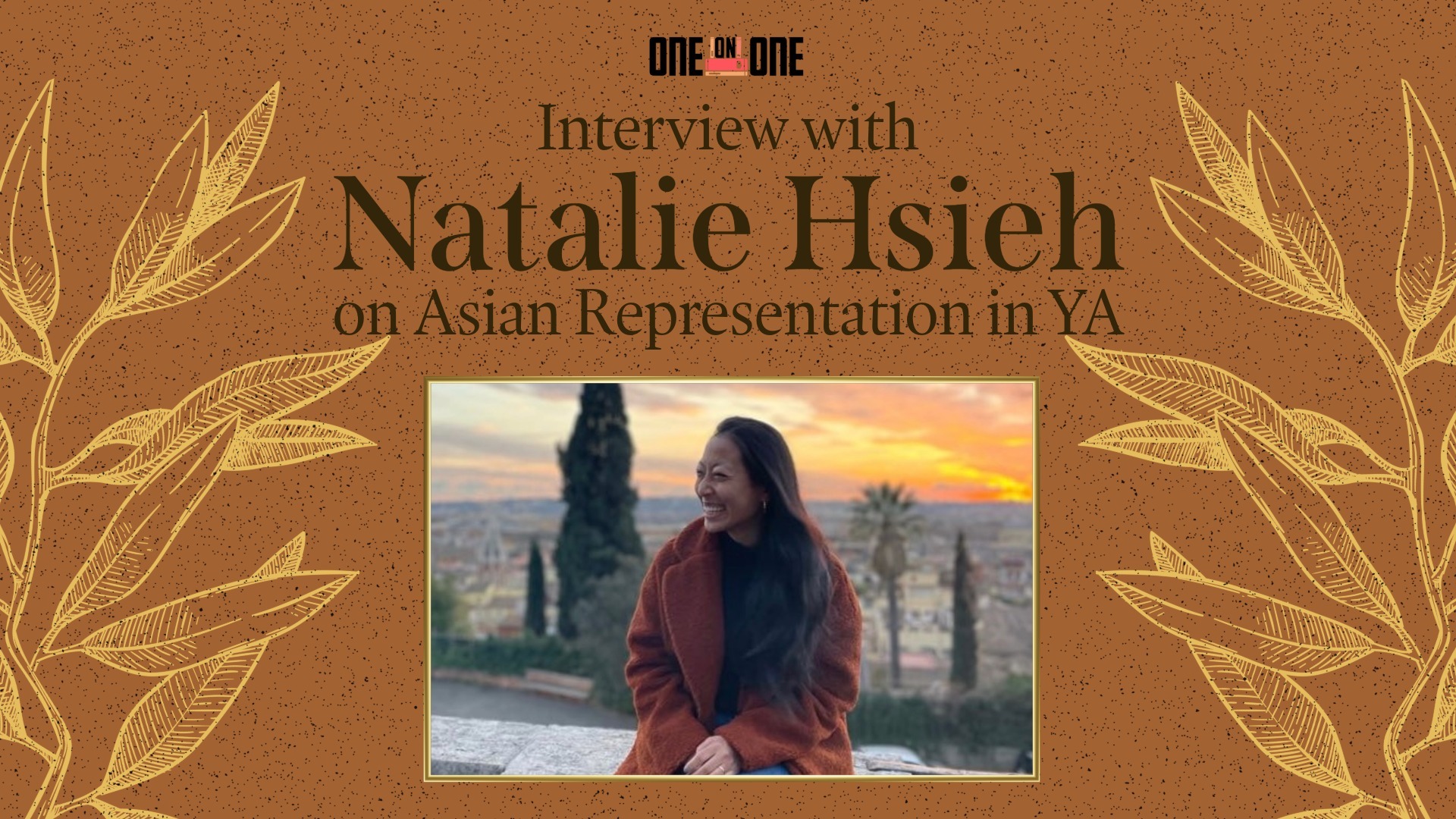
Researcher Natalie Naihuei Hsieh sought to understand how young adult readers in Asian American and British East and Southeast Asian (ESEA) communities respond to literature that centers characters who share their identities. Hsieh organized a book club for Asian American and ESEA readers to discuss two books’ depictions of Asian diaspora experiences. The insights generated in those conversations highlight the many nuances and differences in perception within the diaspora. Importantly, they emphasize the necessity for publishers and educators to make space for a wide variety of stories illustrating a diverse range of experiences — what Nguyen calls “narrative plenitude.” We spoke with Natalie about her pioneering thesis work and her advice for both publishers and aspiring researchers.
About Natalie Naihuei Hsieh
Natalie Hsieh was recently awarded her PhD in Education from the University of Glasgow. Her research focused on the representation and recognition of East and Southeast Asian (ESEA) young adult identities in contemporary Young Adult literature (YA), as well as how ESEA young adults themselves respond to these representations. She is especially interested in the ways that YA portrays the hybrid identities of young people across the ESEA diaspora and their negotiations between cultures; she is also interested in how societal narratives shape social realities. Before completing her PhD, Natalie taught middle school English in the US.

Thanks for joining us, Natalie! Let’s get started.
What personally motivated you to investigate the representation of Asian American and British ESEA young people in young adult literature? Was there any specific experience that led you to this field of study?
There was no specific experience, but rather an accumulation of personal experiences across three distinct stages of my life so far: reader, teacher, and researcher. I was a voracious reader as a child, and I devoured classic fantasy books by authors such as Tamora Pierce, Brian Jacques, and Madeleine L’Engle. However, I never once read a story that featured a protagonist who looked like me, which led me to doubt that kids like me could have adventures.
When I became an English teacher, I found that many BIPOC children in my classes shared these same doubts, particularly when the books we analysed in the classroom usually only featured BIPOC characters in stories about overcoming struggles and deprivations. Ultimately, these experiences led me to make the decision to leave the classroom to pursue research in children’s and young adult literature. When I finally began my studies as an Asian American researcher in the UK, I found that there was a massive lack of British ESEA (East and Southeast Asian) representation in books and wider media. I began to wonder what the impact of this lack might be on young British ESEAs themselves, inspiring the focus of my research.

For someone unfamiliar with the field of young adult literature research or academic discussions about representation, how would you summarize the central points of your thesis?
Historically, stories have often been used to marginalize and misrepresent the Other and to disseminate stereotypes. This is particularly harmful for BIPOC young people who rarely see themselves represented in stories, as the lack of representation creates a version of reality that excludes them entirely. Thus, it is crucial for stories to include both ‘windows’ and ‘mirrors’ that can truthfully capture the complexity and diversity of the world in which we live.
Young Adult literature can provide some of these necessary ‘windows’ and ‘mirrors,’ especially for young people who are seeking stories that are relevant, relatable, and can provide counterstories that work against the deficit messages of society. However, the field of YA is still lacking when it comes to nuanced representation, especially regarding Asian American and British ESEA stories. A study on Asian American and British ESEA YA and the hybrid experiences of these young people seemed long overdue, particularly a study which sought out these young people themselves to act as partners in this research and not just subjects.
Your research highlighted that there’s a gap in knowledge about how Asian American and British ESEA young people respond to representative YA literature as “cultural insiders”. Could you explain more about what it means to be a cultural insider in this context and how it influenced the participants’ responses in your book club?
At the simplest level, being a cultural insider means that one can identify with aspects of a shared cultural background. In this case, I sought out young people who could identify with aspects of YA depicting Asian American and British ESEA characters and communities. Of course, insiderness/outsiderness is also a spectrum; a person can simultaneously be an insider and outsider based on many shifting identifiers, so it was important to acknowledge how Asian American and British ESEA young people who might all fall in the same ‘group’ can still relate differently to representative stories. This could be seen in the study, as there were many poignant moments where participants saw themselves represented in the texts, as well as an equal number of times where they disagreed on whether a scene was a ‘mirror’ or a ‘window.’
Ultimately, the participants were quite keen to make it known that while books about the ESEA experience are necessary and valuable, readers should not assume that every ESEA young person can be reduced or equated to the experience of the characters in these novels. They appreciated the chance to speak back to these stories, asserting the non-monolithic nature of the diaspora and of their own identities.
One of your key findings was the participants’ feeling of “identity in flux”. Could you elaborate on how reading If You Still Recognise Me and The Silence that Binds Us helped or challenged young people to navigate this “identity in flux”, especially considering the familial expectations and language barriers mentioned in the thesis?
As you mentioned, participants often discussed how their conflicted identities — “identities in flux” — were shaped by parental expectations, by distance from extended family, and language barriers — in other words, by the expectations of the diasporic community around them. They felt as though their hybrid identities caused them to be alienated, no matter where they were (US, UK, or Asia). And while participating in the book club didn’t provide participants with any neat answers about their identities, reading and discussing the two YA novels did appear to help participants process many of their thoughts on this topic, leading to meaningful conversations with their peers.
Although it seemed that much of the discussion revolved around the participants’ negative and conflicted feelings about identity, the book club itself provided a valuable opportunity for the participants to discuss these feelings with other young people and perhaps understand that they were not alone in their uncertainty and doubt. As one participant wrote, “Verbalising my thoughts on Asian diaspora narratives has really helped me process my own sense of cultural identity…I’m really grateful to have been a part of the study and to have met you.”

You observed differences between the perspectives of US and UK participants, particularly regarding activism and community engagement. How do you believe the distinct histories of Asian American and British ESEA community formation influence young people’s current perception of their place in society?
I can’t speak broadly on all Asian American and British ESEA young people, but my participants’ perceptions of their own identities as hybridised Asian Americans and British ESEAs seemed to be drastically different. Although all the participants felt the complex difficulty of being a part of two or more cultures simultaneously, the Asian American participants also believed that their hybrid identities gave them access to different perspectives, communities, and dimensions in their lives and that they could rely on the larger diasporic community to help them to feel seen and proud of their identities.
In contrast, the British ESEAs viewed their hybrid identities with far less positivity, writing that they felt invisible and unrepresented in British society, leading them to never truly feel that they belonged anywhere. And in contrast to the US participants, the UK participants discussed the lack of representative community around them and their difficulty in finding and connecting with other British ESEAs. However, perhaps because of these differences, the UK participants were actually far more engaged in the study than the US participants; it might be inferred that they were much more eager to connect with other ESEA participants and to participate in an online community centred around their reading experiences.
Your research emphasizes the importance of “counterstories” for minority youth. Thinking about the young adult publishing industry, what practical steps could be taken to not only increase the number of representative stories but also to ensure these stories function as effective counterstories that challenge stereotypes rather than reinforce them?
Both my study participants and published authors have repeatedly pointed out that the publishing industry is still mainly publishing select books that portray the diasporic immigrant experience as full of trauma and hardship. While these difficult experiences are undeniably part of growing up in the diaspora, there are countless other experiences that are overlooked in favour of creating this ‘single story.’ Additionally, this unfairly places the burden of representation on a very small number of authors, asking them to somehow capture all the nuances of an entire culture.
Ultimately, publishers should be more open to authors and stories that reveal new and different facets of ESEA individuals and communities, as every new story helps to create a fuller picture of the ESEA diaspora. The publishing industry should also seek out ‘sensitivity readers’ where possible, asking for the perspective of cultural insiders who can make sure that these stories are not veering into stereotypes. And finally, publishers can work with grassroots ESEA organisations to create resources that are high-quality, easily accessible, and can be disseminated to schools, businesses, and organisations that would like to learn more about ESEA issues.
What ESEA books do you wish had existed when you were younger, beyond those you studied in your thesis?
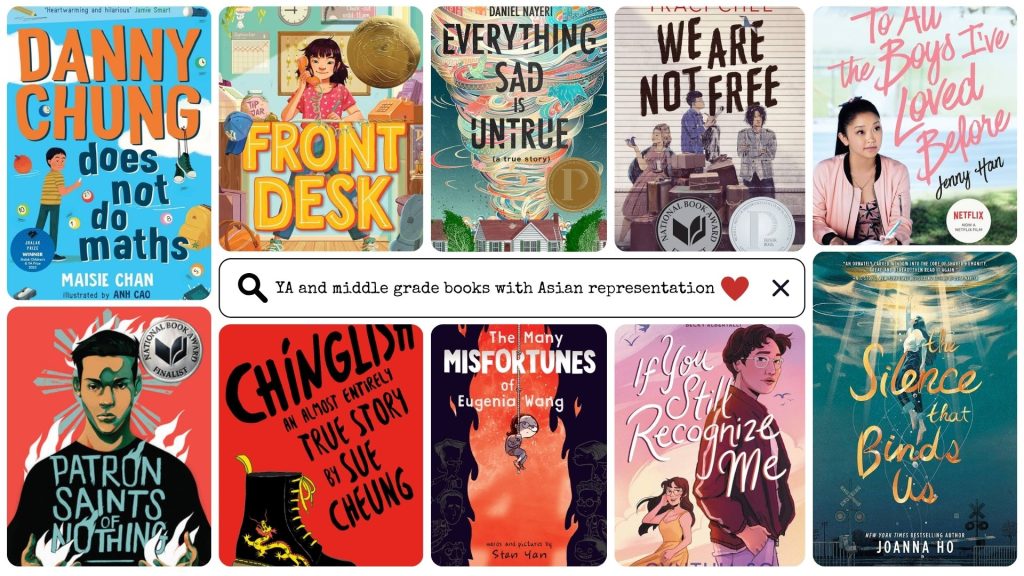
There are so many great options now, which is really amazing! Most of my suggestions are from US-based authors, but there are also a couple of really great UK titles in this list.
- For middle grade readers:
- Danny Chung Does Not Do Maths – Maisie Chan (marketed in the US as Danny Chung Sums It Up)
- Front Desk – Kelly Yang
- Everything Sad is Untrue – Daniel Nayeri
- For YA readers:
- We Are Not Free – Traci Chee
- To All the Boys I’ve Loved Before – Jenny Han
- Patron Saints of Nothing – Randy Ribay
- Chinglish – Sue Cheung
For other young researchers or students interested in conducting their own research, what are the three most important tips you would give about how the research process works and what one should keep in mind to succeed?
Don’t be afraid to make it personal: As researchers, we’re often told to stay impartial and unbiased. While this is important advice, it is also crucial not to ignore the reasons why you decided to pursue research in the first place, reasons that are often rooted in a personal question or passion. Remembering why you wanted to begin this journey can help you in the moments where you feel stuck or unmotivated, and it’s what will make your research powerful and unique.
Find your community: Research is lonely and isolating, so make sure to find your people and make time for regular breaks with them. Oftentimes, talking over your research with someone else can spark a new idea or breakthrough. It’s also important to stay balanced; there’s nothing wrong with stepping away from research and simply spending time with others to fill your cup!
Persevere! The research process is a marathon, not a sprint. At times, it will feel never-ending and too challenging to bear. In those moments, take a step back and focus on what smaller pieces you can identify out of the mess. Give yourself deadlines and tackle what’s manageable in the moment, even if it’s just reading a couple articles or sketching out a mindmap with ideas. The little things add up!
Thanks again to Natalie for speaking with us! You can read her thesis here and explore her other academic publications here.
Click here for 11 graphic novels spotlighting the Asian American and Pacific Islander community.
Find more AAPI-focused reads at our Bookshop.