
















Beauty, romance, innocence, rebirth. Whether annual or perennial, flowers hold enduring meanings both in life and literature. Before whatever blossoms into realization within a book’s pages, covers draw our attention and set our expectations, meaning florals have a meaningful place on a book’s cover as well as in the story itself. From a simple, single rose to tangles of blooms and vines, here are 15 book covers with some of the natural world’s most splendid spoils.
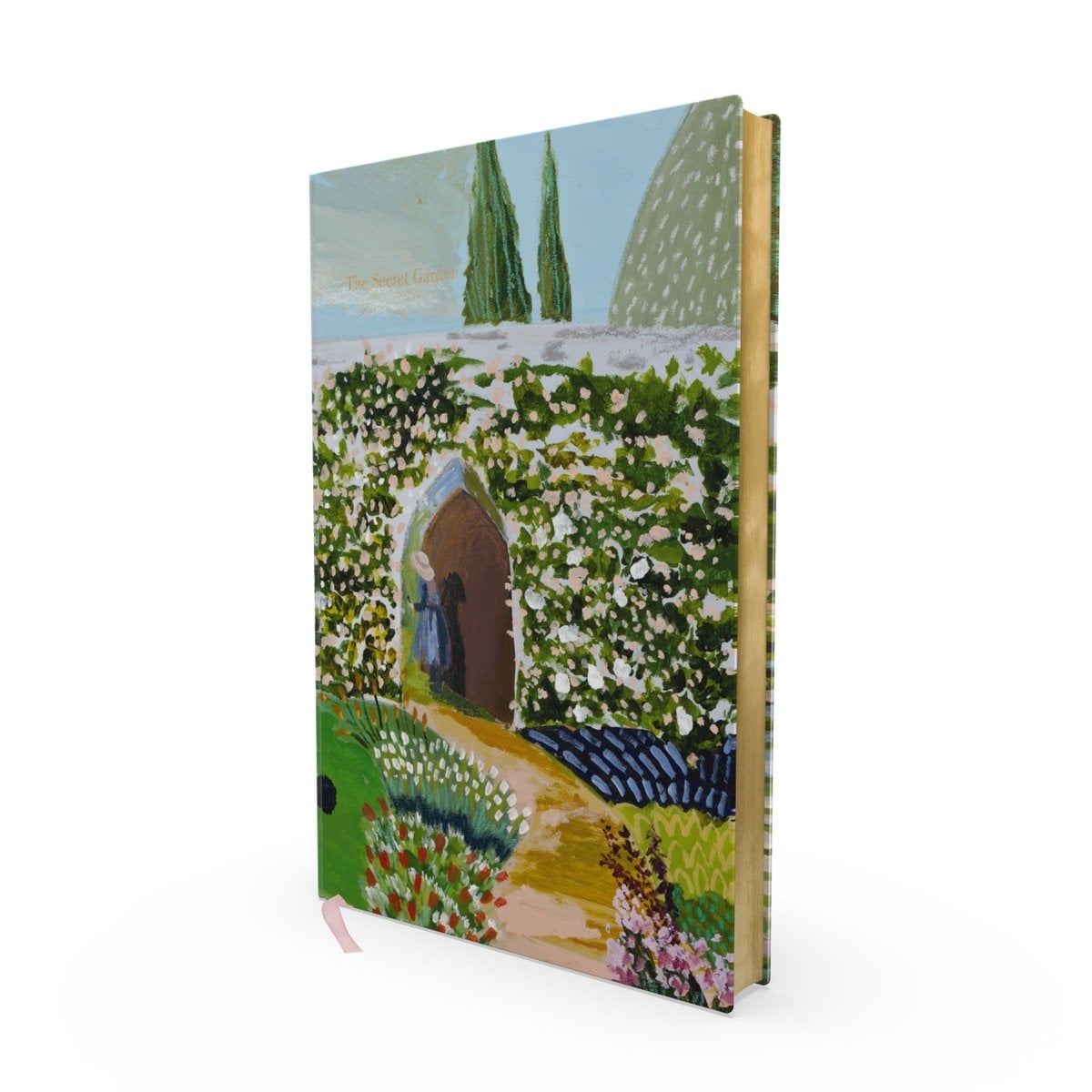
The Secret Garden by Frances Hodgson Burnett
Nature creates a healing space in this classic children’s tale, shaping both the health and temper of young Mary Lennox. This painted edition of the story captures the alluring nature of the world as she explores it, with crowds of tulips, clouds of pink blossoms, and climbing, flowering foliage offering a taste of what she might find behind the wall. These vivid colors and simple strokes bring the garden and its florals to life.
Little Women by Louisa May Alcott
This story of four sisters’ coming-of-age encompasses experiences from romance and marriage to grief and loss. The simple white blossoms and clear, bright blue backdrop capture something sweet and tender among it all, a plant in the process of its own kind of growing up. Like the gold tinge to the modest white petals, the cover invites us to explore what small treasures can be uncovered in the lives of Little Women.

Wide Sargasso Sea by Jean Rhys
In a post-colonial response to Jane Austen’s novel Jane Eyre, Wide Sargasso Sea reexamines the classic story to imagine a deeper narrative for the mystery-shrouded character of Bertha. The vibrant pinks and reds of this cover’s florals, crowded near the young woman’s head, initially seem to create a tropical paradise. The burning house behind, however, adds an eerie and alluring complication to their idyll.

Shakespeare’s Sonnets (Arden Shakespeare, Third Series Revised) by Katherine Duncan-Jones (Editor), Richard Proudfoot (Editor), Ann Thompson (Editor), David Scott Kastan (Editor), H. R. Woudhuysen (Editor)
In The Bard’s world-renowned sonnets, love and its many wonders and pitfalls are a common theme. The red rose is a symbol of that romance and passion that dates back to Greek and Roman iconography. In stark contrast to the scrawled writing and faded, creased paper behind it, the flower demands attention on this edition’s cover, like an impassioned confession of love.

The Sun and Her Flowers by Rupi Kaur
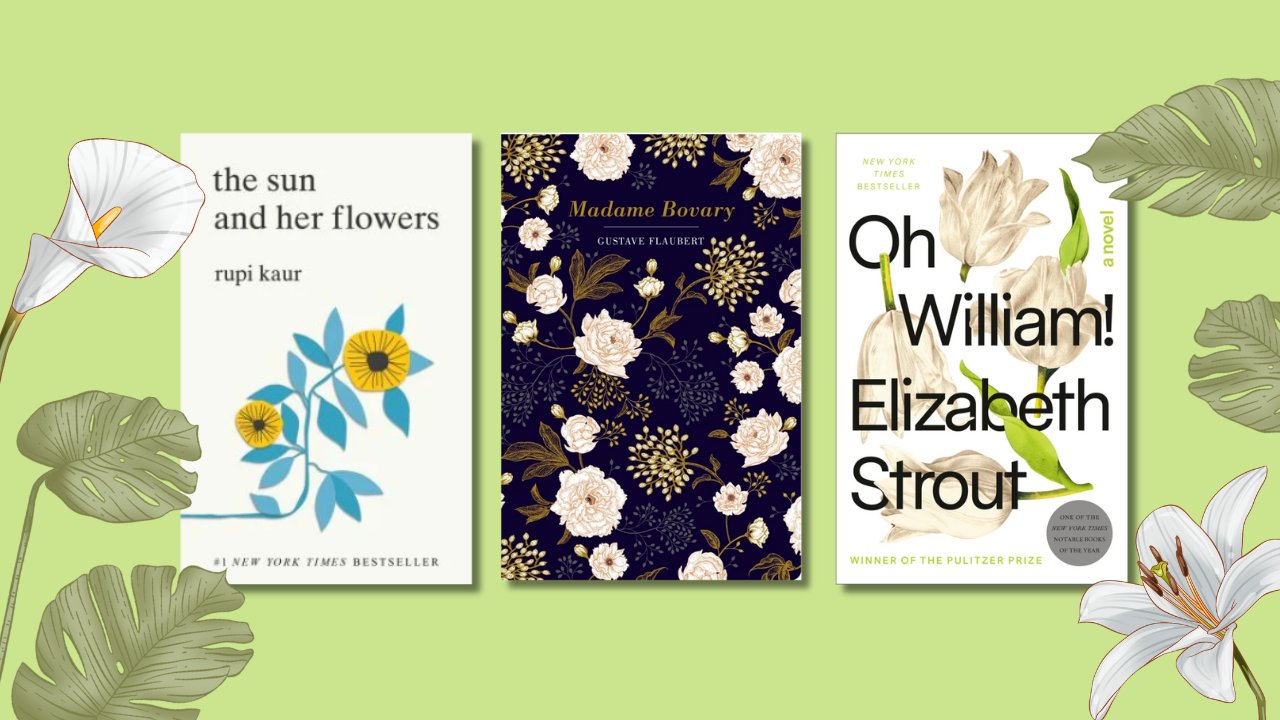
Kaur’s poetry collection is framed by the flower’s cycle of growth and decay. It is only fitting, then, that this cover displays florals in the minimalist style of her words. The yellow and blue tendrils and blossoms, contrasting and yet complementary, capture the flower in complete bloom, the culmination of her own journey through her poems.

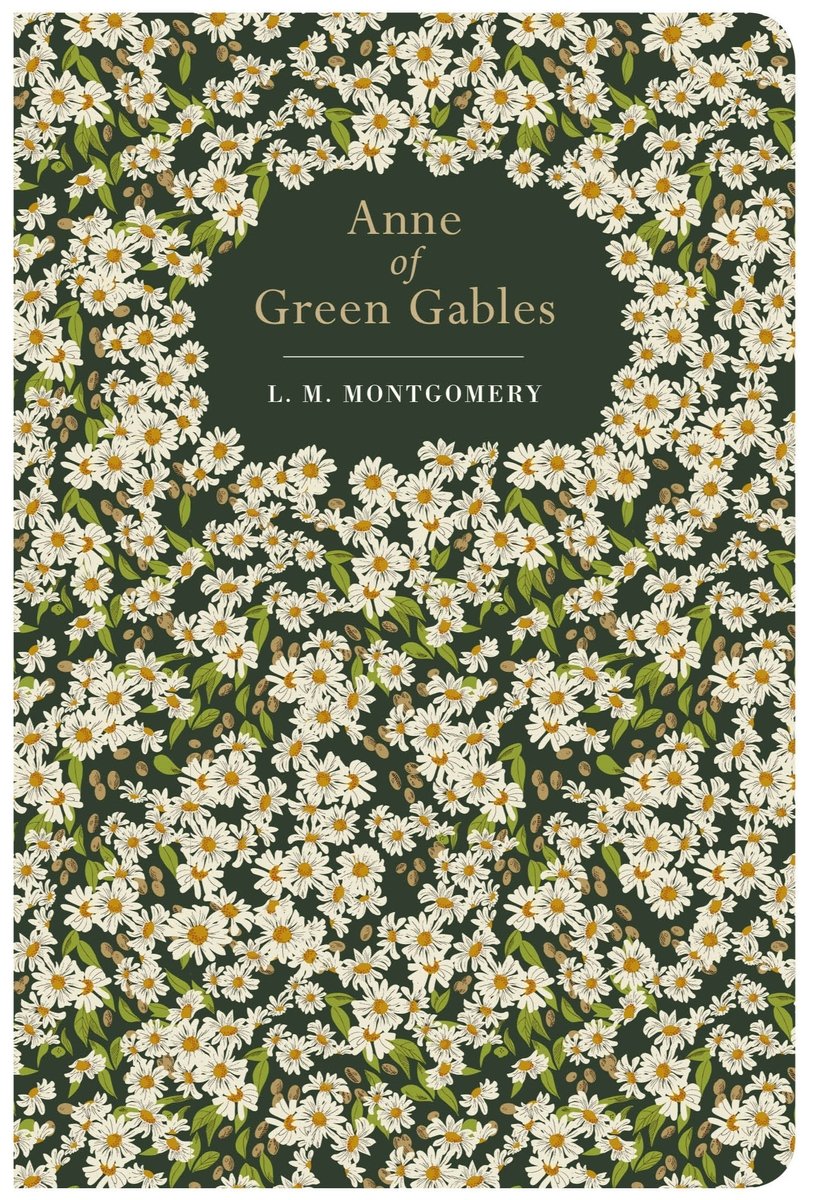
Anne of Green Gables by L. M. Montgomery
Anne Shirley’s electric energy and passion for the world around her are captured in this jam-packed cover. With a surplus of bright white daisies crowded in around the title, the design seems almost to create a meadow of flowers, perfect for the romping exploration of both the reader and the young, curious girl they will meet.
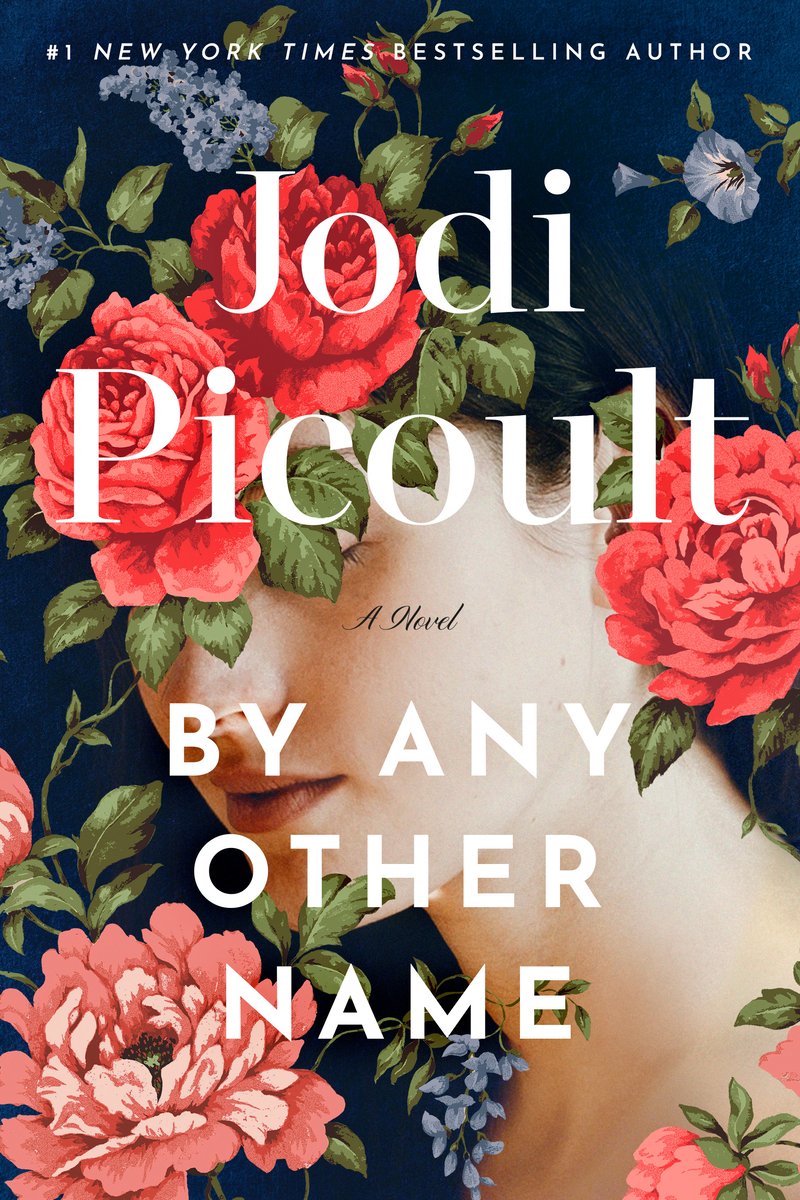
By Any Other Name by Jodi Picoult
For all the delicacy of this cover’s roses, they also seem to invade, shrouding the face of the young woman at the image’s center. In Picoult’s work of historical fiction, where a young woman faces a world in which she must assume a pen name to share her writing, the beauty of the flowers’ sprawl is edged with the question of what is obscured in their growth.
Tom Lake by Ann Patchett
The smattering of daisies and hazy backdrop of blue-green grass behind them give this cover a rawness and nostalgia. In Tom Lake’s dealings with family dynamics and love across both stages of life and generations, memory is an essential aspect of the story. The visible textures and soft, mottled edges of these florals and the grasses in which they grow make the cover seem almost like a memory itself.

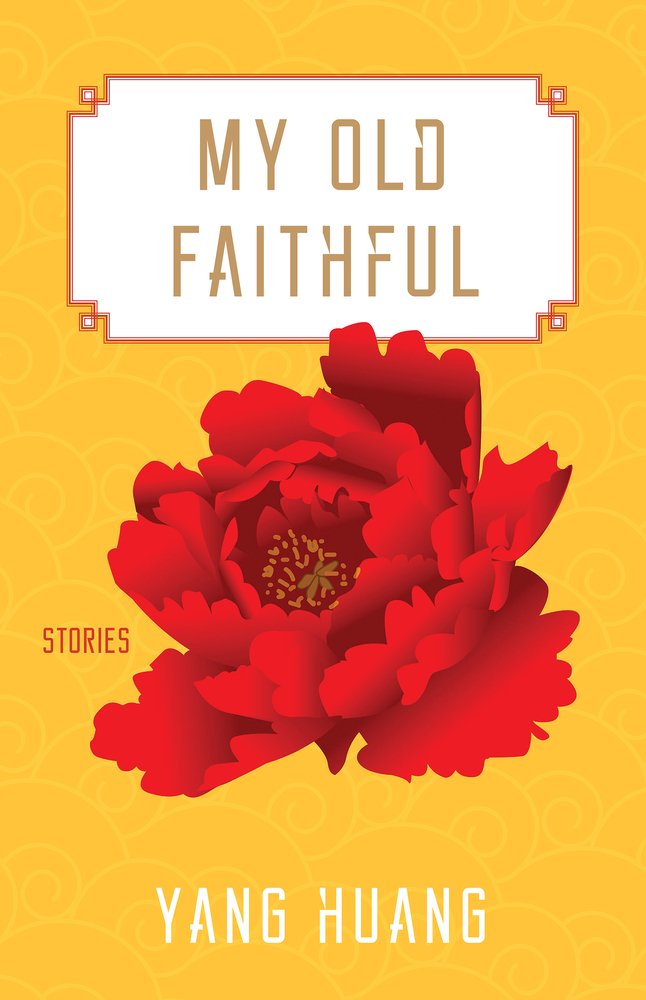
My Old Faithful by Yang Huang
Crisp shades of red and curling petal edges seem to erupt straight from the center of Huang’s book. The cover boasts bold colors, a harmonious union of red and gold that signifies prosperity, good fortune, and joy in Chinese celebrations such as the Lunar New Year. Such a combination also indicates to the reader the sense of place that brings the book together across a collection of short stories.
Oh William! by Elizabeth Strout
A white background and black text give this cover a clean simplicity. This look is interrupted, however, by the organic shapes, odd angles, rippling textures, and fine details of the white tulips. The third novel in a series, immersed in the world of Lucy Barton, Oh William! unpacks themes of marriage and relationships, finding twists, mysteries, and complexities that overlap and disrupt like the florals of its cover.

My Ántonia by Willa Cather
Two blossoms, one bud, and their stalks and leaves make a modest composition for this cover of My Ántonia. Like young Ántonia, a resilient and enduring daughter of immigrants on tough Nebraska prairie, these stark and sturdy sprouts display a quiet beauty in their star shapes, gentle dips and bends, and purpley-blue hues.

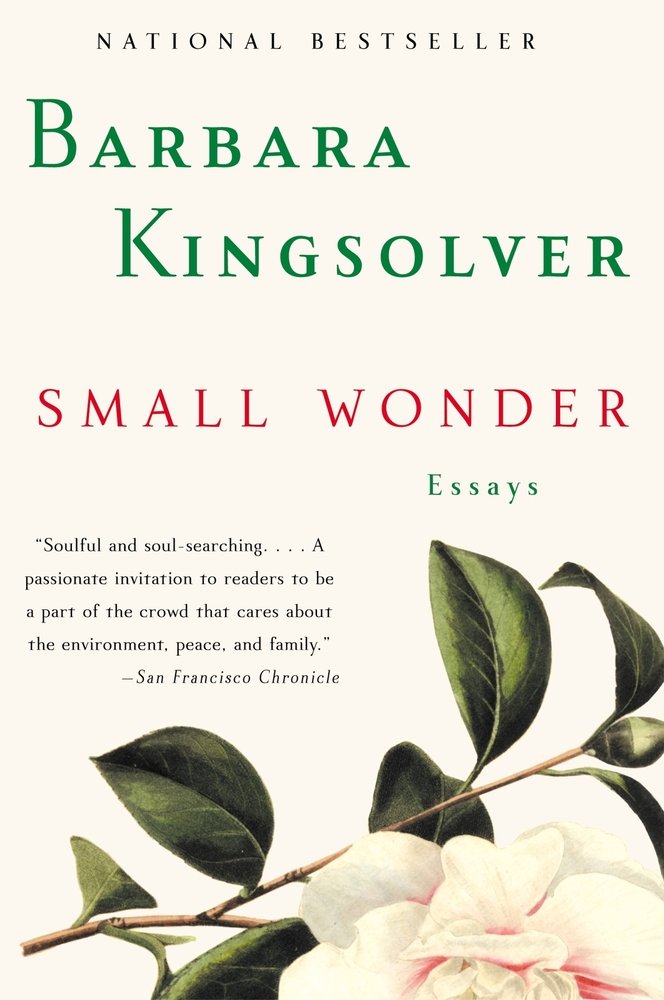
Small Wonder by Barbara Kingsolver
The fragment of a flower reaching across the bottom of this cover is a graceful example of just what Kingsolver’s title denotes: a small wonder. Even without the full image of the blossom, the waxy sheen of its leaves, and the soft tinge of pinks seeping from smooth white petals, draws you in. With so much detail to explore in the florals of this cover, a reader approaches Kingsolver’s essay with close attention and appreciation for the little things.
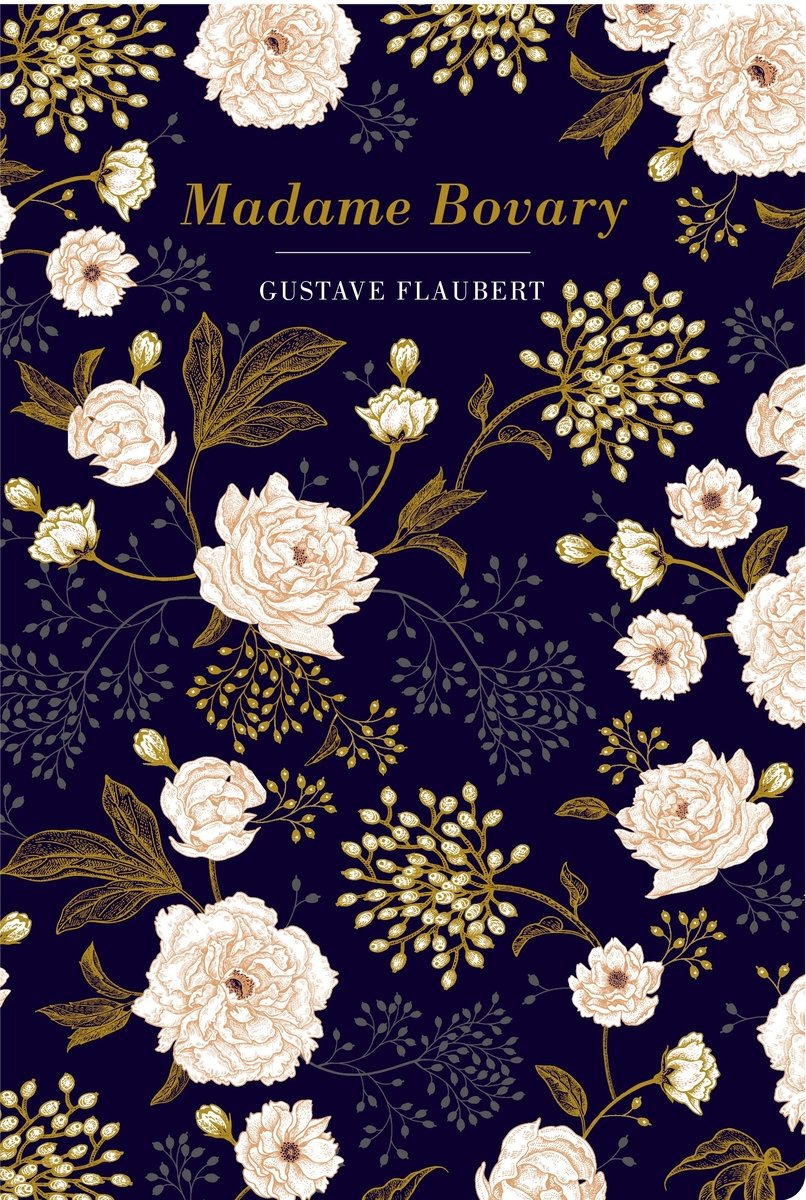
Madame Bovary by Gustave Flaubert
The regal florals of Madame Bovary’s cover are spread evenly, flowers and buds curling around one another as if carefully laid. Soft cream and glowing bronze colors are brought into sharp relief by the deep navy behind them, all together creating a style as classic and dignified as Flaubert’s tale of the disillusioned Emma Bovary.
The Housekeeper and the Professor by Yoko Ogawa
Floating across the cover from the pink swathes of cherry blossoms, light petals pepper the clear sky. In a tale of constantly fading memory, these spots across the clear sky appear like another kind of dissipation. Still, even in their moment of disappearance, they create a profound and beautiful scene, just as the story of The Housekeeper and the Professor itself.

The Year of the Flood by Margaret Atwood
A lone poppy dominates the cover of Atwood’s work. Despite the piercing gaze of the patterned creature above, the flower takes the cover’s center and commands attention. The Year of the Flood has its share of darkness as the second work in a series of speculative, post-apocalyptic fiction, yet this bloom emerges from the dark and muddled shades behind it as bright, hopeful, and bold.

The colorful and eye-catching florals of these 15 book covers are enough to grab our attention, even from across the bookstore. Their beauty makes an impression, whether in classics or contemporaries, poetry or post-apocalyptic literature. For those who take a closer look, hints of the stories within of woven through the stalks, leaves, and petals of each design.
Want to learn more about the symbolism of flowers? Click here.
Find these books on our Books to Pick Up Because They’re Pretty bookshelf on Bookshop.org.