


















Anyone who has been on a paddleboard knows the feeling of finding your feet, rising to a wobbly stand, only to lose that fragile balance and fall, flailing, back towards the water. They might know too the weight of the board and their awkward hold on it, trudging towards the water, and the mush of silty riverbed underfoot as they push off into a current. If the gear is inflatable, they might be familiar with the weary effort of pumping air in a slow effort against a stubborn pressure needle. Whether on a meandering river or turbulent ocean, paddleboarding is a practice that brings you up close and personal with nature’s many elements and forces.
Journalist Dan Rubinstein takes a special interest in the mindfulness of the exercise, and how it connects him both to the land around him and others who share his passion. This interest led him on a four-month paddleboarding adventure, navigating waters from Ottawa to Montreal, New York City, Buffalo, and Toronto and home again, collecting stories both in interviews and his own experiences along the way. On June 10th, he put out a book on his journey titled Water Borne: A 1,200 Mile Paddleboarding Pilgrimage.
Rubinstein Getting to Know Nature
Water Borne is not the first of Rubinstein’s writings about outdoor experiences. In 2015, he published Born to Walk: The Transformative Power of a Pedestrian Act, diving deep into the unassuming and everyday act of walking to understand its role in culture and lifestyle. Like the on-foot mode of transportation that first caught his attention, paddleboarding is also an alternative transit method that requires slowing down in comparison to trains, planes, and automobiles, something that is afforded little patience in an efficiency-minded world. With an easier pace, however, Rubinstein not only saw much more — making his way through at least ten rivers and lakes, including Lake Champlain, the Hudson River, and the Niagara River — but formed a unique relationship with the land and waterways. These interactions, whether it be moving with the flow of the water, seeing thriving marine ecosystems beneath his paddleboard, or observing benefits to his own physical and mental health, all point towards the essential nature of “blue space,” or time spent with and in water.
Blue Space Benefits
Though the healing properties of water may conjure the ideas of Regency doctors’ skewed sea cures prescriptions, science shows that having a body of water close by can have far-reaching benefits. Doctors at the University of Exeter and BlueHealth explain in a Guardian article how proximity, especially paired with regular visits, to coastlines, rivers, waterfalls, and other waterways is linked to improved mental health. Whether bodies of water are encouraging people to get outside and be more physically active, providing more pollution-free spaces, or simply improving people’s moods, the impact is notable.
Water Borne
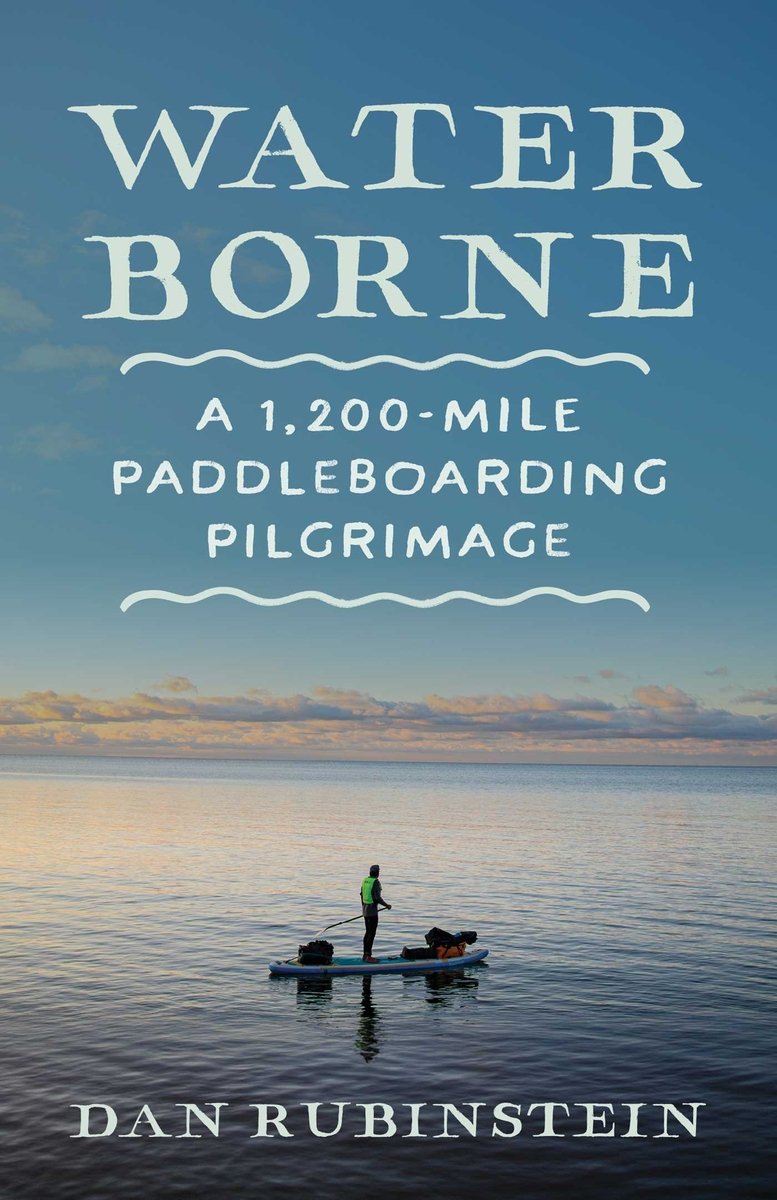
In Rubinstein’s latest publication, his stories are not only about water, but also the community it can foster. The conversations he had along his route reveal a myriad of philosophies and attitudes on how humans and the natural world relate, gaining insight into the perspectives of those who engage with aquatic areas as a space to play, study, or profit. The work Rubinstein has done to put these experiences into words is also not complete — he writes on a blog related to Water Borne that there is still plenty of paddleboarding in his future, and more stories to come.
Want to keep reading about water features that fill us with awe? Click here
Get more profound real-life stories at our Bookshop Non-Fiction Titles for the Enlightened Mind list!
