

















As writers, we’re often told to write what we know. But sometimes we want to write about what we don’t know. We want to write about the distant past, about places we’ve never visited or experiences we’ve never had. Extensive research enables us to grow familiar with our subjects so that we can write about them authentically, creating a more immersive and believable reading experience.
We commonly associate research with nonfiction and historical fiction, but as our panelists today demonstrate, research can strengthen your writing in any genre. From fantasy and horror to romance and children’s books, these authors know well how research can enrich your writing. Read on as they discuss finding authenticity in the unfamiliar and the joys of learning and discovery.
The Authors
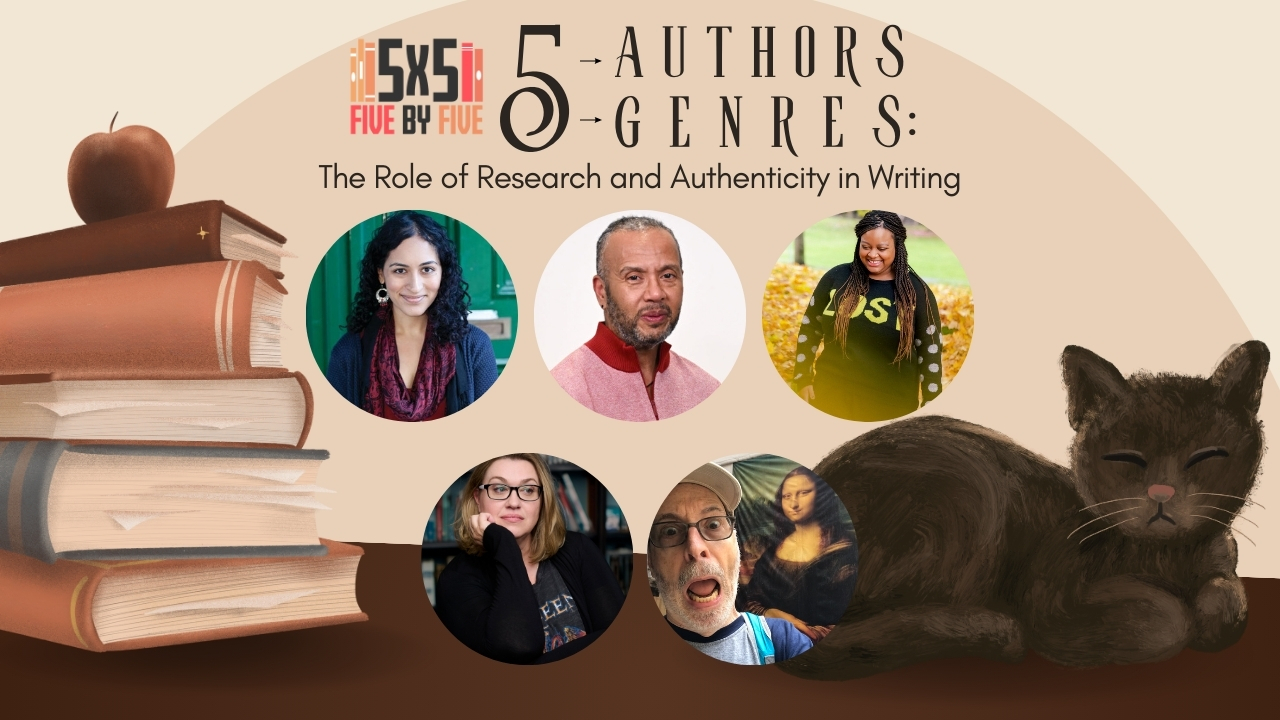
Tasha Suri
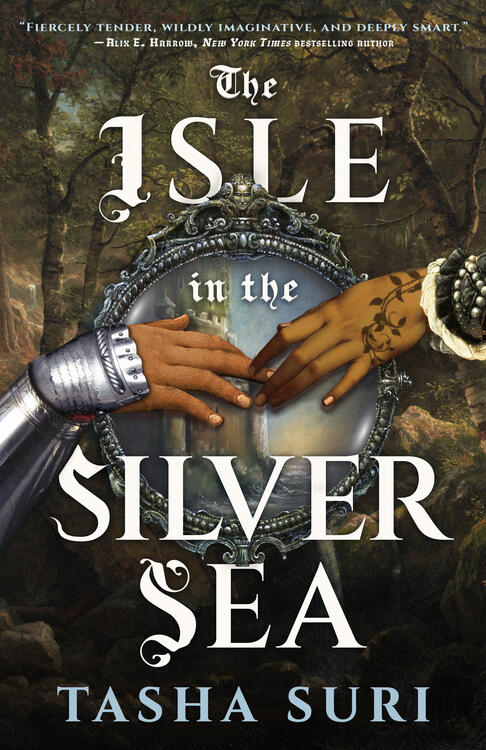
Tasha Suri is the World Fantasy Award-winning author of The Isle in the Silver Sea, The Burning Kingdoms trilogy, The Books of Ambha duology, What Souls Are Made Of, and Doctor Who: The Cradle. Once a librarian, she is now a part-time writing tutor and a full-time cat and rabbit wrangler. She lives with her family in a mildly haunted house in London. She can be found at tashasuri.com.
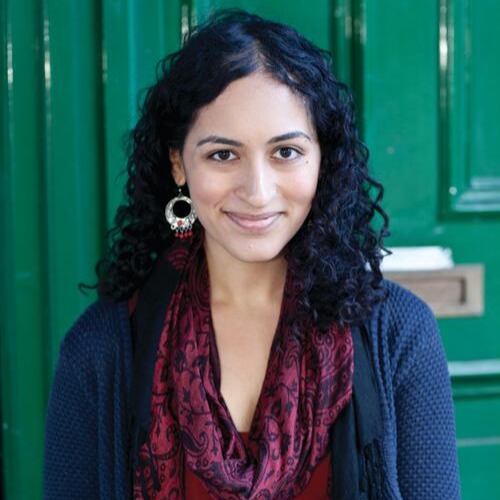
Stacy Nathaniel Jackson
Stacy Nathaniel Jackson is a trans writer, poet, playwright, and visual artist originally from Los Angeles. His poems, plays, essays, and visual art have appeared in Callaloo, Electric Literature, The Georgia Review, and elsewhere. His debut novel, The Ephemera Collector, was published by Liveright in 2025. His Afrofuturist play The Codex of Narma was a semi-finalist for the 2025 Eugene O’Neill National Playwright Conference, and selected for a staged reading presented by the National Queer Theater’s Cherry Picked series. Stacy is a graduate of USC’s Roski School of Art and Design, and holds an MFA in creative writing from San Francisco State University, and an MBA from UC Berkeley’s Haas School of Business.
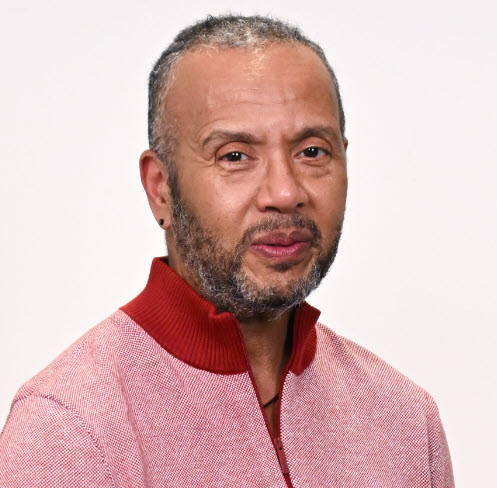
Neena Viel
Neena Viel is a horror writer who lives in a cabin in the Washingtonian woods with her husband and the best dog on the planet. Her passion for philanthropy (almost) rivals her love for ghost stories. Listen To Your Sister is her debut novel.
Mikki Daughtry
Mikki Daughtry is the co-author of the #1 New York Times bestseller Five Feet Apart, which was based upon her screenplay for the major motion picture of the same name, as well as the New York Times bestseller All This Time. Her most recent novel, Time After Time, was released May 27, 2025, and was chosen as GMA Book Club’s June Young Adult book of the month. In addition to her novels, Mikki’s produced screenwriting credits include Five Feet Apart, The Curse of La Llorona, and Nightbooks. She is currently writing the remake of the sentimental cult classic A Walk To Remember with her screenwriting partner, Tobias Iaconis. They have several other projects in development. Mikki lives in Los Angeles.
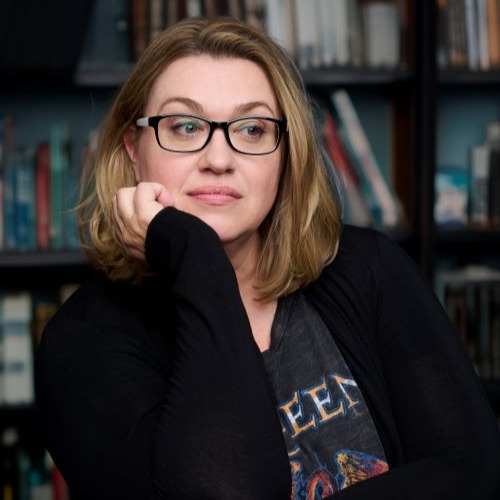
Dan Gutman
Dan Gutman is the author of 180 books for young readers, including Houdini and Me, The (Mostly) True Story of Cleopatra’s Needle, the My Weird School series, The Genius Files, and the Baseball Card Adventures series. Thanks to his many fans who voted in their classrooms, he has received 19 state book awards and 92 state book award nominations. Dan lives with his wife, Nina, in New York City.
The Questions
1. How do you tackle research for your novel(s)? Do you begin researching before writing, or research while you write?
Tasha: Research isn’t a one-and-done process for me. It happens in waves. The first wave of research happens before I ever put pen to paper. I think of this as the stage that opens the door to the story — that lets me begin imagining the world and breathing life into it. This is where my sweeping research happens: where I read books about the era or setting I want to focus on, generally building up a broad understanding of the world my characters are going to inhabit. The second wave happens while I write. I’ll often dip in and out of research texts and media. Sometimes I’ll specifically look for small details I need to keep the story moving, but often this stage is just about keeping my excitement for the story up and the knowledge I need to write it current.
The final stage involves me looking for specific, weird, and wonderful information that I need, now that my draft is done, to make the story richer. For The Isle in the Silver Sea, set in a magical Britain, my early research involved Arthurian myths and life across the Tudor, medieval and Victorian eras. But my later research had me diving deep into smaller folktales of Britain, and even archival record appraisal policies — quite a mixed bag!
Stacy: For me, it depends on the project whether I begin with research or not. My debut novel, The Ephemera Collector, began with the idea: if I had a granddaughter, what would they be doing professionally? The answer — archiving their own research at The Huntington Library, Art Museum, and Botanical Gardens. I began to write. I slowly built a near-future world supported by a 200-page development document, filled with screen-grabs and links on topics including artificial intelligence, library science, health science, marine science, arboriculture, space science, and robotics.
However, poems published from my project on African American women in the military began with a research grant, followed by travel to various archives across the country. I only began writing after viewing images, reading biographies, essays, and organizing a community event featuring Black female veterans. Although the project was a poetic meditation, the design was documentary at its core. Research came first.
Neena: Writing has taught me just how little I know about everything. I basically don’t know how anything works. Are sewer tunnels really those big open spaces like in the movies? Can a character secretly move through a building by scuttling through an air vent? Are air vents actually big enough for a person? What slang for “butt” would someone say in 1974? Is hot wiring a car still a thing?
In that respect, research can be a trap (a sexy trap, but a trap nonetheless), because you’re never done. There’s always more to learn and apply. I don’t want anything slowing me down while I’m drafting, so I research as I go. If it’s a minor detail, then I’ll flag it to investigate later. I try to keep the momentum going.
Mikki: It depends on the project. For Five Feet Apart and All This Time, which both were set in hospitals (for different reasons), I did tons of research beforehand. I needed to know every detail of cystic fibrosis for Five Feet Apart, and I needed to know as much as I could about comas, what they are, and how they work, for All This Time.
For my current book, Time After Time, the only real research I did was period research into the 1920s, but even there, I had an advantage, since so many of the books I read still are from that era. Books that were written in the era are the best research tools, I find. They are replete with details you won’t necessarily find on the internet, AND they’re part and parcel of a story, so the details stick, you know?
Dan: When I have an idea for a book — fiction or nonfiction — I start looking up stuff about the topic. I’ll search for other books that are similar to what I have in mind and read them. I’ll search for information online. I may seek out an expert in the field to interview or go to the location where the story takes place. For The Genius Files, I flew to San Francisco and rented a bike to ride over the Golden Gate Bridge, because the climactic scene in the series takes place there.
Whenever I come across a fact or idea that might work in my story, I’ll jot it down on a 3×5 file card. Sometimes I’ll accumulate 200 or more file cards, and I’ll shuffle them around to create a rough outline of my story. Then I start writing, going through the file cards one by one. Often, during the writing process, other ideas will come to mind, and I’ll do more research to incorporate those ideas into the story. But mostly I do the research before I start writing.
2. Where do you draw your authenticity in writing from? How much do you draw from personal experience, and how much from using research to provide character authenticity?
Tasha: I was once told that all writers draw their ideas and themes from their own anxieties. I think that’s true, though a little broader in scope. We build out plots and our characters to reflect what we care about, what we love, and what we hate, the dreams we have, and the injustices we loathe. In The Isle in the Silver Sea, I wrote about what it means to be British, and the price, difficulty, and loss caused by assimilation, because these themes matter to me personally. Bringing that emotional weight to your writing creates authenticity.
Research is equally as important to me. You can’t talk about Britishness without understanding the historical context that underpins that concept. You also can’t write a book about knights (which I did) simply because you think knights are cool (which I do), without researching knights. Personal experience gives emotional weight — research gives grounding and flavour.
Stacy: I believe that character authenticity can resonate with a reader or an audience, whether it is extrapolated from research or experienced personally in real life. Though research can only take me so far, to the water’s edge, so to speak. If I don’t dive into an emotional place of authenticity, the written work doesn’t work. My approach is similar to what I’ve read about actors who utilize method acting — research that helps create a strong (personal) emotional connection. If I am successful, at some point during the writing process, there is a merge of my real and imagined worlds, leading to an emotional “truth,” which I try to transcribe onto the page.

Neena: It really depends! My debut novel, Listen to Your Sister, is about three siblings struggling to find their way after the eldest sibling, Calla, becomes the guardian to her teenage brother. This premise was inspired from my personal experience of suddenly becoming a guardian in my early 20s. It was such a big, startling change that brought all of these new anxieties and nightmare scenarios. The fun part of writing horror and speculative fiction is that I can escalate these real-world conflicts into world-shaping calamities.
Not every book I write is borne of personal experience, but every book still has a thread of something true. For me, research is about stringing together hundreds of details that bring a richness to the environment the characters are in, the physiology of their bodies, the impact of the dangers they’re in, their clothing, their city, their speech, and so much more. However, the emotional heart and the interpersonal dynamics come from me.
Mikki: Again, it depends on the project. I don’t tend to write about myself, or about people I know. I like to let my characters be who they are, instead of some Frankenstein amalgamation of someone from my real life. For Tish’s character in Time After Time, I drew upon my own experiences backstage as a Theatre Major. Tish’s details of practicum, of set building, of scene design, all come straight from my own time spent in the theatre department, right down to the nail gun mistress. I did have to research a little bit about how to build a motorcycle, because Tish is a bit of a gearhead, and I most certainly am not. I could probably have a cursory conversation about the differences (and similarities) of a Honda CB350 vs a Honda CL350, but I definitely couldn’t do any hands-on work.
Dan: Fortunately, I have the brain of an eight-year-old. So if my characters sound and act like regular kids, that’s why. Every author puts some of their own experiences into his or her books, of course. But what I like to do is take an ORDINARY kid and put him into an EXTRAORDINARY situation. I haven’t been in many extraordinary situations myself, so I can’t draw that much from personal experience. I make a lot of stuff up. But very often, the stuff I make up is inspired by the research I’ve done.
3. How does your most recent/upcoming novel’s genre relate to the amount of research you have to do? What is the connection you have found between your writing genre and the research you conduct?
Tasha: The nice thing about writing fantasy is largely you’re not held to the strict standards of reality. All my fantasy novels draw on real-world cultures and history, but they are not strictly set in one historic period in the real world. I find this means I’m less afraid of making mistakes — although I’m sure I do — and I’m far more interested in researching to find interesting tidbits, atmosphere, and conflict.
Stacy: For the most part, the amount of research I do has more to do with me and my interests in a particular subject or idea, versus genre. The exception, however, is probably alternate history. Research accuracy is embedded in the conceit of my next novel, exploring the Manila galleon and the lesser-known Transpacific slave trade. The Codex of Narma, my Afrofuturist play currently in development, began two years ago at an artist residency in Florida, ground zero at the time for anti-LGBTQ+ political rhetoric. Walks outside of the artist enclave felt like I was conducting ethnographic research. The lawn signs and flags were from a different culture, a different world.
As a visual artist trained to analyze images, I consider studying photographs, paintings, and drawings as primary research. I was introduced to ekphrasis, a literary response to visual art, while studying poetry in graduate school. Whether writing fiction, poetry, or personal essays, I have found that research can be used to generate new ideas or correct preconceived notions I may have had floating unmoored in my head.
Neena: For Listen to Your Sister, I spent some time researching nontraditional families, as well as cultural attitudes toward gender, childcare, and labor. Who does what in a family? The research was sort of a quiet scaffolding for other writing elements. My next novel, on the other hand, is a historical fiction that required a more intensive approach to research.
As a horror writer, I have to look up very sketchy things! I’ve got about twelve tabs open at all times, and none of them have content I would tell my grandma about. I was an especially poor anatomy student back in high school, so I’m always researching/asking my medical friends about wounds and injuries.

Mikki: When it comes to the dual timeline in Time After Time, the 1925 timeline was actually the easiest for me to write. I’ve read and studied so many books from the 1920s that writing in that period was like second nature to me. Occasionally, I would check on some detail, just to make sure I was correct, and when I wasn’t, I’d fix it. But overall, I already knew a lot of what I was writing about. It was almost like cheating, I guess. If I had to write about 1725, though, it’d be a much different story.
Dan: I write a lot of historical fiction, so for those books, I do a lot of reading to make sure I get my facts right. For The Picasso Curse (Holiday House), I had to learn all about the theft of the Mona Lisa in 1911 and Picasso’s role as a suspect in the case. Other books that don’t focus on history (like The Kid Who Ran For President, The Million Dollar Shot, and The Homework Machine) don’t require me to do very much research. For those, I can just make up crazy stuff in my head.
4. Have you ever learned something through research or experienced something and immediately thought: This needs to go into a book? What was that experience like?
Tasha: Usually, I’ll read some research, and it will take days or weeks before that information gives rise to an idea. But the exception was my research visit to the Holy Isle of Lindisfarne in Northumbria. I was interested in writing a fantasy about the myths of Britain when I visited — but the sight of the tidal island, the road that would vanish beneath the sea, the silver water, and the ruined abbey all ignited my imagination. I knew I had to use it all in my next book.
Stacy: No, since I don’t research without an idea for a project (other than Googling to see if a health symptom is going to kill me). On a serious note, once I start, I expect to be surprised. That surprise is part of the magic which I hope to share in some ways with my readers or audience.
Neena: Sometimes! There have definitely been details I think are very cool, but I’ve learned not to get too attached. If I have to take a detour to include a fun fact, it’s probably something that will get cut during revisions, so I try to play it cool. I stash away interesting tidbits I’m not sure what to do with, and think about the day we might be able to be together.
Mikki: Probably, but I honestly don’t remember. I tend to strictly stick to the details I’m researching, or I’d rabbit-hole forever and never come back out. I have to be careful not to let my attention stray. When that happens, I jot down a note and keep moving and hope I remember to come back to it later (which I rarely do).

Dan: All the time! And it’s a great feeling. I’ll give you a few examples…
– I got the idea for The Kid Who Ran for President when Bob Dole was running for president in 1995. He was 72 years old, and some people felt he was too old to be president. So I figured if somebody might be too OLD to be president, what would be too YOUNG to be president? The book was easy to write after that.
– I was visiting a school in Cos Cob, Connecticut, one day, and having lunch with a group of kids in the library. I asked them, “What’s the weirdest thing that ever happened in your school?” Somebody said that the previous week, a dentist had visited the school to talk about dental hygiene. Instantly, I thought, “That’s a My Weird School book just waiting to be written!” So I wrote Dr. Floss Is the Boss! and dedicated it to the kids at that school.
– I had been wanting to write a basketball book for a long time, but I couldn’t come up with an idea because the game moves too fast (unlike baseball, which I’ve written about a lot). Then I was watching a basketball game on TV one night when they pulled a fan out of the crowd and let her take one shot for a lot of money. That’s what gave me the idea for The Million Dollar Shot. I could slow the game down to just one shot.
– I was walking down the street in New York City one day, and eight blocks from my apartment, I saw a plaque on a wall that said Harry Houdini lived in that building for the last 22 years of his life. I wondered — what if a kid lived in that building in the present day and was able to communicate with the spirit of Houdini by text message? That’s what inspired Houdini and Me.
5. If you had to choose between solely using research or solely using personal experience in your novel(s), what would you choose and why?
Tasha: I’m afraid it simply isn’t possible to choose one. They go hand in hand. You wouldn’t, for example, research the history of witchcraft if your personal experience hadn’t ignited an interest in magic and feminism in you. Personal experience helps guide what you choose to research, and research can enrich and stretch the limits of a personal story and make it far more epic.
Stacy: Research would be my sole path forward if forced to choose between research and personal experience. For me, research isn’t simply a scaffold to build worlds. I consider myself a lifelong learner. By nature, I am super curious. I can’t imagine having a conversation without asking questions. The opposite of TMI is probably TMQ (too many questions), but I think this works in my favor when writing novels, essays, plays, or poems. Scientific discovery, current events, or historical facts can lead to character development or challenges that my characters need to overcome. This is so much more interesting to me, and hopefully my readers, than being limited by my personal experience.
Neena: Hmmm. Probably personal experience. Ultimately, I think research is in service to fleshing out ideas, but not the point itself. Done well, the research is integrated so naturally into the work that you can’t tell that a scene might be the result of hours of prep and logistics. When readers reach the final page of Listen to Your Sister, they’re not going to be thinking about the statistics of nontraditional families or if Ashland really is one of the best small arts towns in Oregon. When I finish a novel and I’m staring up at the ceiling in a book coma, I’m thinking of the overall narrative, the characters who reached into my heart and moved everything around, and the moments that thrilled me the most.
Mikki: I can’t answer this in good faith because my characters don’t come from research, and they don’t come from my personal experiences. They are themselves whole people who knock on my mental door asking to be let in, asking to have their stories told. I only use research to complement their personalities and/or their lives, not to create them. I could lie and just answer the question, but I have a hard time doing that, as well.
Dan: That would be very hard, because I like doing it both ways. But if I had to choose I’d probably choose research. As I said before, my life is pretty ordinary. I sit in front of a laptop and write. It’s not that fascinating to read about, and I don’t want to bore my reader. But when I’m relying on research, I can use all the fascinating, amazing, wonderful, and horrible things that have happened in the world and write about that stuff. It gives me something to work with, a head start. And it can be so much more interesting than anything I’ve experienced.

Bonus Questions
6. What is one piece of advice you wish you had known at the beginning of your writing journey?
Tasha: Read widely and voraciously. There’s nothing better for learning how to write.
Stacy: I consider my writing journey to have begun when I was in eighth grade. I got in trouble for submitting an age-inappropriate story in school, which required a parent-teacher conference. I stopped writing for pleasure; it wasn’t safe. It has taken decades for me to write what I want to write. My advice: Don’t stop, regardless of the challenges or risks you may want to take.
Neena: Just like how an actor on stage has to project their voice to reach the audience in the back seats, you’ve gotta maximize your voice on the page. I wish I’d known that it’s alright — and essential, even — for me to be Neena 1000%.

Mikki: I wish I had believed enough in myself to start when I was younger. Now, I have too many stories and, I’m afraid, not enough time to tell them all. We’ll see.
Dan: I wish I had known what I was good at. I knew I could communicate in writing, but I spent almost 15 years writing for adults before I realized that my “calling” was to write for kids. I tried to write screenplays, newspaper articles, magazine articles, and nonfiction books for adults. I wasn’t very good at it, and I wasn’t successful at it.
Then my son Sam was born, and I started reading children’s books with him. I thought — let’s try writing for kids. And as soon as I started writing for kids, I said to myself, “THIS is what I’m good at! THIS is what I should have been doing all along.” So I switched to writing for kids, and I’ve been doing it ever since.
But I realize that sometimes in life, we have to try and fail at a bunch of things before we stumble upon the one thing that we’re meant to do. I’m just grateful that I finally found it. Some people never do.
7. If you could have lunch with a character from your most recent release / upcoming release — who would it be and why?
Tasha: The cat in The Isle in the Silver Sea, Maleficium. I’m not sure if she’d claw me or sit in my lap, but I bet I could bribe her with tuna.
Stacy: It would have to be my protagonist, Xandria Brown, from The Ephemera Collector on her 300th birthday. Who wouldn’t want to talk to an immortal?
Neena: I’m definitely going with Calla, the eldest sister who works hard to keep her little brothers out of trouble, even when they’re in a remote cabin in the woods. She’s the only character in the novel who would offer to split the bill. One of her brothers would “forget” his wallet, and the other would steal someone else’s.

Mikki: Definitely Joe [from Time After Time]. I’d want him to order Hammie’s burgers and zucchini fries, and we’d eat at the old metal table inside the warehouse at his scrapyard, and I would listen to him tell me all about the mysterious old Victorian house on Mulberry Lane. I would love that. I would love that very much.
Dan: Well, Pablo Picasso, of course. He was a fascinating man who lived and worked up until the age of 91, but just about all the people in his life suffered tragedies (that’s where I got the title The Picasso Curse). I admire people like Picasso (and the Beatles, for instance) who not only created great art, but their art also evolved with time. I’m not a genius like them, but I like to think I’m following in their footsteps in a smaller way.
Thanks to these wonderful authors for speaking with us! For any budding writers reading this, consider taking their advice: Don’t be afraid to write what you don’t know. Instead, think of it as an opportunity to learn something new, to familiarize yourself with the unfamiliar.
Find Tasha Suri here.
Find Stacy Nathaniel Jackson here.
Find Neena Viel here.
Find Mikki Daughtry here.
Find Dan Gutman here.
Click here to learn how five romance authors craft exciting relationships.
Visit our Bookshop to find your next great read.
