

















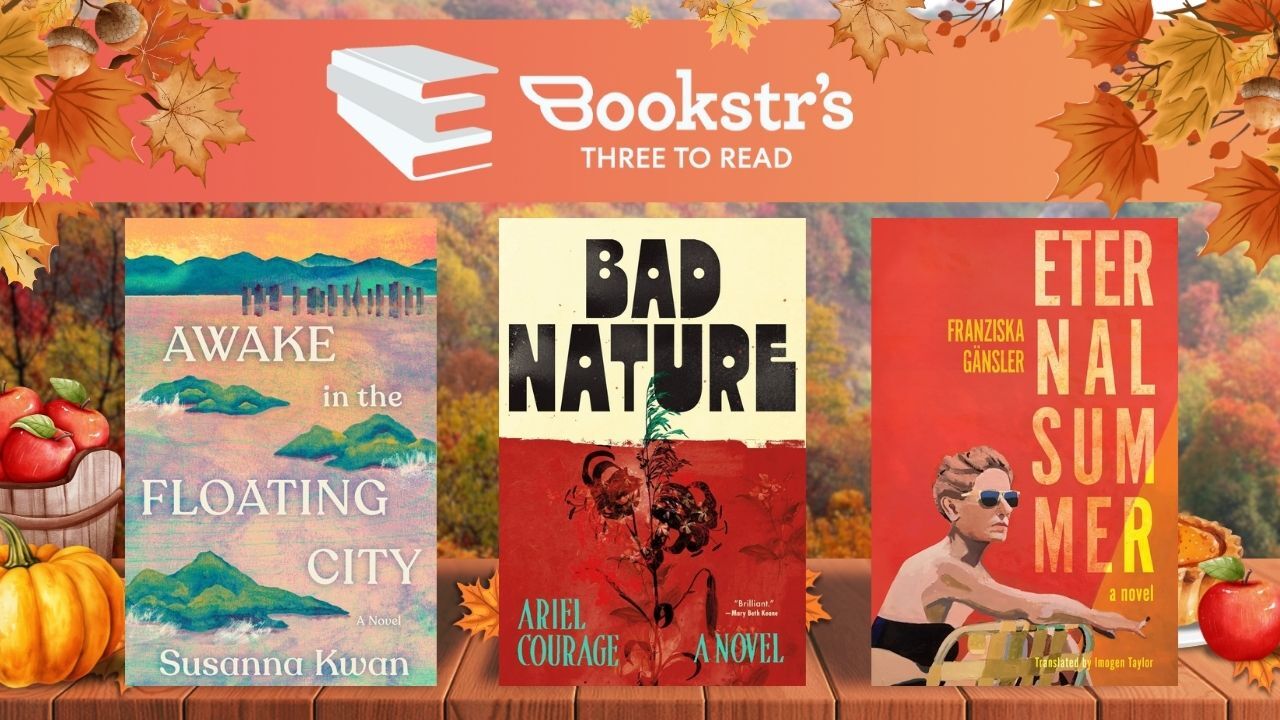
Amid the ongoing destruction of our environment, it is somehow both difficult and all too easy to envision what the future may hold. Climate fiction can help us make sense of our changing environment and our place within it. Sometimes it warns us of impending disaster. Sometimes it illuminates a path forward, guiding us through the confusion and darkness. And sometimes it poses questions without offering answers, opting simply to peel back the curtain on what may soon be. From the present moment to the not-so-distant future, this week’s Three to Read picks — all debuts — provide compelling portraits of life among the ruins.
Trigger warning: Some of the books discussed in this article contain references to or depictions of domestic abuse and cancer. Please exercise care while reading.
HOT PICK
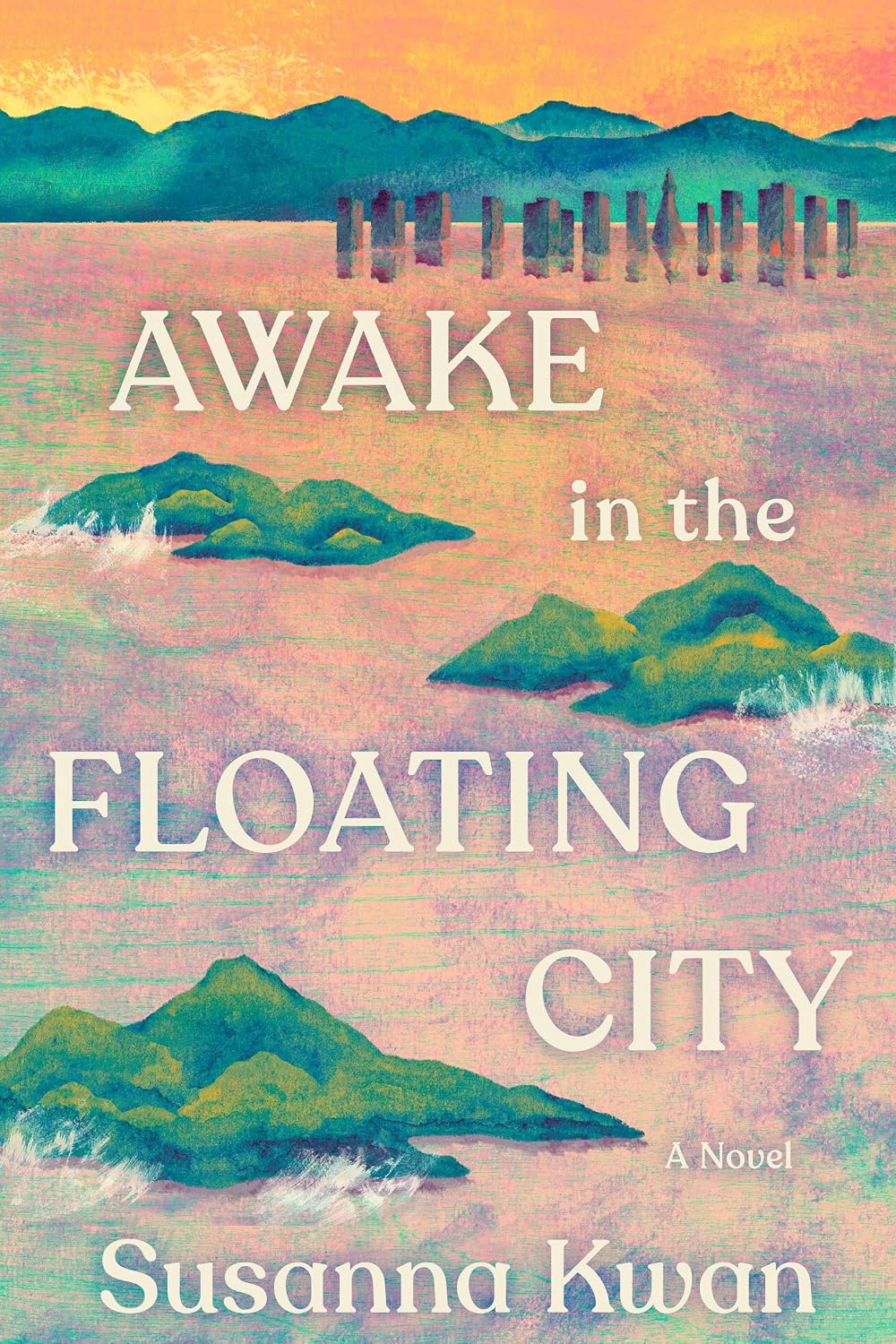
Awake in the Floating City by Susanna Kwan
SUMMARY:
Alone in a future San Francisco besieged by flooding, artist Bo can’t bring herself to leave. She still holds out hope that her mother, swept away by a storm, might be alive. As she reluctantly prepares to follow her cousin to safer ground, she discovers a note slipped under her door. Mia, her 130-year-old neighbor, wants Bo to take care of her.
Bo and Mia forge a strong relationship, enriched by Mia’s memories of life before the floods and the city whose history will soon be washed away. But when Mia’s health begins to decline, Bo must harness her creativity and inspiration to preserve the life they’ve built together before it disappears.
WHY:
Longlisted for the Center for Fiction First Novel Prize, Susanna Kwan’s debut heralds the arrival of a striking new literary voice. Kwan’s reverence for her hometown and its history shines through every page — in the quiet ways humanity persists amid disaster, in Mia and Bo’s intertwining recollections of the city they love, in the novel’s homage to the storied history of the Chinese American diasporic community to which both women belong. Awake in the Floating City shines a light on the power of intergenerational connection and the often-overlooked importance of care work. To paraphrase Naomi Elias, writing on this book for KQED: When all else is lost, compassion is all we have.
COFFEE SHOP READ
Bad Nature by Ariel Courage

SUMMARY:
On her 40th birthday, corporate lawyer Hester is diagnosed with terminal breast cancer. Rather than seek treatment, she quits her job, rents a car, and embarks on a journey from New York to California with a singular goal: avenge her dead mother by killing her abusive father. What she doesn’t count on is John, an environmental activist hitchhiking his way to Superfund sites around the country. As the unlikely pair heads westward, a cynic and an idealist with two very different goals, Hester begins to wonder whether her quest for revenge is really worth pursuing.
WHY:
A strong contender for Best Logline of 2025, Bad Nature uses its wild premise to explore capitalism’s detrimental physical and psychological effects. Faced with both her own decay and that of the polluted sites John secretly catalogs, Hester lapses easily into nihilism. But her cross-country murder jaunt proves markedly transformative, as all the best road trips are. In a voice by turns funny and surprisingly poignant, Ariel Courage turns a deft, critical eye on hyperindividualism and our doomer impulses. This debut author is definitely one to watch.
DARK HORSE
Eternal Summer by Franziska Gänsler, Translated by Imogen Taylor

SUMMARY:
Once a thriving German spa town, Bad Heim now endures interminably dry summers, marked by raging wildfires and smoky air. Through it all, Iris remains to look after her family’s hotel, even though bookings are no longer allowed. One Tuesday, a mysterious woman and her daughter appear seeking a room, shaking Iris out of her complacency. What could Dori possibly want in such a barren, borderline uninhabitable place like Bad Heim? Will she and Iris escape the confinement of their circumstances?
WHY:
The devastation wreaked by global warming creates a tense backdrop for Franziska Gänsler’s riveting character drama to unfold. Eternal Summer brings together two different women, each trapped in her own way, their lives suddenly and unexpectedly disrupted. As Iris and Dori grow closer, they begin to imagine a way out for themselves: Dori, from abuse; Iris, from the literal and metaphorical suffocation of her day-to-day life. Gänsler’s highly praised debut recognizes that there are no easy ways to save ourselves from apocalypses or personal purgatories. But even in the absence of concrete answers, we can still find moments of hope and kinship.
That’s it for this week’s Three to Read! We’ll be back next week with more amazing recs for your TBR.
Click here for three books that celebrate female friendship.
Find these and more Three to Read recs at our Bookshop.
