

















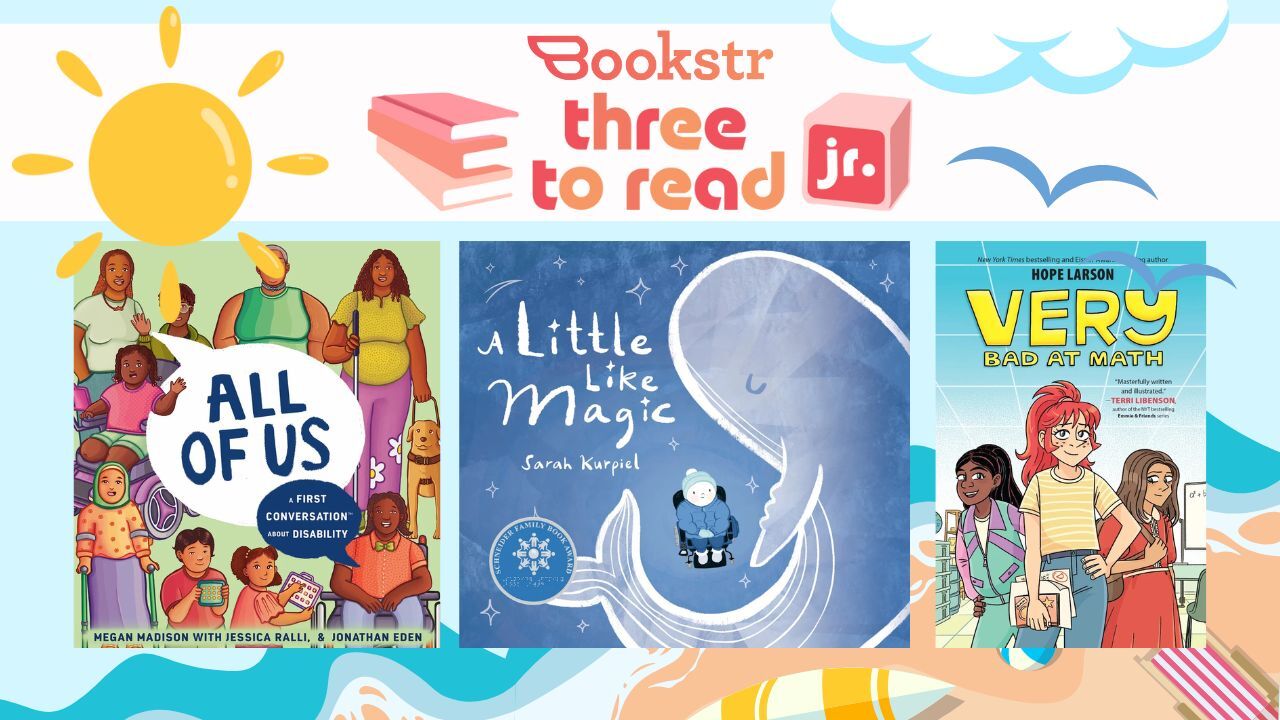
Children’s literature has seen great strides in disability representation in recent years. Stories like this week’s Three to Read Jr. picks help normalize and destigmatize disabilities. Whether your child is seeing their experience reflected on the page or learning about how their friends, family members, or neighbors navigate the world, these books are valuable additions to your library.
EARLY READERS
All of Us: A First Conversation About Disability by Megan Madison with Jessica Ralli, Illustrated by Jonathan Eden

SUMMARY:
The latest installment in Dr. Megan Madison and Jessica Ralli’s First Conversations series introduces young readers to the concept of disability. Madison and Ralli explain ableism and accessibility in clear, compassionate language, informed by insights and input from disability advocates. Guiding questions help readers engage and generate discussion, allowing them to consider how these ideas apply in their lives and how they might affect the people around them. All of Us helps children understand that disability is simply a different way of experiencing and interacting with the world.
WHY:
While it’s important to introduce children to concepts such as body diversity, consent, and disability early on, attempting to distill these topics into easily digestible terms can be difficult. Rooted in Madison’s work as an activist and educator, the First Conversations series is a helpful resource that guides both children and parents through these discussions. All of Us encourages young readers to embrace the differences that make them unique — and to strive for a world that accommodates everyone.
ELEMENTARY READERS
A Little Like Magic by Sarah Kurpiel

SUMMARY:
Despite not liking cold wind, heavy coats, or going to new places, this young protagonist bravely ventures out to an ice festival with her mother. She watches sculptors carve ice with different tools, wondering why they would make sculptures that will eventually melt. When she gets home, she realizes her special horse figurine is missing. The girl is reluctant to go back to the ice festival the next night, but some magical surprises await her under the stars.
WHY:
Trying new things is scary for any child. A Little Like Magic’s young narrator, a power wheelchair user like author Sarah Kurpiel, dislikes many of the sensory experiences that come with winter, from icy roads to itchy hats. This movingly written, beautifully illustrated book perfectly captures the uncertainty that comes with new adventures — but also the spellbinding wonder we can find when we leave our comfort zone. As the narrator concludes at the book’s end, “Sometimes you have to brave the cold to experience something special.”
MIDDLE GRADE READERS
Very Bad at Math by Hope Larson

SUMMARY:
From debate club to clarinet, there’s nothing class president Verity “Very” Nelson can’t do… except math. Despite her best efforts, she just can’t seem to figure out how numbers work. With election season ramping up and her third presidential term on the line, Very enrolls in a remedial math class. There, she discovers the answer to her problems: She has dyscalculia, a learning disability that affects her ability to understand mathematical concepts. As her grades improve, Very’s determined to keep her diagnosis under wraps — until a nosy podcaster exposes the cracks in her facade.
WHY:
Not many people know about dyscalculia, a diagnosis author Hope Larson didn’t receive until adulthood. Through the accessible format of a graphic novel, Larson sheds light on this lesser-known disorder, which affects five to eight percent of children in the US. Kids like Very may not realize their brains process information differently and may be reluctant to discuss the challenges they experience out of shame or stigma. In Very, they’ll find a kindred spirit and a powerful ambassador, one who learns that ultimately, as Larson says, “[we are] so much more than our accomplishments.”
That’s it for this week’s Three to Read Jr.! We’ll be back next week with more amazing recs for your little bookworm.
Want books to help your child navigate big feelings? Click here.
Find these and other Three to Read recs at our Bookshop.
