

















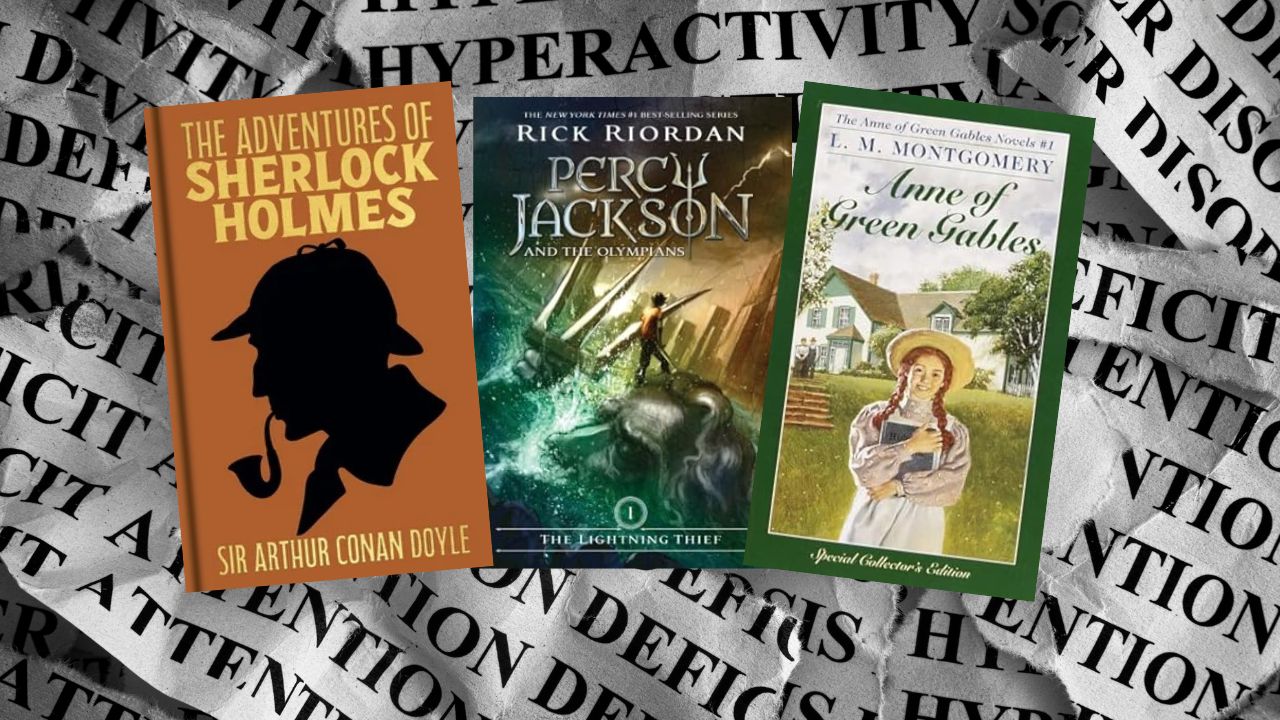
Today, celebrities like Tom Holland, Greta Gerwig, and Simone Biles live in the spotlight with ADHD. This rising awareness of neurodiversity has also extended to the literary world, with authors increasingly writing about ADHD characters in their books with greater openness. With a particular focus on books for children and young adults, these characters can provide a point of relatability — and even discovery — for the readers who share their traits. However, it’s easy to forget just how recently we’ve been able to attach a name to these traits (the term Attention-Deficit Hyperactivity Disorder was introduced as late as the 1980s). People with ADHD have lived long before the condition was named. And today, fans are more interested than ever in picking out their favourite hyperactive, impulsive, iconic characters as retrospective ADHD-ers. Read on for 10 of our favourites.
Percy Jackson, from Percy Jackson and The Olympians
“That’s your battlefield reflexes. In a real fight, they’d keep you alive. As for the attention problems, that’s because you see too much, Percy, not too little.”
Annabeth, The Lightning Thief
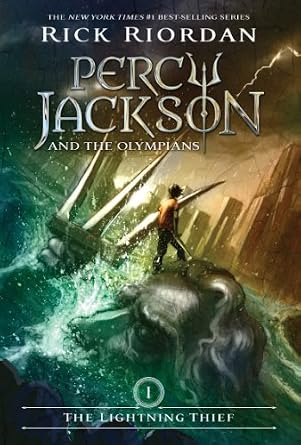
Like many teens with ADHD, school taught Percy the hard way that he was wired differently. In Camp Half-Blood, he learns that his neurodiversity is his strength; in fact, it’s the markings of a demigod. His impulsive and easily restless nature equips him for battle, giving him quick reflexes and sharp awareness. And his dyslexia, which jumbles English words across a page, is a sign that he’s hardwired to read Greek, the language of the gods. Rick Riordan’s demigod hero reshapes perceptions of ADHD and dyslexia for teenagers — including his own son, Hayley.
Anne Shirley, from Anne of Green Gables
L. M. Montgomery’s classic introduces “Anne with an E” as a red-haired orphan accidentally adopted by mild-mannered siblings Matthew and Marilla.
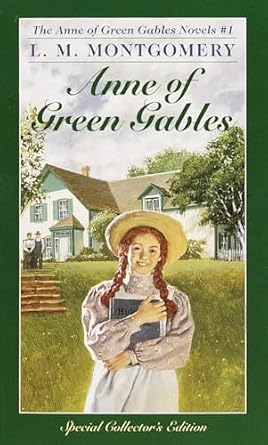
Melodramatic, accident-prone, and warm-hearted, Anne weaves her way into readers’ hearts as easily as her adoptive parents. She’s also impulsive, endlessly loquacious, and a chronic daydreamer, and many readers with ADHD see themselves in her. Anne’s impulsivity often gets her into trouble with classmates, but the scrapes she finds herself in — dyeing her hair a disaster green instead of black — are what make Anne so unforgettable.
Tom Sawyer, from The Adventures of Tom Sawyer
The harder Tom tried to fasten his mind on the book, the more his ideas wandered.

Mark Twain’s The Adventures of Tom Sawyer is often hailed as a kick-starter of American children’s literature, and its intrepid protagonist as the archetypal All-American boy. But many modern-day readers also read his behavior as typical ADHD. School is like a prison for Tom. He aches to do anything other than sit and read. Rather than pay attention, he gets into trouble, starts fights, and blames others. Ultimately, Tom finds he thrives in his natural habitat — outdoors, where he can spend his energy rafting down the river and (spoiler alert) finding buried treasure.
Sherlock Holmes, from The Adventures of Sherlock Holmes
Adult characters can often be overlooked when it comes to neurodivergence. But modern-day readers are detecting more than a few clues pointing towards Sherlock Holmes’ ADHD.

In Arthur Conan Doyle’s original stories, Sherlock’s variable attention span is likely what makes him the legendary consulting detective he is. When he’s on a case, he often hyper-fixates on nothing but the case at hand, forgetting his surroundings until it’s solved. This also has its side effects. Sherlock holds a number of fleeting hobbies. Boxing, martial arts. He thrives in fast-paced, highly stimulating environments, but becomes restless and even depressed without them. We see this in its most extreme form in the BBC adaptation— “bored!” he shouts, shooting holes in his own wall.
Emma Woodhouse, from Emma
“I have done with expecting any course of steady reading from Emma. She will never submit to anything requiring industry and patience, and a subjection of the fancy to the understanding.”
Mr Knightly, Emma
The eponymous protagonist of Jane Austen’s 1815 novel, and later, several movie adaptations, Emma is witty, determined, and more than a little meddlesome. To those closest to her, she’s also fleeting and scatterbrained.

What was perceived as inattentiveness then would likely be identified as ADHD now. Emma can also be short-tempered and miss the wood for the trees, both symptoms Alice McVeigh correlates with unmedicated ADHD. But, like Sherlock on a case, Emma also uses her streamlined attention span for good, pouring all her energy into her role as the neighborhood matchmaker.
Willy Wonka, from Charlie and the Chocolate Factory
Roald Dahl’s 1964 children’s book sees Charlie win a priceless golden ticket to Willy Wonka’s lesser-seen chocolate factory. But perhaps equally as iconic as the factory, with its chocolate waterfalls, edible gardens, and oompa-loompas, is the man who created it, seen dashing from room to sugar-coated room.
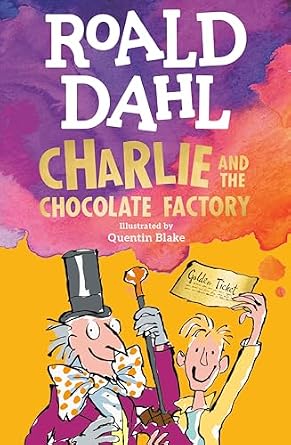
Wonka is eccentric. More specifically, he’s a quick thinker, easily bored, and occasionally speaks before thinking — all traits consistent with ADHD. Some have also speculated on Wonka’s autistic tendencies.
Tigger, from Winnie the Pooh
A. A. Milne lived and died well before ADHD was named— but not before children with undiagnosed ADHD existed. Many readers have retrospectively diagnosed Tigger, including Laura James, author of Tigger on the Couch.

Milne’s hyperactive tiger embodies childhood ADHD in perhaps its most stereotypical form. Tigger has seemingly inexhaustible energy levels, unable to stay in one place for long before bouncing to another. After all, “bouncing is what Tiggers do best!” James also points to Tigger’s erratic behaviour. He often exclaims that whatever food he’s given is his favorite, even if he hates it. In The House at Pooh Corner, Tigger impulsively climbs a tall tree with Roo, only discovering when he’s stuck at the top that he cannot, in fact, climb trees.
Alex Claremont-Diaz, from Red, White & Royal Blue
He tells his too-fast brain: ‘Don’t miss it this time. He’s too important.’
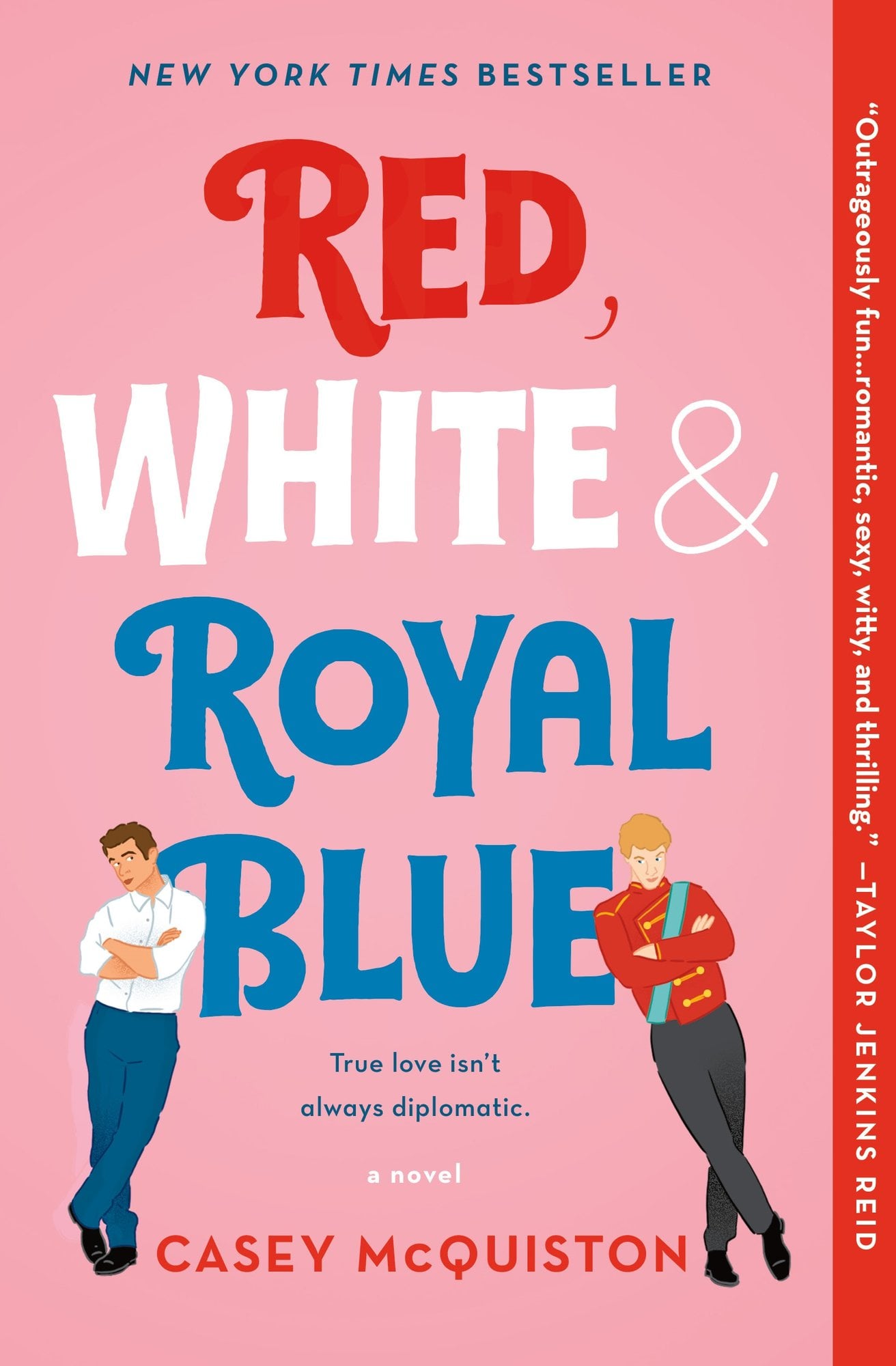
As Red, White & Royal Blue progresses, Alex’s world becomes one of royalty and romance. Alex is the son of a president, an aspiring politician, and an example of what it means to discover one’s sexuality under the public eye. It’s also pretty much canon amongst fans that he has undiagnosed ADHD. Neurodiverse fans have noticed several relatable clues. Alex’s — in his own words — “too-fast brain”, his struggle to maintain close friendships, and his ability to mask his true identity with a charming, extraverted persona. Alex’s creator, Casey McQuiston, has also spoken about their own experience with ADHD as a writer.
Jesper Fahey, from Six of Crows
Jesper Fahey is the gun-loving sharpshooter of Leigh Bardugo’s fantasy heist series. Much like Tom Sawyer, Jesper struggles to focus on his studies for long periods of time. Instead, he thrives in the dangerous but thrilling criminal heart of Ketterdam. As a keen fighter and gambling addict, Jesper is known as an adrenaline-seeker.
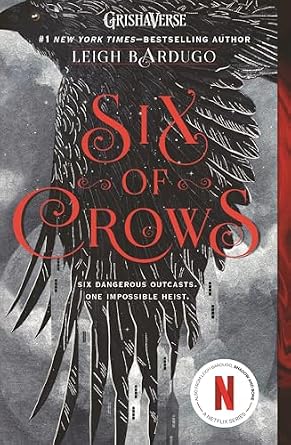
Bardugo herself responded to fans’ theories around Jesper’s neurodiversity, confirming that she was consciously ‘writing to the symptoms’ of ADHD. As she points out, Six of Crows “isn’t a world where something like ADHD…is recognized or understood.” And I think we can agree that she speaks for many worlds — fantasy and real, past and present.
Eddie, from It’s The End of the World and I’m In My Bathing Suit
And finally, a recommendation for children with ADHD, parents of ADHD-ers, or indeed, anybody who wants a laugh.

justin a. reynolds’ book follows Eddie, a twelve-year-old who has launched a “genius” plan to avoid doing chores over the summer. He’s going to wear every item of clothing in his wardrobe in turn, so that he doesn’t have to do laundry until he’s run out. Unfortunately, this plan quickly backfires. When Eddie has used up all of the day-to-day clothes he owns, he’s left with just one. His bathing suit. As the title suggests, Eddie’s problems soon surpass the laughable results of his ADHD. Nonetheless, his ADHD is something he discusses openly without dominating the story, a refreshing representation for neurodiverse readers.
Spotting the potential ADHD-ers in the books we read, both classic and contemporary, reminds us of one crucial fact: people with ADHD have always existed, and always will. Diagnosed or undiagnosed, our favourite detectives, demi-gods, and daydreamers transform ADHD from a “disorder” to a strength. And there are plenty more of them out there.
For tools for ADHD reading, check out Bookstr’s recommended resources here.
For further reading, check out our favorite YA fantasy books with ADHD representation here.
