











Authors throughout time have dosed the pages of their novels with poison. Whether metaphoric, psychological, or literal, poison is deployed liberally in our favorite spine-tingling thrillers, mysteries, and societal commentaries. Hard to trace, easy to use, the perfect entrance into a whodunnit, and the tragic gateway into social exploration, toxins prove themselves the ideal ingredient in novels you just can’t put down. Putting this list together was a killer ー literally ー but let’s see what stories made it onto the list of the top ten fictional deaths by poison.
Gertrude, Laertes, Claudius, and Hamlet in Hamlet by William Shakespeare

Shakespeare’s Hamlet is ripe with poison. In a struggle for power between Claudius and Hamlet, there are many casualties. As Hamlet tries to avenge his father, Claudius attempts to silence him. At a duel between Hamlet and Laertes, Claudius spikes Hamlet’s chalice with poison, but Hamlet’s mother and Claudius’s wife, Gertrude, are the ones to drink from it. Gertrude dies, and Laertes, Claudius, and Hamlet are soon after her. During Hamlet and Laertes’ duel, Hamlet is stabbed with Laertes’ poisoned blade. Their fight continues until Hamlet stabs Laertes with his weapon; Laertes falls dead first, whilst Hamlet goes searching for Claudius. Hamlet stabs him with the poisoned blade and forces him to drink the poisoned wine that killed his mother before succumbing to his wounds.
Sibyl Vane in The Picture of Dorian Gray by Oscar Wilde
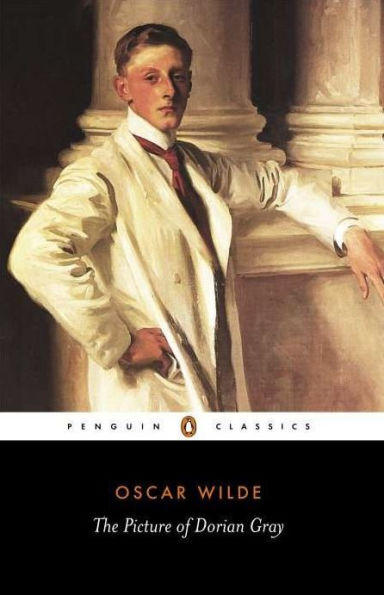
Poison is the basis of Oscar Wilde’s The Picture of Dorian Gray. Moral degeneration plagues Dorian through the influence of the company he keeps and the book he reads every night, which is slowly eroding his virtue. However, where we first see the poisonous effects of Dorian Gray’s influences on his soul in all its vigor is with Sibyl Vane, an up-and-coming, talented actress. When Dorian first sees Sibyl performing on stage, he is immediately infatuated with her and soon proposes. As their bond grows stronger, Sibyl is unable to act to her full ability on stage because now that she has found true love in Dorian, she can never fake it again. However, when Dorian, who fell in love with her because of her acting ability, sees one of her poor performances, he is disgusted. When Sibyl tells him the reason for her decline, Dorian breaks off their engagement:
“I wish I had never laid eyes on you! You have spoiled the romance of my life. How little you know of love, if you say it mars your art! Without your art, you are nothing. […] The world would have worshipped you, and you would have borne my name. What are you now? A third-rate actress with a pretty face.”
– The Picture of Dorian Gray, 74-75
Shortly after Dorian spits his poison at Sibyl, she takes some of her own and effectively ends her life.
Bartholomew Sholto in The Sign of the Four by Arthur Conan Doyle
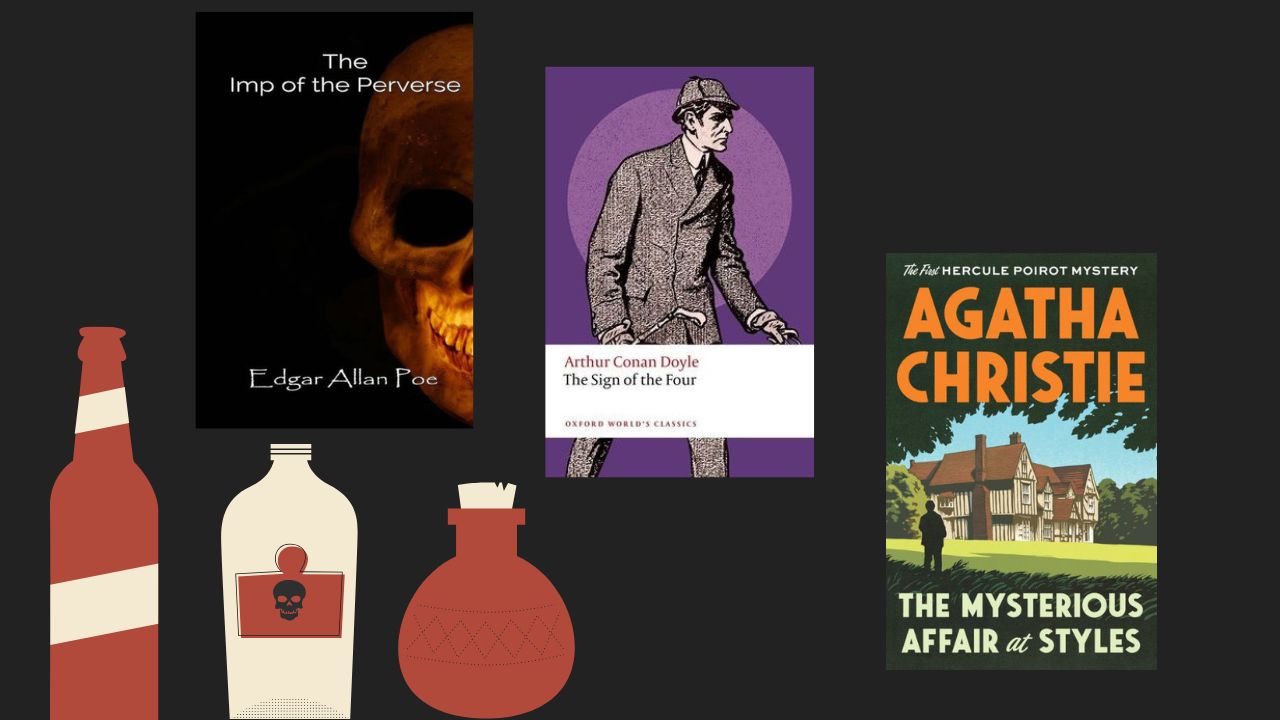
Beloved detective Sherlock Holmes often investigates death by poison, but The Sign of the Four is a standout. Holmes and Watson take up a case that spans generations, centering around hidden treasure, deception, and murder. A young woman named Mary Morstan consults Holmes and Watson over her father’s mysterious disappearance years ago. A few years after he vanished, she saw an advertisement in the paper requesting to release her address to be released. After she did so, she received a valuable pearl in the mail.
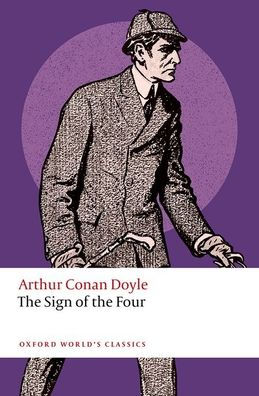
Following that, she had received a single pearl every year for the next six years. When she gets a letter in the mail urging her to meet the sender that very night, she brings along Holmes and Watson, sparking a weaving and unpredictable mystery. The duo end up investigating the death of Bartholomew Sholto, the son of Captain Morston’s closest friend, Major Sholto, who Holmes deduces died from a poison blow dart, most likely covered in a strychnine-like substance, evident from the thorn stuck in his skin.
Uncle Monty in A Series of Unfortunate Events: The Reptile Room by Lemony Snicket
In The Reptile Room, the second novel of Lemony Snicket’s children’s series, the Baudelaire children are put under the care of their new guardian: the brilliant and eccentric herpetologist Dr. Montgomery, or Uncle Monty. Finally feeling as though they’ve found a home, after the death of their parents and the subjection to their former guardian Count Olaf’s wicked and murderous attempts to steal their inheritance, Violet, Claus, and Sunny form an attachment to Uncle Monty. He opens his arms to them and plunges them into his beloved world of snakes ー literally, he has an extensive collection of snakes, many venomous, in his “Reptile Room”.
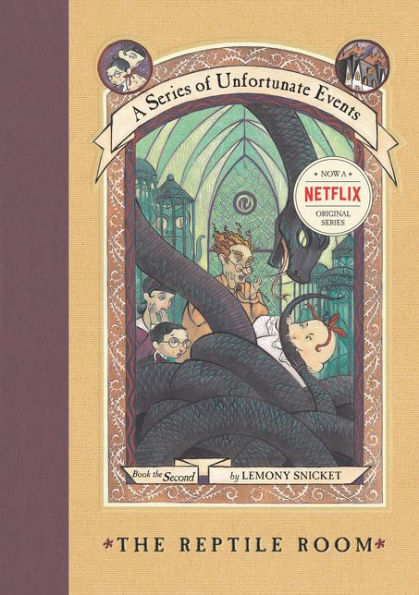
However, it isn’t long before Count Olaf arrives to disturb their peace and scheme for their money. Posing as Uncle Monty’s assistant, Count Olaf succeeds in poisoning the children’s new guardian despite their attempts to stop them. Olaf injects Monty with snake venom stolen from his vials; his death is deemed the result of a snake bite from one of the animals in his care.
Marian Preaker in Sharp Objects by Gillian Flynn
Poison in Gillian Flynn’s novel Sharp Objects, adapted into an HBO mini series in 2018, takes a different, potentially even more menacing, form. The central focus of Sharp Objects is dissecting the trauma Camille Preaker endured in her past, most specifically, the drawn-out death of her younger sister Marian in her youth, and her strained relationship with her mother. This psychological thriller comes to its climax upon the discovery that Adora Crellin, the mother of Camille, Amma, and Marian, has Munchausen by Proxy syndrome.
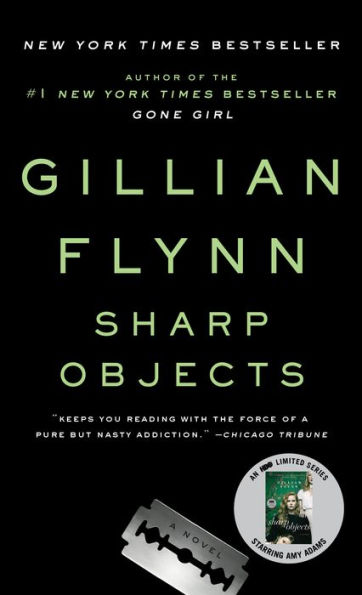
Adora had been poisoning Marian for years to induce her sickness until it eventually killed her. She attempted to poison Camille when she was young, successfully poisoning her as an adult, though she didn’t kill her, and was steadily poisoning Amma as well until Camille intervened. Munchausen by Proxy is a menacing thing to see unfold on the page, and Amy Adams and Patricia Clarkson breathe life into the terrors of this illness in an adaptation that is sure to make your skin crawl.
Joffrey Baratheon in A Storm Of Swords by George R.R. Martin
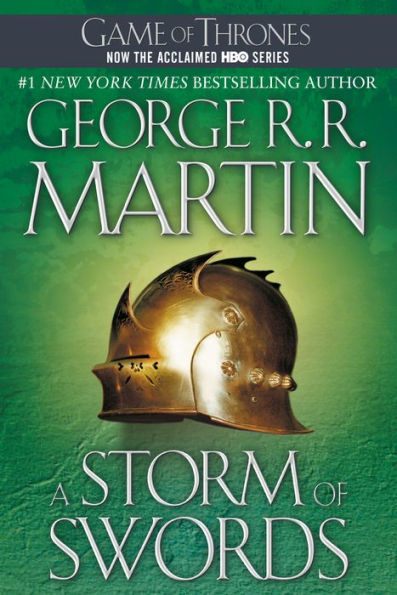
There’s nothing like the deserved death of one of the most insufferable villains to ever grace the page and screen. Joffrey Baratheon, the King of the Seven Kingdoms at the time of his death, dies on what should have been the happiest day of his life: his wedding to Margaery Tyrell. As he delights in the ridicule and humiliation of his performers and his uncle, Joffrey drinks gluttonously from his chalice. In a drawn-out death, where Joffrey struggles for air and writhes in pain on the floor, the King is reduced to a squirming, helpless boy in front of his subjects. Though Tyrion is immediately arrested, imprisoned, and tried for Joffrey’s murder, we later discover the plan was carried out by Littlefinger and Lady Tyrell. In the HBO adaptation, the revelation of this fact is one of the most iconic and quotable moments from the entire series.
The Victim in The Imp of the Perverse by Edgar Allan Poe
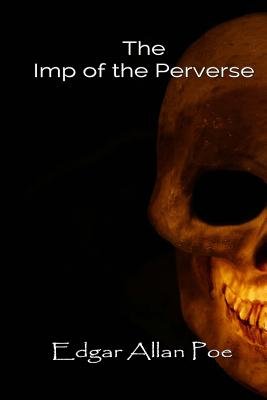
Edgar Allan Poe’s short story The Imp of the Perverse may have one of the cleverest poisonings throughout literature. An unnamed narrator, awaiting execution for murder, recounts how he was driven to commit his crime by an impulse within him he calls “the imp of the perverse.” This impulse is the desire to do things because they are forbidden, even when it goes against your best interests. The narrator plans a “perfect” murder to inherit his victim’s estate. After studying his victim and noting that he reads by candlelight each night before bed in his small, stuffy room, the narrator swaps his usual candle for a poisonous one emitting toxic fumes. His plan works: the victim inhales the fumes and dies, the narrator inherits his estate, and lives comfortably for many years. However, driven by the “imp”, the narrator ultimately confesses to his crime and receives his punishment.
Latimer in The Lifted Veil by George Eliot
George Elliot’s 1859 novella The Lifted Veil compellingly begins with a first-person narrator, Latimer, preparing for his impending death and recounting the story of his life while he still has time. From there, the reader travels back in time with Latimer to him at nineteen when he discovers he has a superpower: he can see future events before they occur. His realization happens upon having a vision of meeting a woman he has never seen before, Bertha Grant, and who soon after is introduced as his brother’s bride-to-be. Here begins the story of one brother in love with the other’s fiancée.

Latimer has another vision, this time years later, of Bertha screaming viciously at him, telling him the world would be a better place if he killed himself. Latimer realizes in this future that Bertha is not his brother’s wife, but his own. Latimer ignores the vision, marries Bertha, and soon her toxicity seeps out. Upon the death of their maid and the subsequent blood transfusion to revive her, the maid opens her eyes and reveals Bertha’s plot to poison Latimer. As Latimer dies by the end of the novella, it’s safe to assume Bertha carried out her plans.
Emily Inglethorp in The Mysterious Affair at Styles by Agatha Christie
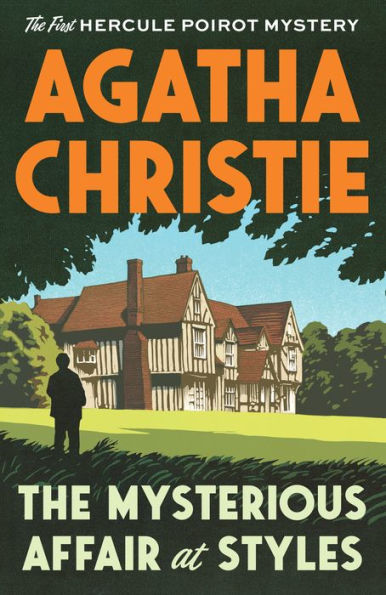
The Queen of Crime, Agatha Christie, strikes again with her 1920 mystery The Mysterious Affair at Styles, which, like many Christie stories, centers on poison as a method of murder. After her late husband’s death, Emily inherited Styles and the majority of his income. Soon after she marries a much younger man, Alfred Inglethorp, and lives on the property with him, amongst several others, such as her two stepsons, their families, and Lieutenant Hastings, who is staying with them as a guest. Late at night, the residents of the Styles estate wake to find the lady of the house, Emily Inglethorp, formerly Emily Cavendish, dying of strychnine poisoning. Luckily, Lieutenant Hastings seeks out the help of a friend staying close by. Of course, this friend is the most celebrated detective in the world: Hercule Poirot.
Lily Bart in The House of Mirth by Edith Wharton
The circumstances of Lily Bart’s death are unclear: was it an accidental overdose or a suicide? This author would go with the latter. The House of Mirth details the economic tightrope women of the early 20th century walked and how easy it was to get knocked slightly off kilter and go plummeting to their demise. Lily Bart’s family never had much wealth themselves, but were always within wealthy circles thanks to their rich relatives. Lily is impossibly beautiful, witty, clever, and shamelessly motivated in her relationships for economic safety.
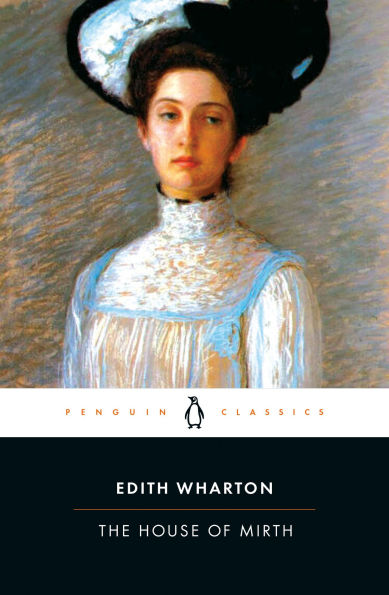
However, the whiff of suspicion in cosmopolitan society can exclude you from it for good. When Lily is accused of being a cheater, gambler, and mooch, she desperately tries to amend her image to no avail. She eventually has to work for her money, which, for any woman of high society during that time, is as good as a death sentence in their opinion. Lily begins taking sleeping pills to numb her loneliness and pain, pays off her debts with her Aunt’s inheritance, and shortly after overdoses.
Poison rears its head in ugly forms. Whether it’s used to end one’s suffering, to satiate the sadistic impulses running rampant in the perpetrator’s head, or in the pursuit of greed, the troubled minds of these stories use toxins to put an end to life. Why do we devour poisonous stories? There’s something poetic, tragic, and downright frightening in the ease of swirling venom into a cup, lighting a toxic candle, and pills drifting someone off into a permanent sleep with the potential of the perpetrator lurking in the shadows and reaping the rewards. Sometimes justice is served, sometimes it isn’t, but regardless, we lap the poisoned ink up anyway.
Looking for more page-turning crime novels? Click here.
Shop more mysteries and thriller reads on our Bookshop.