

















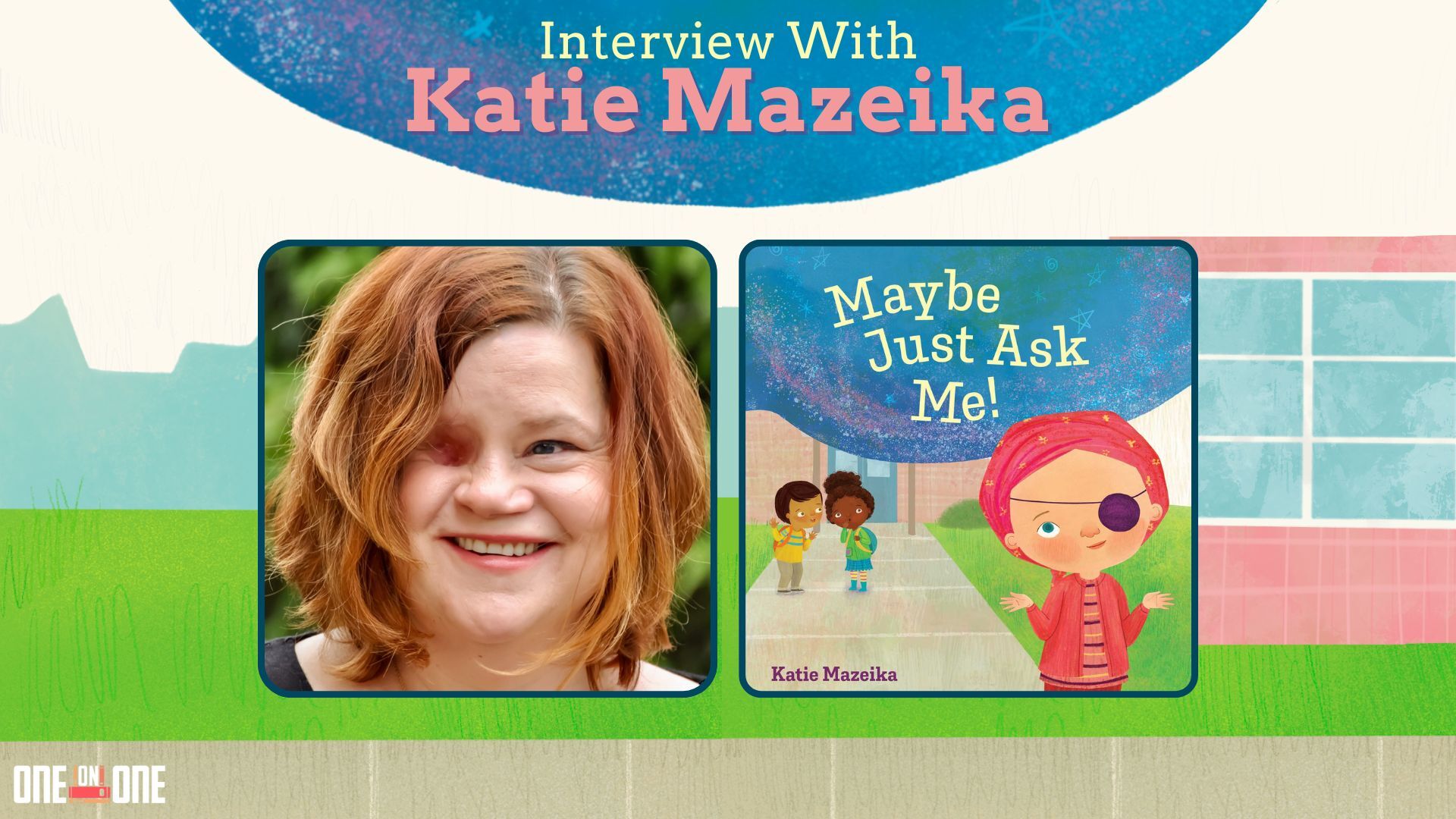
Many would argue that people have a natural curiosity when they meet someone noticeably different from themselves, particularly young children. After all, meeting someone from a different culture, background, or who has physical differences is just another way of being exposed to a new aspect in the brilliantly diverse tapestry of the human experience. However, just as there are positive ways to approach this curiosity, there are negative ways as well, something explored in Katie Mazeika’s new picture book, Maybe Just Ask Me! We had the chance to sit down with Katie to talk about how her childhood experiences inspired her book and the importance of diverse representation in children’s media.
About Katie Mazeika
Katie Mazeika is an author and illustrator with a BFA from the Columbus College of Art and Design. When she isn’t in the studio, she likes to spend time at the theater, in her garden, or getting lost in a good book. She is the creator of picture book biographies including Annette Feels Free and Beulah Has a Hunch!. She lives in Ohio with her family and two dogs.
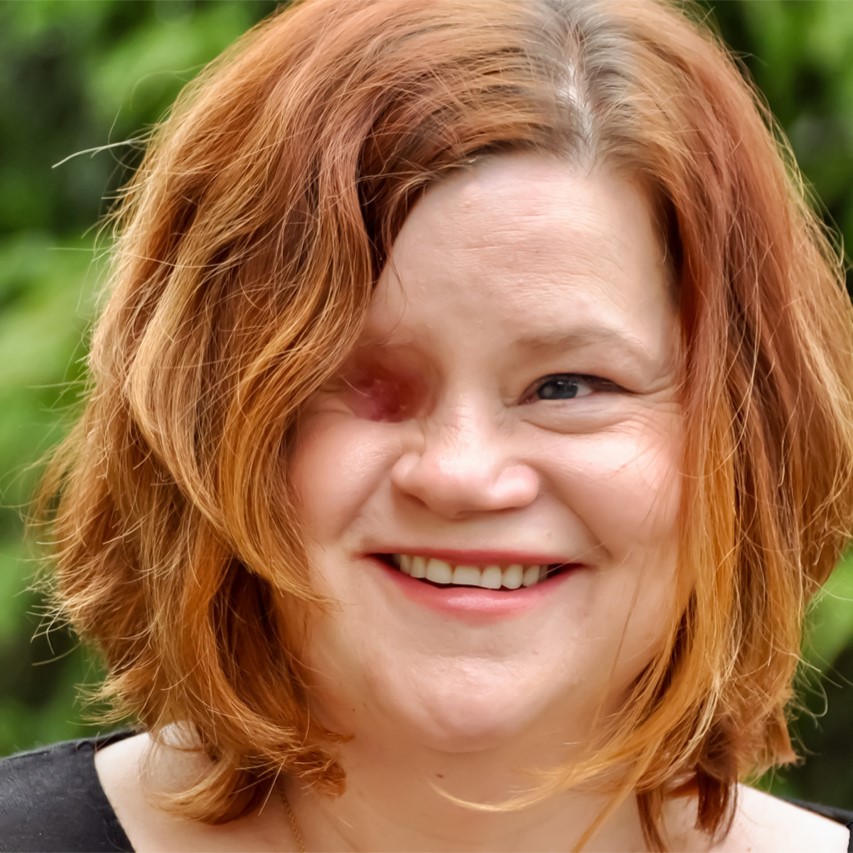
Thank you so much for taking the time to speak with us, Katie! Let’s dive in.
At the beginning of Maybe Just Ask Me!, protagonist Mazie is starting her first day at a new school, a stressful experience for any kid. Can you explain why Mazie is prepared for her first day to be uniquely tricky?
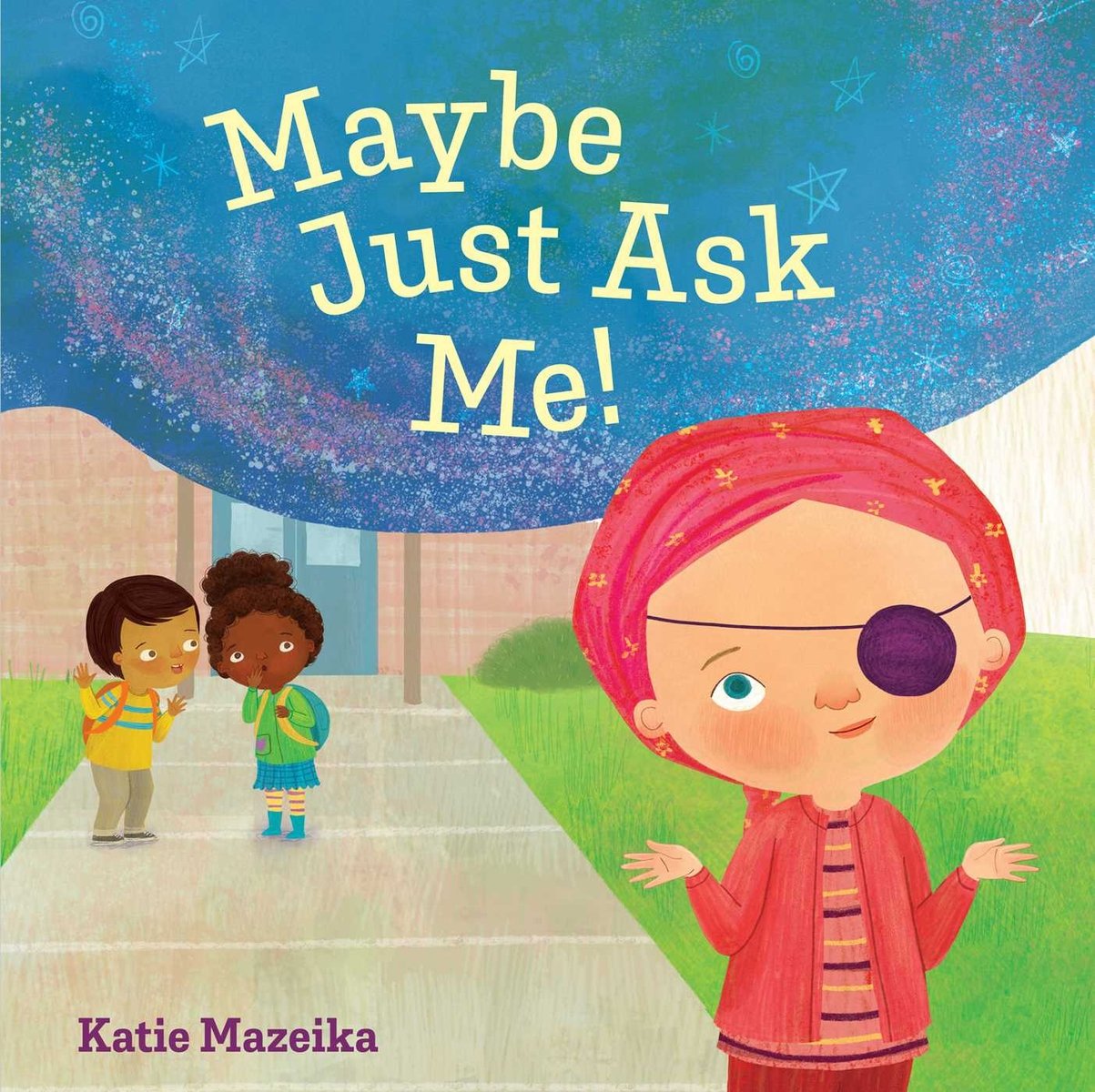
Mazie is starting school wearing an eyepatch and headscarf. It’s tough enough to be the new kid, but Mazie knows that her patch and headscarf will be stared at, and other kids will have questions. But, just like any other kid, Mazie is hoping to make some new friends.
Instead of asking Mazie directly about her vision difference and lack of hair, her classmates begin to speculate and spin rumors about her appearance. Why did you find it important to illustrate to young audiences why this behavior isn’t okay?

When I created those scenes, it was important that the other kids didn’t come across as mean-spirited or bullying. I don’t feel like that’s where the speculation comes from. It’s just curiosity and kids’ wild imaginations. But I also wanted to show the effect the stories have on Mazie. Her feelings weren’t hurt when they speculated that she’s a pirate; instead, she’s frustrated that they are so fixated on the patch and headscarf that they never bother to get to know the real story and who she is.
We understand that Mazie’s story is a very personal one to you. Can you elaborate on how your childhood experiences shaped Maybe Just Ask Me!’s story?
Mazie’s story is very personal. Mazie is based on me, and my childhood (the name Mazie came from my last name, Mazeika). I had cancer and lost my eye when I was three. When I was five, I was in the hospital for almost six months to have several surgeries. So, when I started school, I was bald and wore an eyepatch, just like Mazie at the beginning of Maybe Just Ask Me!. Even at that age, I was accustomed to double-takes and stares and especially used to hearing parents tell kids not to stare at me, or to look somewhere else.
I never questioned it, probably because I was so young. It wasn’t until I was older that it occurred to me what a harmful message it sends to kids. When we teach kids not to acknowledge a disability, it’s isolating to the person with a disability. At the same time, it implies that there is something shameful about disability and disabled people. I internalized that shame as a kid. When I created Mazie, I made her open and honest about what makes her different, but not ashamed.
While Mazie is more than willing to disclose her disability to her classmates once given the chance, not all children with disabilities may be ready to talk about their differences. What advice would you give to young readers who are not ready to disclose their disability to peers?

I think that it’s perfectly fine to say, “I’d rather not talk about it.” Whether or not someone wants to talk about their own disability is a personal choice. While curiosity, with kindness, should be encouraged, so should respecting each other’s boundaries and accepting when someone doesn’t want to share their story.
Many prominent groups and politicians are pushing to ban children’s books that explore themes relating to disability and inclusion from public school and library shelves. As a creator and advocate, why do you think it is so critical for young readers to have access to these kinds of books?
Dr. Rudine Sims Bishop wrote that books are “windows, mirrors, and sliding glass doors.” I think that all kids need those “mirror” books; everyone deserves to see themselves in books. When a kid recognizes some piece of themselves in a book, they feel validated and reassured that they are not alone. Books that serve as windows are just as important. Nondisabled readers may not see themselves in disabled main characters, but they’ll see members of their community. And their empathy and understanding for people with disabilities will grow, while the mystery and scariness that surrounds disability will fade. Ultimately, this is how readers come to see how alike we all are despite our differences.
As part of your job as a creator and work as an advocate, you do a lot of in-person work with children. Is there a favorite interaction you’ve had with a young fan?
I’m neurodivergent, and when I speak to groups, I usually have a fidget in my hand. It helps me slow down and process. I had a school visit last month to an elementary school. Some students, kindergarten or first graders, were drawing characters while I was walking around the room helping them draw. One girl stopped me and pointed at my fidget. I told her it helps me talk to large groups. She then showed me her fidget and told me, “Mine helps me too.” I loved that she shared that with me without hesitation.
We always love to ask children’s authors and illustrators about the books that inspired them when they were children. Are there any books or series from your childhood that have stuck with you?

Madeline by Ludwig Bemelmans. Looking back, I can see that it was a mirror that I needed during a difficult period of my life. When I was a kid, there were very few picture books that showed the inside of a hospital or had a character in a hospital. Madeline was in the hospital, just like I was. Madeline had a scar from surgery, and I did too. It was my favorite book for years, because I recognized myself in the story and I felt less alone. But Madeline was much bolder than I was; she stood on her bed and showed off her scar. I was quieter and shy, although I wished I could be more like Madeline.
Lastly, in honor of Maybe Just Ask Me!, if you could ask a question of anyone in the world or throughout history, who would it be, and what would be the question?
Hahaha, it’s not book-related, but I know exactly who it’d be: Ben Stiller, and the question would be about Severance. But I don’t know how I’d narrow it down to a single question. I just finished the second season, and I have so many questions.
A huge thank you to Katie for taking the time to talk to us about her work! Be sure to find her online at KatieMazeika.com or on Instagram, Facebook, Pinterest, and Bluesky! Lastly, don’t forget to add Maybe Just Ask Me! to your family’s TBR list.
Looking for more children’s books that explore the disabled experience? Check out our article on Picture Books With Authentic Developmental Disability Representation!
For all of our recommendations for mini bookworms, check out our Bookshop bookshelf.
