















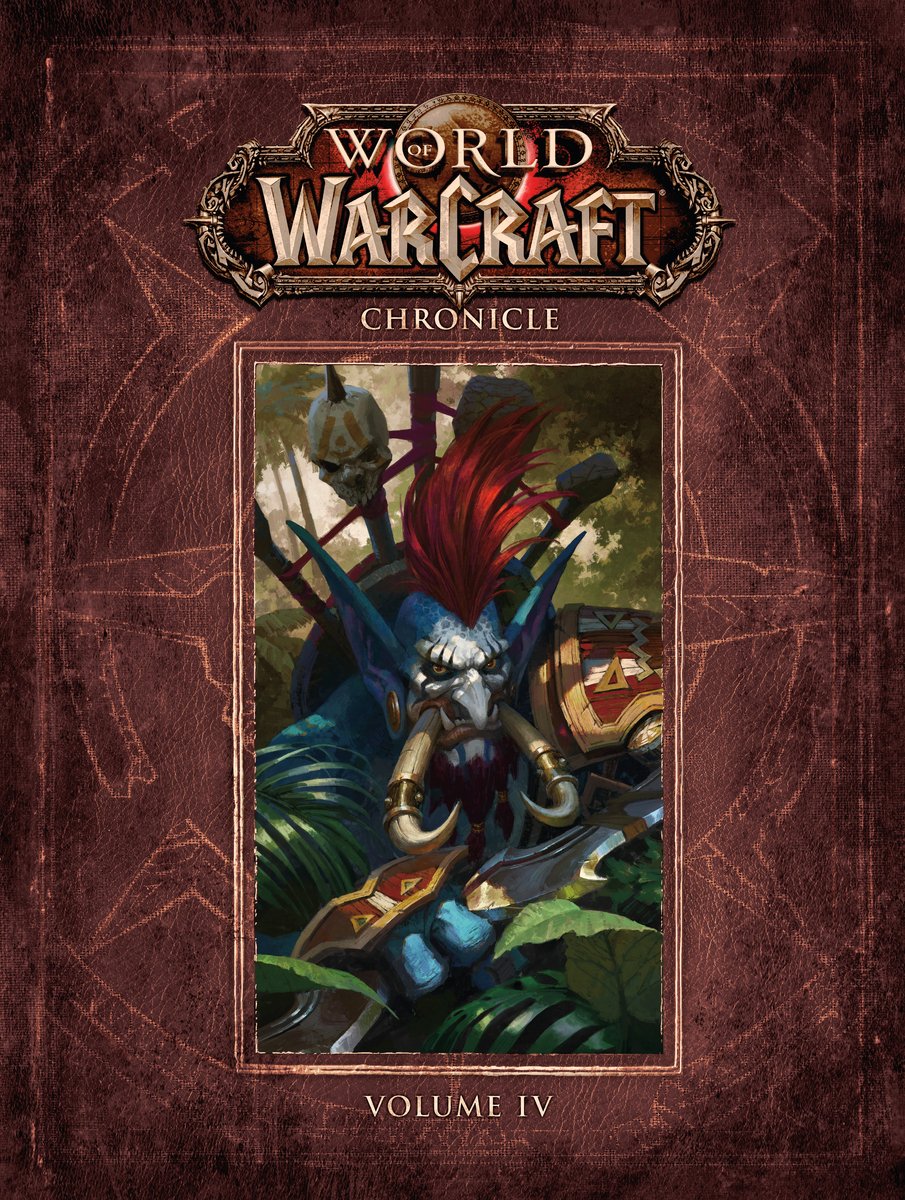
With World of Warcraft’s new expansion, The War Within, coming soon, Blizzard has released the fourth installment of the Chronicle series. Written by Matt and Marty Forbeck, the series offers more information on the stories players experience in the game. This installment picks up at the end of the third volume and is divided into five sections that break down the lore of the expansions. The third volume ended with the Cataclysm expansion, while the fourth installment covers the events of the next five expansions, starting with Mists of Pandaria and ending with Shadowlands.
CW: Spoilers for Chronicle Part 4 ahead!
It’s important to note that the previous Chronicle books were written from the perspective of the Titans and those working for them. This means that God-like beings created the stories within the first three books. However, the fourth installment seems to be written by someone who knows World of Warcraft is a video game because the writer uses the word “players” to describe our characters. Our characters have gone by many different titles, but not once have we been referred to as “players,” and it indicates that this story is different than the three before. While this could be an oversight or an error in editing, details like this leave players wondering and theorizing.
World Soul
Speaking of Titans, this book tweaked what we know about the creation of Titans. The Worldsouls we know of are Azeroth, our homeworld, and Argus. Previously, Worldsouls were referred to as “slumbering Titans,” and the planets served as large incubators that protected them before they could hatch as full Titans. This book now tells us that the title of slumbering Titan isn’t accurate because the Worldsouls within the planets only have the potential of becoming Titans when they awaken, not that they are destined to become one.
In addition, book four of Chronicle tells us that when a Worldsoul is born from a planet, the planet itself isn’t destroyed. This means that when Azeroth awakens it won’t destroy the planet we live on, and theories of the planet itself turning into a Titan most likely won’t happen. This change in lore allows the game to continue after Azeroth awakens because, let’s be honest, Azeroth will eventually awaken. If it destroyed the planet, the game would be much more difficult.
One More Old God
Fans of World of Warcraft are surely familiar with the threat of the Old Gods. C’Thun, Yogg Saron, Y’Sharraj, and N’Zoth. Four powerful eldritch horrors created by the Void to find and corrupt any sleeping titan world-souls. The players defeated these horrors in different areas of the game, except for Y’Sharraj, who was popped like a pimple by the titan leader Aman’Thul. G’Huun is an outlier, as it was accidentally created during the Titan’s experiments on the other Old Gods, so it isn’t technically an Old God like the rest.
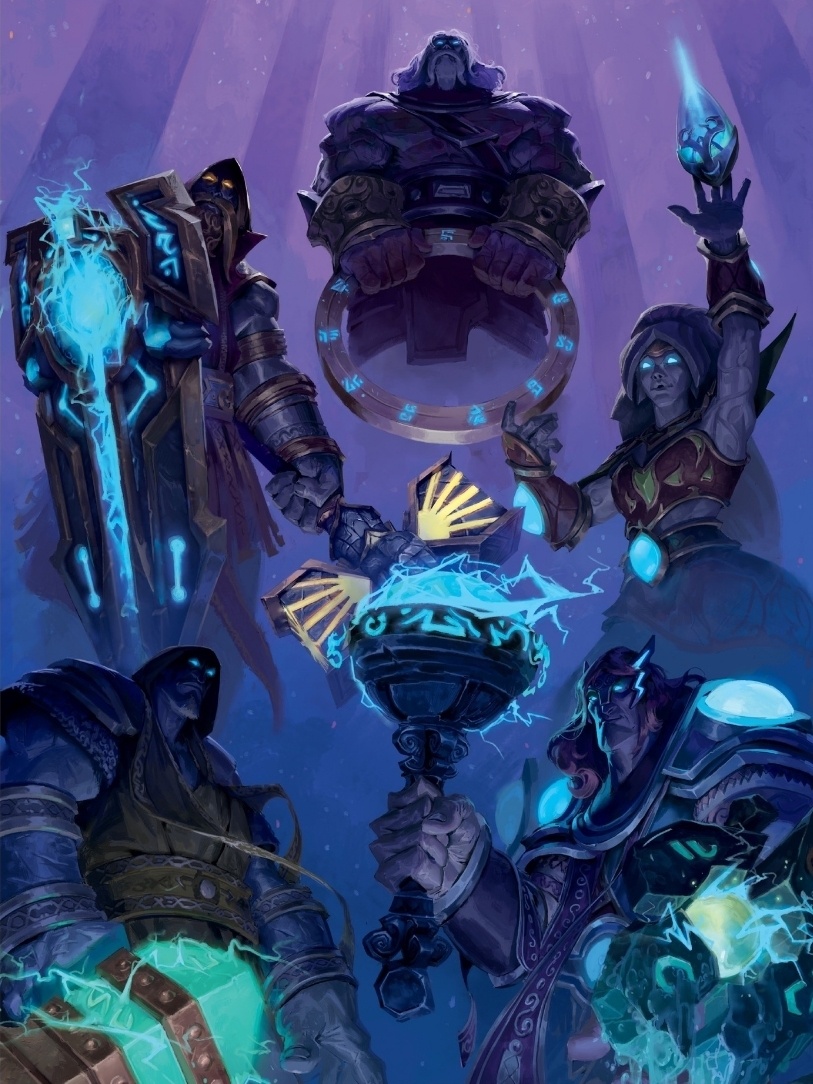
The fourth volume of Chronicle confirms that, along with the original four, there is a fifth Old God on Azeroth. The reasoning and explanation are completely up to interpretation. Since Y’Sharraj was killed and not technically imprisoned (and it was confirmed that the Titans imprisoned four Old Gods), it could be possible that the “fifth” Old God was imprisoned somewhere else in Azeroth. It could also mean that the fifth Old God is still en route to Azeroth through the cosmos. It might even mean that the fifth Old God is the new big bad enemy, Xal’atath. Or maybe there isn’t even a fifth Old God and we are on a wild goose chase.
The Cosmic Chart
The cosmic chart has seen changes throughout the history of the game, and volume 4 of Chronicle has seen it changed once again. This time there was only one small amendment that brought major implications. Previously, the chart listed “undead” as the primary force of Death, but now Blizzard has changed it to “The Eternal Ones,” which are in layman’s terms, keepers of death. The expansion Shadowlands explained that The Eternal Ones rule over Death within their respective realms, and their realms serve as afterlives for living souls that have died throughout the cosmos.
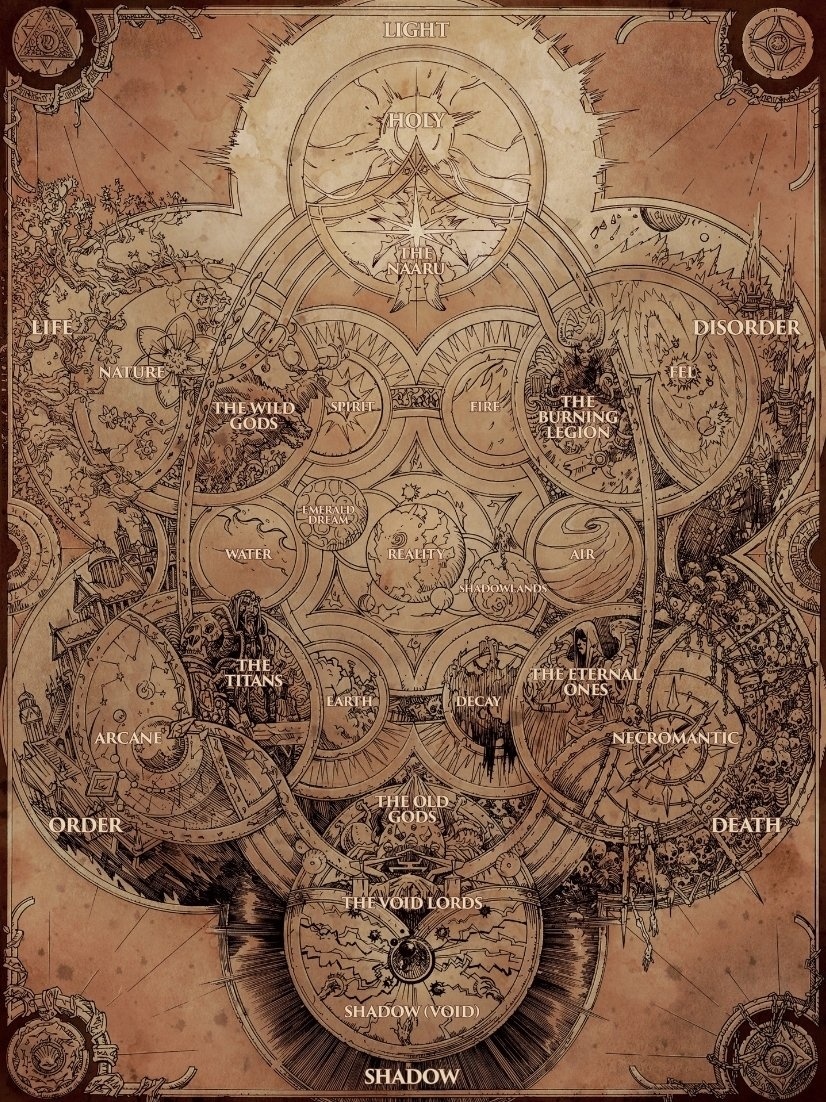
This change seems minor but it helps explain things much easier. Undead creatures can be found all over the game and some players can even choose to play as an undead. Using the term “undead” to explain the primary force of Death created some confusion or, rather, unnecessary theories. It was a blanket term used to describe the forces of Death; that isn’t necessarily wrong but also isn’t true because the undead aren’t bound to serve Death. The origin of the playable undead race was that they broke their chains and became free, so this change to the cosmic chart allows the undead to be separated from the cosmic force of Death.
Timeline Changes
This volume of Chronicle adds clarification to the timelines of the expansions. It’s difficult to accurately portray time in-game given that, unlike the characters in the game, players need time away from Azeroth. This means that timelines become foggy and hard to nail down, because the developers need to give every player time to play the game before pushing the next update and continuing the story. Within the game’s timeline, each expansion takes place for roughly one year despite some expansions taking years to develop before finally releasing.
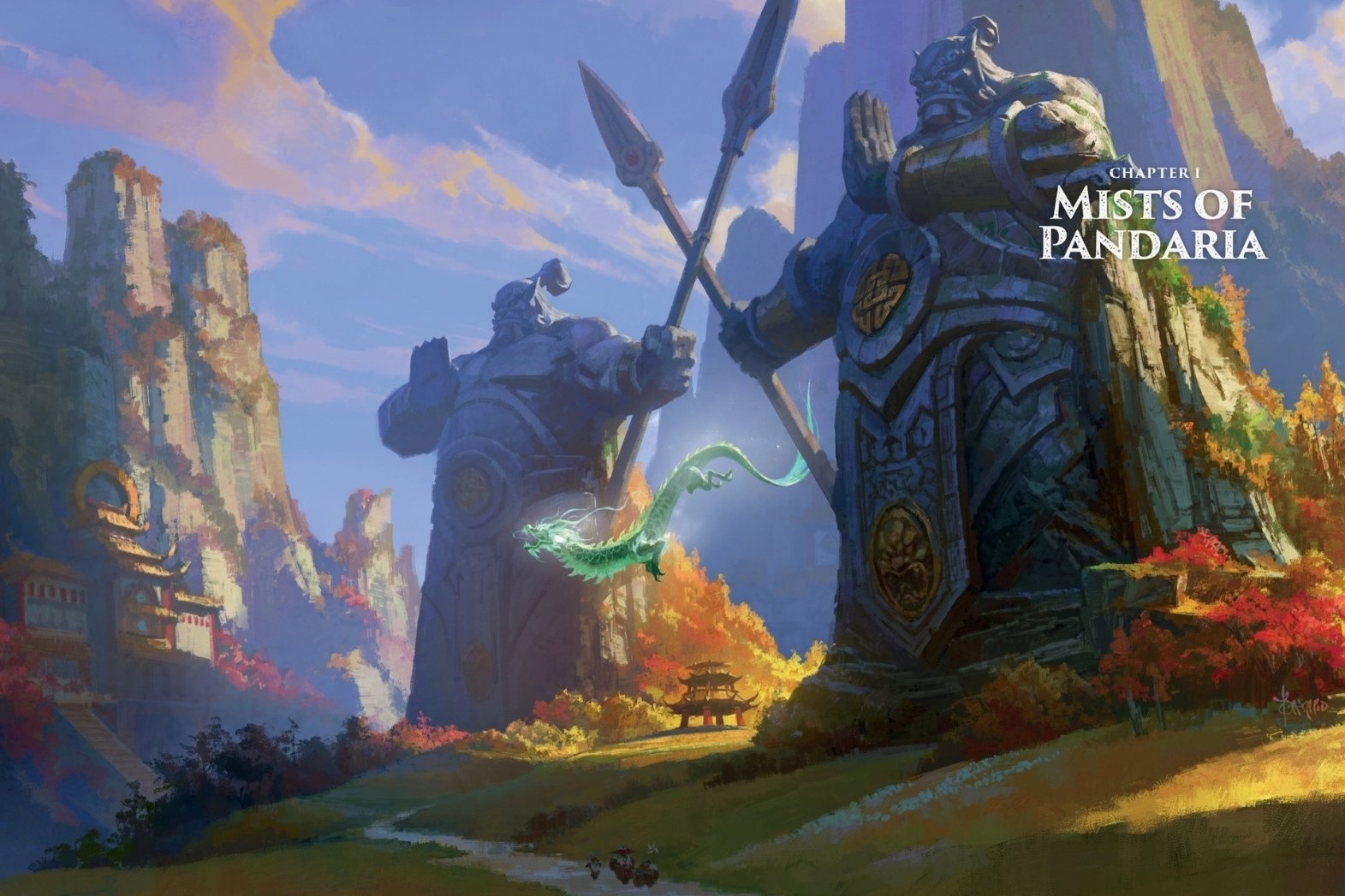
For example, the Mists of Pandaria expansion had a determined order in the game; the leveling zones had an established order that followed the sequence of released content. But this volume of Chronicle has changed the structure of the raids in Mists of Pandaria to something completely different. Mogu’shan Vaults was the first raid of the expansion, but Chronicle has changed that raid to the third. Similarly, the Siege of Orgrimmar raid was the last raid, but is now split into two parts with the first half of Siege of Orgrimmar happening simultaneously with the second raid, Throne of Thunder.
The amendments made in Chronicle: Volume 4 are a lot to process. It changes what players understood before and adds information in an attempt to clarify bits of confusion. While the intention of this book is pure, as it works to explain and make sense of oddly placed timelines, players haven’t been excited about its changes, which they mostly deem unnecessary. But no one knows what the writers of World of Warcraft are truly thinking. To put it in perspective, Mists of Pandaria was released in 2012 and there is no way the writers knew where the story would be heading. Changing the previously established lore allows the game’s current story to make more sense and tie up any loose ends.
Check out more pop culture from Bookstr here!
Stop by our Bookshop for recommendations here!