


















Howard Philips Lovecraft has greatly impacted the horror genre with his haunting short stories. He single-handedly created a genre called “Lovecraftian horror” with themes like cosmic and eldritch horror. This genre features beings so horrific that they are beyond human comprehension. These beings typically come from outer space or other dimensions and have as much a right to live as humans do, which is to say — no right at all. Lovecraft wrote these beings to explain that the universe does not care who lives or dies, nor who wins or loses.
Less Than Stellar
When he was a child, Lovecraft’s father Winfield died of syphilis and his mother Sarah succumbed due to mental illness. He failed to complete school and was rejected by Brown University. Despite his hateful beliefs as an anti-Semitic, racist, and classist individual, he found love in his Jewish wife Sonia Greene. After moving into her Brooklyn apartment, they soon fell on financial hardships. Greene lost her hat shop and turned to Cleveland for employment. She would send Lovecraft a weekly allowance that helped him pay for his tiny apartment at Brooklyn Heights. Years later, he returned to his home state of Rhode Island, and they agreed on a divorce.
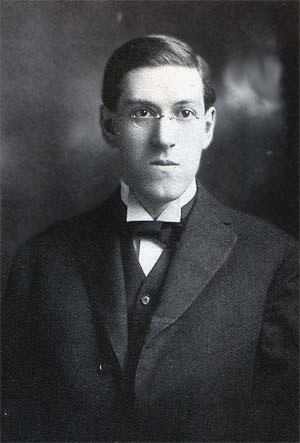
Lovecraft hated his time in New York. In a letter, he explained that he survived on one loaf of bread, a can of cold beans, and a hunk of cheese for three days. But, in Rhode Island, he found his stride by writing famous works such as The Call of Cthulhu, The Shadow Over Innsmouth, and The Shadow Out of Time. He wrote for eleven years before intestinal cancer took him at the age of 46 in 1937. Despite his fame today, he could not support himself from his earnings as an author and editor. In the 1970s, a revival of his work skyrocketed him into his position as one of the most influential supernatural horror authors.
Lovecraftian Horror
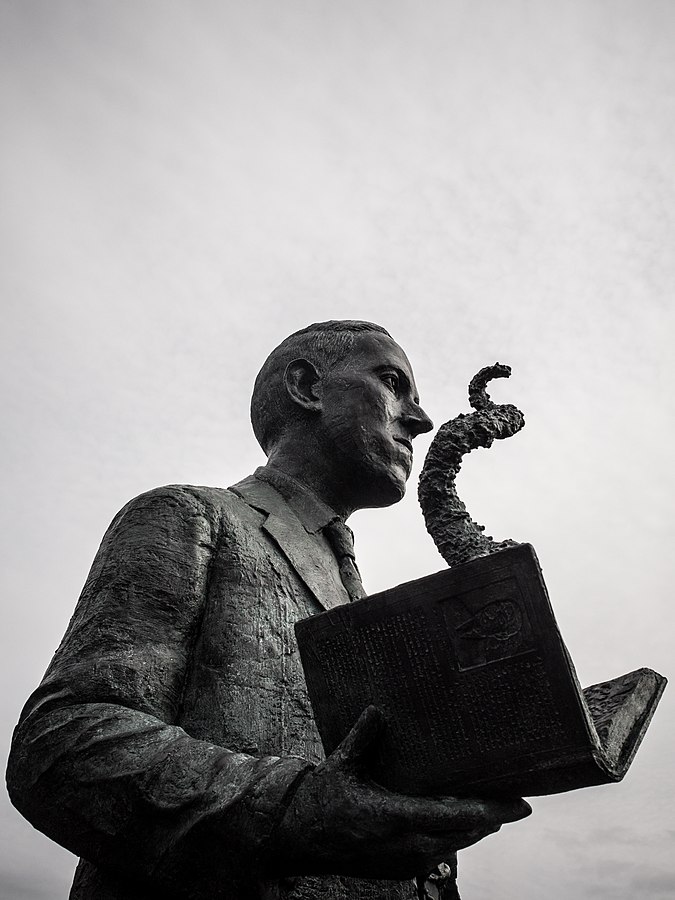
Before heavy metal fans, game collectors, and those in the Goth community embraced his stories, he was just a man who liked writing about the unknown. Lovecraft believed that the greatest thing mankind could fear was the unknown, and he embraced that in his stories as each of his cosmic horrors stemmed from mystery. He described it as the spectral macabre and used it because it demanded a certain level of imagination from the reader. Lovecraft avoided direct descriptions as he knew readers had different fears, so it was best to let them create the imagery out of the horrors he wrote about.
“The oldest and strongest emotion of mankind is fear, and the oldest and strongest kind of fear is fear of the unknown.”
H.P. Lovecraft
Lovecraft wrote a few essays on his genre of horror, Supernatural Horror in Literature. Lovecraft wanted his horror to transcend the secret murder and bloody bone literature of his peers. He explained that Edgar Allan Poe was the first author to touch on cosmic horror through Gothic horror. Lovecraft expresses that Poe opened doors for writers to utilize the psychological basis of horror in their stories. Where writers created happy endings and rewarded virtue, Poe used his writings to interpret events as they should be. Lovecraft explains it as:
“Pain rather than pleasure, decay rather than growth, terror rather than tranquility.”
H.P. Lovecraft
The Cthulu Mythos as Inspiration
With Lovecraft’s work being so prominent that it spawned an entire genre, it’s no surprise that the most popular mythos of Lovecraft has inspired countless works of fiction. The Great Old Ones and Outer God are, without a doubt, the pinnacle of Lovecraft’s creations, as they are what many creative minds pay homage to. The Great Old Ones feature ancient aliens that arrived on Earth eons ago, such as Cthulu and Dagon. The Outer God are cosmic deities of immeasurable power, such as Azathoth and Yog-Sothoth.
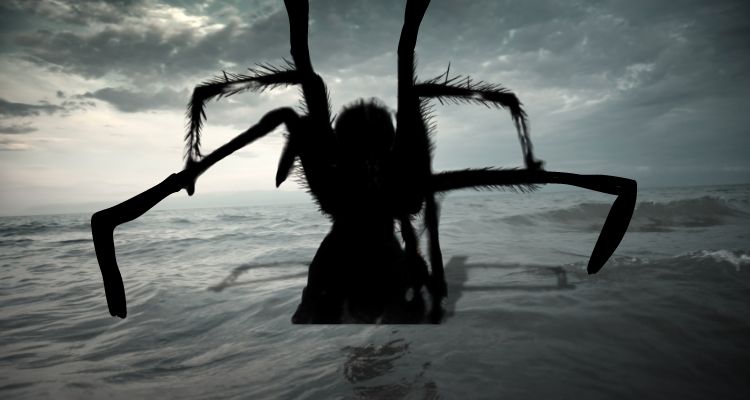
It’s surprising to see how many things take some inspiration from Lovecraft’s work. The Marvel and DC universes both have their takes on Lovecraftian horrors that place them as mysterious space aliens with immense power. There is an argument to make that the movie Alien takes some inspiration from Lovecraft, seeing as it is humanity’s curiosity of the unknown that could potentially bring about the apocalypse on Earth. On the musical side of things, the metal/rock band, Metallica, has written at least four songs that feature Lovecraft-inspired lyrics.
Howard Philips Lovecraft was not a person people should look up to and aspire to be, but his writing was out of this world. Credit where credit is due; he created an entire genre of horror that has spanned the length of time and doesn’t show any signs of stopping. His influence has inspired countless works of unknown horror. Lovecraft’s work of fiction will stretch long into the future, only stopping when Cthulu rises from the depths of the Pacific or Azathoth awakens from its slumber and devours everything in the universe.
Check out more bookish celebrations here!
If you like horror, check out our horror picks here on bookshop!
