


















Literacy is more than just learning how to read — it’s the foundation for opportunity, empowerment, and breaking the cycle of poverty. At the forefront of this mission is Vanessa Portilla, Chief Operations Officer at the World Literacy Foundation (WLF), who brings both heart and strategy to the fight for global literacy. With her background in journalism, communications, and marketing, Vanessa has dedicated her career to amplifying voices that often go unheard and driving innovative, community-centred solutions. In this conversation, she shares how WLF is transforming lives through the power of books, storytelling, and education.
About Vanessa Portilla
Vanessa Portilla is the Chief Operations Officer at the World Literacy Foundation (WLF), a global nonprofit dedicated to ensuring every child has the opportunity to acquire literacy skills and access books, regardless of their circumstances. With a background in journalism, social communications, and a Master’s degree in marketing, Vanessa has dedicated her career to using storytelling and innovation as tools for social change. Before joining WLF, she worked on education and communications projects across Colombia, where she witnessed firsthand the challenges faced by underserved communities.

Since joining WLF in 2022, Vanessa has overseen international programs in Africa, Latin America, the USA, the UK, and Australia. Her leadership blends strategic vision with a passion for grassroots impact. Vanessa is deeply committed to amplifying the voices of disadvantaged communities, building sustainable partnerships, and driving initiatives that break the cycle of poverty through literacy. She believes in the transformative power of education to change lives and in the power of stories to inspire action worldwide.
Thank you so much for participating, Vanessa! Let’s begin.
For those who might not know, can you explain what the World Literacy Foundation is, when it started, and what its goals are?
The World Literacy Foundation (WLF) was founded in 2003 with a simple but ambitious goal: to ensure that every child, no matter where they are born, has the opportunity to acquire literacy skills and access books. Today, WLF operates in more than 85 countries, reaching children and families in underserved communities with tailored programs, digital resources, and grassroots support. Our mission is not just about teaching children to read — it’s about empowering them to succeed at school, gain confidence, and break the cycle of poverty.
With so much of today’s conversation happening on digital platforms, how does WLF navigate and use social media? How can younger generations use these platforms to help spread the word about global literacy?
Social media is one of our most powerful tools for awareness and advocacy. It allows us to connect across borders and amplify voices that would otherwise remain unheard. At WLF, we use digital platforms to share impact stories, engage donors, promote campaigns, and mobilize youth ambassadors globally. For younger generations, social media is an entry point into activism — they can share literacy campaigns, organize fundraisers, or even use platforms like TikTok or Instagram to produce creative content that sparks conversation. Each post, share, or video has the potential to ripple into meaningful change.
What is one of the most common misconceptions about illiteracy that you encounter, and how does WLF work to challenge that narrative?
A common misconception is that illiteracy is a problem confined to developing countries. In reality, it is a global issue. In the U.S. and the UK, for example, millions of children struggle with reading below grade level. Illiteracy impacts every society and every economy. At WLF, we challenge this narrative by presenting real data, sharing personal stories, and demonstrating that literacy is a fundamental human right that transcends borders. By highlighting both global and local challenges, we emphasize that this is not “someone else’s problem”— it’s everyone’s responsibility.
As a journalist and social communicator, how do you apply your skills in your day-to-day work as Chief Operations Officer at the World Literacy Foundation?
My background in journalism and communications has shaped the way I approach leadership at WLF. Storytelling is at the heart of literacy advocacy, and I believe deeply in its power to connect, inspire, and mobilize people. Every day, I use those skills to give visibility to our programs, engage stakeholders, and spark action. As COO, I also rely on my ability to listen, research, and synthesize complex information into messages that resonate — whether it’s preparing a fundraising campaign, motivating staff, or speaking with government officials.
When I studied communications, it was because I wanted to tell the stories of those who couldn’t tell them themselves. Early in my career, I realized that I wanted my talents to be used where they were needed the most. That’s what led me to WLF: the chance to amplify the voices of communities often overlooked and to show the transformative power of literacy.
The World Literacy Foundation focuses on a “ripple effect” through parental involvement. From your experience, what is the key element for creating that kind of sustainable, community-driven change?
The key is empowerment. When parents feel confident and supported, they become their child’s first and most important teacher. We’ve seen the difference when we provide parents with simple tools, resources, and encouragement — they start reading aloud at home, telling stories, and modeling positive learning behaviors. That ripple effect spreads across families and communities. Sustainable change occurs when literacy is not just a school subject, but a shared value that permeates homes and community spaces.
Thinking about the next generation of advocates and philanthropists, what’s one piece of advice you’d give to a young person who wants to get involved in a cause like global literacy but doesn’t know where to start?
Start small. You don’t need to launch a global campaign on day one. Begin with your community: organize a book drive, volunteer to read with children, or share literacy resources online. The important thing is to take action. Once you take that first step, opportunities will open up to connect with organizations like WLF, join youth ambassador programs, or contribute to larger initiatives. Every advocate begins somewhere, and what matters most is consistency and passion.
WLF works with partners and leaders from over 85 countries. Can you share a story about a specific program or partnership that you’re particularly proud of, and what made it so successful in reaching a community?
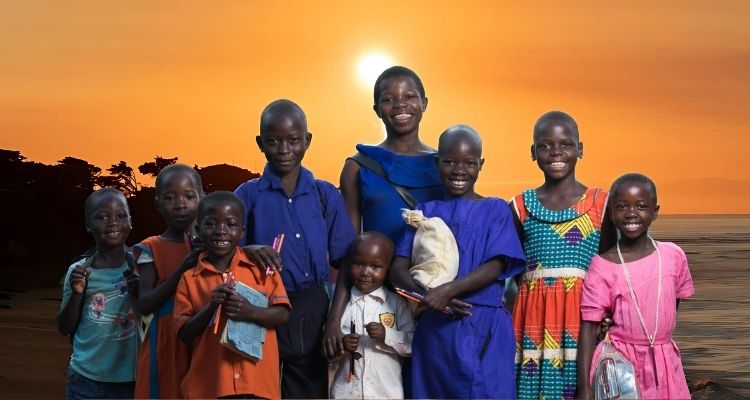
One program that is especially close to my heart is Sun Books. In fact, when I first joined WLF, it was to work directly with this program, and I immediately fell in love with the work being done in Africa. Sun Books provides solar-powered tablets preloaded with hundreds of books and learning resources to children in rural areas. In many of these communities, there is no internet or reliable electricity. These tablets became a bridge to education, giving children access to learning tools they otherwise would never have.
One story that has stayed with me is of a girl I met in Kenya. She told me that before Sun Books, her dream was simply to “BE a wife,” just like her mother and grandmother. But after reading stories and learning about the world, she realized she could BECOME a teacher, a nurse, or even a businesswoman. That moment resonated with me deeply. Books have the power to transform “to be” into “to become,” and that is why I believe so strongly in the importance of the work we do at the World Literacy Foundation.
As the Chief Operations Officer of a global organization, you must deal with unique on-the-ground challenges. What is a specific, unexpected logistical or cultural challenge you’ve had to overcome to successfully implement a program in a different country?
One of our ongoing challenges is that no single solution fits every community. Illiteracy looks different in each country, and so do the barriers to solving it. What works in a rural Kenyan village is not the same as what will work in a city in Colombia or a classroom in the United States.
To address this, we focus on building strong relationships with local partners who truly understand the cultural, linguistic, and social context. By listening first and adapting our resources, we avoid the mistake of assuming that one general model will work everywhere. That flexibility — being willing to adapt and co-create solutions with communities — is what allows our programs to succeed across so many different regions.
A massive thank you to Vanessa Portilla for enlightening us with her incredible work. Literacy is a fundamental human right that can grant and rewrite a bright and successful future for children with hopes and dreams all over the world. From empowering parents at home to equipping children with classrooms in remote villages, Vanessa’s heartfelt advocacy is a stepping-stone in championing a positive, transformative change that begins with a single book. Through her passion and vision, she spreads a didactic message — that stories don’t just tell, but perform on a larger extent in showing us who we can become, and what we can do with this. And in the hands of children worldwide, that power has the potential to change everything. If you want to take a step in becoming a part of this beautiful journey, follow Vanessa on Instagram, Facebook, TikTok, Twitter, and website!
Inspired by seeing stories that spark the same change? Click here to witness more!
Browse our Back To School bookshelf for more encouraging children’s literacy progress on our Bookshop!
