



Children with inadequate access to quality literature often face more burdens throughout their lives to compensate for their consequential lack of education. A few legendary celebrities have chosen to use their platforms to help children and families combat this inaccessibility in various ways. Julie Andrews recognized the pandemic’s effects on children’s literacy and quickly started a children’s book podcast with her daughter for families to read together. Dolly Parton grew up in Eastern Tennessee, where opportunity was scarce. But Parton was smart, she knew if she had a decent education she could achieve her dreams, and so she read. Henry Winkler, unlike Parton, did not seek out books. He avoided them because his dyslexia severely affected him, and instead used humor as a defense mechanism. Now educated about his dyslexic diagnosis, Winkler wants to help children like him so they don’t have to be afraid of reading–and education by extension. Each of these cultural icons understands the importance of childhood literacy, and continually uses their notoriety to raise awareness and resources for the cause.
What is Children’s Literacy?
Literacy is a basic right. Every person should be able to comprehend what they are reading as it occurs in daily life: for instance, reading food choices on a menu, reading an itemized invoice for a quote or purchase, reading contracts, or even reading road signs. No person should bear additional burdens because they couldn’t understand what they were reading, and had no choice but to depend on another person. Using one of the above examples, let’s say someone from my town of Erie, PA wanted to get to Philadelphia via Greyhound Bus, but accidentally boarded the Pittsburgh bus. They knew Philadelphia started with the letter “P” and boarded the first bus with a similar-looking destination. This wastes numerous resources and is unnecessarily frustrating because of its preventability.

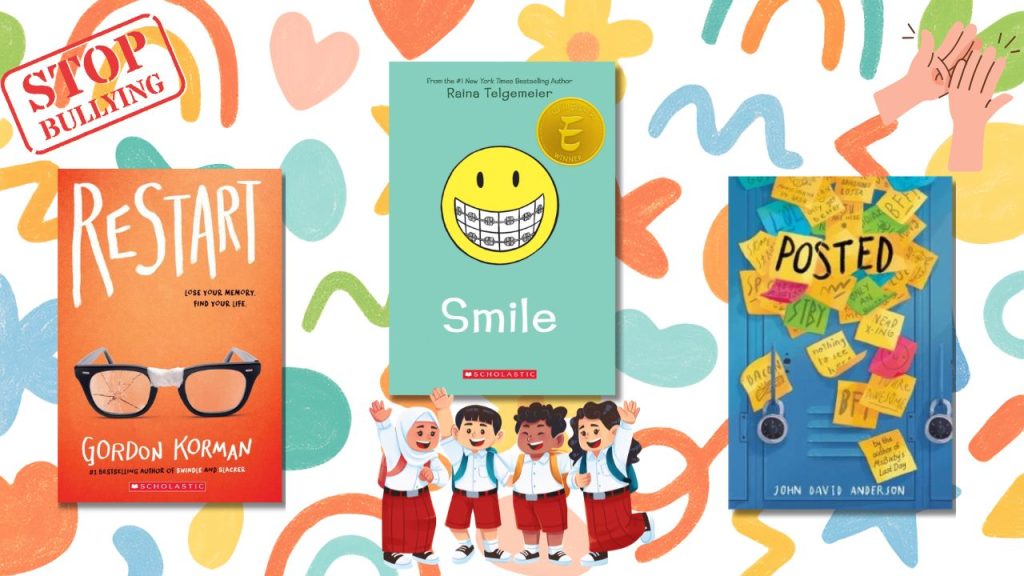
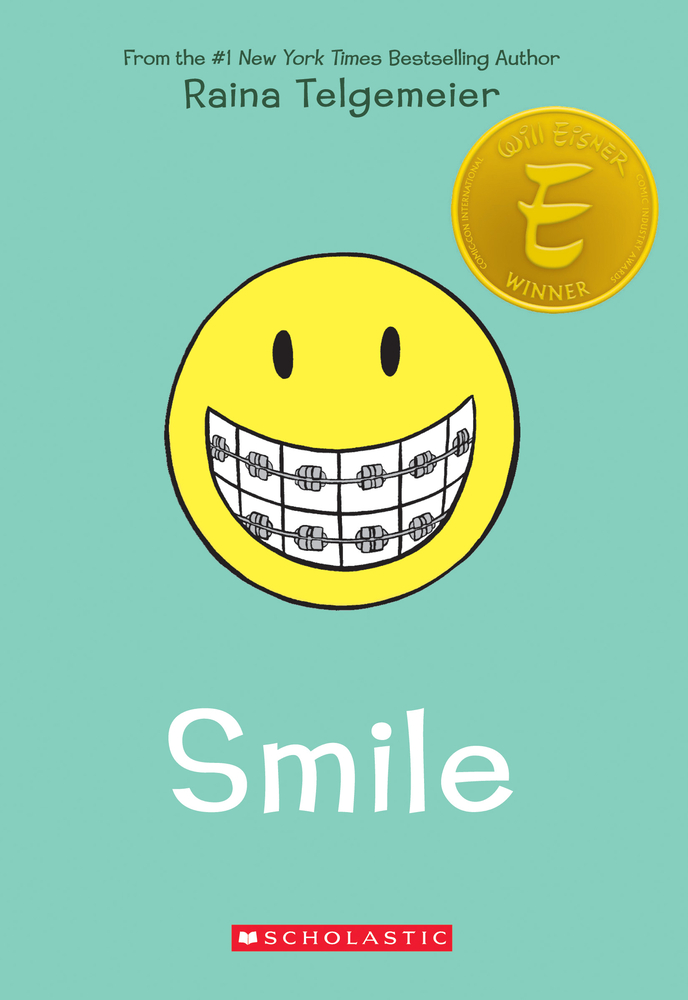
Literacy is also freedom. It’s the freedom to make your own choices in life, and learning how to make those choices begins in childhood. It is the gateway to knowledge and, often, opportunity. Advocating for children’s literacy means advocating for any child to have access to quality and age-appropriate literary resources. For many of us, that looks like hosting a baby shower and asking for books instead of gifts to start the baby’s library, or participating in the local library’s read-alouds and events. In my household I made a deal with my teenage niece to encourage her: she read a book (of her choice) and I’ll watch a movie she really likes. Building this positive relationship with reading in a low-stakes environment has been pivotal in encouraging her literacy skills. She began with graphic novels like Smile by Raina Telgemeier and Evil Spy School the Graphic Novel by Stuart Gibbs, and now we’ve progressed to contemporary middle-grade fiction!
Having role models who genuinely enjoy reading is crucial to developing a love of literature in the home. I was fortunate–my parents did not restrict my reading habits. If I was reading it was a good thing, it didn’t matter what the material was or the time of day. However, not everyone is fortunate enough to have that unfettered bookworm support. The following legedary celebrities have used their fame and influence to advocate for children’s literacy through their own writing or children’s lit-programs (and trust me, they’re all truly iconic!)
Julie Andrews
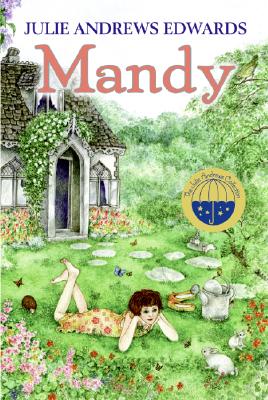
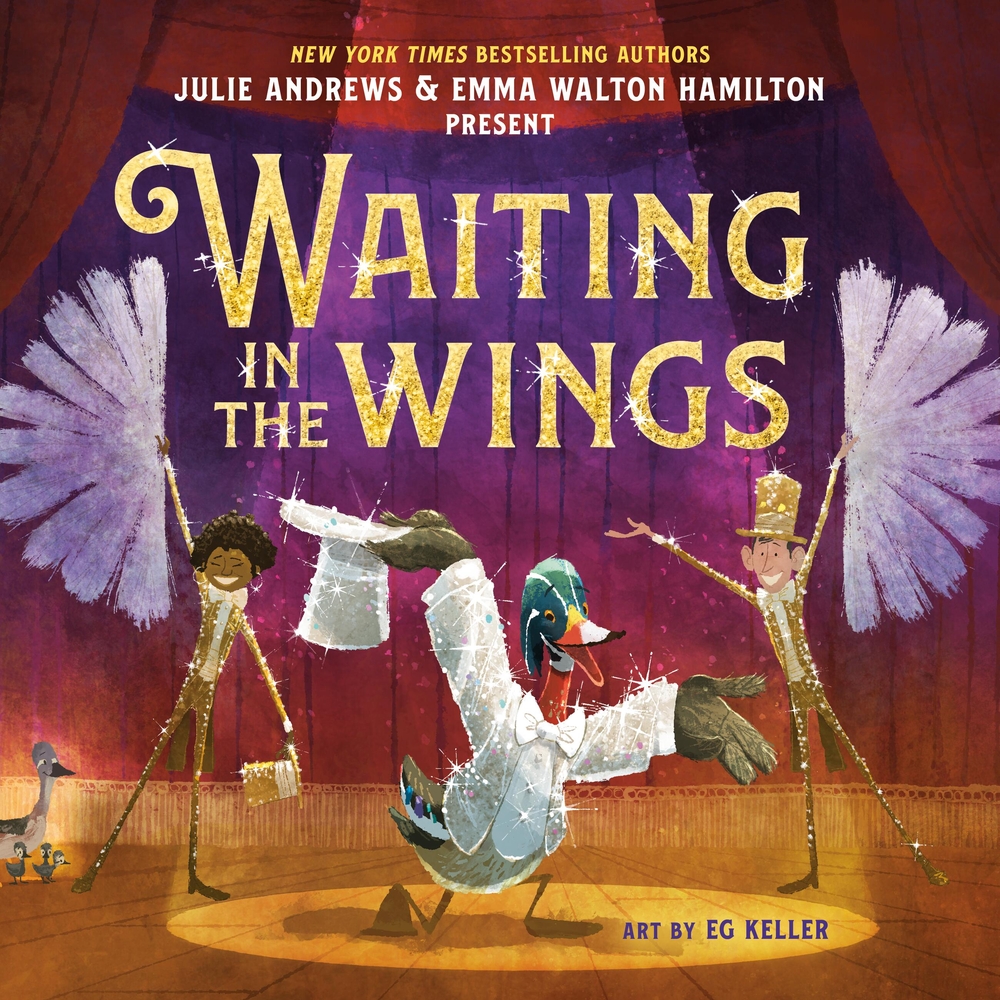
Julie Andrews is a legend, no doubt about it. Her career in literature shines just as brightly as the stage spotlight (if you haven’t seen Mary Poppins or Sound of Music, you need to). Andrews’ father fanned the literary flames of her childhood, which eventually led to the publication of her first book, Mandy, in 1971 with revised editions currently in circulation. Encouraged by her publisher and inspired by her grandson, Andrews, and her daughter, Emma Walton Hamilton, co-wrote their first book, Dumpy the Dump Truck. Together, they have written over 30 children’s books and continue campaigning for children’s literacy. Their latest book, Waiting In the Wings, was published in April 2024 and tells the charming tale of traffic-stopping ducklings who inspire their community.
Andrews and Hamilton felt the shockwaves in children’s literacy when the Pandemic shut down the world. Both women felt the next natural step in continuing their advocacy was to start their podcast, “Julie’s Library”, to read to children (and their families) who may not have had access to books or other literary opportunities during quarantine. This gradual accumulation of children’s literacy content became the Julie Andrews Collection (an imprint at HarperCollins) with the mission to “nurture the imagination and cultivate a sense of wonder.” The Julie Andrews Collection features other notable children’s authors as well.
Andrews’ charitable work goes beyond children’s literacy. She has served as the Goodwill Ambassador for the United Nations Development Fund for Women (UNIFEM) which provides financial and technical support for women, and their children, in developing countries. This role, her impact as a children’s author, and several other acts of charity earned Andrews the title of Dame–bestowed by Queen Elizabeth II for her lifetime achievements in the arts and humanities.
Dolly Parton
Dolly Parton, much like Julie Andrews, is an absolute legend. After her breakout role on The Wagnor Show in 1967, Parton became a country superstar, actor, businesswoman, and philanthropist. Before children’s literacy, women in the country music scene needed Parton’s outspoken activism. With their “strong feminine stances”, Parton, alongside Loretta Lynn and Tammy Wynette, revolutionized how women interacted with the music industry.
Her passion for serving the underserved is integral to Parton’s character. She started her educational non-profit, The Dollywood Foundation, in 1988 to inspire children to achieve educational success. If children graduated from high school, they were rewarded with $500 from the Foundation. This simple, yet effective, incentive led other community organizations to contribute funds in a collective effort to get these children the education they deserve.
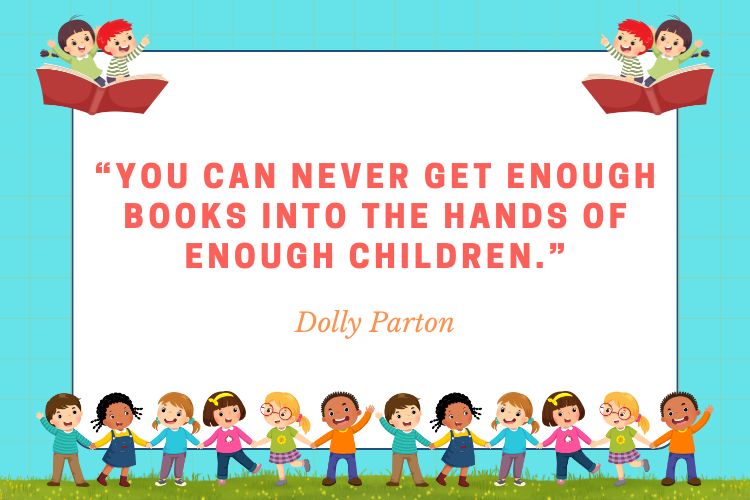
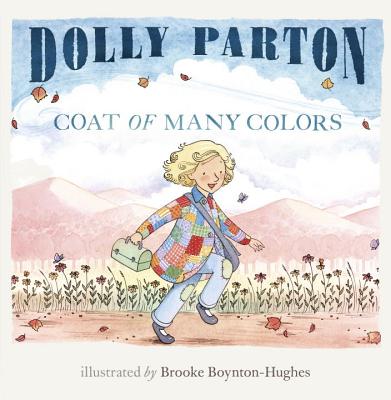
What began as The Dollywood Foundation evolved into Dolly Parton’s Imagination Library, which has helped over three million children worldwide. Parton’s Imagination Library was officially launched in 1995 to benefit the children of her hometown in Eastern Tennessee. The Imagination Library mails children under five high-quality books (for free!) The massive demand for these literary resources launched The Imagination Library into the international stratosphere of philanthropy. Her children’s literacy program reached a milestone in 2022 when the Library mailed their two millionth book. The program also has a range of resources designed to help communities invest in and grow their Imagination Libraries! Parton has also written a handful of children’s stories to fill the Library, including one based on her earlier hits, Coat of Many Colors. Check The Imagination Library’s availability for your area here.
Henry Winkler
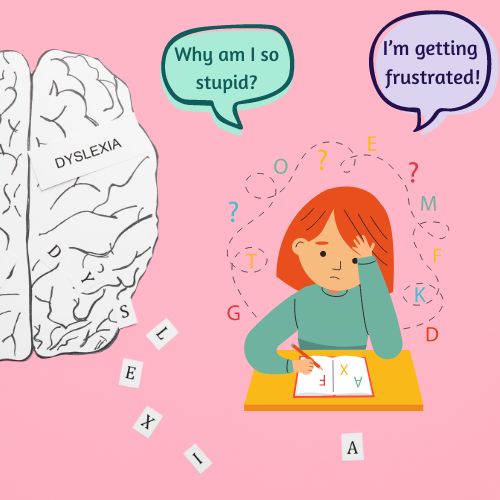
Henry Winkler was officially diagnosed with dyslexia when he was 31 years old, which made his educational experiences difficult for him. Dyslexia is a fairly common learning disorder that affects someone’s language skills–reading, writing, speaking, spelling–all of it. Despite the disorder, Winkler fought through his discomfort to earn a master’s from the Yale School of Drama in 1970. Despite this success, Winkler’s confidence in his intelligence wavered because the effects of dyslexia rippled beyond the classroom. The brain did not recognize the institutional accomplishment and continues to make language processing a hardship for Winkler. Even after completing his degree, TV and movie scripts were, and still are, difficult to memorize.
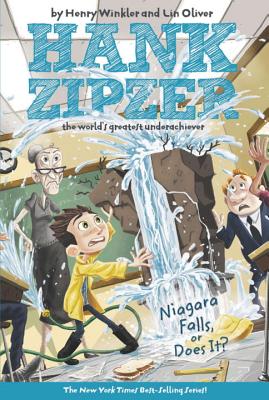
After establishing his legacy as Arthur “Fonzie” Fonzarelli on the ABC sitcom “Happy Days”, Winkler gathered the courage to become a reader after researching dyslexia and how it presents itself in his life. He and his writing partner, Lin Oliver, have written numerous books in a children’s series about a boy named Hank Zipzer with learning challenges. In the beginning, writing a book seemed incomprehensible for Winkler. He struggled so much as a kid he wasn’t sure his character and stories would resonate, but they did. He realized that readers could relate to Hank’s struggles. Winkler and Oliver use their literary expertise and human experiences to help children feel proud of themselves and to celebrate their talents and trials–whatever they may look like!
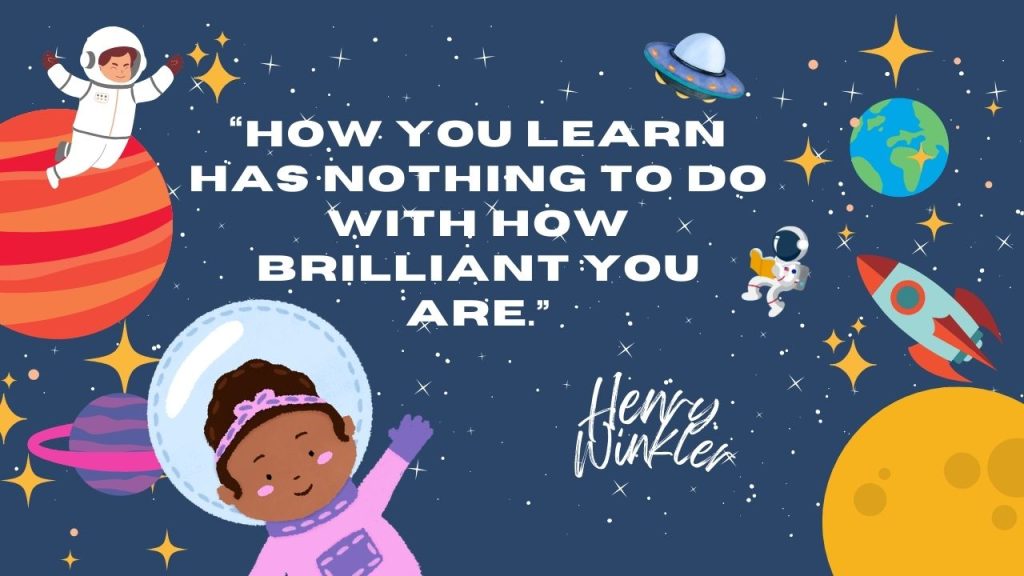
He admits that even then he would use humor to hide his embarrassment with his dyslexia, and often felt he held others back because of it. And yet, Winkler persisted. He persisted through the common excuses and explanations the 1950s and 1960s eras often labeled people with learning disabilities by calling them “slow”, “stupid”, or “lazy” simply because they weren’t understood like they are today. Winkler has lived a life full of extraordinary accomplishments armed with the knowledge of what dyslexia is, and how he can navigate its effects in his life. Now that he has a better grasp of what dyslexia looks like, Winkler tells the struggling kids he meets “How you learn has nothing to do with how brilliant you are.“
These superstars have all recognized the imperative need for access to children’s books and literary resources, and have chosen to use their glowing reputations as cultural icons to promote reading. Whether it’s Andrews and her daughter hosting a podcast episode for children to listen to stories, or Winkler writing his Hank stories so dyslexic children feel their struggles are valid and they aren’t stupid or lazy. Role models like Julie Andrews, Dolly Parton, and Henry Winkler are literary heroes! They publicly discuss why their involvement matters, and they discuss it frequently which is another crucial component to advocacy. The more conversation there is about children and reading, the more children and reading will meld together to forge a society in which illiteracy is not a reason underserved people are denied opportunity.
There are so many other ways to encourage reading – learn how here!
Need more recommendations to inspire your child? Check out these amazing Back to School recs!