







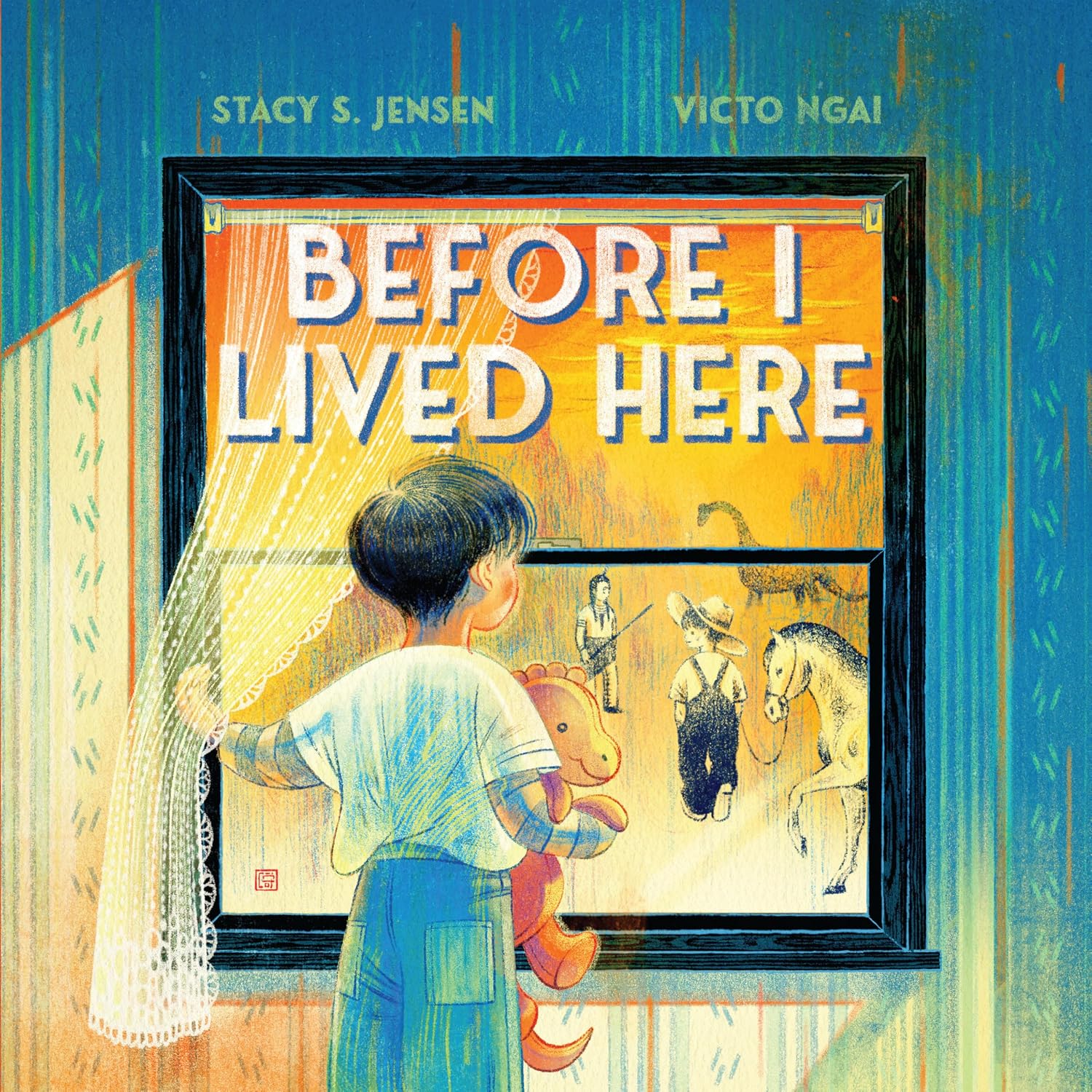
No matter where we live, our hometowns each have a long, rich history that predates us, one we might not even know. Stacy S. Jensen’s picture book debut, Before I Lived Here, aims to encourage children to dig deeper into the history of where they live. Accompanied by Victo Ngai’s gorgeous illustrations, Jensen and her young narrator trace the past of a Colorado Springs neighborhood over centuries, exploring the many people and forces that shaped its evolution. Join us as Stacy walks us through the ideas and process behind the book that’s sure to become your child’s new favorite.
About the Author
Stacy S. Jensen is a former newspaper journalist always searching for unique stories for children, which has led her to historical sites, state and national parks, and everyday spots, like the grocery store. When not writing, she enjoys time with family, reading, and paper quilling. She also volunteers to support literacy, youth, and children’s programs. Previously a Colorado resident, she now lives in Marietta, Georgia, at the base of a mountain with her husband, son, and two Vizslas, who walk their humans daily. Stacy can be found online at stacysjensen.com.
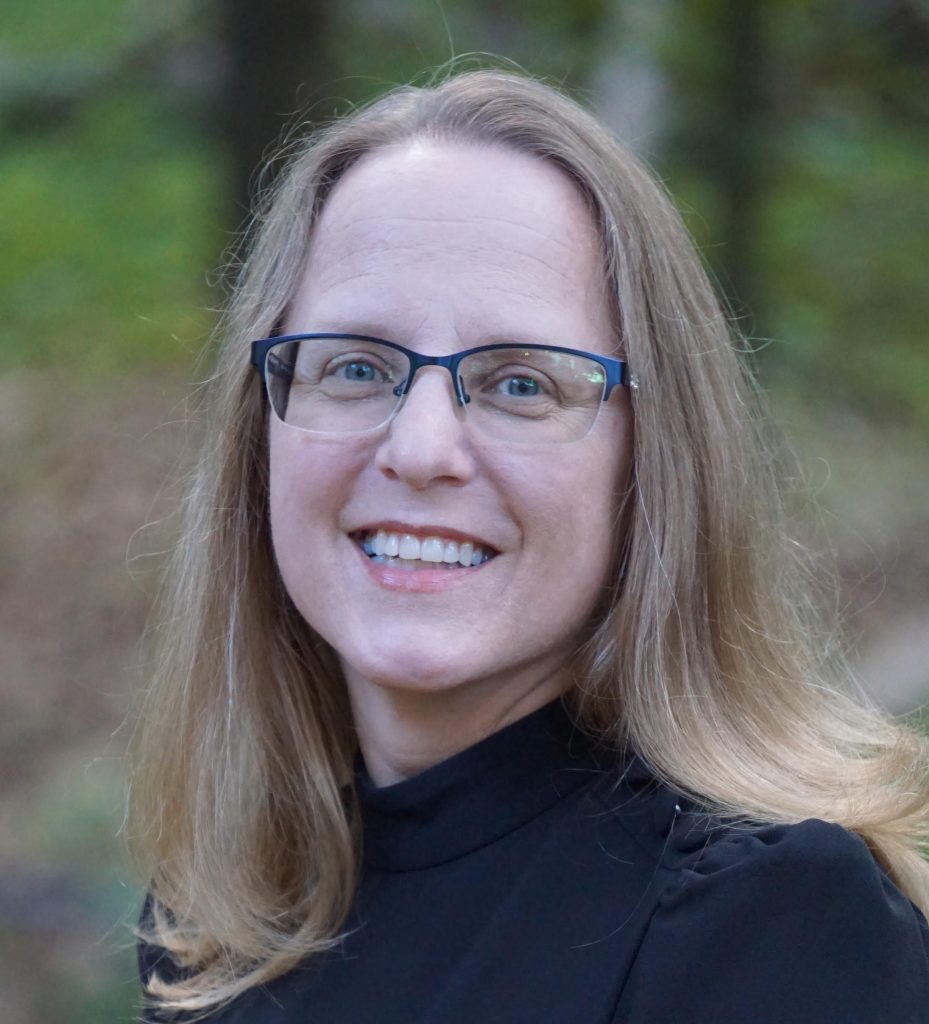
Thanks for joining us, Stacy! Let’s get started.
For those unfamiliar with it, can you briefly tell us what Before I Lived Here is about?
Before I Lived Here is about the history of where you live. I wrote the story about a boy who is in a new house, in a new neighborhood. The mountains have been there for a long, long time. Before the boy’s house, the land was different.
Stacy, first of all, let’s give you flowers for the research portion of this book. The way you are able to guide young readers through complicated parts of history is wildly impressive. Where does the inspiration for this exploration come from?
I’ve always been curious. I channeled that into my journalism career, where I repeatedly asked many who, what, where, when, why, and how questions — on a wide variety of topics that impacted my community and my neighbors. Now, I get to continue asking those questions and seek answers as a picture book author.
Why were you drawn to Colorado for the setting of Before I Lived Here? Was it simply because of your personal history (having lived there) or something deeper?
When we moved to Colorado, we found a house in a growing development. I was fascinated by the history of the community as a cattle ranch before the development. I volunteered and was elected to a position in the community. I read many development documents, which are not very exciting, but the documents told a story about the many steps to create our neighborhood. As a resident, one could see the changes to the landscape in real time, like [how] open fields where antelopes once grazed became cul-de-sacs with new houses, where children learned to ride their bicycles.
We need to talk about the brilliance in the way the setting becomes a character in itself. The boy from the beginning is a frame for the land and the audience to understand your point. What was the collaboration like between you and your illustrator, Victo Ngai, to create this?
Victo Ngai’s illustrations are gorgeous. She added so many touches to the story to make it even more accessible for children. Did you spot all the squirrels in the illustrations? So cute. We’ve never spoken directly but collaborated through our editors. If she needed reference photos or asked about a word in the text, I responded through the editors. Picture books are a collaboration of words and art. It’s the ultimate group project.
How do you balance the weight of the information (such as the displacement of Utes) with the simple medium that is a children’s picture book?
My first draft was very different from the final book. Early versions focused on the people in the immediate neighborhood. With the help of my friend Ana Crespo and other critique partners, it all clicked when I focused on the land and used each page turn as a step back in history. All my early readers loved the concept of discovering the history of where you live. It was important, through the early drafts and the publication process, to be thoughtful about all the information I included in the book.
Why do you believe it’s important for young audiences to see a clear timeline of history laid out in this way?
This format will hopefully hold young readers’ attention and get them excited about history as they turn each page and go back in time. It’s difficult to put a complete history in 32 pages, so I’ve put key moments in time in Before I Lived Here.
Your book is all about the appreciation of what came before. How do you feel about the way literature and other forms of media, including emerging technologies, preserve historical perspectives?
We can learn a lot from history. It’s important for us to know the facts. It’s also important to understand that those writing history are making decisions on what to include and how it’s written. In Before I Lived Here, I studied significant periods of time and made choices on what to include. I hope young readers will like those choices.
What do you hope the next generation of readers can understand about the world that exists in their own backyard after they get their hands on Before I Lived Here?
It’s not just us — right now. Many others came before us, and many more people will follow us. We’re all sharing the same land, and we’re part of that history. While Before I Lived Here is based on my former neighborhood, I hope the book kicks off an exploration of the history of the reader’s own community. You may be surprised by what you discover about where you live.
Thanks again to Stacy for speaking with us! Be sure to follow her on Instagram to keep up with her work, and don’t forget to check out Before I Lived Here!
Click here to read our interview with middle grade fantasy author Lauren Magaziner.
Stop by our Bookshop to find your little bookworm’s new favorite story.