

















This week, Bookstr’s Around the World series takes us to Berlin, Germany, where its rich culture and creative industries, such as museums, galleries, and cultural institutions, encompass the great city. Known for its striking contrasts from historical to modern architecture, Berlin offers a little bit of something for everyone. Even Berlin authors made an impact within the literature realm, and of course, there is always room for new writers to pave the way as well. From past to present and a look toward the future, let’s take a look at some of Berlin’s most renowned authors!
Christa Wolf
Christa Wolf is a German novelist and essayist. She was born on March 18, 1929, in Landsberg an der Warthe, Germany, and died on December 1, 2011, in Berlin, Germany. Wolf studied literature at the University of Jena and the University of Leipzig. She worked for the German Writers’ Union and became an editor for publishing companies such as Verlag Neues Leben and Mitteldeutscher Verlag. During her time there, she came in contact with antifascists and Communists as they returned from exile or imprisonment in concentration camps. Her connections sparked writing that discussed political, economic, and scientific power. In 1949, Wolf joined the Socialist Unity Party of Germany but left in June 1989 before the Communist Regime collapsed.
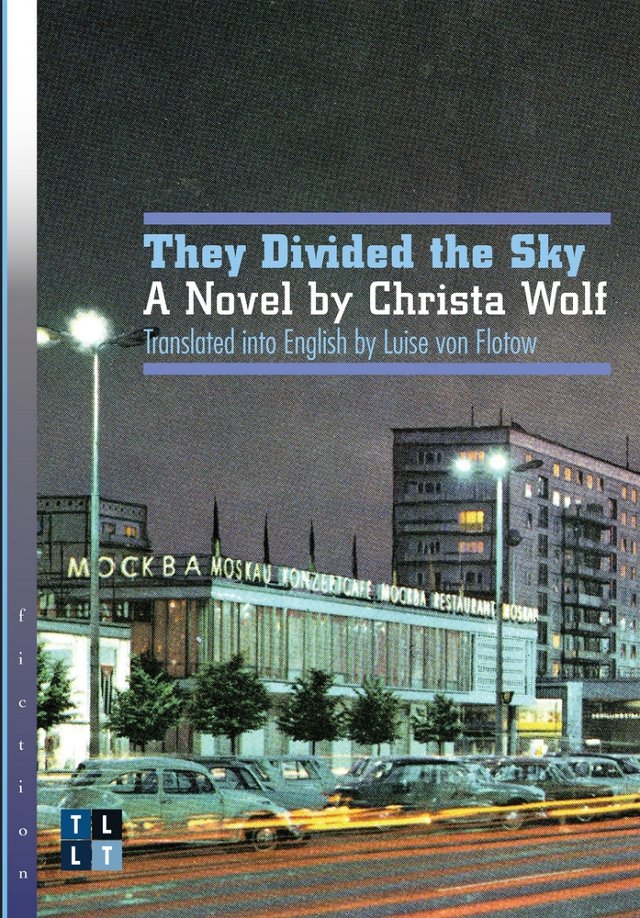
In 1961, she published Moskauer Novelle (Moscow Novella). However, her true breakthrough in her writing came with her book Der Geteilte Himmel (They Divided the Sky), which was published in 1963. It tells of a story about a young couple living in the new, socialist East Germany, where their relationship is tested due to the extreme political positions they gradually develop by the Berlin Wall. The story is set in 1960 and 1961, mapping political tensions between the East Bloc and the West.
Günter Grass
Günter Grass was born on October 16, 1927, in Danzig, Free City of Danzig (which is now considered Gdansk, Poland). He died on April 13, 2015, in Lübeck, Germany. Grass was a German writer who also made a living as a graphic artist and sculptor. His love for the arts allowed him to write quite a few novels using WWII and Nazi crimes as the backdrop. Through his touching and profound words, Grass won the Nobel Prize in Literature in 1999.
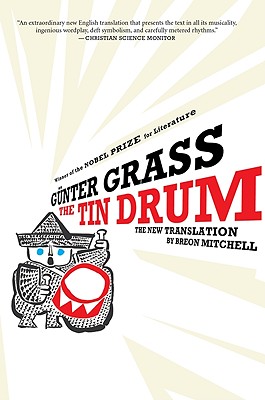
His breakthrough came out of The Tin Drum, a story about a 30-year-old Oskar Matzerath, who has lived through the long Nazi nightmare and is being held in a mental institution. The Tin Drum provides a comedic perspective on both German history and the human condition. It was adapted into a movie in 1979, directed by Volker Schlöndorff. The city Danzig/Gdansk and its alternating German and Polish affiliation serve as the background in several of his writings. A unique characteristic about Grass is that he has the ability to mix autobiographical and historical elements with fictional events that form an ironic social satire.
Charlotte Gneuß
Charlotte Gneuß was born in Ludwigsburg in 1992 and studied social work in Dresden, literary writing in Leipzig, and scenic writing in Berlin. She publishes in literary magazines, is a guest author for ZEIT Online, and has published four books. In her writing, Gneuß approaches the GDR, the reality and the utopia in which her parents grew up and which no longer exists today.

Her most popular book is Gittersee, which was her debut novel. A story about 16-year-old Karin, who is torn from her daily life as a teenager without warning when she wakes up in a world where both truth and lies can be equally decreed by the state. Gittersee can be translated into the phrase “grid lake,” which can be interpreted as a metaphor for the oppressive, controlled nature of life under the GDR. The novel explores themes of surveillance, loyalty, personal responsibility, and the struggle to maintain one’s identity under a repressive government. Gittersee was awarded the Jurgen Ponto Foundation Literature Prize and the Aspekte Literature Prize.
The history of Berlin holds so many complex emotions due to the past events. While Berlin is rich in its culture, it does not shy away from the problems it has faced. The themes of struggle, understanding one’s identity, and overcoming oppressive government can be seen throughout the different writers’ topics. Even though years may separate them, each writer felt a connection to the things they or their family members faced.
That’s all we have for this week’s Around the World With Bookstr! Don’t forget to check out these wonderful authors and get a taste of the Berlin culture, both the beauty and the challenges faced.
Want to dive into more global reads? Click here!
Click here to browse more classics on Bookstr’s Bookshop page!
