

















John Green’s Looking For Alaska is a heartbreaking novel exploring heavy themes laced into complex characters and the lives they create with one another. Green is an expert at telling stories of loss and capturing the sharp, bittersweet nature of nostalgia, and in Looking For Alaska he takes these feelings a few layers deeper as he invites readers on the devastating journey of Miles Halter, Chip “The Colonel” Martin, and of course, the titular Alaska Young. If you’ve not yet read Looking For Alaska: first, I strongly recommend it, and second, this article is completely full of spoilers.
Meaning and Coincidence
Miles has an obsession with learning people’s last words, and has memorized those of many famous figures as something of a trivia project. One of his favorites, and the reason for his desire to go to boarding school, was François Rabelais’ final utterance, “I go to seek a Great Perhaps.” Miles does not know what his “Great Perhaps” will be or in what form it will come, but he knows that he is looking for something. It comes to him in the form of an unpredictable, moody girl named Alaska.

When Alaska peels off into the night after an evening of pranks and revelry and leaves her friends behind, she meets her fate “straight and fast.” Miles pores over these words when he finds them written in response to the question “How will I ever get out of this Labyrinth!” in a book he finds in Alaska’s room. He remembers the police reporting that Alaska hit the police car head-on without ever swerving, and begins to wonder if her death was intentional or accidental. As he begins to investigate her death, it dawns on him that he knows the last words of so many people who are unimportant to him except for a line of trivia, but he will never know the words of the girl who changed his life.
Obsession, Love, and Friendship
As Miles navigates his new life at Culver Creek boarding school, he is thrust into a complex world of social relationships and forced proximity. While he relishes some of this closeness, the realities of boarding school force him into countless situations with people he probably never would have spent much time with otherwise, and it illuminates much about his own character, as well as those of the people around him.
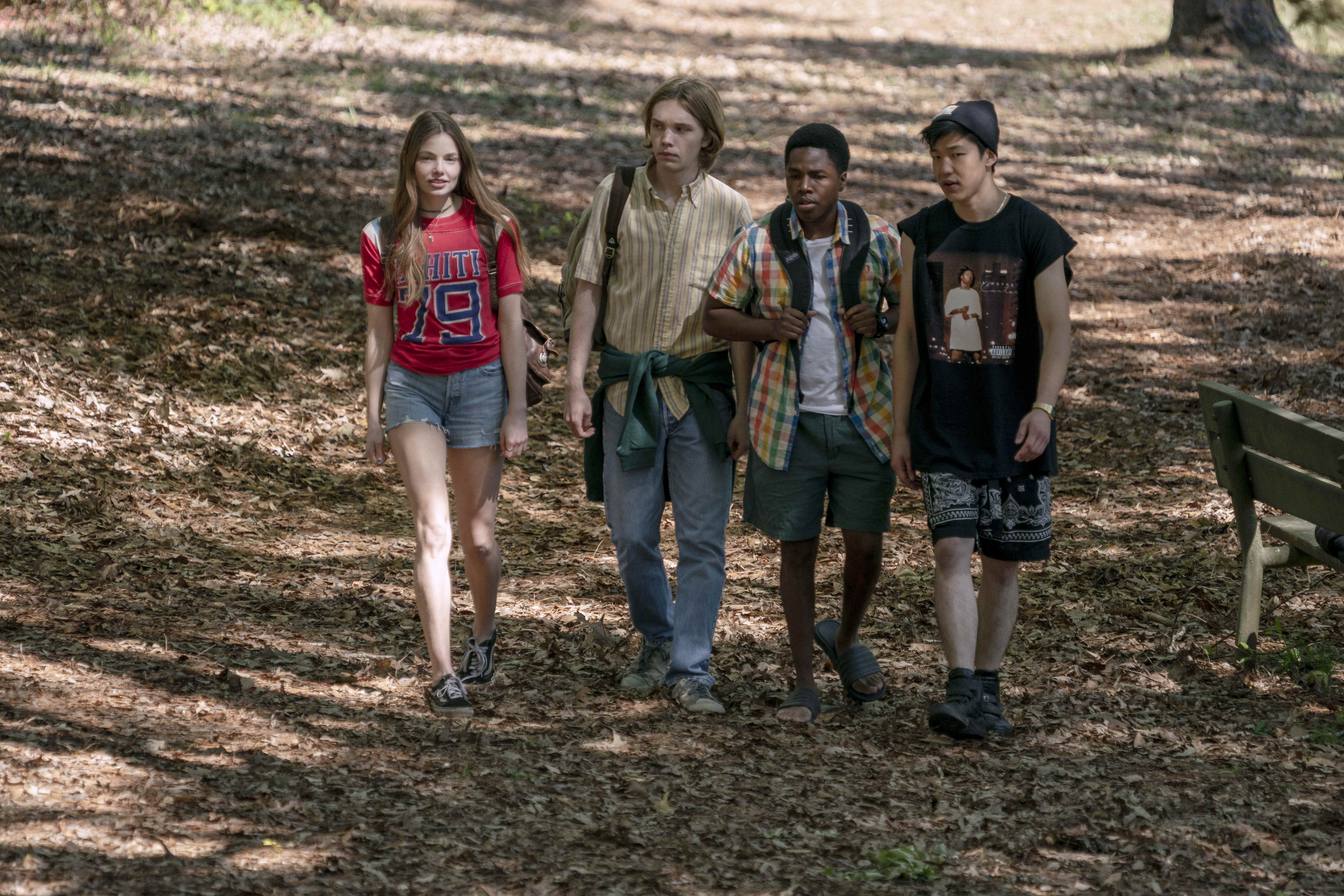
His roommate and soon-to-be best friend, The Colonel, is many things that Miles is not, and despite (or perhaps because of) their differences, it is not too long before they take a liking to one another and form a deep bond. While The Colonel is boisterous and headstrong, Miles is observant and timid. The two form a balanced pair as they navigate adolescence and form deeper relationships with their friend group. Particularly important in their friendships with one another is each of their relationships with Alaska.
Alaska is even more different from Miles than The Colonel is. She is fiery, mischievous, confident, and guarded, and during her friendship-with-hints-of-something-more with Miles, he begins to idolize her and her very existence. His admiration for Alaska begins to prevent him from seeing her as a regular person just like himself, and his perception of her begins to blur between his genuine feelings of love and connection and the worship of an idealized fantasy.

It is not until after her death that he begins to reconsider his relationship with Alaska, and the way that his image of her was skewed by his desire. Relationships are inevitably complicated by loss, and though as Miles begins on his journey with The Colonel to discover what truly happened to her — a journey that will take them to her hometown, into her bedroom and through her bookshelves — he begins to understand some of her pain and complexity, he (and the Colonel) have a difficult time reconciling their memories of her, what they learn about her, and the reality of the situation.
In an interesting moment, The Colonel — who, mind you, had known Alaska far longer than Miles — admits that he was already having a hard time remembering what she looked like. Even for The Colonel, who was not in love with Alaska (at least not in the same way as Miles was), it was more difficult to remember Alaska as a person of flesh and blood than it was to remember her larger-than-life personality and the force of her nature.
Forgiveness
In the end, Miles and The Colonel must forgive themselves, each other, and ultimately (and perhaps surprisingly) Alaska. They held onto much anger and confusion in addition to their grief and guilt surrounding the night of her death. They are angry with her for the way she loved to be a mystery, for not sharing her sadness with them and for driving off into the night, and for not being careful enough with herself and making the choices that caused them to lose her.
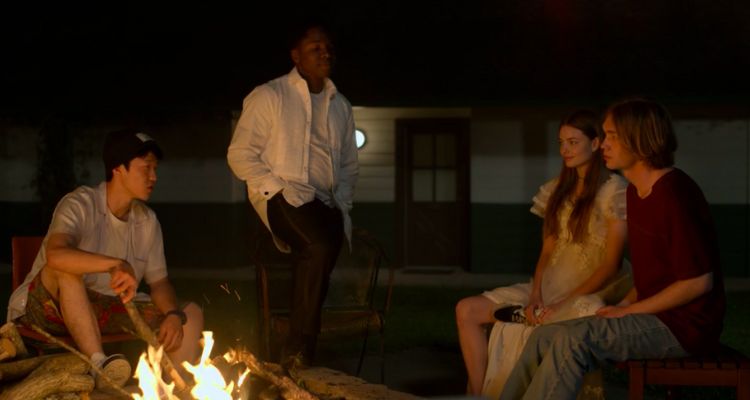
They are also deeply angry with themselves for the role they played in her death. For allowing her to sneak away and get behind the wheel when they had all been drinking, for not trying harder to understand her, for allowing her to be a larger-than-life figure in their worlds and forgetting that she could feel the same emotions they could.
In a poignant and telling line by Miles he muses: “You can’t just make me different, and then leave. Because I was fine before, Alaska. I was just fine with me and last words and school friends, and you can’t just make me different and then die.” And, unfortunately for Miles and for readers, she did. But while this line shares the truth of his anger and frustration at Alaska for “leaving,” he realizes after investigating her death that she gave him his Great Perhaps.
Beneath the more obvious themes of grief, loss, and the coming-of-age that is inevitable in high school (though we could discuss those at length as well) Looking For Alaska approaches these themes in a highly specific way that leaves readers asking the same questions as Miles. And, in case you were wondering, Green refuses to answer whether Alaska’s “straight and fast” demise was intentional or accidental, stating that once the book was written, he gave it to the readers to decide. Frustrating, yes.
Craving more Looking For Alaska? Click here to see some of the book’s most memorable quotes!
Click here to check out more of the Bookstr team’s favorite reads!