












In this segment of Bookstr’s Around the World series, we head to Argentina, a South American country. It has great architecture, remnants of the past, and a language and accent similar to Spain’s. With a deep visible history, there is also an extensive fondness for a specific type of literature. From what I’ve gathered, Argentina is rich with themes of identity and philosophical writing. When I say mind-bending, these next entries will make your brain work ten times to create a clear image from the written word. The mind is an infinite void of imagination and pensive queries these authors magnificently detailed on the page. With no time to waste, let’s dive into these must-reads from Argentina!
Ficciones by Jorge Luis Borges
Starting strong, we have the famous Jorge Luis Borges, born in Buenos Aires, the capital of Argentina. If you haven’t read his works, regardless, you’ll recognize his name as an influential 20th-century writer. He wrote a collection of short stories Historia universal de la infamia (A Universal History of Infamy), in 1935. But it’s his next work that cemented him as a well-known author. Before, Borges was left in an uninspiring state, working nine long years in a major post at a Buenos Aires library. This changed after almost dying from a head injury and blood poisoning that left him deprived of his speech and scared for his sanity. This experience drove Borges to write many fantastical short stories collected in Ficciones.
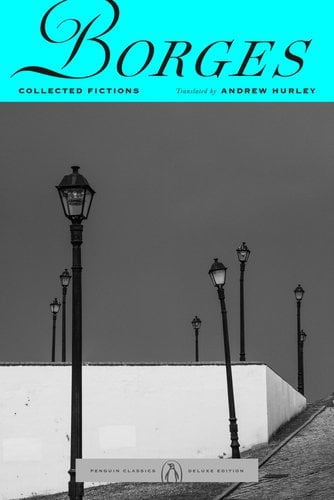
Borges’ imagination for this short story collection came from his birth home, filled with a library and an impressive garden. There came his obsession with labyrinths, his writing structure transporting readers into getting lost in his worlds filled with creative spirit. In Fiction, Borges writes a little of everything in his short stories. From his signature labyrinths, epic duels, and exploring identity itself, this author lets his imagination run wild, earning him praise as:
‘The greatest Spanish-language writer of our century,’ collected in a single volume, ‘An event, and cause for celebration.’
–The New York Times
Borges is most recognized from the short story The Garden of Forking Paths, which is included in Fictions.
Mis dos mundos by Sergio Chejfec
Staying in Buenos Aires, next, we have author Sergio Chejfec. He was only 65 when he died in 2022, but left the world his numerous short stories, essays, and poetry collections. He lived in New York City and held the position of Distinguished Writer in Residence in the M.F.A. Creative Writing program in Spanish at New York University. He has often been compared to another revered Argentinian author, Juan Jose Saer, who wrote on self-exaltation. With such praise, My Two Worlds should be a delightful treat.
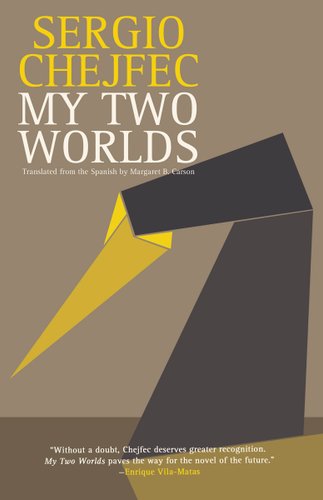
Chejfec’s writing style included a lot of self-reflection, a strong trait of someone willing to fix their faults when recognizing them. Focusing less on the plot, get ready to join a man reminiscing over his long life in a park. The man’s memory comes to life, like a stage play, using the people and habitat of the park as the stars. Chejfec’s take on life’s experiences will make you look back at your own, no matter how long you’ve lived on this Earth.
Distancia de rescate by Samanta Schweblin
Continuing with Buenos Aires, author Samantha Schweblin lives in Berlin, Germany. She has been writing since 2002 with her first book, El núcleo del Disturbio (The Nucleus of Disturbances), and won the Casa de las Americas award for her short-story collection Mouthful of Birds. It’s her first novel that put her in the mainstream media and was turned into a Netflix movie in 2021. Just by Netflix’s promotional image, Fever Dream will be an excitably good time.
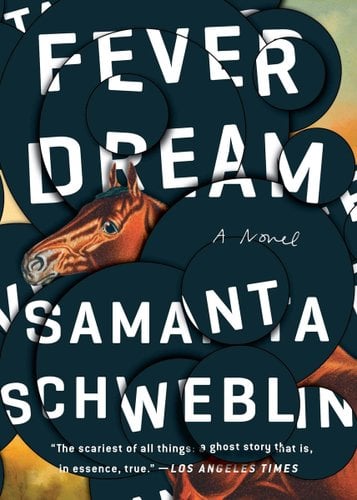
Schweblin creates a relationship thicker than blood. With Fever Dream’s dark undertones, Schweblin turns a found family trope into something sinister, with no one knowing what could happen. Amanda is a sickly woman who knows her days are numbered. No one but a boy named David comes to visit her. They don’t know each other, but it’s their desire for a family that forces them as mother and child. But is there more to it than people making a family together? Based on the title, something sinister mixes reality with make-believe that neither character is willing to distinguish unless their wish of close bonds were to break.
El túnel by Ernesto Sábato
Traveling to Rojas, a small town in the upper northern part of Argentina, is where Ernesto Sabato originated. Known for his concern for psychological and philosophical issues that mirror his novels and essays, Sábato is also an influential figure of the latter half of the 20th century. He started as a physicist and a mathematician before writing an article on his opposition to the Juan Perón government and was removed from his teaching position in 1945. Uno y el universo (One and the Universe) was Sábato’s first literary philosophical accomplishment as a writer, later writing one of his most well-known novels El túnel.
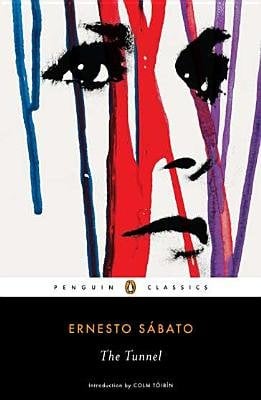
From the instant success of The Tunnel’s English translation, writers Albert Camus and Thomas Mann commended Sábato for the book’s theme of existentialism. If you want to feel the shivers of early Halloween by immersing yourself in the mind of an obsessive painter, then this is for you. Juan Pablo Castel was a painter before being locked in jail for murdering a woman named María Iribarne. It’s not a spoiler to say that she was the object of Juan’s obsessive love, longing to since he first saw her admiring his work. The book is Juan’s mental journey recounting his relationship with her and if what they had was real.
En estado de memoria by Tununa Mercado
Lastly, in the city of Cordoba, filled with Spanish architecture and found in the middle of Argentina, Tununa Mercado knows about living in many places. From the National University of Cordoba, where she studied literature, she moved to Buenos Aires with her husband and finished her degree. Mercado wrote a book of short stories called Celebrar a la mujer como una pascua (Celebrate Women Like Easter) for a competition, receiving only a mention. Then she and her family moved to France for her husband’s job, finding work as a teacher, and lastly, moving to Mexico, where her family was forced to stay due to Mexico’s Triple A’s anti-communist parapolice terrorist organization. Mercado was an editor for a magazine called Fem, which is one of the first Latin American feminist magazines. It’s safe to say that her record of traveling translated into In a State of Memory.
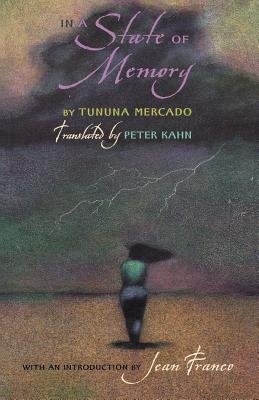
The toll it takes on the mind to make a home away from home is taxing and delicately shows in this fictional narrative. With the story’s narrator traveling from place to place in exile, she slowly loses her identity. With borrowed clothes and borrowed furniture, the narrator experiences life from a distance, wanting to live her life back at home. From France to Mexico to Buenos Aires, Mercado takes her real-life experiences onto paper, relating to how people feel displaced after so long that their original home feels different with such care.
Besides its beautiful lands brimming with life different from the States, Argentina embraces philosophical narratives, putting its thoughts into the written word. From analyzing the mind of an obsessive painter to unloosing the dark relationship between a found family, these authors go all in. If you’re interested in an intense dive into humanity’s faults or self-reflection, this is just a small list of what Argentina has to offer.
Want to explore another part of the literary world? Check out Around the World with Bookstr: Sensational Spanish Novels!
For Latinx recommendations, click on Hispanic/Latinx Recommendations: Bedtime Stories, Poetry, and Novels on Bookshop.org!