













Trigger Warning: The mention of violence, specifically violence against women, and online misogyny may be triggering for some readers. Please exercise personal care when reading.
There are few shows that are flawless. Many are good, some are great, but hardly any come close to perfection. Even fewer can articulate and reflect the reality, urgency, and cruciality of the topics they dissect. Netflix’s Adolescence is one of these rarities.
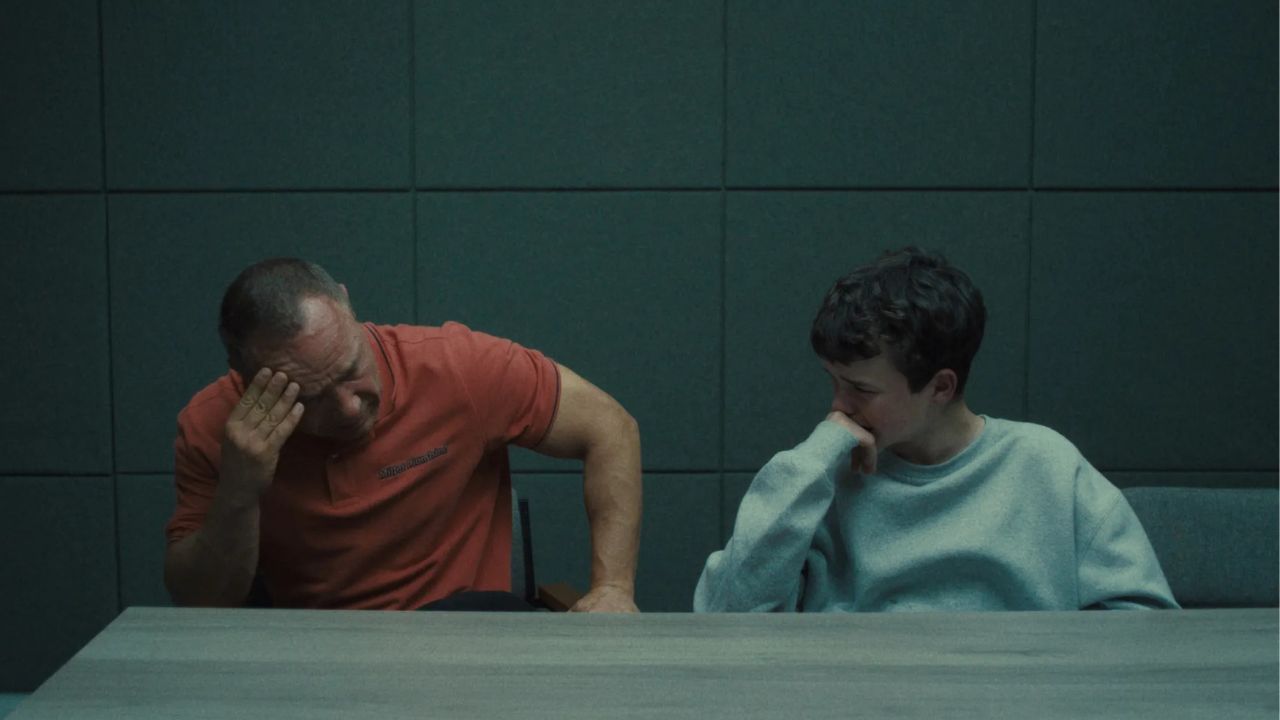
The new crime drama premiered on March 13th and garnered a whopping 24.3 million streams within four days. Adolescence, brought to viewers from the minds of Stephen Graham and Jack Thorne, follows the immediate aftermath of the arrest of a thirteen-year-old boy, Jamie Miller, who is accused of murdering his classmate, Katie. The series unfolds in four one-hour episodes: Jamie’s arrest and the following police procedural, a glimpse inside an overwhelmed and struggling British school system and the cultural distance between generations, an exploration of male rage and the poisonous effects of online misogyny on the younger generation, and the devastated Miller family grappling to understand where things went wrong.
This gut punch of a series is receiving outstanding reviews for its unflinching exposé into the cultivation of violence and misogyny in the young male generation through online “manosphere” rhetoric. Misogynistic content creators, such as the infamous Andrew Tate, litter the subtext of Adolescence. This show is too sophisticated to focus solely on Jamie’s crime. It examines the cultural kiln that forges boys like Jamie and refuses to let the audience turn away from the epidemic at hand.
Powerful and Immersive One-Shot Filming Style
Each episode of Adolescence is filmed in a single hour-long, one-shot take. For reference, most television episodes are at least 400 shots. Once you start an episode, you’re trapped in the Miller family’s reality following the sequence of events so closely that it’s as if you’re in lockstep with the actors. The filming style creates a visceral and unnervingly close connection with the story unfolding. However, it never draws attention to itself. Besides the tightening of your chest, the one-shot style feels natural. If it wasn’t there, the effect of the story wouldn’t be nearly as all-encompassing.
_n_S1_E1_00_13_01_10.jpg)
Filming in one continuous shot is no small feat. It requires an enormous amount of dedication and a level of perfectionism from the crew and cast, with the entirety of the take relying on their flawless execution. This creates an innate tension palpable on the screen. For other projects, this stress could be destructive, but in Adolescence, this tension strengthens the tone of the show and, ultimately, aids in the urgency of its message.
Sensational and Haunting Cast Performances
Adolescence has staggering performances. The most notable is break-out star Owen Cooper, who plays Jamie. This is Cooper’s first acting role and he knocks it out of the park. His seamless drifting from a sweet and cheeky thirteen-year-old to a rageful misogynist is frightening and masterful. Cooper’s shining moment comes in the third episode, where he has a one-on-one session with psychologist Briony Ariston, played by Erin Doherty. Doherty commented on Cooper’s immense talent in a recent interview with Netflix. Rewatching a clip from their episode, Doherty says to Cooper:
“I still feel really sorry for you. It takes a craftsman to really kind of toe the line of anger and vulnerability. The fact that you were able to feed those things in without making him a monster in any way is really impressive. And necessary in order for us as an audience to care about you.”
— Erin Doherty, (One) Shot By Shot, Netflix

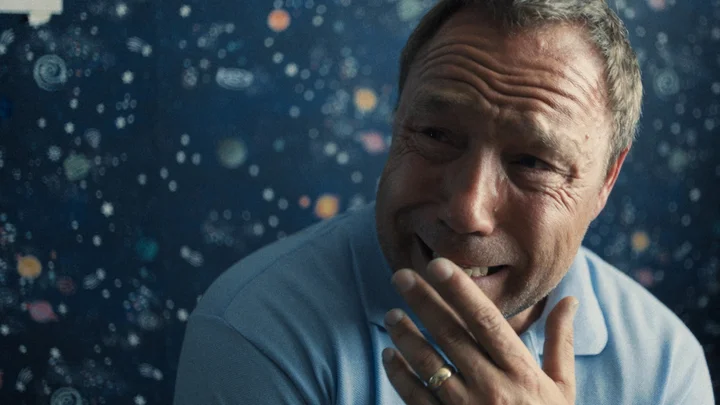
Stephen Graham’s performance as Eddie Miller, Jamie’s father, is haunting and astounding. Graham’s raw representation of a father racked by grief, guilt, and confusion is enough to leave anyone in tears and certainly enough to ignite anxiety in any parents watching. The fourth episode focuses on the fractured Miller family clinging to what normalcy and humor they can whilst constantly living in the shadow of Jamie’s crime. After Jamie calls his father, thirteen months after his arrest, and tells him he will be changing his plea to guilty, whatever charade they were able to maintain over Jamie’s innocence is completely broken.
Christine Tremarco — who plays Jamie’s mother Manda Miller — and Graham’s chemistry command the screen in the final minutes of the show. Despite the heartwrenching, and at times painful, dissection of their parenting, Graham and Tremarco give a performance you cannot turn away from.
Startling and Poignant Cultural Commentary
This is not a whodunnit. There are no false accusations or legal errors. There are no abusive or emotionally withdrawn parents. The viewers have indisputable proof of Jamie’s guilt by the close of the first episode when he, as well as his father and his lawyer, are shown a CCTV recording of his attack. The potential for the familiar plot of a miscarriage of justice is squashed and the family, the police force, the community at large, and the viewers are left with only one question: why? Why did this boy, hardly a teenager, violently extinguish the life of a young girl whom he hardly knew? Why did he believe he had the right, and how was that privilege reinforced by the world around him?
These are the initial questions that led to the conception of Adolescence. After noticing a rise in male knife violence against young girls, Graham and Thorne took a deep dive into youth culture. They found themselves swimming in a sea of toxic masculinity, the “manosphere,” and a social media landscape, aimed at young boys, preaching hate and an imagined need for retribution against women.

These topics are introduced towards the end of the second episode, when lead investigators go to Jamie’s school to try to understand what motivated him to commit this heinous crime. The genius of the show shines through in the revelation of Jamie’s connection to “incel” culture, which comes from the lead detective’s son. While searching for a motive, the detectives mistook comments Katie made on Jamie’s Instagram posts of scantily clad women as a sign of friendship or romance. Lacking an understanding of social media and youth culture, the detectives could not decipher the comments for what they were: Katie accusing Jamie of being an incel, a member of the manosphere, a believer of the 80/20 rule (80% of women are attracted to 20% of men).

The influence of social media on the younger generation is put under a microscope in the third episode. Jamie and Briony get into an intensive interview covering his views on masculinity, romance, and sex, as well as his self-perception. Finally, Jamie is cracked open, and he is not merely painted as a psychotic boy that we can excuse as an outlier. We are confronted with a performance that garners sympathy, disgust, helplessness, and anxiety from the viewer. He is a criminal, he has done something unforgivable, but he has also been poisoned. Mutated by his online life, he is flooded with angry men explaining the “proper” pecking order between men and women and what to do when women fail to understand their place. Thorne commented on the type of logic he saw weaponized in his research:
“The disturbing sort of thing I found was that I understood the attraction of it, and I could particularly put myself in Jamie’s shoes. I could go to a place where, if I heard 80% of women are attracted to 20% of men, that this world is female-centered and that these women need to be manipulated. […] I was shocked that I would understand that and that the logic was as compelling as it was.”
— Jack Thorne, NBC News
:max_bytes(150000):strip_icc()/adolesence-Owen-Cooper-Stephen-Graham-031325-e6f63910cace4dbb9fcffd015ed100cb.jpg)
Making a television series that exposes the darkness of the manosphere and incel subcultures so masterfully is a success in its own right. What takes Adolescence to another level is the revelation that this kind of thinking can manipulate and infect any teenage boy under the right circumstances. Even one from a nice, loving family like Jamie. According to Thorne, the question then becomes:
“How do we help these kids? How do we help these boys? How do we stop boys harming girls? Those conversations, it takes all of us to have them. And maybe this show asks the question, and maybe then everyone can take these questions and try and find a collective answer.”
— Jack Thorne, NBC News
With the show’s creators, teachers, and viewers already pushing for Adolescence to be used as an educational tool in schools, this series is more than just superbly well-made and acted. It felt and held the pulse of a culture that is becoming increasingly unsafe for women and made parents ask themselves haunting questions: who else parents your children? Who do they become when you aren’t watching? When they go into their room at night, what will they see on their social media? How does it affect them and how can we protect them? Graham and Thorne have some of the answers, but not all of them. Educate yourself, educate your children, and be vigilant.
Looking for another thought-provoking and eerie crime drama? Click here.
Wanting to learn more about womanhood? Browse our Bookshop here.