















Trigger Warning: This article contains references to racism, graphic racial violence, and the genocide of American Indians and Alaska Natives. Please exercise personal care while reading.
Note: This article defers to the Bureau of Indian Affairs (now reclaimed and operated by largely Indigenous staff) for correct terminology for referring to Indigenous groups. Whenever possible, specific nation names will be used. However, when referring to the community holistically, the preferred terms American Indian and Alaska Native will be used — the stand-alone terms Native and Indigenous may also be utilized, as needed.
Feather headdresses, war whoops, buckskin dresses, red and black warrior paint — these are some of the stereotypes the American Indian has taken on in Western media. For decades, Native actors were shoved to background roles, acting as little more than set dressing and disposable bodies, while White actors in redface spoke for them. Yet, surprisingly, this wasn’t how they were originally represented in film.
So, what happened to the American Indian on screen? Follow us as we trace their history all the way from the silent era to modern day.
Silent Films With Loud Opinions (1890-1940)
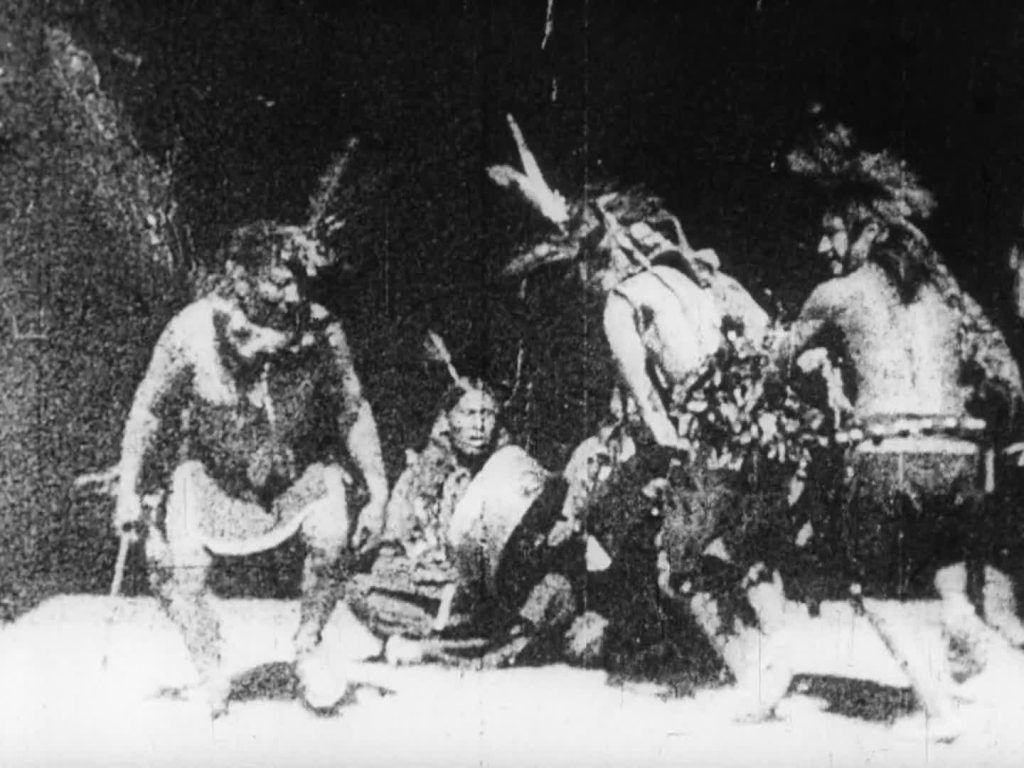
The first time Native people were presented on camera was in 1894, when famed inventor Thomas Edison used his Kinetoscope to film a Lakota ghost dance. In these early days of moving pictures, Indigenous nations were common subjects due to the general public’s fascination with their cultures. The American government’s genocide of American Indians and Alaska Natives had dwindled their total population to under 240,000 by the year 1900. This, coupled with the forced removal of Native people to Indian Reservations, created a narrative of Indigenous people as mythological figures who belonged to a distant past. Early film clips, like those of Edison, were sought after for their authentic feel.
Fictional movies were not as accurate. In 1914, the silent movie The Battle at Elderbush Gulch was one of the earliest depictions of the “savage Native” trope. White actors in redface portrayed vicious American Indians who attack a family of White settlers. This sensationalized revisionist history of the American West was a popular way for filmmakers to guarantee cheap thrills for their audience. It was, of course, grossly inaccurate.
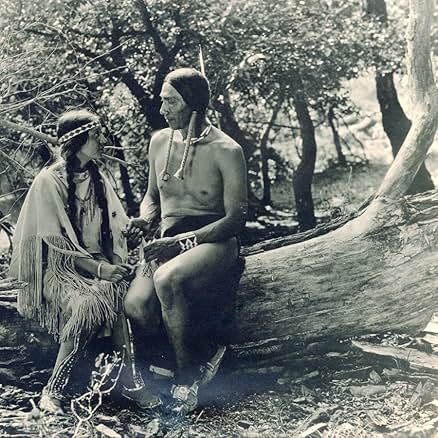
This cynicism didn’t stop Native performers from fighting to portray their experiences with grace. The Daughter of Dawn, a 1920 previously lost silent film, was one of the first productions to feature an all-Native cast. Incredibly subversive for its time, The Daughter of Dawn used Kiowa and Comanche artifacts and consultants in order to accurately represent the culture of Native nations, specifically those located within the Plains territories. This conscious approach to representation was echoed in some other movies of the time, including 1939’s The Silent Enemy, which was part documentary, part fictional story, and also featured an abundance of Native actors.
However, these attempts were nowhere near as successful as the damaging films that would be released over the next thirty years.
Cementing a Legacy of Derogatory Tropes (1930-1970)
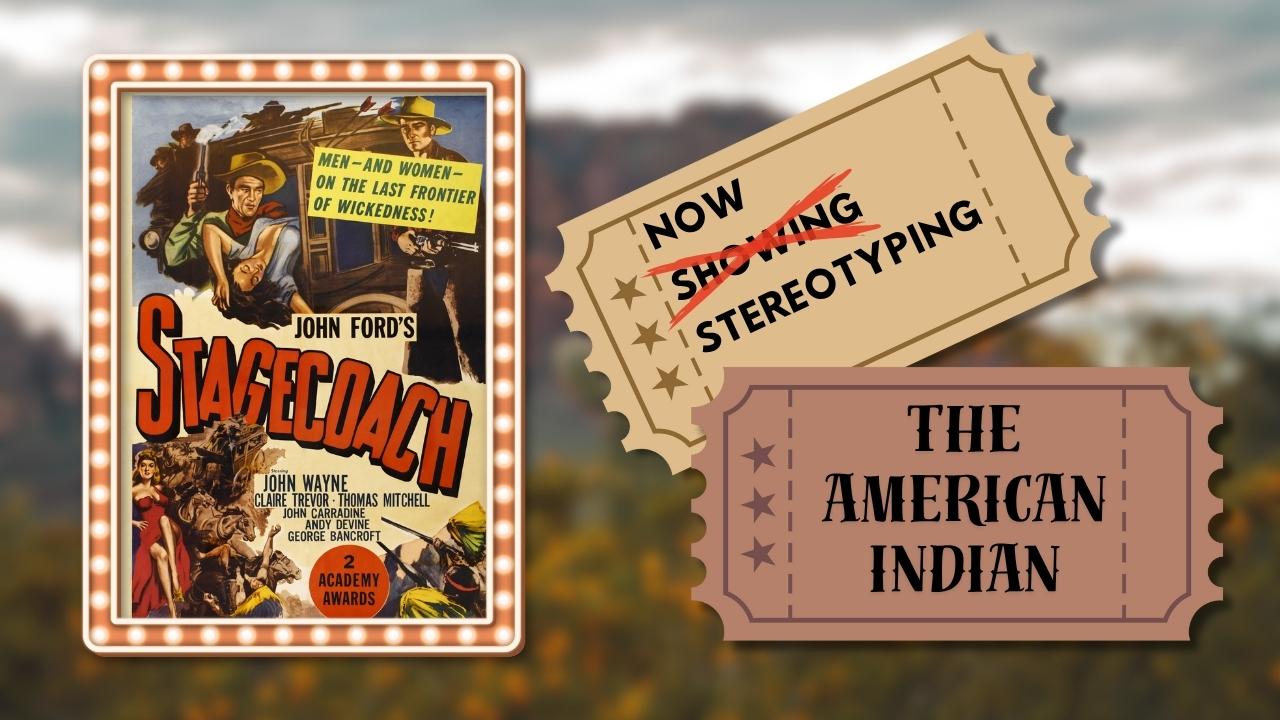
While the “Cowboys vs. Indians” motif already existed in the silent era, the classic American Western as we know it was changed forever by John Ford’s 1939 movie, Stagecoach. In this film, the Apache people are presented as undeniably villainous and cruel “others” that the heroes (namely, John Wayne) need to eradicate. Stagecoach was a smashing success and ignited a firestorm of Westerns that followed suit, portraying Native peoples as one-note villains and openly disrespecting their cultures.
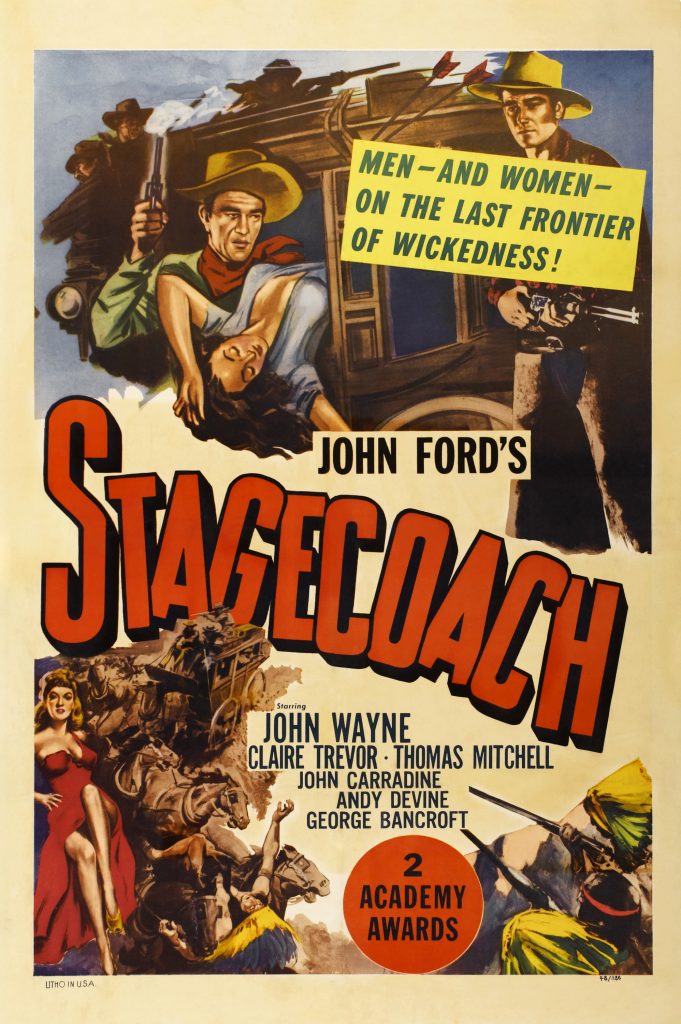
This thirty-year period of film history cemented the stereotypes we know today. Cultures from multiple nations were lumped together, every prominent male character wore a headdress, and the racist “Tonto-speak” created the archetype of the “dumb Native.” Some movies, like 1939’s Scouts to the Rescue, didn’t even bother to use real Native languages, instead playing English backwards in a mocking approximation of an “alien tongue.”
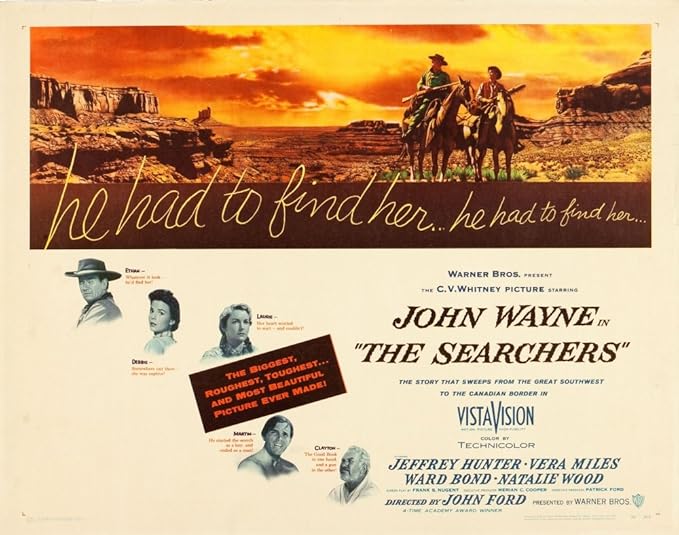
John Ford was the studio darling of Western film directors during this age, and his movies, many of which featured John Wayne, are considered the gold standard of classic Westerns. However, his approach to presenting American Indian characters always carried an undercurrent of racism. The most egregious of these was 1956’s The Searchers, wherein John Wayne’s character is horrifically racist against the Comanche people. At one point, he happens upon the grave of a dead Comanche man and shoots the corpse in the face. Chuckling, John Wayne’s character triumphantly claims that by destroying the dead man’s eyes, his spirit will wander forever and never be at rest.
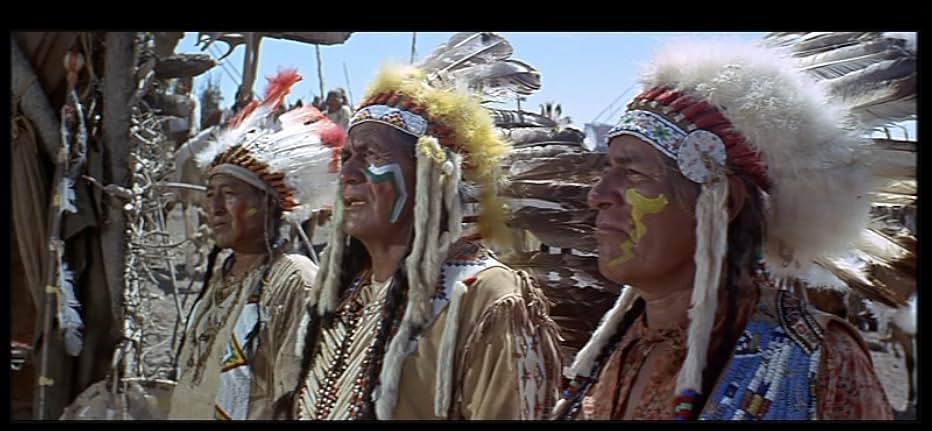
Native actors during this period found ways to push back against Hollywood’s racist tirade. When they were hired for speaking roles in movies, the production teams never bothered to translate any of the actual words they spoke in their Native languages, so the Indigenous actors improved lines for their own enjoyment. In 1964’s A Distant Trumpet, during a tense exchange between two Apache characters (played by Navajo actors) and White soldiers, the Navajo men actually say, “You’re a snake crawling in your own sh*t!” Their subversive protests against their treatment on set were part of a larger movement going on in the United States at the time.
Native Actors Step Into the Spotlight (1970-2000)
The American Indian Movement, founded in 1968, snowballed into a fearsome force during the 1970s. It helped pass legislation expanding the rights of American Indians and Alaska Natives in the United States. Their strive for representation expanded to all areas of life, and Hollywood began to take notice.
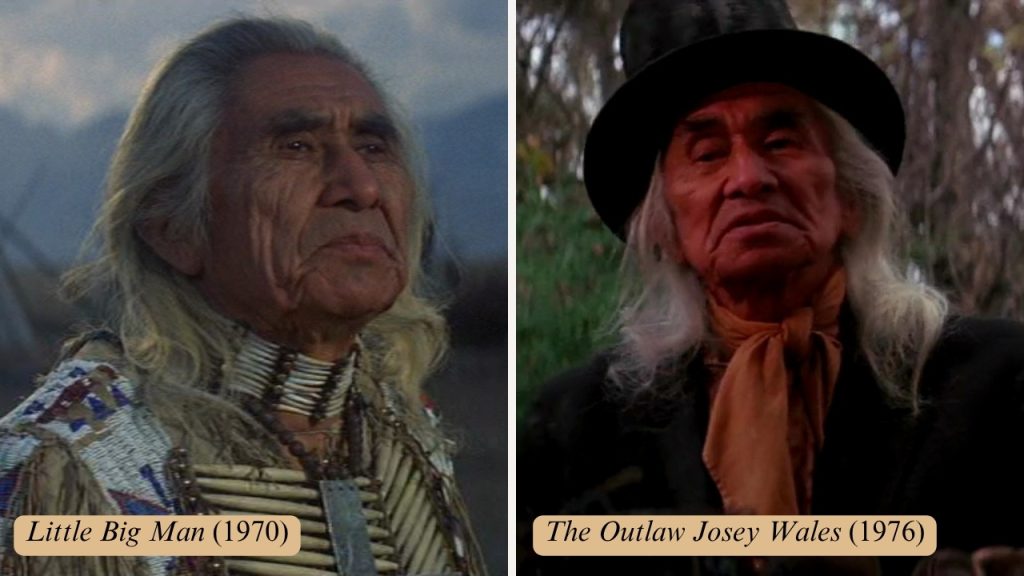
In 1970, Little Big Man truthfully depicted the massacre at Little Bighorn, urging an empathetic view of the plight of the Cheyenne and Sioux nations. Although the main star was Dustin Hoffman as a White boy adopted by the Cheyenne, it also prominently featured Tsleil-Waututh actor Chief Dan George. His witty performance eventually earned him other film roles, like 1976’s The Outlaw Josey Wales. For the first time, Native actors were no longer relegated to background set dressing, instead transforming into noteworthy movie stars.
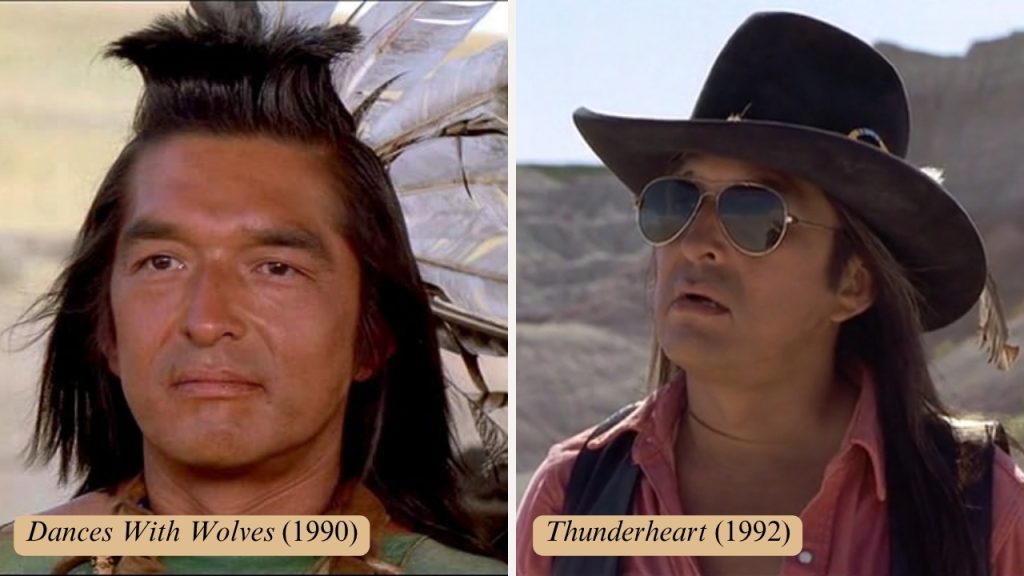
When Kevin Costner’s critically acclaimed movie Dances with Wolves hit theaters in 1990, it changed the landscape of Western cinema even further. The Lakota characters all spoke in their Native tongue and were fully rounded and developed, bursting with the kind of nuance that up until that point had only been given to their White counterparts. This was also the first time that Indigenous actors were allowed to play lead roles, with Oneida actor Graham Greene giving a memorable performance as Kicking Bird. In 1992, Greene would go on to play another starring role in Thunderheart, as a Sioux police officer on the fictional Bear Creek Indian Reservation.
While the 1970s through the 1990s presented a notable change in representation on screen, the stories all still featured token White characters as the main roles. As the millennium approached, Indigenous directors were finally able to take up the camera and present the real, modern-day American Indian.
Native Directors Finally Tell Their Stories (1998-2025)
In 1998, Chris Eyre, of the Cheyenne and Arapaho nations, directed Smoke Signals. This became the first feature film to be directed, written, and produced by American Indians. Nearly the entire cast was made up of Native actors as well, with Ojibwe actor Adam Beach and Tla’amin actor Evan Adams in the lead roles. Originally a film festival favorite, Smoke Signals had a limited five-screen theatrical run, where it managed to earn triple its production budget. Chris Eyre’s phenomenal film paved the way for future Indigenous directors, portraying modern American Indians outside of the harmful stereotypes of decades prior.
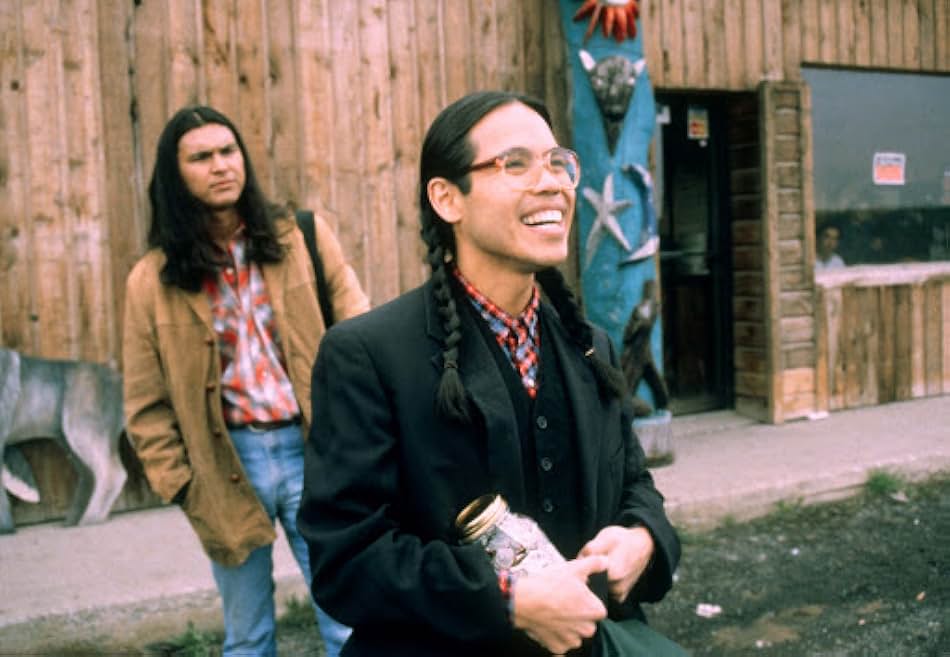
Prominent films by Native directors include the following:
- Skins directed by Chris Eyre (Cheyenne and Arapaho nations)
- Four Sheets to the Wind directed by Sterlin Harjo (Seminole and Muscogee nations)
- Drunktown’s Finest directed by Sydney Freeland (Navajo nation)
- Barking Water directed by Sterlin Harjo (Seminole and Muscogee nations)
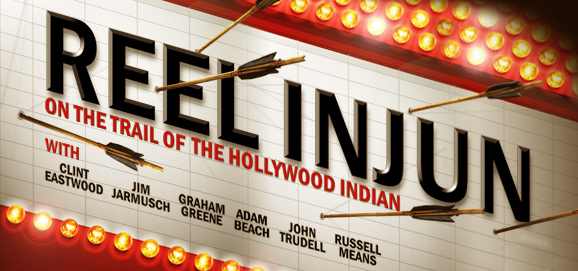
A comprehensive look at the history of Native peoples on film can be found in Cree director Neil Diamond’s 2009 documentary, Reel Injun. Through a mix of interviews with Native filmmakers and critics and footage of historically noteworthy movies, Reel Injun is a powerful source for dissecting the legacy of Indigenous people on screen. (Please note that this documentary was made before Sacheen Littlefeather’s passing revealed that she had lied about her heritage. In the film, she is miscredited as being Apache and Yaqui. In truth, her mother was White and her father was Spanish-Mexican, with no ties to South American Indigenous communities.)
From racist caricatures to moving portraits of humanity, American Indian representation has undergone many forms throughout film history. Luckily, the modern age has allowed Native performers to gain prominence in Hollywood and begin dismantling the damaging stereotypes that plagued Western media for over 100 years.
Click here for another look at troubling American Indian representation in pop culture.
Visit our Native American bookshelf on Bookshop for more Indigenous stories.