

















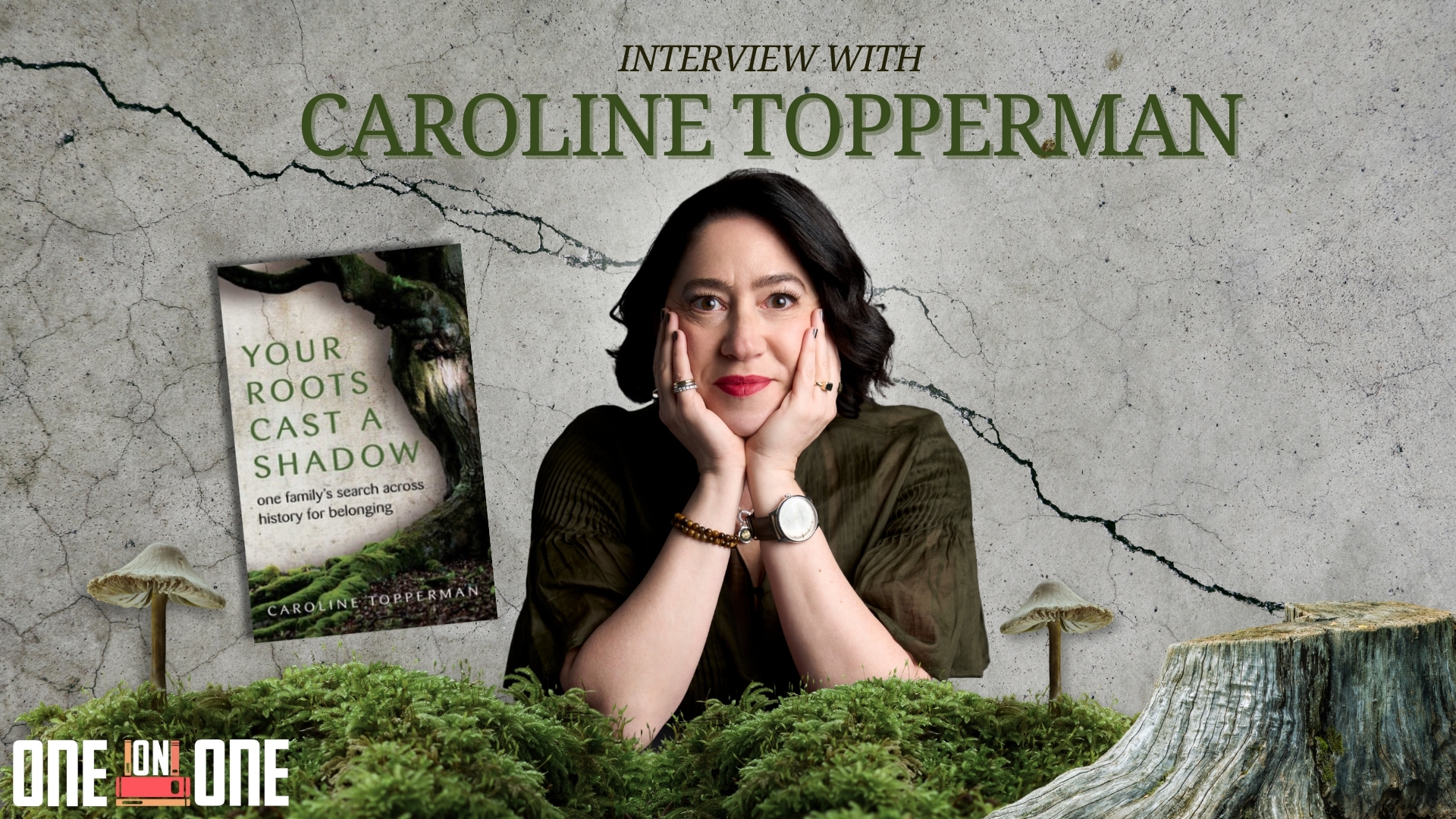
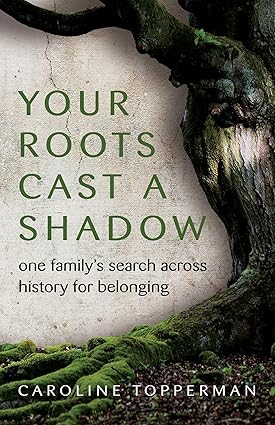
Welcome, readers, to a conversation that examines the heart of identity, history, and the enduring power of family. We’re honored to have Caroline Topperman join us to discuss her deeply moving nonfiction book, Your Roots Cast a Shadow. “In an era marked by rising nationalism and global displacement”, Topperman’s work resonates with a profound urgency, inviting us to explore the intricate tapestry of our individual origins.
This creative nonfiction is more than a memoir; it’s an exploration of how our personal and familial stories shape our identities in a world on the move, a must-read for anyone fascinated by history and their place within it.
In this interview, we’ll explore the pivotal moments that compelled Topperman to share her family’s story, the challenges of navigating complex cultural identities, and the profound importance of preserving truthful historical accounts. We’ll also explore her extraordinary work in Afghanistan, where she’s contributing to an underground school for girls, and her insights into the enduring relevance of history in our contemporary world. Join us as we unpack the layers of Your Roots Cast a Shadow and uncover the powerful connections between past and present with Caroline Topperman.
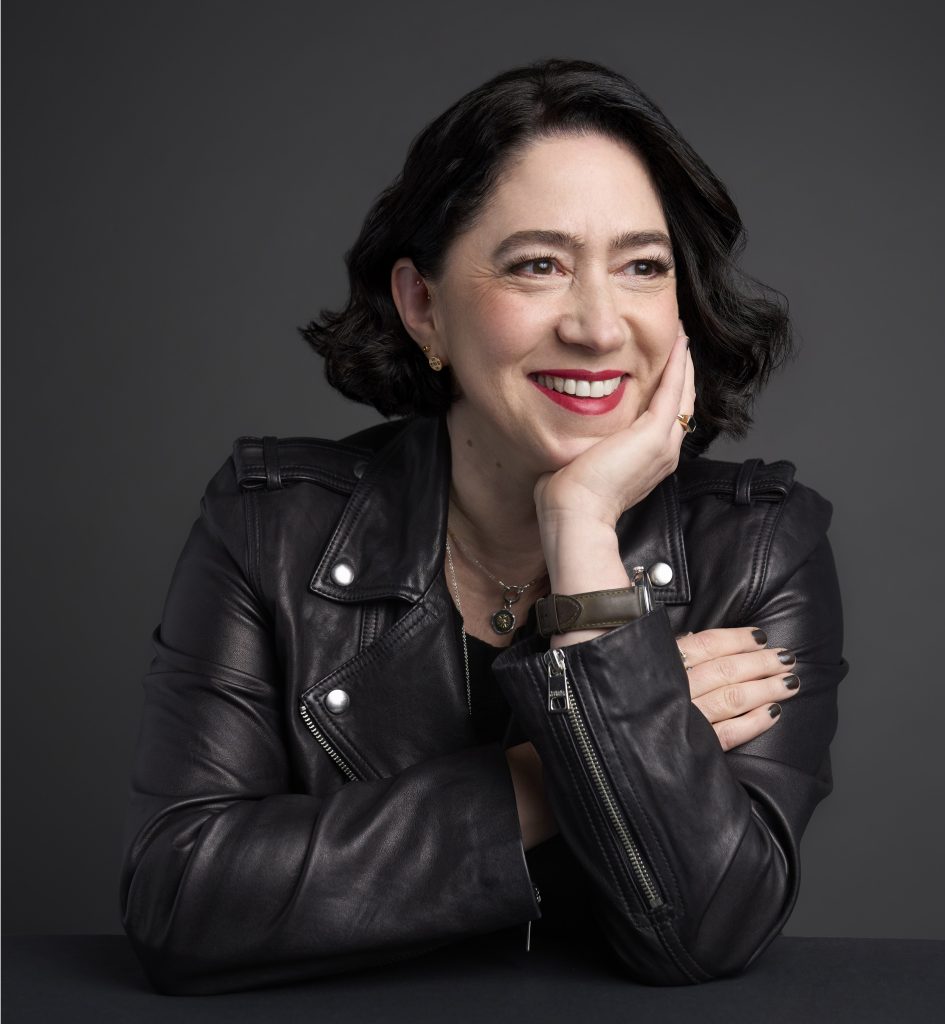
About Caroline Topperman
Caroline Topperman is a European-Canadian writer, entrepreneur, and world traveler. Born in Sweden, raised in Canada, with a recent stint living in Poland. She is a co-founder of Mountain Ash Press and KW Writers Alliance, and currently teaches at an underground school for Afghan girls. Her book, Tell Me What You See, serves as a toolkit for her writing workshops. She has written articles for Huffington Post Canada, Jane Friedman’s blog, was the Beauty Editor for British MODE Magazine, and served as managing editor for NonBinary Review. Her hybrid memoir, Your Roots Cast a Shadow: one family’s search across history for belonging with HCI Books, explores explosive intergenerational histories that link war zones and foreign shores with questions of identity and belonging.
INSTAGRAM | FACEBOOK | TIKTOK | PINTEREST | X | BLUESKY
WEBSITE | LINKEDIN
Thank you for talking with us, Caroline. Let’s get started!
For any readers unfamiliar with it, can you give an elevator pitch for Your Roots Cast a Shadow?
In an era of rising nationalism, where does your story fit in? When I moved to my parents’ homeland, I uncovered a shocking family history spanning communist Poland, Afghanistan, and beyond. This book explores how our personal experiences and family stories shape our identity in a world on the move. Perfect for the wanderlust readers fascinated by history and their place in it.
What was the moment you realized that your and, by extension, your family’s story, must be turned into a memoir?
Not long after I moved to Poland, PiS, a right-wing populist and national-conservative party, was elected. Right away, we saw a change. Protests spilled out onto the streets, and petitions began circulating. One demonstration, in particular, affected me. The government was about to take over the national television corporation. We were at a protest, and I suddenly thought of my maternal grandfather, who had run an underground press in the 1930s. In that moment, I had an overwhelming sense of sadness and fear. All I could think was, “Would he have been standing here, too?”
In that moment, I had an overwhelming sense of sadness and fear. All I could think was, ‘Would he have been standing here, too?’
Unfortunately, the sense of foreboding became all too familiar over the course of the four and a half years that I lived in Warsaw. I started seeing worrying headlines in the newspapers, and I witnessed marches by fascists and ultra-nationalists.
The situation really hit home when I came back to Canada and realized that our newspapers (both Canada and the US) weren’t reporting these events. That scared me even more. History repeats itself. That’s when I knew that I could not be quiet, and the best way I could think of to make some noise would be to tell my family’s story. I wanted people to see that what had happened once could easily happen again.
Your journey and the stories you told of your grandparents and parents opened my eyes to many things. Not the least of which is the cultural identity you struggle with, given the near-global migrations you have had. What is something you have come to realize for yourself that others of similar backgrounds might find enlightening or helpful in their own journeys?
This question really made me stop and think about the broader themes of my book and how they connect to the experiences of others who have navigated complex family histories and cultural identities. Get ready for a long answer.
One of the most powerful realizations I’ve had is that it’s okay to embrace the complexities and contradictions of my heritage. For a long time, I struggled with feeling like I didn’t fully belong to any one culture. Growing up in Canada with Polish and Jewish roots, I often felt like an outsider in both places. Then, when I moved to Poland, I discovered that my Canadian upbringing had shaped me in ways I hadn’t fully realized. I was a foreigner in a not-so-foreign land.
One of the most powerful realizations I’ve had is that it’s okay to embrace the complexities and contradictions of my heritage.
This sense of in-betweenness can be challenging, but I’ve come to see it as a source of strength. It allows me to appreciate the richness and diversity of my heritage and to connect with people from different backgrounds. It also gives me a unique perspective on the world and the ability to bridge different cultures.
For those on a similar journey of self-discovery, embrace your complexities and don’t try to fit into a box. Your cultural identity is a tapestry of experiences, influences, and perspectives, so celebrate its richness and diversity. Connect with your roots by exploring your family history, learning about your ancestors, and visiting their homelands. This can deepen your understanding of your identity and heritage. Be open to new experiences, like traveling, meeting new people, and learning about different cultures, to broaden your horizons and appreciate the world’s diversity. By embracing our complexities, connecting with our roots, finding our voices, and being open to new experiences, we can all gain a deeper understanding of ourselves and our place in the world.
Your Roots Cast a Shadow opens with your move to Poland and the subsequent rekindling of familial bonds in 2013. Almost 12 years later, how have your relationships developed? Did the book enhance the relationships?
You know, this is actually a tough question to answer. When I moved to Poland, I quickly realized that my relationship with my cousin and his daughters was unconditional loyalty. My cousin’s daughter played an instrumental role in getting my husband and me settled in Poland. Without hesitation, she was always there for us. I think we’ve maintained that relationship. She knows that she can call me anytime, and that I will drop everything to help however I can.
Where I would say the book enhanced a relationship was with my father’s brother, Andrzej. He knew I was working on this book, and the last time I saw him, which was in 2019, he gifted me with a box full of letters, photographs, and pages written by my paternal grandfather. There was also a Polish/Farsi, Farsi/Polish dictionary that he wrote for the family while they were living in Afghanistan. I say all this because I was entrusted with the stories. Clearly, he saw that I was worthy of that.
I absolutely love the treatment you gave the narrative: alternating chapters of past and present, and the research that you conducted. Can you tell us a bit about your process and the choices you made when you finally sat down to write this compelling book?
Thank you! I knew that I wanted to accomplish a few things with this book. First, I wasn’t willing to compromise on including historical facts. I knew that part of what I needed to do to tell a complete story was to provide readers with information that might not be familiar to them. World War II isn’t a new topic, but what my maternal grandparents experienced isn’t common, and it’s not taught in school. I also knew that I had to provide context for my family and the decisions they made. This is what makes a story relatable. I want readers to find pieces of their family stories in my book.
To be honest, wrangling all of my family’s stories was a big undertaking. At one point, the book had a whopping forty-two chapters, and I had everyone’s timelines laid out with sticky notes on my wall. I had to physically write out dates and places so that I wouldn’t get lost in all of them. With a lot of coaxing and some tears, I started to slowly weave everyone’s stories together, including mine. Full transparency: the final order was decided upon a week or two before the book went to print.
You’re a busy woman: author, writing consultant, teacher of an underground school in Afghanistan for girls, and the co-founder of multiple companies. Tell us about your drive and inspiration that pushes you to be so successful.
It’s true that when you list it all out, it seems like I have a lot on my plate. But honestly, I don’t really stop to think about it that way. Each project I take on has a specific purpose, a goal that resonates with me deeply. For example, the underground school in Afghanistan is incredibly close to my heart. Providing education to girls who are denied that basic right is something I feel passionately about. It’s about empowering them, opening doors to a future they might not otherwise have.
My writing often reflects the experiences and challenges I encounter in my other work. It’s a way to process, to raise awareness, and hopefully to inspire others to take action. I admit, I have a bit of a rebellious streak. When someone tells me something can’t be done, it just fuels my determination to prove them wrong. I love the challenge, the process of finding creative solutions and overcoming obstacles. I feel fortunate to be able to pursue different passions. Knowing that I’m making a difference, however small, keeps me going.
Can you tell us more about your involvement with the underground teaching facility in Afghanistan?
My involvement with the underground school happened unexpectedly. I’m currently working on a second book about my family’s experiences in Afghanistan during World War II. This includes my grandfather’s written account of working on the road between Kabul and Jalalabad, and a collection of Afghan folk tales he gathered. To ensure I do those stories justice, I decided to collaborate with an Afghan scholar living in exile in Canada. He’s the founder of this incredible facility, and as we talked, I realized I had to be a part of his work. It’s been very rewarding, and honestly, probably the most fulfilling thing I’ve ever done. The students are producing amazing writing, and I’m hoping to help them get their work published. It’s been a privilege to contribute to this project, especially given the current situation in Afghanistan, where their voices are being actively silenced.
To close out, can you touch on the importance of keeping truthful accounts of history alive for posterity, even when it goes against what mass media and academia push?
History is more than just dates and names. It’s really about the stories of people, their struggles, and how they overcame them. These stories shape how we see the world around us and even ourselves. That’s why it’s so important to make sure we’re telling the truth, even when it goes against what’s popular or what we’re told to believe.
We need to remember that everyone’s experience matters, and much of the time, the voices of those who don’t usually get heard are the most important. By looking at history from all sides, we can learn from the past, both the good and the bad, and build a better future. It’s about understanding each other and realizing that we’re all connected.
In a time when it’s so easy to change or twist the truth, we have to be extra careful about protecting real history. It’s how we respect those who came before us, understand what’s happening now, and give the next generation the tools to make good choices.
- Caroline Topperman
Caroline, thank you so much for taking the time to share your family’s story with us. It’s clear that Your Roots Cast a Shadow is a work of immense personal significance, and we appreciate your willingness to open up about such complex and important themes. Your journey, and the stories of your family, offer a powerful reminder of how deeply our past influences our present.
For our readers, we highly recommend diving into Caroline’s book. It’s a journey that will stay with you long after you’ve finished the last page. You can find Your Roots Cast a Shadow wherever books are sold.
We’re left with a real sense of the importance of remembering, of honoring the stories that shape us, and of understanding the interconnectedness of our lives. Caroline’s work is a gentle, yet powerful, reminder that even in the face of great challenges, human stories have the power to connect, to teach, and to inspire. Thank you, Caroline, for sharing yours.
Not ready to be done with this author and their book? Check out our review of Your Roots Cast a Shadow here.
Ready to promote your book but need some help? Reach out to us today to see how Bookstr can be a part of your author journey.
Be sure to support an indie bookstore by grabbing your next read from Bookshop.org—they have audiobooks now, too!
