

















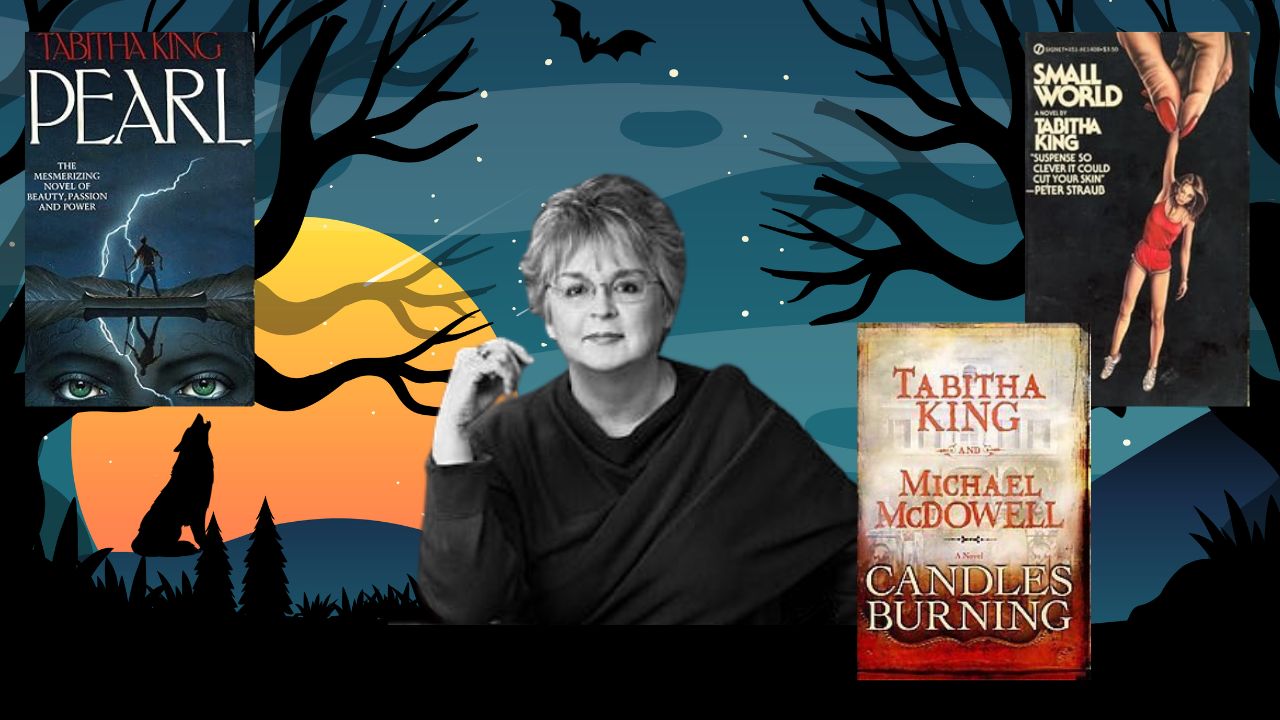
Every literary dynasty has an origin story, but some are shelved a little too quietly. While fans can recite Stephen King’s bibliography like an incantation, far fewer know his wife’s pen, presence, and persistence helped shape that legacy — or that she wrote extraordinary books of her own. In this love letter to a powerhouse often hidden in the margins, we’re dusting off the real tale behind the King family’s rise and celebrating the remarkable author who deserves her own crown.
Tabitha King: The Queen Behind the Curtain

Long before the world knew Stephen King as the Master of Horror, there was Tabitha Spruce — poet, activist, librarian, and literary force of nature — quietly shaping a family dynasty. Born and raised in Maine, Tabitha met Stephen at her state’s university, where their romance grew between stacks, typewriters, protests, and the kind of broke-college-kid creativity that would later fuel legends. Talent recognized talent, and it was love at first sight, but Tabitha’s biggest hurdle was the trash can.
As Stephen tells it, Carrie — his breakout novel, the one that launched the whole empire — nearly died an early death via the household wastebasket. Tabitha fished the crumpled pages out, smoothed them like a literary midwife, and insisted he keep going. All he needed was a little female insight to save the story, and how lucky for him that she was one. She saw the potential when he couldn’t. On this matter, history repeated itself a few times, like when Pet Sematary briefly found itself in the bin because Stephen thought he’d finally gone too far with the horror, only to be rescued by the same Queen of Second Chances. Some couples recycle cans and bottles; the Kings recycle great ideas and dead kids.
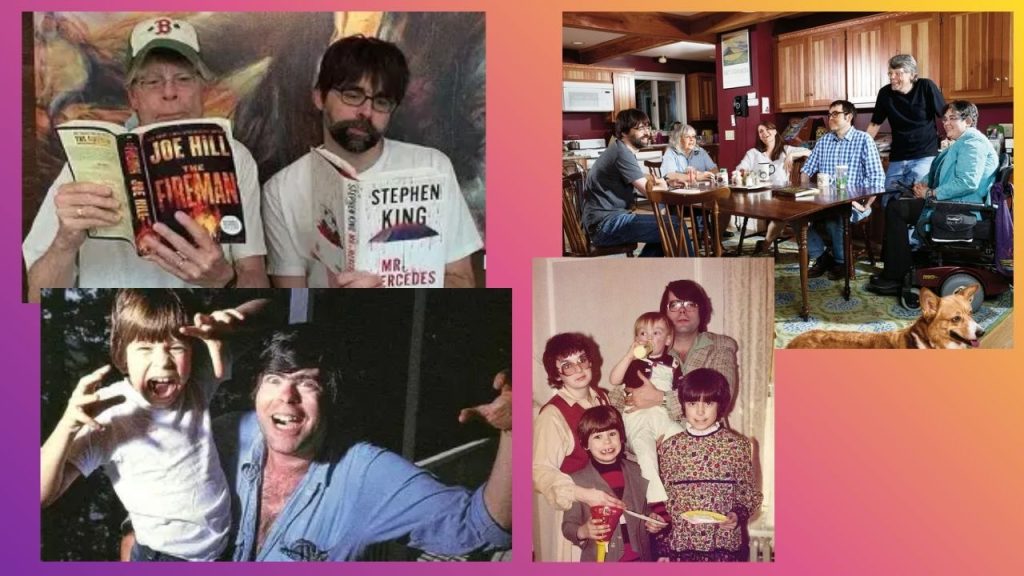
Together, Tabitha and Stephen built not just a career but a family of storytellers. Their sons, Joe Hill and Owen King, have grown into literary celebrities in their own right, crafting bestsellers, blockbuster screen adaptations, and fan bases as devoted as their father’s. But the dynasty didn’t start by accident; it grew in the warm glow of a household where Tabitha championed imagination as fiercely as she championed her husband’s work.
And here’s the twist many readers miss: Tabitha professionally inspires books — and writes them, too. A whole stack of them. Novels, short stories, poems, nonfiction, and more make up an entire career of her own, too often overshadowed by the giants she nurtured standing beside her. But make no mistake: this Queen has her own crown, her own voice, and a section on the bookshelf that deserves attention.
Small World (1981)
In Small World, Tabitha King invites you into a delightfully twisted dollhouse of horrors where a rich, socialite daughter of a former United States President becomes obsessed with miniature perfection, and a lonely ex-government scientist has created a shrink ray. Their bizarre collaboration transforms a replica White House into a macabre prison for real people — shrinking them down, then trapping and terrorizing them like toys. Twisted with glamour, psychological horror, and a “what-if dollhouse curses were real” nightmare, this is a funhouse story turned sinister.

Caretakers (1983)
It starts with two souls from opposite corners of Maine society. On one side is Torie Christopher, a reckless aristocrat married to privilege. On the other hand, Joe Nevers is a tough, proud working-class man bound more by grit than status. Fate (and perhaps fate’s more capricious cousin) strands them together in a blizzard of memory, hardship, and buried truths — forcing each to confront what they’ve lost, what they’ve become, and the secrets only they know. It’s a chilly Maine winter novel that warms dark truths by the fire.

The Trap (1986)
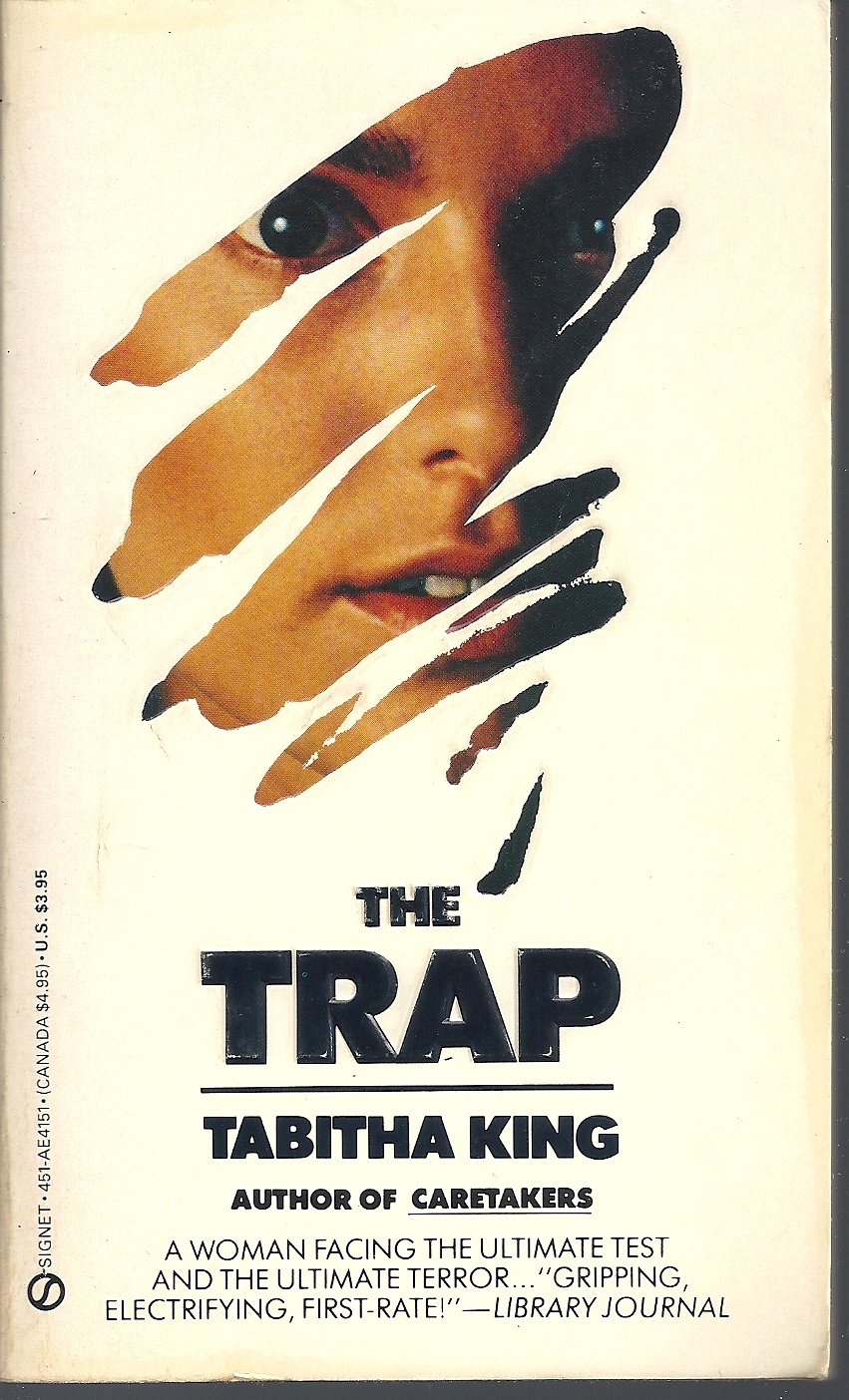
Tabitha King turns a cozy Maine winter retreat into a white-knuckled cage. When Livia Russell and her young son retreat to an isolated cabin to escape a failing marriage, three violent, animal-like youths break in — and in one terrifying instant, the sanctuary becomes a prison. Kidnapping her child, they strip away all civility, forcing Livia to summon every shred of cunning and desperation just to survive. It’s a chilling tale of how quickly trust (and warmth) can turn to fear — and how far a mother will go when her child’s life is on the line.
Pearl (1988)
Tabitha King introduces Pearl Dickenson, a savvy, warm-hearted, and hard-working woman who comes to the tiny Maine town of Nodd’s Ridge to inherit an old house, and unexpectedly settles in. Stirring up the quiet equilibrium of the place like a spoon in still tea, she soon finds herself at the center of a love triangle with two very different men: stoic hometown mechanic Reuben, and the mercurial, troubled summer visitor David. As loyalties, histories, and old rivalries unravel, Pearl discovers that beneath the town’s surface lurk jealousy, bitterness, secrets — even murder. What began as a fresh start becomes a tangled web of desire, danger, and small-town scandal. Will Pearl’s choices heal a community… or break it?

One on One (1993)
One on One is a dunk-filled, slice-of-life YA novel set in the early ‘90s. Tabitha King swaps horror for hoops, telling a gritty coming-of-age story set in small-town Maine where star basketball player Sam Styles — cool, clean-cut, and used to winning — tries to lead both the boys’ and the girls’ teams to state titles for his final year at Greenspark Academy. He’s led the boys’ team to the top several times, but the girls’ team — led by the rebellious, tattoo-and-piercing-clad Deanie Gauthier, a hard-edged misfit with a dangerous home life — always falls just shy of victory. As their unlikely alliance morphs into romance, the court becomes their battleground.

The Book of Reuben (1994)
Tabitha King tracks the tangled life of Reuben Styles — from his teen years trying to escape a dying, abusive father, through a rocky adulthood of garage work, doomed relationships, dark secrets, and moral wreckage, to a second chance at love when he meets a woman named Pearl (Yes, the same one from the 1988 book). Over the decades, the novel confronts heartbreak, betrayal, murder, alcoholism, faith, and the brutal cost of chasing the American Dream. What does it take to survive, forgive, and rebuild in a town where everyone knows your name anyway? The answer is explored in a raw, small-town saga painted with grime and hope, where Reuben learns the hard way that growing up doesn’t come with a manual.

Survivor (1997)
Fate’s wheel is flipped when a nighttime car crash leaves two strangers dead and rattles photographer Kissy Mellors’s life. Haunted by survivor’s guilt, she drifts into a series of unwise relationships, like the marriage (and messy divorce) to a high-flying college hockey star. Enter the problematic local cop who has been pursuing Kissy since the accident, ready to take advantage of her spun, depressed state. He eventually gets her to marry him — a fatal mistake.

Candles Burning (2006)
Michael McDowell, known for his chilling Blackwater series, died in 1999 of an AIDS-related illness. He was a long-time family friend of the Kings, and he left behind the unfinished manuscript for Candles Burning for Tabitha to finish. Harnessing the spirit of the ghost stories that Michael so loved, Tabitha King completed and published it for him in 2006. It’s a Southern-Gothic story that follows young Calliope “Calley” Dakin — the only girl in a crumbling family whose quiet gifts include an eerie ability to hear what little girls aren’t supposed to hear. When her father is brutally murdered, her world is upended: her mother spirals them into exile, and the two are whisked away to a mysterious boarding house on Pensacola Beach, run by a woman with secrets as deep as their grief. As Calley grows, she learns that the ghosts whisper more than just their loss; they carry clues about her father’s death, her birthright, and the dangerous power she never asked for.
The Blue Chair (1981)
Featured in an anthology of nightmares called Shadows 4, this short story spins a quiet horror around a businesswoman and a seemingly innocent chair in a hotel room. What begins as a reunion with an old crush (her cousin, but no one’s looking) quickly sours. Yes, the two get hot-n-heavy, but it’s the not-so-ordinary piece of furniture that doesn’t let things end so easily. The encounter transforms into an uncanny, chilling trap. Instead of offering comfort, the blue chair delivers terror.

Long Live the Kingmaker
Tabitha King has spent decades shaping stories, rescuing legends, and writing novels that stand proudly on their own spine. She’s the quiet architect of one of the greatest literary bloodlines in the world — a brilliant author whose work deserves far more spotlight than footnote. It’s long past time readers pulled Tabitha’s books off the shelf and gave her crown the shine it deserves.
Tabitha King also saved her husband’s life by helping him get sober. Explore that story in my article: King’s Addiction and Recovery Seen Through 12 Powerful Characters.
Browse our bookshelf on Bookshop for more spine-chilling horror novels not for the faint of heart.
