
















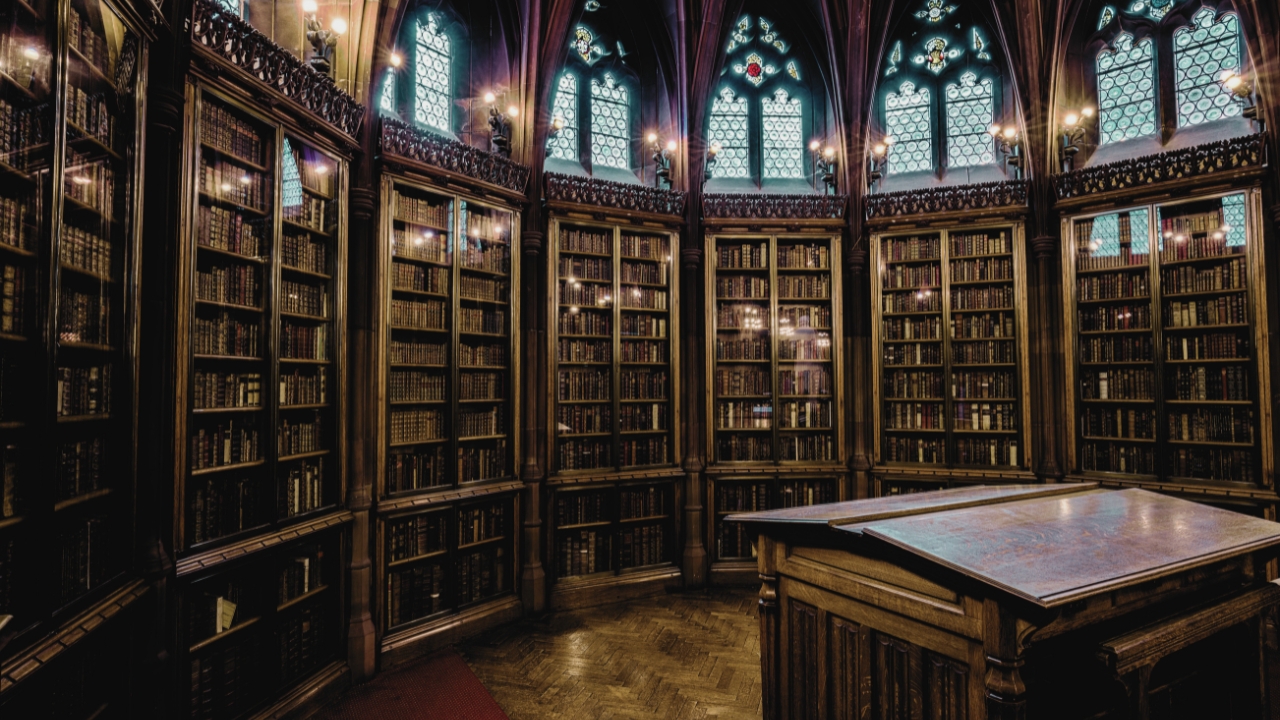
This week for Bookstr Trivia, we’re diving into the history of one of the world’s most beneficial social provisions: libraries. Sure, you’ve probably been to your school’s library for a project, and I’m sure you’ve heard of the tragedy of the Library of Alexandria, but do you know where the first library was or who it was designed for? From ancient Greece to Timbuktu, we’re diving into the creation, cultural significance, impact, and downfall of some of the world’s greatest libraries. Read on to find out more!
History
The first libraries are believed to have originated some 5000 years ago, and looked quite different from the libraries of today. Long before the advent of paper or even papyrus, the first texts were carved into a clay-like mud substance that had been spread into a wooden frame. These frames were left in the sun to dry before being baked in a kiln at high temperatures. The writing was done in large, cuneiform script similar to hieroglyphics.
The word “library” comes from the Latin “libraria“, which means “place storing books,” whereas the Greek version, “bibliotheca,” is the origin of the word in the Romance languages as well as German and Russian.

For thousands of years, there existed a troubling pattern of destroying or intentionally purging records when governments fell and rulers were displaced, leading to devastating losses of information and culture throughout history. It’s truly heartbreaking, for this writer at least, to think of all that has been unnecessarily lost to the violence of politics.
One example of this purging comes from ancient China when the emperor Shih Huang-ti of the Ch’in dynasty (and the first ruler of a unified Chinese empire) ordered that all historical texts and records be destroyed so that it appeared that history began with his dynasty. However, under the later Han dynasty, the repression of history lifted, some works were recovered, and the writing of history and literature was encouraged once more.

The First Library
The oldest library is believed to be The Library of Ashurbanipal, located in Nineveh in modern-day Iraq, and once held over 30,000 cuneiform tablets. The Library of Ashurbanipal was founded sometime in the 7th century BC for the Assyrian ruler Ashurbanipal’s “royal contemplation.” The texts were from both Babylonia and Assyria and contained a wide variety of subject matter, from legal documents, literature such as myths and legends, astronomy, divinatory, epics, history, medicine, lexical documents (grammatical texts and recordings of archaic word lists) and religion.

As with many artifacts rightfully belonging to their countries of origin, nearly all of these materials now reside in the British Museum. The objects were recovered by two British archaeologists working at Nineveh on excavations funded by the museum itself.
Greece
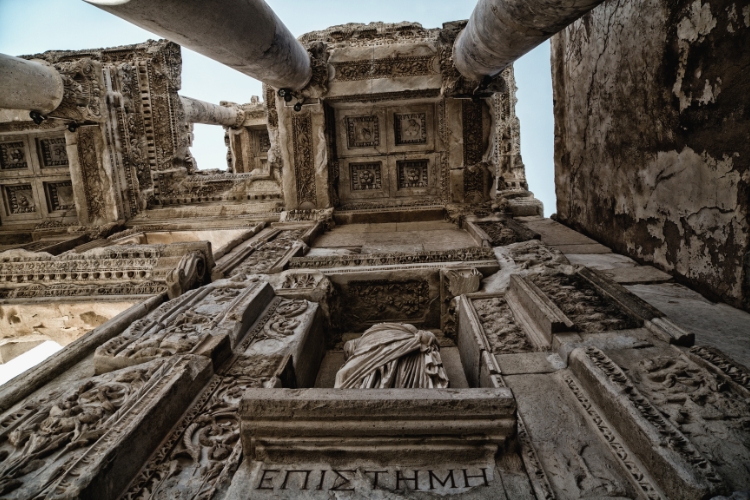
Most Greek temples had libraries, and many contained detailed archives. The first institutional libraries in Athens arose during the 4th Century BC with the major schools of philosophy. Texts were originally written on papyrus and, later, parchment, and much replication occurred.
The most renowned of the Greek collections belonged to the Peripatetic school, which was founded by Aristotle. Filled with texts that had come to Rome as the spoils of war from a raid on Athens in 86 BC, Aristotle organized his library specifically with the intention of facilitating scientific research. This library would later form the basis for the Library at Alexandria.
Rome
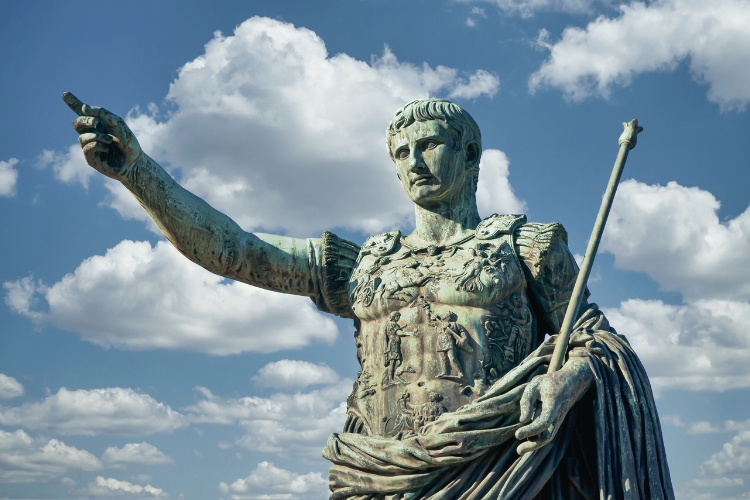
Private libraries were highly fashionable in Ancient Rome, where knowledge was associated with wealth, and scrolls were exorbitantly expensive.
Julius Caesar planned to construct a public library, though he died before his plans were fulfilled. However, just five years later, literary enthusiast Asinius Pollio founded and commissioned the first public library in Rome. When describing this feat of social service, Pliny penned the iconic phrase that still applies to libraries and the invaluable service they provide: ingenia hominum rem publicam fecit (“He made men’s talents a public possession”).
Asia Minor (Modern-day Turkey)
The library of Pergamum was one that rivaled Alexandria. Pergamum was founded during the reigns of Attalus I Soter and Eumenes in the 2nd century BC. It was accredited for the invention of parchment after Ptolemy Philadelphus banned papyrus exports from Egypt, which made copying of books difficult. Lucky for them, parchment was found to be much more durable than papyrus and marks a major technological development in written technologies and the dispersion of knowledge throughout the globe.
In 133 BC, the library and the kingdom of Pergamum were surrendered to the Roman Empire, and it is rumored that Mark Antony gifted some 200,000 volumes to Cleopatra, which then became part of the Library of Alexandria.
Byzantium
In the East, Constantinople became home to the leading libraries and private collections. For over a thousand years, keen copyists, editors, and translators preserved texts from Athens, Alexandria, and Asia Minor. Their replications were highly valuable, and though some losses occurred, they were primarily due to the 9th-century trend of replacing the original texts with summaries. The majority of the Greek classics, however, were immaculately preserved and replicated to be later used by Western European universities.

Egypt
The greatest library in human history, the Library of Alexandria, was planned by Ptolemy II Philadelphus in collaboration with Demitrius of Phaleron in the 3rd century BC. They planned to collect the entirety of Greek literature in the best copies available and modeled the Greek idea to organize it in meticulous systematic order.
It was said to house hundreds of thousands of papyrus and vellum scrolls, and under Ptolemy III Euergetes, the library’s collection increased immensely. This was due to the practice of taking texts from ships at port, copying them, keeping the originals and giving the copy back to the ship. The possession of so many first edition texts is another reason the library achieved such renown and was considered such a valuable hub.

Though the popular rumor is that the library was burned by Julius Caesar in 48 BC, there is much debate. Other sources cite the destruction to 272 CE by emperor Aurelian during his war with Zenobia, or by Diocletian in 297 CE, Christian zealots between 391 and 415 CE, or by Arab invaders in the 7th century.
Many historians believe that the true cause of the decline of Alexandria was negligence and lack of upkeep by later Ptolemaic rulers. Particularly, Ptolemy VIII due to the fact that he banned foreign scholars until 145 BC. Religious intolerance due to the rise of Christianity created immense civil strife, and many scholars left Alexandria in favor of safer countries with richer, better kept archives.

The Islamic World
The death of the Prophet Muhammed in the 7th century spurred on the dissemination of written text in Islamic territories. Followers swiftly transcribed his word into the Qur’ān, which became the sacred text of the Muslim religion. Followers were encouraged to read commit the text to memory, and thus as the armies of Muhammed’s decedents claimed more territory, they took their commitment to literacy with them.
Later in the 7th century, the first caliph of the Umayyad Dynasty, Mu’āwiyah I, redesigned his personal library, which served as the basis for his successors to build upon and expand. In the early 7th century, Caliph as-Walīd assigned the first șāhib al-mașāhif (“curator of books”). By then, the Umayyad collection housed hundreds of works spanning military science to medicine to astrology.

When Muslims adopted paper-making techniques learned from the Chinese, they exponentially increased their ability to create and copy texts. By the 10th century, Baghdad and Córdoba became home to the largest book markets in the world. Christian monks were known to be sent to Córdoba to purchase new texts and other philosophical works.
Middle Ages and Renaissance
European Monasteries
When European monastic communities formed (some as early as 2nd century AD), reading and study was deemed to be an essential element of spiritual life and practice. Many monasteries created Scriptoria, which were places where manuscripts were copied, which later served as the basis for their own libraries.
When Henry VIII began suppressing the monasteries in 1536-40, there was no plan or action taken to preserve their treasured libraries. In 1550, it got worse. Henry VIII believed in “new learning,” and ordered the purging of all books from university, school, and even church libraries that depicted the “old learning” from the Middle Ages.

Mali
The incredible collection of libraries in Timbuktu were formed by Musa I (thought to be the richest man who has ever lived), after he fell in love with the city. Nestled in the bend of the Niger River, the city was already a bustling trading hub and established center for Islamic studies.
Musa commissioned Andalusian architect Abu Ishaq al-Sahili to design the Djingereyber mosque, which is now considered an architectural masterpiece, as the home for his massive library. It immediately became the most relevant African collection since the Library of Alexandria. Timbuktu was home to more than 60 archives, and flourished under Musa’s adamant and intentional support of written history, which spurred on the culture of recorded documents.
At the height of its operation, Timbuktu could hold 25,000 students, and was home to at least 400,000 and as many as 800,000 manuscripts. Already a popular learning center and trading hub, it quickly became a hotspot for global book trade.
17th and 18th Centuries
France
The 17th and 18th centuries saw a boom in European scholarship and interest in philosophy and historical studies. As such, public interest in reading and literature boomed. Political unrest in France caused massive collections, like Mazarin’s renowned library, to scatter, not to be reassembled until the political turmoil settled. This library became open to the public in 1691, nearly four decades after the reassembly, and remained a great library until after the French Revolution.

Many French monastic and church libraries were dissolved in the 1700’s, and books were flooded into local depositories. In the 1790s’ aristocratic family libraries experienced the same fate, and their collections were absorbed by the depositories. This massive flood of text caused immense problems for the depositories with limited capacities, and many books were lost.
Eventually, the Bibliothèque Nationale was able to coordinate an acquisition effort and received some 300,000 volumes. They then set up libraries in many of the major provincial cities. Though, it was not just the dissolving of their own libraries that the French provinces benefited from. Though these smaller cities benefited from the influx of text and information now in public hands, it came at a horrible cost.

Mali
When the French invaded West Africa in the 17th century, Timbuktu’s reign as a vibrant center of trade and learning came to an abrupt and devastating halt. Intense looting and pilaging occurred on top of the ravaging Mali society, and many of the texts and cultural products of the city were stolen and taken to Europe. This ended the widespread availability and practice of learning through the treasured manuscripts.
Later Developments
In the 19th century, library management problems began to develop. After haphazard, unorganized growth, weak administration, nonexistent standards, limited funding, and weak commitment to staffing, it was a recipe for disaster.

The library at Göttingen, Germany, is a shining exception to the rule. The librarian Johann Gesner worked in close relation with the university curator G.A con Münchhausen, and the pair made fervent efforts to carefully catalog and cover all departments of learning. The library offered a meticulous catalog and strived to make all of its materials accessible to all. Gesner’s successor, C.G. Heyne, closely followed these principles and elevated Göttingen to the best-organized library in the world.
In the middle of the 19th century it became accepted that local authorities might provide community libraries using public funding, and in 1850 an English act of Parliament passed a decree that local councils could levy a tax to provide free library facilities to the public.
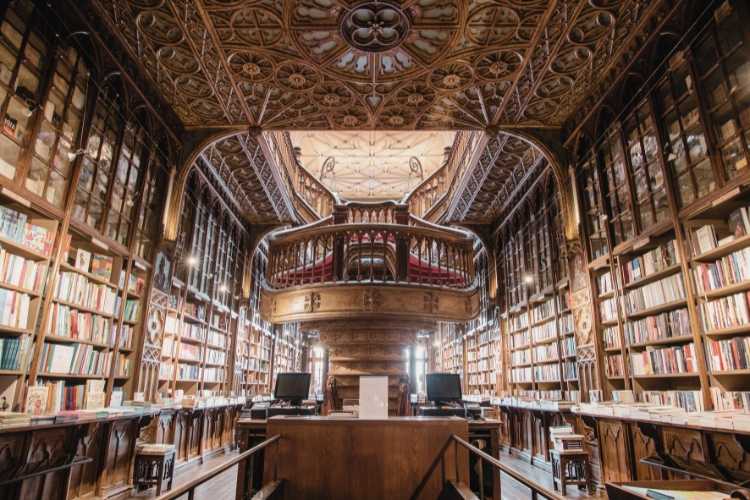
In the 20th century, the role of libraries shifted drastically as new technology emerged and became accessible. Now that individuals could access worlds of information through the internet, libraries also began providing computer labs and free public internet access. Though their role has changed, public libraries remain as important as ever before.
Types of Libraries
National Libraries
Most countries have a national library, or group of libraries which are supported through government funding. They are usually responsible for maintaining a national bibliographic information center. Their goal is usually collection and preservation of their nations literature, though many strive to be as international as possible. In some countries, national libraries even receive a free copy of every book printed in their country!

University/Research Libraries
Before printing, scholars would travel long distances to hear from university professors and read handwritten copies of their lectures. Some of the largest university libraries in the world, like Oxford and Harvard, are more expansive than many national libraries in both size and scope. Universities will often specialize their collections, which they become known for on a larger scale as the library is considered the heart of a university.
Public Libraries
Public libraries are widely considered to be hubs of community engagement and provide many services beyond book-lending. From literacy programs to free computer access, school supply drives, and children’s programs, as well as services for the elderly and people with disabilities, they serve as stewards of a variety of social programs. They also provide much-needed “third spaces” where people can go socialize and spend time without requiring a paid subscription or spending any money.

School Libraries
School libraries are often attached to or very close to an existing elementary, middle, or high school, and are known for experimenting with multimedia communications and creative ways of sharing and implementing informational programs. They are resources for teachers as well as students, and provide many of the same services one could find in a public library.
Special Collections Libraries
Special collections libraries are often created by specific groups to create hubs of information to meet their specific scholarly or professional needs. They are often attached to museums, hospitals, or government organizations, but not necessarily. These were mostly developed before national/public libraries developed their stacks covering niche scientific and technical topics.

Private Libraries
Private libraries are those curated and owned by individuals and are not usually accessible to the public. Due to the fact that they use personal funds to support their libraries, they are able to delve deep into their personal interests and are often top contributors to niche studies. For example, Henry Clay Folger owned 70 copies of the first collected edition of Shakespeare’s plays and, as a result, contributed much knowledge about the printing of Shakespeare’s works and 17th-century printing practices. Private collectors also receive renown when they donate their collections to universities or public libraries, thus contributing greatly to public knowledge.
Subscription Libraries
These paid libraries were popular from the late 17th to 19th centuries, and many were unable to survive due to replacement by public libraries who offered the same services for free. Similar to special collections libraries, this type of library was originated by scholars and academics who were seeking curated collections, although they were also open to the general public.

Archives
Archives are collections of documents, legal papers, and relevant photographs with historical significance that are important to their governing body. They serve to preserve, protect, and make available an organization’s important documents.
Digital Libraries
Digital libraries have taken off with the internet age, where internet access is widespread, and many prefer the convenience of reading on-the-go on their phone or tablet. They often function as a regular library would, where users can get a library card, place holds on a certain number of books, borrow books and return them after a certain time period. They are convenient and eliminate the element of transportation when considering library accessibility. However, the fact that their lending services are comparable to in-person libraries is troubling for the future of physical libraries.
There have been hundreds of books written on the history of libraries. Whether you’re looking to learn more about the history of architecture, the cultural impact, and significance of libraries throughout time, or take a peek at some of the gorgeous libraries around the globe, one of these books is sure to pique your interest. A few incredibly popular, well-written, and visually stunning ones include:
- Ancient Libraries by James Westfall Thompson
- The Meaning of the Library: A Cultural History by Alice Crawford
- The Most Beautiful Libraries in the World by Jacques Bosser
Well, there you have it. A brief introduction to the history of libraries, and some of the different types of libraries that you can visit, or create! If you’re anything like me, you’re probably feeling a little wistful about some of the masterpieces of human intelligence that have inevitably been lost to our own quarrels. Here’s to hoping the trend of burning books to manipulate history stays dead! What do you think? Did you know any of these facts? Let us know on our socials!
Want to find out more about the fall of the epic Library of Alexandria? Click here!
Click here to check out the Bookstr team’s favorite recs!