

















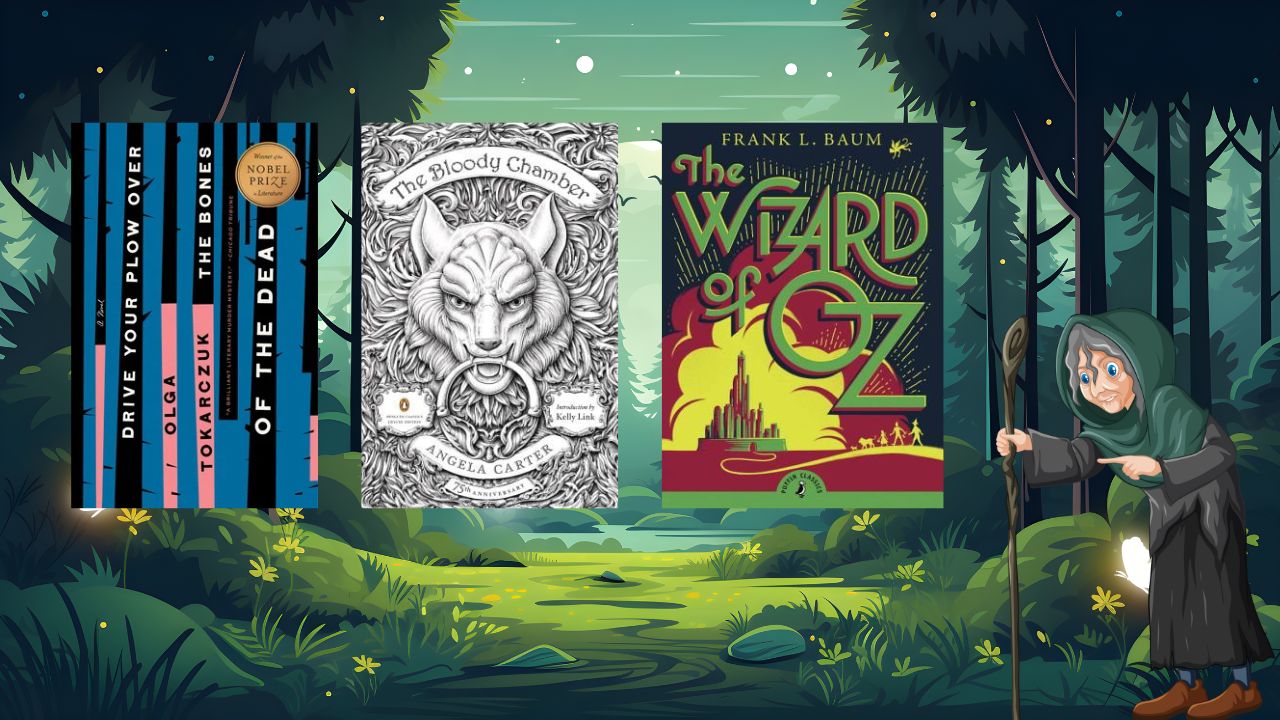
For a long time, the cardinal sin of any woman has been daring to age. Resident in almost all fairy tales, commonplace in literature, and still perpetuated in pop culture, are the three roles women are delegated to: maiden, mother, and crone — the life cycle of the written woman. In mythology, a crone is a wise elderly woman with a strong intuition often rooted in nature and or magic. However, the depiction of the crone is often disparaging and ripe with disapproval of the aging woman.
Witch, healer, or simply knowledgeable, the crones we’ll know best are the vilified, ugly, and bitter “hags” often willing to resort to evil to gain back their youth or to spite someone else’s. These depictions are many, but as are the depictions feminists have written to counter this overtly sexist and calculated representation of women’s aging. Let’s take a look at seven depictions of the crone in literature and pop culture: some as commentary, some positive, and some negative.
The Bloody Chamber by Angela Carter
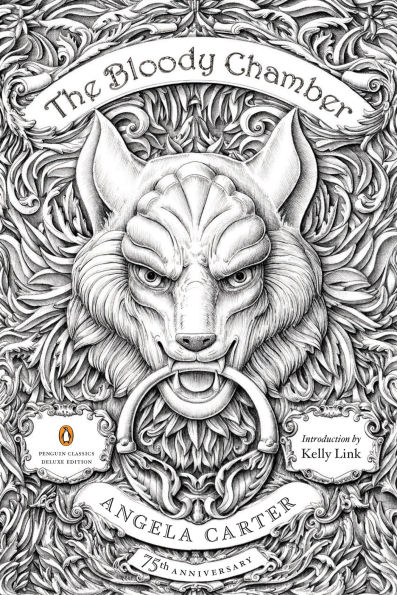
If you haven’t read Carter’s feminist reconfigurations of classic fairy tales, do it. Carter dissects the damning sociological concepts regarding women deeply ingrained in the stories we’ve consumed since we were sentient and puts them on full display. Not always a happy ending, but always a revealing one. Some of the most prominent examples of commentary on the crone arcetypes are within her two reimaginings of Little Red Riding Hood, The Werewolf, and The Company of Wolves, where the crone is represented through the grandmother. The Werewolf comments on the disparaging connotations of old women and society’s treatment of them, and The Company of Wolves provides a more well-rounded view of the grandmother’s role. We also see depictions in the titular story, The Bloody Chamber, a reimagining of Bluebeard, and The Snow Child, a reconception of Snow White.
The Witch in Hansel and Gretel by The Grimm Brothers
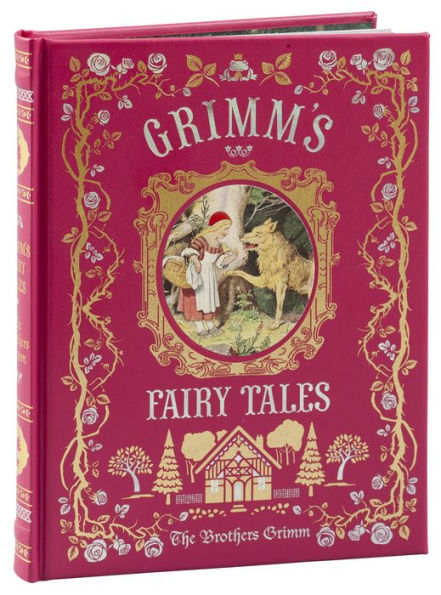
One of the most iconic representations of the crone comes in the form of the wicked old witch from Hansel and Gretel. It is certainly a more disparaging representation of women in their old age: the witch lives deep in the woods in a candy house to lure children inside. The location of her home taps into the enchanting and mystical elements often associated with the crone and her motivation to kill and eat the unlucky children that stumble across her threshold certainly connects with the crone’s evil and spiteful connotations.
Gramma Tala from Moana

Regarded as the village’s “crazy lady” and the keeper and connection to ancient Polynesian stories, Gramma Tala, from Disney’s Moana, has invaluable wisdom. Rather than instilling fear in the younger generation, as many crones are depicted to do, Tala is Moana’s closest confidant and the root of her love for the ocean. Tala is eccentric, free-spirited, and often belittled by other villagers for her steadfast belief in Polynesian folklore. However, without her guidance, the village and the world would be doomed. A crazy crone saves the day and the future; now that’s a representation of aging I can bite into.
The Wicked Witch of the West from The Wizard of Oz by Frank L. Baum
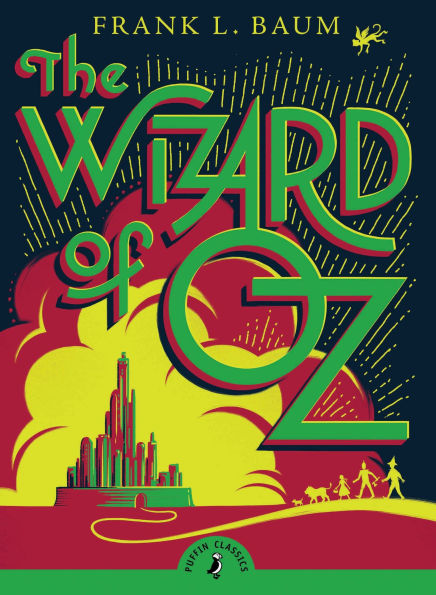
‘I’ll get you, my pretty, and your little dog too!’
– The Wizard of Oz
What would the crone archetype be without the Wicked Witch of the West? Two aspects of it sit right in her name: wicked and witch. In her old age, she uses her power to spread evil and, as all The Wizard of Oz fans should know, seeks to destroy a young, beautiful girl. However, I’ll always defend the Wicked Witch to a certain extent (definitely in light of Wicked); we always seem to forget that Dorothy killed her sister with a flying house, literally took the shoes off her feet, and paraded around in them, but I’ll rest my case.
Janina from Drive Your Plow Over the Bones of the Dead by Olga Tokarczuk
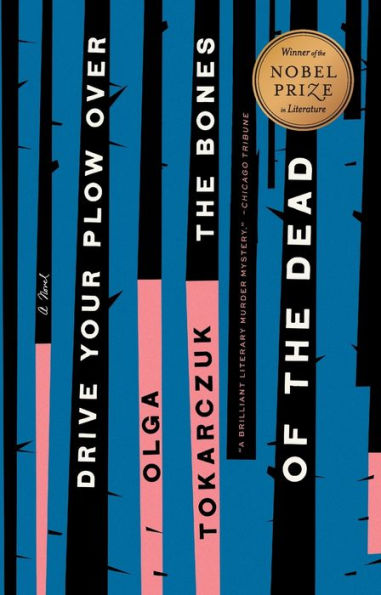
Tokarczuk’s Noble Prize winning novel follows the eccentric Janina living in a remote Polish village and independently investigating a series of murders she believes to be carried out by animals seeking vengeance against humans. Though the plot eventually reveals itself to be a straightforward murder mystery, the majority of the text reads like a dark fable with Janina as the crone heroine, specially tuned into the environment and the feelings of its animals. Though we eventually see a dark side to Janina, her narration imparts wisdom surrounding the relationships between humans and nature and the hierarchy we place on human lives in our society.
Pearl from X

Ti West’s 2022 slasher X may not tap into the supernatural aspects of the crone, but it certainly relies on the archetype for one of the villains: Pearl. When the cast and crew of a pornographic film show up at a reclusive farm run by an elderly couple, the old, decrepit, and jealous Pearl takes a special interest in Maxxine’s youth and beauty as she is a reflection of a past self. Literally. Maxxine’s actress Mia Goth transformed into the elderly Pearl for the shoot and, in the prequel, plays her younger self. Maxxine and Pearl are meant to be parallels of one another and, ultimately, symbolize the birth and death of women in literature and entertainment: the wide-eyed, desirable maiden and the spiteful, shriveled crone.
Miss Marple from The Miss Marple Mystery Series by Agatha Christie
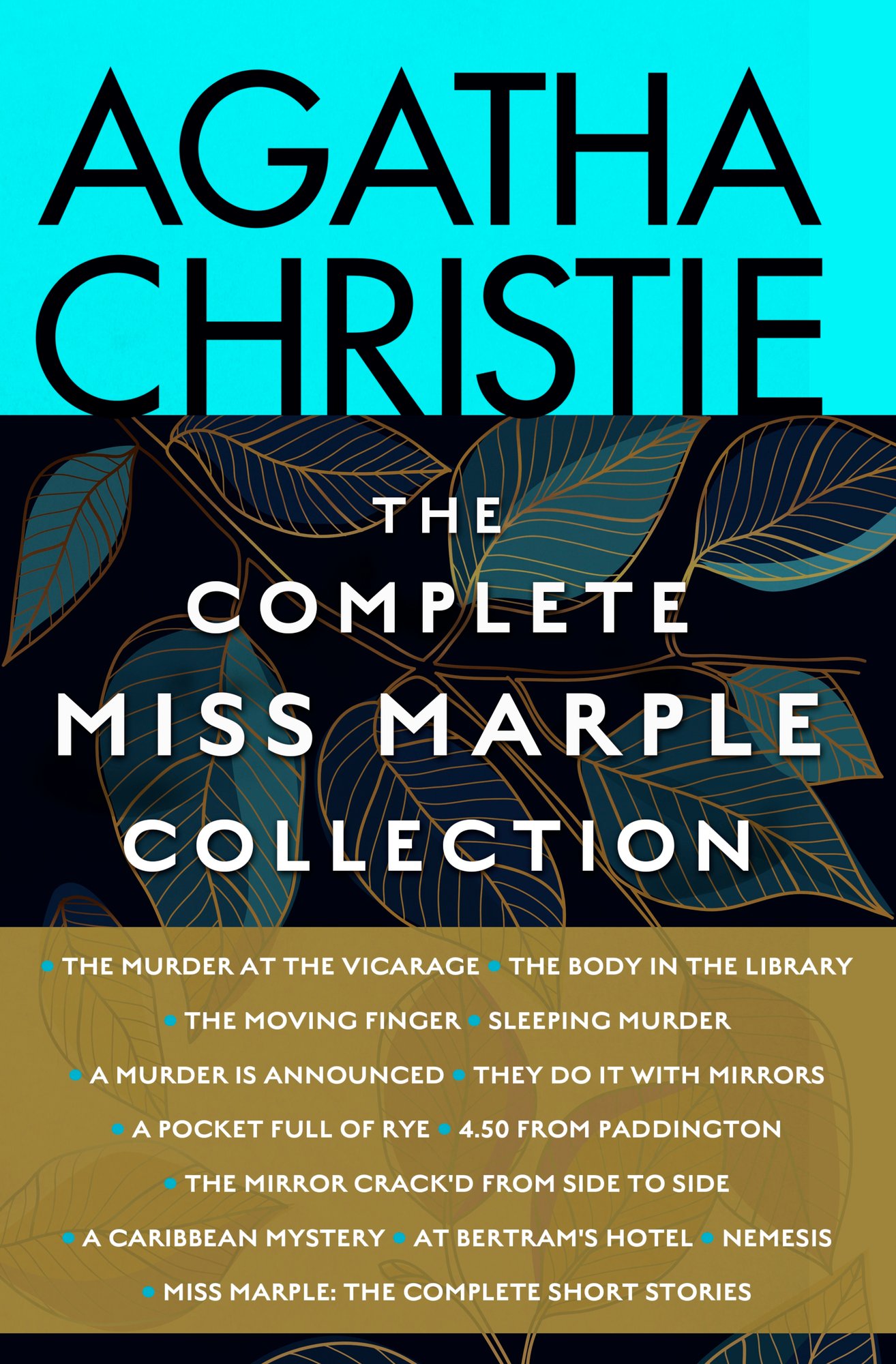
Another positive crone figure is the beloved Miss Marple. Though often teased by the surrounding characters for her peculiarities and old age, Miss Marple is hyper-observant, holds a powerful intuition that hardly ever steers her wrong, and can identify patterns in society that others often miss. She is unmarried and lives alone, and her age, rather than a hindrance, is intrinsically linked to her impeccable detective skills. Miss Marple may not be supernatural, but she holds the wisdom of a respected and all-knowing crone.
The crone has historically been misused as a disparaging stereotype of aging women. Meryl Streep had talked about this phenomenon openly before in her casting experience post-40, telling Graham Norton that “when I turned 40, I was offered three witches in one year and it was sending me a signal, I felt, about Hollywood and how they felt about women turning 40.” Too often, the crone is turned wicked, ugly, and conniving, however, the true crone is characterized through her wisdom and her unique understanding of the world around her and all its counterparts. Slowly but surely, more positive depictions of crones and aging women have been brought to life; here’s hoping the trend continues.
Looking to learn more about fairy tales and their tropes? Click here.
Browse more stimulating fantasy reads on our Bookshop here.
