










The setting of a fantasy book is meant to be enthralling, capturing the audience, and providing a backdrop for the book’s narrative and the readers’ imagination. Few settings evoke such beauty and danger as a world locked in frostbitten winter. From snow-covered kingdoms to frozen tundras, authors have long used the chill of winter to reflect both external and internal struggles. Here are five novels that transform frost and ice into something truly magical. Grab your warmest blanket and prepare to be transported!
The Lion, the Witch, and the Wardrobe by C. S. Lewis
No discussion of wintry fantasy is complete without stepping through the wardrobe into Narnia. In the beloved classic, the land is gripped by a perpetual, enchanted winter under the rule of the White Witch, as beloved character Mr. Tumnus exclaims to protagonist Lucy, “always winter but never Christmas.” Snow blankets the forests, rivers are frozen solid, and silence hangs over Narnia like a cloak.

For generations, the cold has symbolized the suppression of joy and spiritual hope under the White Witch’s rule. When the four Pevensie children, Peter, Susan, Edmund, and Lucy, discover this frozen realm, they become entwined in an age-old prophecy that foretells the return of Aslan, the true King whose presence alone can melt both the physical frost and the fear that keeps Narnia subdued. Lewis crafts a world where winter becomes both a marvel and a warning, reminding readers that warmth, literal and emotional, is worth fighting for.
A Game of Thrones by George R. R. Martin
In Martin’s epic fantasy, winter isn’t merely a backdrop; it’s a looming inevitability woven through every page. The Stark family, noble rulers of the North, embody the famous warning “Winter is Coming,” a phrase that functions as both regional proverb and philosophical truth, hinting at what is to inevitably come.

As political tensions ignite across Westeros, between Daenerys Targaryen, the Lannisters, and rival houses forced to choose allegiances, the towering Wall stands as both a physical and a symbolic barrier between civilization and the horrors gathering beyond it. Past its icy battlements stretches a wilderness buried in snow and haunted by the White Walkers, whose return threatens far more than questions of succession. Here, winter becomes a chilling emblem of mortality, consequence, and Westeros’s brutal cycles of history. Martin uses the season not just to freeze the North, but to unsettle the soul, reminding readers that the greatest danger isn’t the cold itself, but what lies within it.
The Left Hand of Darkness by Ursula K. Le Guin
Le Guin’s The Left Hand of Darkness redefines what it means to build a fantasy world shaped by winter. Set on the frigid planet of Gethen, aptly nicknamed “Winter,” the novel places readers in an environment where ice and snow are not merely obstacles, but a constant force that shapes the planet’s identity. While the temperature is perpetually lethal, physical survival is only half the battle.
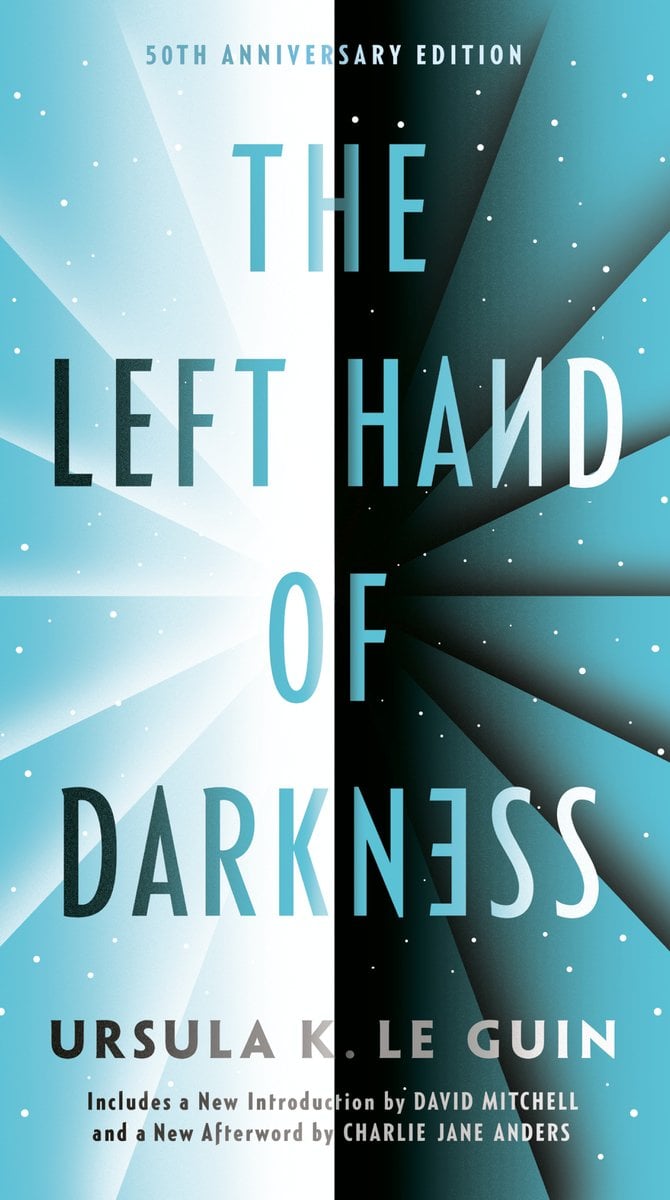
As envoy Genly Ai journeys across frozen tundras alongside the exile Estraven, their grueling traverse becomes more than a trek through blinding storms; it is a crucible for understanding. Gethenians are ambisexual, shifting genders naturally, and Ai struggles to comprehend their biology and social norms. Through hardship, silence, and shared vulnerability, the frozen landscape forces both characters to confront their biases and redefine companionship. In a world defined by cold, The Left Hand of Darkness warms readers with the revelation that the most treacherous landscapes are often the ones inside ourselves.
The Bear and the Nightingale by Katherine Arden
Inspired by Russian folklore, Katherine Arden’s enchanting novel, The Bear and the Nightingale, transports readers to a 14th-century village nestled on the edge of a vast, snow-laden forest. In this world, winter is not merely a season; it is a presence. Arden’s Medieval Russia is steeped in ancient magic, where frost creeps along windows and spirits linger in the shadows of the woods.
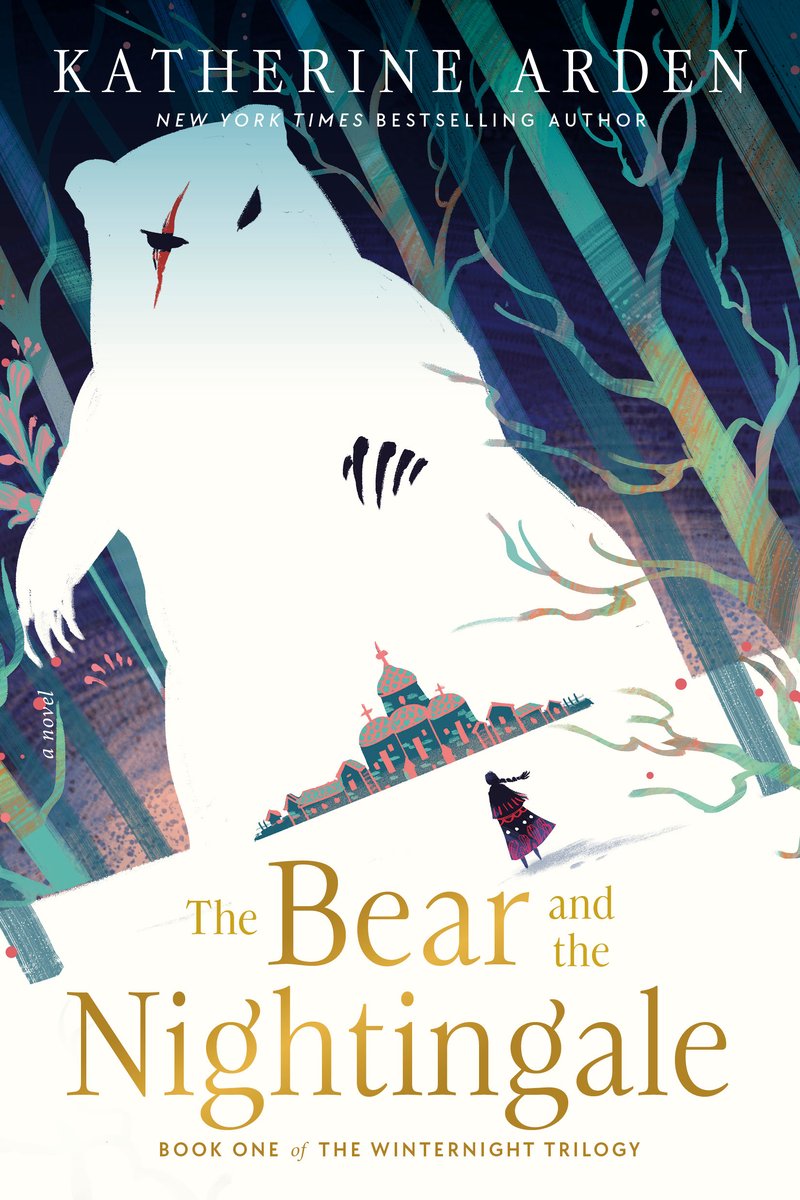
At the center of the story is Vasya, a fiercely independent girl blessed (or cursed) with the ability to see creatures others have forgotten. As Christianity tightens its grip on her village, the old household spirits weaken, and superstition festers. Winter’s chill intensifies with the rise of Morozko, the frost-demon of legend, whose icy embrace embodies both allure and danger. Vasya must confront not only external threats but the growing fear of those who refuse to see the world as she does. The result of this wintry setting is a haunting, atmospheric portrait of winter as a test of courage, faith, and the enduring power of old magic.
Emily Wilde’s Encyclopedia of Faeries by Heather Fawcett
In Heather Fawcett’s charming novel, Emily Wilde’s Encyclopedia of Faeries, winter becomes both playground and peril. The story follows brilliant but socially awkward scholar Emily Wilde as she travels to the remote northern village of Hrafnsvík, determined to complete the world’s first comprehensive study of the elusive Hidden Ones, a mysterious species of fae rumored to dwell deep within the ice-slick forests and snowy mountains.
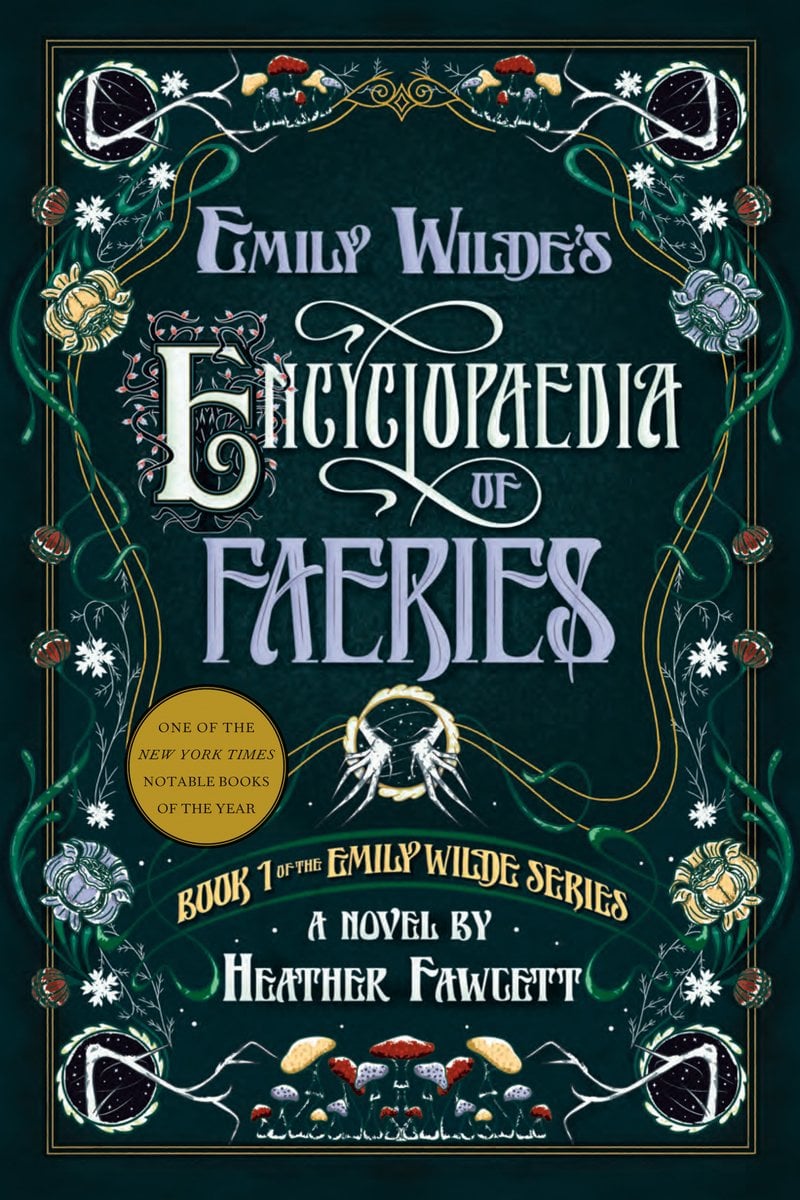
What begins as an academic expedition quickly transforms into an enchanting blend of folklore and mischief. The bitter cold that clings to the village reflects Emily’s own reserved disposition, wrapped in layers of tweed and self-reliance. Yet, as the wind howls through abandoned paths and the Hidden Ones play their trickster games, Emily finds herself drawn into the lives and secrets of the villagers. The arrival of her infuriatingly charming colleague, Wendell Bambleby, only stirs the frost further, forcing Emily to confront emotions she’d much rather footnote.
Fawcett’s prose thrives in the contrast: the coziness of candlelit cottages, warm tea, and academic banter set against treacherous forests. With its blend of scholarly humor, folklore-rich worldbuilding, and quiet romance, Fawcett crafts a wintry fantasy that feels both whimsical and wonderfully cozy.
From Le Guin’s philosophical frost to Arden’s folkloric snowscapes, these authors prove that winter is far more than a simple backdrop; it’s a breathing force that shapes both worlds and the people who move through them. Eternal winter tests courage, exposes vulnerability, and strips away illusion, revealing what characters will cling to when the world turns cold. Across fantasy literature, authors repeatedly return to ice and winter because the season heightens stakes. Its unforgiving landscapes can isolate communities, magnify political tensions, and conjure myths that blur the line between survival and superstition. Winter becomes a metaphor as much as an environment.
So, whether you’re craving sweeping epics of frozen kingdoms or intimate cozy tales lit by candlelight, grab a blanket and sink into one of these frostbitten fantasies. They’re the perfect companions for a snowy Christmas day, a stormy night, or any moment you want to feel the hush and wonder of winter, without leaving your reading nook.
Want more winter fantasy recommendations? Check out Revealing 5 Must-Read Books Set in the Thick of Winter!
Find more fantasy books at our bookshelf on Bookshop.org!