

















Librarians and research assistants perform a myriad of duties that keep libraries running smoothly. We curate and organize collections. We love to assist patrons — online or on campus — in locating resources and books, provide them with guidance on research projects, and teach them how to write citations. We also manage digital databases, host educational programs, and create inclusive environments that welcome diverse populations. Our expertise and dedication are crucial in maintaining the library as a cornerstone of their communities.
The importance of libraries and the dedicated custodians who manage them cannot be overstated. Libraries are more than just repositories of books; they are vibrant community and academic hubs that provide access to knowledge, foster lifelong learning, and offer a safe space for all. The unsung guardians behind these institutions are dedicated to ensuring that everyone has the opportunity to explore, discover, and grow. Yet, despite their undeniable value, libraries nationwide often face the threat of defunding. This shortsighted approach historically overlooks the critical role libraries play in bridging the educational divide, supporting literacy, and nurturing a love for reading. Defunding them not only undermines these efforts but also deprives communities of essential resources and services that contribute to their overall well-being. Therefore, supporting libraries is not just a matter of preserving books, but of safeguarding the intellectual and cultural fabric of our modern society.
@snhuoncampus Halloween at the library! 👻🎃💀 #snhu #snhuoncampus #halloween #spooky #ghosts #costumes #candy #fun #college #newhampshire #dressup #party #pumpkins #snhulibrary ♬ original sound – SNHU On Campus
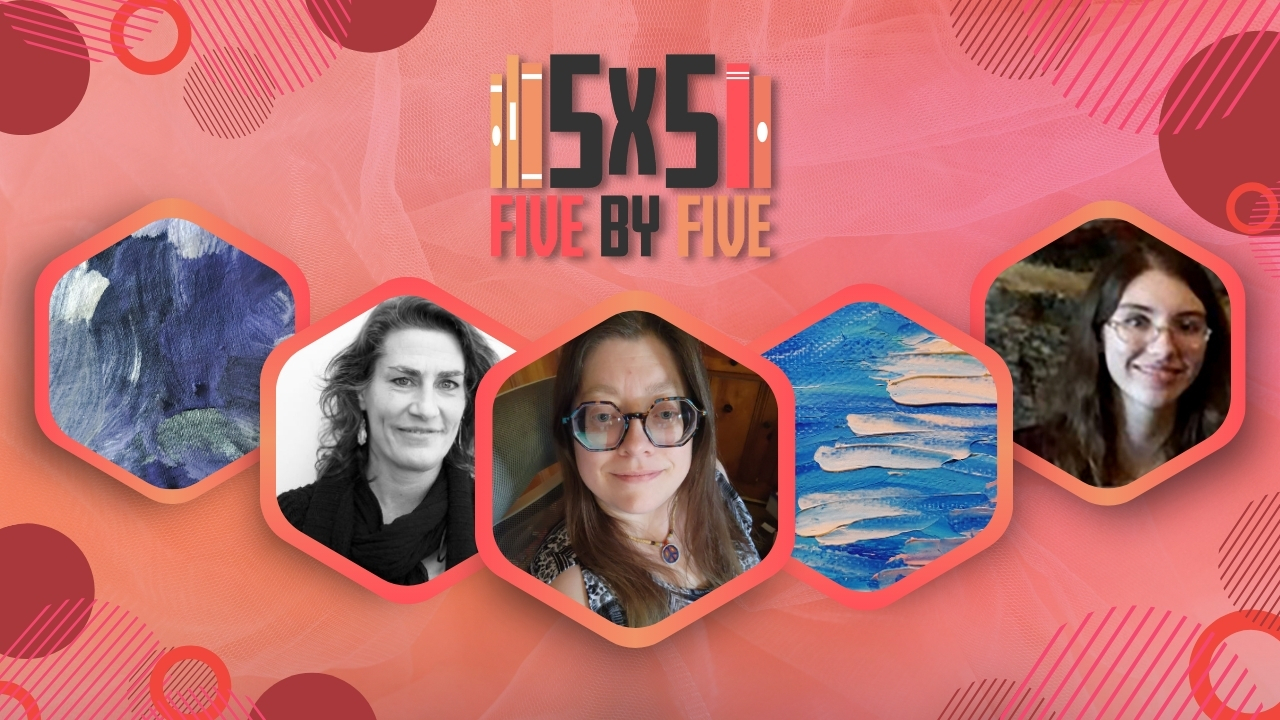
For this 5×5 installment, we gathered five dedicated people who work for The Shapiro Library at Southern New Hampshire University (including yours truly!). Our massive library offers a wide range of resources, including over 250 databases with full-text journals, magazines, reports, and newspapers — and books, of course, lots and lots of books. It also provides information on copyright, intellectual property, open educational resources, conducting research, and citing those sources. For those who need materials not available in the library’s collection, interlibrary loan and document delivery services are available. And who’s there to help everyone navigate and use all this? Well, Amanda Girard, Gwen Smith, Kim Hannon-Brobst, and Caitlyn Dewitt are just a few of the wonderful staff members I work with who help answer any questions a visitor may have, day or night. Speaking of questions, let’s get to the interview!
The Questions
1. In your tenure as a guardian of the written word, what is the most unusual book request you’ve ever received?
Amanda Girard: When I worked at the physical reference desk in our library building, I assisted a master’s level history student who was working on his thesis about US Civil War military technology. He had found a short version of a primary source about a specific weapon in one of the books he had. Unfortunately, the full text was only available at the National Archives in DC and by in-person appointment only, so we weren’t able to get him the full thing. But that’s probably one of the most in-depth book requests I’ve had, and the student kept me updated on his progress as he regularly came to the library building to work.
@troylib #LibrarianTok #LibrariansOfTiktok #Librarians #LibrarianAppreciation #LibraryTok #LibrariesOfTikTok #Libraries #Library #PublicLibraries #TroyPublicLibrary #TroyMI #FYP #JasonMamoa #Capcut ♬ original sound – Troy Public Library
Gwen Smith: In my early days working for a public library, I once had a man ask for help locating a book he had read as a child. He could not remember the title, author, or anything about the book except a line from it. We were able to find it by searching for that line in quotes in Google.
Kim Hannon-Brobst: It was a request for a book written for children during the Nazi regime in 1938 — a collection of short vignettes or morality stories to warn them of ‘the dangers’ presented by ‘those of a different faith’. The intended use of this research was a class on propaganda
Caitlyn Dewitt: I wouldn’t say that I have had an unusual request for a book, but I have had a rather interesting request for information. I was rather new to this field when someone asked for information on “computers making limbs.” Of course, I asked some follow-up questions such as “Oh, are you interested in the use of computers/technology used in the medical field?” … To my surprise, they responded with, “No. I’m looking for computers making limbs.” This has to be the most interesting encounter that I’ve had to date.
Erin Dzielski: I once had someone ask for books in the microbiology section that could theoretically explain how the fictional undead creatures featured in the video game series The Last of Us could exist.
2. As with any career, there are highs and lows, challenges and ease alike. What has been the most challenging part of working in a library? What is the most rewarding part of being a librarian?
Amanda Girard: The most rewarding is definitely helping students. Working at a large online university, I get the chance to assist people from all over the US, with so many different lived experiences. Whether I’m working with them for just an email exchange or long-term as a student worker, it’s rewarding all the same. I learn a lot from my student interactions!
The most challenging part is probably the technical issues that arise with the library databases. That can be frustrating for both students and staff alike. Luckily, most vendors are pretty responsive and fix the issue quickly, but it can definitely change the course of my day when we first encounter problems like that.
Kim Hannon-Brobst: I would say the most challenging part is when resources cannot be accessed without charge (beyond tuition) without cost to the student. Research (of course) costs money, and that is the rub.

Gwen Smith: The hardest part for me is when learners get upset or frustrated with our online library due to technology issues that are out of my control. The most rewarding part is when learners are struggling with finding resources, and I’m able to point them in the right direction.
Caitlyn Dewitt: The hardest part of working in a library would be when a client gets upset when you cannot provide the information they need. Specifically, it seems as if they think you are being untruthful about not having access to what they are asking for. On the flip side of things, it is extremely rewarding being able to assist students in finding the research that they need and teaching them how to conduct searches. Although the interactions are rather short, you see them gain confidence in their abilities to search independently.
Erin Dzielski: As someone who works in the online space of our vast system, the most challenging part of working in the library was learning how to partially help out with IT-related problems, especially the ones that occur all the dang time. I have lost count now how many times I’ve walked a patron through the process of clearing their browser’s cache and cookies!
3. You interact with thousands of students and library borrowers a year. Have any of those exchanges left a lasting impression? Could you tell us about it?
Amanda Girard: When I first started reference work, I remember a comment that a student left on a chat that provided me with a lot of confidence. I had helped walk them through finding sources for their assignment, and they left a comment on the chat afterward. To paraphrase, they thanked me and said that I had treated them like a student, a collaboration, and a colleague, and with respect, among other things. I actually printed out the chat transcript and kept it in my work backpack for a while. It affirmed many things for me about my ability to successfully help students and is one of the reasons why I took the jump into adjunct instruction as well.
Gwen Smith: A student that finished her degree came back to the library to thank all of the librarians that helped her along the way. She was so grateful and thankful to all of us for being there for her. She was in tears, and I came very close as well! It was such a great reminder of why we do what we do!
Kim Hannon-Brobst: Yes, many interactions are memorable for various reasons. I think the love of learning and libraries are common themes. To be able to access a long-lost book from your childhood memories or finding the resource that will help complete the assignment that has been causing concern — they are all rewarding when both parties are happy with the results.

Caitlyn Dewitt: Every individual is unique in their own way! Students come to us for help and to have someone be empathetic towards them in their library journey, but sometimes, it takes the professionals a little time also to find the correct material. It’s always nice when you have a student who is understanding and patient with you as you assist them. It reminds me that we are all in this world trying to do our best, but we need to be kind to each other no matter what end of the situation we are in.
Erin Dzielski: The patrons I tend to remember the most are the ones who did not hold back on their appreciation of my assistance. It is the first-year students and the older students returning to school that make my job fun, just teaching them how to use the library’s resources or research and find sources for their assignments. They often come into the chat service already overwhelmed, lost, and feeling down about themselves. By the time they leave my chats, they are a whole different patron! The best part: they sometimes come back to me months down the road when they hit a more advanced problem, and it feels good to see students thriving in a modern, bookish environment.
4. Have you ever recommended a book to someone, and they came back later and thanked you?
Amanda Girard: I haven’t had this experience with a book per se, but it’s always a great feeling when I send someone a resource or list of search results and, upon asking if it was helpful, they enthusiastically say yes!
Gwen Smith: A big part of my job is recommending articles and books (via chat and email), and it’s actually quite common for a student to chat back or reply to the email with a thank you. It’s very gratifying!
Kim Hannon-Brobst: I recommended The Graveyard Book by Neil Gaiman, to a parent who had been concerned that their young reader had not found a book that held their attention. It was really just a stroke of luck, but it did open an appreciation of reading to a young person, and that is always a wonderful occurrence.
Caitlyn Dewitt: In my role, I find myself looking at articles most of the time! With that being said, students have come back to thank me for the suggested articles on their topics.
Erin Dzielski: I don’t just work in the library at SNHU; I’m also currently a graduate student there. One time I started a new semester and one of my fellow classmates was excited to see my name show up again. I had helped her find books and articles for her class nine months prior and she still remembered me! At the time, she couldn’t imagine how she was going to get through her undergraduate degree at her age after returning to college since a time before cell phones. Now, here we were, in the same class for the same master’s degree!
5. Regarding the acclaimed classics, which would you say is the most underrated and often overlooked but should be read by everyone?
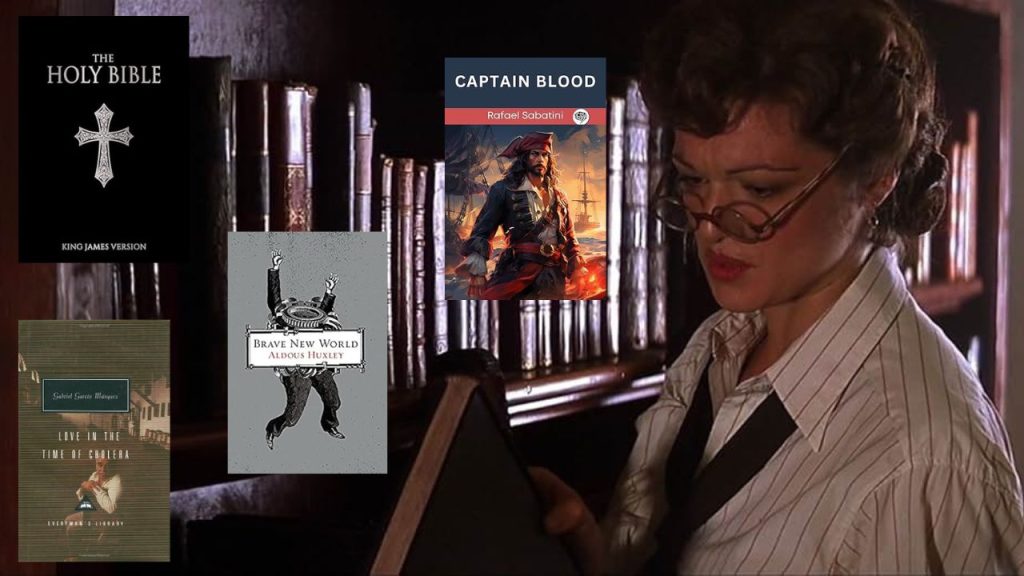
Amanda Girard: Oh, that is a great question! I’d say Brave New World by Aldous Huxley. I think it has a lot of relevance to our society today, with concepts like mass media and data privacy.
Gwen Smith: Without a doubt it’s The Holy Bible. Even if you are not a Christian, so much of our culture and history is based on it and you will miss out on so many references and allusions if you’ve never read it.
Kim Hannon-Brobst: I honestly don’t feel there is one — to me books we love are based on so many personal factors. There are books that are considered classics I find no value or pleasure in reading. So I encourage readers to create their own list of books that have impacted them, and they can decide to share those titles or keep them close and treasured without opening them to a debate or discussion.
Caitlyn Dewitt: Love in the Time of Cholera by Gabriel Garcia Marquez. Why? Because it’s an excellent written, epic journey of everlasting love. It shows that no matter what you go through in life, you will end up right where you need to be.
Erin Dzielski: Captain Blood by Rafael Sabatini, originally published in 1922. It’s a swashbuckling adventure that follows Peter Blood–a physician turned pirate — as he seeks justice and freedom. Sabatini’s blend of historical fiction and action-packed narrative is done well and captures the allure and peril of the high seas. The novel explores themes like honor, betrayal, and redemption, just like you’d expect. Something about it makes it a timeless and thrilling read, in my opinion.
Some Burning Bonus Questions!
What are your feelings on dog-earing pages of a book?
Amanda Girard: I personally don’t do it, but I feel it’s fine if it’s someone’s personal copy of a book. If it’s a library copy, though, I’d prefer not!
Gwen Smith: If it’s a personal book in your collection, have at it! If it’s a library book, please find a scrap of paper or invest in those cool magnet bookmarks to keep your place.
Kim Hannon-Brobst: If it’s your own, have at it. If you are borrowing it and feel the need to want to draw attention to a page please use removable book tab tapes. You can even place them pointing at the spot on the page you want attention drawn to.
Erin Dzielski: I dog-ear the crap out of my books, but I don’t do it to the ones that do not belong to me. That would just be bad manners!
Of all the hidden gems within your library vault, which would you love to recommend to the curious borrower?
Amanda Girard: House of Leaves by Mark Z. Danielewski is one of the most unique and interesting books I’ve ever read. It’s part haunted house story, part family drama, and part film analysis, among other things. Danielewski plays a lot with the presentation of words on the page too, at one point even requiring you to physically turn the book upside down to read it!
Gwen Smith: We subscribe to a database called Very Short Introductions. It gives introductions on a wide range of topics from depression to children’s literature to Protestantism to microbiology. It would be the perfect source for someone beginning research on a topic that they don’t know much about or for someone who is just curious about any topic!
Kim Hannon-Brobst: Know My Name by Chanel Miller, for so many reasons, for so many age groups.
Erin Dzielski: Crocodile on the Sandbank by Elizabeth Peters. It’s a mystery novel from 1975 set in late 19th century Egypt and follows the adventures of an unconventional Englishwoman by the name of Amelia Peabody and her companions. I describe it as a delightful mix of archaeology, mystery, and romance — great for fans of movies like The Mummy.
A heartfelt thanks to our five library stars for sharing their behind-the-scenes magic. Your dedication to the world of words makes every visit a novel experience. Now give a round of applause to all library staff everywhere! Their efforts — whether it’s organizing shelves, helping with research, managing programs and databases, hosting events, and keeping the peace — are a key part of keeping communities thriving and curious. Their dedication is unmatched, and their hard work ensures we all have a place to learn and grow. Without them, we’d be lost in a sea of information. And to think, some people want to defund libraries — that’s like wanting a house without any bookshelves! I can’t imagine such an existence, can you?
Sign up for a library card at The Houston Public Library (even if you don’t live in Texas) by clicking here.
Find Amanda Girard here.
Sign up for a library card at The Fairfax County Public Library in Virginia — just click here.
Find Erin Dzielski here.
Get an electronic membership at The New York Society Library right over here.
Journey into the publishing world with 5 Indie-turned-trade authors by clicking here.
To shop every book mentioned in the article and more, browse our Bookshop here!
